• Hey Guest. Check out your NeoGAF Wrapped 2025 results here!

Games Journalism! Wainwright/Florence/Tomb Raider/Eurogamer/Libel Threats/Doritos

Status
Not open for further replies.
Have now read the Kotaku piece and wasn't particularly impressed.

I find it very unlikely that Lauren just mentioned legal action and EG folded as she claims. Tom Bramwell was very clear: she made it plain that she wouldn't back down.

The article as a whole fulfilled the "so long it must be making good points" criteria. It was quite clearly majorly biased in favour of the status quo, and for Totilo to be talking in such glowing terms about Kotaku's journalism and lack of recycled press releases was hilarious. It's telling that the reaction I saw last night from game journos on Twitter was to completely accept the piece, almost breathing a sigh of relief.

This whole saga has made me look differently at the industry, with particular interest in how several people I know at least well-ish have reacted. Looking from the outside in, the closed shop approach hasn't done anyone any favours, and it's been eye-opening to see how easily journos fell into either defending the status quo or subconsciously trying to play down the issues.

What is more surprising to me is that the defences of their profession by the "wise elders" carry little weight. They don't add up to more than that they have to do something to make a living and that it would be embarrassing and annoying for them if readers didn't just accept their authority without questioning it.

This is what you get for looking behind the scenes I guess. There is no attempted defence in terms in terms of them feeling a vocation to entertain and inform their readers. Only a mild embarrassment that the way they present things given to them by the industry might be challenged.
 
This Mountain Dew and Doritos campaign, especially the tv ads, makes me believe that Richard "Dick" Roman is in charge of the marketing.
 
When a game reviewer posts a review about a game, he puts his layman opinion about that game out to a huge group of experts. Game reviewers have to review so many different games that they are essentially dilettantes. Posters on forums have the ability to specialize in whatever games interest them.

For example, I have yet to see a main stream outlet adequately review an RTS to my standards. I have played RTSs since I was 8. I've played an RTS nearly every day since then. Some summers, I used to play 6 hours a day every day. I've played them competitively at LANs. Do any of you honestly think someone who plays all the newest releases will be able to assess an RTS as well as I can?

Whenever a one of these dabblers posts a review, it will be rightfully critiqued, and unfortunately the reviewer's reaction is usually to trust his "strong opinion" over the 'arrogant expertise' of the forum posters who know better.

Don't believe me? Just watch these purported experts play public multiplayer (after a couple of sessions, you'll be able to create your own "excuse bingo" card).

this's been my take on 'reviewers' for a while now. anyone who literally has to play a wide variety of games, & do so relatively quickly & irregardless of whether they're actually interested in any of them or not, may indeed have my sympathy, but not necessarily my trust :) ...
 
There was one very interesting quote in the Kotaku article by John Walker.


The unintended irony in this quote makes me smile.

When a game reviewer posts a review about a game, he puts his layman opinion about that game out to a huge group of experts. Game reviewers have to review so many different games that they are essentially dilettantes. Posters on forums have the ability to specialize in whatever games interest them.

For example, I have yet to see a main stream outlet adequately review an RTS to my standards. I have played RTSs since I was 8. I've played an RTS nearly every day since then. Some summers, I used to play 6 hours a day every day. I've played them competitively at LANs. Do any of you honestly think someone who plays all the newest releases will be able to assess an RTS as well as I can?

Whenever a one of these dabblers posts a review, it will be rightfully critiqued, and unfortunately the reviewer's reaction is usually to trust his "strong opinion" over the 'arrogant expertise' of the forum posters who know better.

Don't believe me? Just watch these purported experts play public multiplayer (after a couple of sessions, you'll be able to create your own "excuse bingo" card).

Hmmm... if you like, like, European strategy-style RTS's, you might want to consider following PC Gamer's Rob Zacny who specialises in this field.
 
Which sounded like a double standard to me.

Considering his circumstances and experiences during that time, if we're to trust his account on what happened, maybe he doesn't feel that he should use mock reviewers now that he has a better understanding of the process? Seems to me like at the time he was considering doing one he didn't really know the business process behind it, and thus wanted to find out.

Doesn't really seem like a double standard seeing that in the end he decided that he didn't want to do it due to conflicts of interest.
 
Have now read the Kotaku piece and wasn't particularly impressed.

I find it very unlikely that Lauren just mentioned legal action and EG folded as she claims. Tom Bramwell was very clear: she made it plain that she wouldn't back down.

The article as a whole fulfilled the "so long it must be making good points" criteria. It was quite clearly majorly biased in favour of the status quo, and for Totilo to be talking in such glowing terms about Kotaku's journalism and lack of recycled press releases was hilarious. It's telling that the reaction I saw last night from game journos on Twitter was to completely accept the piece, almost breathing a sigh of relief.

This whole saga has made me look differently at the industry, with particular interest in how several people I know at least well-ish have reacted. Looking from the outside in, the closed shop approach hasn't done anyone any favours, and it's been eye-opening to see how easily journos fell into either defending the status quo or subconsciously trying to play down the issues.

Sums up the article nicely.

If I may paraphrase Totilo: "Please can we just end it here".
 
There was one very interesting quote in the Kotaku article by John Walker.


The unintended irony in this quote makes me smile.

When a game reviewer posts a review about a game, he puts his layman opinion about that game out to a huge group of experts. Game reviewers have to review so many different games that they are essentially dilettantes. Posters on forums have the ability to specialize in whatever games interest them.

For example, I have yet to see a main stream outlet adequately review an RTS to my standards. I have played RTSs since I was 8. I've played an RTS nearly every day since then. Some summers, I used to play 6 hours a day every day. I've played them competitively at LANs. Do any of you honestly think someone who plays all the newest releases will be able to assess an RTS as well as I can?

Whenever a one of these dabblers posts a review, it will be rightfully critiqued, and unfortunately the reviewer's reaction is usually to trust his "strong opinion" over the 'arrogant expertise' of the forum posters who know better.

Don't believe me? Just watch these purported experts play public multiplayer (after a couple of sessions, you'll be able to create your own "excuse bingo" card).

tbh I'd rather read reviews by people that aren't autistic savants in their chosen genres. All most people looking for is "Is this game good or not?", and even a layman can tell you that. As a hardcore expert, your job is to then go on the internet and tell everyone how wrong they are about their opinions and how if spawn times on the allied tanks were changed by one sixth of a second then the world would be a better place.

Your skillset is a niche within a niche and while valuable to some should be treated as such. Blaming reviewers for being dilettantes is futile when a large portion of gamers would not be interested in a review by the hardest or hardcore fans.

EDIT: actually, I say this but I don't trust reviews myself for a variety of reasons. All I need to know is 1) a game I'm interested in is coming out and 2) a general ballpark idea as to its quality. Trying to be definitive with numbers and everything is futile.
 
tbh I'd rather read reviews by people that aren't autistic savants in their chosen genres. All most people looking for is "Is this game good or not?", and even a layman can tell you that. As a hardcore expert, your job is to then go on the internet and tell everyone how wrong they are about their opinions and how if spawn times on the allied tanks were changed by one sixth of a second then the world would be a better place.

Your skillset is a niche within a niche and while valuable to some should be treated as such. Blaming reviewers for being dilettantes is futile when a large portion of gamers would not be interested in a review by the hardest or hardcore fans.

Why shouldn't there be reviews like that? Mutliplayer games will die quickly out if high end play is fundamentally flawed as people will stop playing once they have mastered the basics.
 
Why shouldn't there be reviews like that? Mutliplayer games will die quickly out if high end play is fundamentally flawed as people will stop playing once they have mastered the basics.

High end play can't be evaluated in prerelease multiplayer on anything but the most franchised of franchise games
 
Why shouldn't there be reviews like that? Mutliplayer games will die quickly out if high end play is fundamentally flawed as people will stop playing once they have mastered the basics.

This is true and this is the job of the high end forumites to dissect and discuss. But for a general audience, 'high end play' is utterly beyond them and is simply not relevant. The question they want to know is "will this game keep me entertained for X hours?"

As well, factor in the idea that it often takes weeks or months with a multiplayer game to even find a decent rhythm for high end play, how can you expect any one player to dissect it before release?
 
Have now read the Kotaku piece and wasn't particularly impressed.

I find it very unlikely that Lauren just mentioned legal action and EG folded as she claims. Tom Bramwell was very clear: she made it plain that she wouldn't back down.

The article as a whole fulfilled the "so long it must be making good points" criteria. It was quite clearly majorly biased in favour of the status quo, and for Totilo to be talking in such glowing terms about Kotaku's journalism and lack of recycled press releases was hilarious. It's telling that the reaction I saw last night from game on Twitter was to completely accept the piece, almost breathing a sigh of relief.

This whole saga has made me look differently at the industry, with particular interest in how several people I know at least well-ish have reacted. Looking from the outside in, the closed shop approach hasn't done anyone any favours, and it's been eye-opening to see how easily journos fell into either defending the status quo or subconsciously trying to play down the issues.
Very nicely put, and I agree with you on all accounts.
 
tbh I'd rather read reviews by people that aren't autistic savants in their chosen genres. All most people looking for is "Is this game good or not?", and even a layman can tell you that. As a hardcore expert, your job is to then go on the internet and tell everyone how wrong they are about their opinions and how if spawn times on the allied tanks were changed by one sixth of a second then the world would be a better place.

It's not a matter of being an 'autistic savant' - most gamers, and I include the casual market (in fact especially the casual market) only play a handful of games a year, but play them to death. By way of anecdote - my brother plays little other than FIFA and CoD, not to any autistic level but regularly and to a decent level. I'd trust his opinion of either of those game franchises infinitely more than a reviewer who's not touched those game in twelve months for the few days he or she spent reviewing them.
 
From Totillo's article:


Way to trivialize the issue, what a terrible quote to choose, it is not the the t-shirt and the broken statue what makes me think your perception of the game you are reviewing has been compromised; it's the travels to Korea that Blizzard paid to one of the people from your show, it's the trip to Italy for one of the Assassins Creed games, or the trip to Hawaii you took from Capcom and the other one to Italy from Capcom as well, so you think all those travel sucked?
then by all mean don't accept free PR trips anymore, should I check my head because I think all those PR paid trips have influenced you and your crew some way or another?
You guys are delusional if you think all those PR treats haven't influenced you, de-lu-sio-nal.

I do think that the extra goodies (not the crappy stuff that Gerstmann mentioned) have a hand in potentially better review scores. The reality is that we're talking about the same publishers that increased game prices by $10 this generation. They're also the same publishers that cut off content from games so that they can sell it to users at a later time. Sometimes that content is even on the disc. So I don't believe for a single second that they're going to spend anymore than they feel they have to. Yet those publishers are ok with sending expensive press kits, kits that are often much better than what consumers can buy as Limited/Collector's Editions, for free to certain reviewers. Does it mean that it's going to impact every review? Definitely not. But, why else would those publishers continue to do that unless they had an indication that it was working on some level? The same goes for the free trips that you described.
 
Have now read the Kotaku piece and wasn't particularly impressed.

I find it very unlikely that Lauren just mentioned legal action and EG folded as she claims. Tom Bramwell was very clear: she made it plain that she wouldn't back down.

The article as a whole fulfilled the "so long it must be making good points" criteria. It was quite clearly majorly biased in favour of the status quo, and for Totilo to be talking in such glowing terms about Kotaku's journalism and lack of recycled press releases was hilarious. It's telling that the reaction I saw last night from game journos on Twitter was to completely accept the piece, almost breathing a sigh of relief.

This whole saga has made me look differently at the industry, with particular interest in how several people I know at least well-ish have reacted. Looking from the outside in, the closed shop approach hasn't done anyone any favours, and it's been eye-opening to see how easily journos fell into either defending the status quo or subconsciously trying to play down the issues.

Well said sir.

This issue isn't going away gaming press. No one trusts you guys anymore.

Get some standard journalistic ethics in place & follow through. The way you guys operate is way too corrupt.
 
tbh I'd rather read reviews by people that aren't autistic savants in their chosen genres. All most people looking for is "Is this game good or not?", and even a layman can tell you that. As a hardcore expert, your job is to then go on the internet and tell everyone how wrong they are about their opinions and how if spawn times on the allied tanks were changed by one sixth of a second then the world would be a better place.

Your skillset is a niche within a niche and while valuable to some should be treated as such. Blaming reviewers for being dilettantes is futile when a large portion of gamers would not be interested in a review by the hardest or hardcore fans.

An expert should also be able to tell if a game is ok for the casual community and/or if it's difficult to approach, if he's really an expert and not a whiny nerd who wants to show his mad skillz on a forum. An "average joe reviewer" could never do that.
 
Considering his circumstances and experiences during that time, if we're to trust his account on what happened, maybe he doesn't feel that he should use mock reviewers now that he has a better understanding of the process? Seems to me like at the time he was considering doing one he didn't really know the business process behind it, and thus wanted to find out.
I understand your perspective. But I don't recall him saying whether this episode has informed his opinion on the place of mock reviewers in the press. You feel that it is the case, and there are reasons to believe so. I don't, in particular due to the fact that he did not actually do anything, at least beyond agreeing to do it (and later refusing to).

Doesn't really seem like a double standard seeing that in the end he decided that he didn't want to do it due to conflicts of interest.
I think he felt there was a conflict of interest if he was doing both simultaneously. I don't know that he'd felt the same if he had done mock reviews and reviews-reviews at different times.
 
Big part to what make me pissed like hell of Lauren was she used the threat of legal action to change an article. This is so much a resource used by the worst kind of people. And I think she made this for the same motive Totilo was so blasé in the begining, lack of humility and too much self-pride.
 
Well said sir.

This issue isn't going away gaming press. No one trusts you guys anymore.

Get some standard journalistic ethics in place & follow through. The way you guys operate is way too corrupt.
Sad thing is, the issue is going to go away for most people, even of the small minority that was engaged in it in the first place.

Gamers have a notoriously short memory for this stuff.


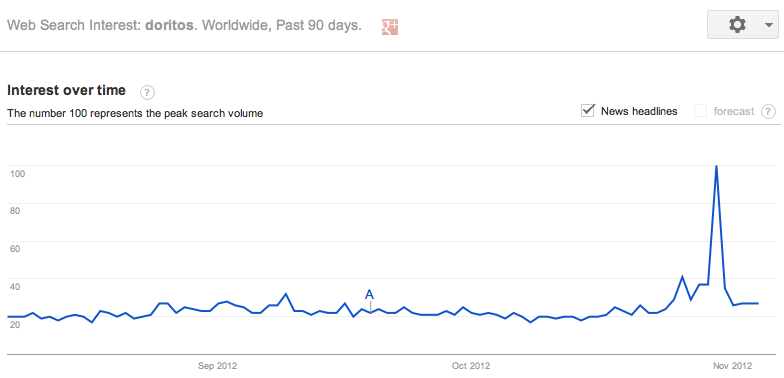
edit: I'm hoping this could be like the Gerstmann case (and the exception to the above statement), eternally referenced so people don't forget, but somehow I doubt it. Thinking of it this way, the meme-ification of Keighley as the Doritos pope could help this stay in people's minds longer, although that's not at the heart of the matter.
 

This is exactly what I thought when I saw the GTA trailer announcement thread. I suppose it was fine with GTA IV, since it was the first game in the new engine and was something completely new. That's not really the case anymore.

But it seems like there are still people who are plenty exited in that thread, oh well.
 
They deleted this tweet or was it some fake tweet?

foqJ4.jpg
 
Had a chance to read Stephen's Kotaku editorial. Glad a few people already pointed out that word count does not equal quality. Seriously, I've never seen so much space used to skirt around an issue. Can't believe this guy is an editor-in-chief (but then again, he's one for Kotaku).

It's just another spin on the what we've heard from other folks: An unfair "witch hunt" is being conducted and yes, while there may be some ethical problems with how video games journalism currently operates, writers like Totilo aren't influenced by things like swag.

You've got to love the section where Totilo and others are essentially saying, "No! We get too much free stuff!" They do realize they can mark packages, "Return to sender," right? If they receive packages from PR that aren't marked as free merchandise, that's illegal according to U.S. law. Again, it goes back to what myself and others have been saying since the beginning of this thread: You don't have to take free stuff. Quit trying to make it seem like you're a victim.

Even though Totilo mentions marketing and psychology, by pointing to things like one of Shawn Elliott's posts, he just brushes it off by quoting a PR person who says, "The smart members of the media can always smell PR bullsh*t a mile away." Except that ... they can't. Dig around places like PubMed and look at topics like neuromarketing, dishonesty and ethics. You'll find plenty of well-conducted studies that show we're influenced by far more than we realize.

For example, this study from Florida State University ran a series of experiments and concluded by saying, "Results indicate that dishonesty increases when people’s capacity to exert self-control is impaired, and that people may be particularly vulnerable to this effect because they do not predict it."

Shawn Elliott mentioned Dan Ariely's "The Truth About Dishonesty," which I'd recommend as well. I'd also recommend Jonah Lehrer's "How We Decide," as a good compliment.

I would spend more time pulling Totilo's editorial apart piece by piece, but, like I stated at the beginning of my post, it's the same defensive stuff we've heard from others.
 
Have now read the Kotaku piece and wasn't particularly impressed.

I find it very unlikely that Lauren just mentioned legal action and EG folded as she claims. Tom Bramwell was very clear: she made it plain that she wouldn't back down.
Even if it seems patently "obvious" what happened, it's still a matter of interpretation. Stephen avoided editorializing on the Wainwright issue and opted instead to provide a reasonably wide array of opinions, including Lauren Wainwright's own. Citing a person in an article is not the same thing as agreeing with them. When Stephen posted here, he seemed wary of diving into these events, and I can understand why. Besides, these details are all beside the point. I don't think the "story" would improve by going down that particular rabbit hole.

The article as a whole fulfilled the "so long it must be making good points" criteria. It was quite clearly majorly biased in favour of the status quo, and for Totilo to be talking in such glowing terms about Kotaku's journalism and lack of recycled press releases was hilarious. It's telling that the reaction I saw last night from game journos on Twitter was to completely accept the piece, almost breathing a sigh of relief.
It may not have been especially scathing, but it at least made a call to journalists to be more open to criticism and self-reflection. He could have gone a lot further. His "final thoughts" at the end of the piece were really pretty tame. But at least there was an acknowledgment that journalists need to do more "good reporting." That's a start. But it was a bit self-congratulatory overall.

You've got to love the section where Totilo and others are essentially saying, "No! We get too much free stuff!" They do realize they can mark packages, "Return to sender," right?
Oftentimes this junk is coming in the same package as review copies. Returning an opened package (from which you've removed and kept an item) has a whole other set of ethical and legal downsides. That crap really isn't easy to get rid of. Not sure on the delivery policies of most private delivery companies in the US and elsewhere (UPS, RPS, FedEx, etc), but I don't think it's as easy as it is with a national delivery system (like the USPS). Signing for packages might also make it more complicated. Not sure. But if I were in charge of one of these sites, I'd certainly look into it.
 
Oftentimes this junk is coming in the same package as review copies. Returning an opened package (from which you've removed and kept an item) has a whole other set of ethical and legal downsides. That crap really isn't easy to get rid of.

Appreciate that perspective. True, you can't return something for free once you've opened it, but why accept free stuff from PR in the first place? If we go with your premise about getting a review copy package and that comes with swag, contact the PR department and tell them you only want a review copy in the future. Plus, purely by weight, you should be able to tell if a package has more than just a game and can return that for free before you even open it.

That's called "balance." He isn't brushing anything aside, simply presenting two sides of the same issue. Honestly, it sounds like most of you wanted an unbalanced, highly opinionated, one sided attack on the industry. I've been as vocal as anyone in this thread, but what you're asking for is something that would be even more problematic than what we already have. That wouldn't "fix" anything; it would likely be a sign that things are even worse in the games media than we thought.

Except he really did brush it aside. He didn't address the issues of neuromarketing, psychology and ethics in any real way. He simple dropped in a quote from a PR person as a way to say it's not an issue. Stephen's piece is an editorial, it's not an article. Its length and the fact that it has quotes from sources doesn't make it a "balanced" piece. And yes, if he did actually report on the matter properly or write a better editorial, you would see things as worse than many people realize (coming from someone that used to work in the industry).
 
Oftentimes this junk is coming in the same package as review copies. Returning an opened package (from which you've removed and kept an item) has a whole other set of ethical and legal downsides. That crap really isn't easy to get rid of. Not sure on the delivery policies of most private delivery companies in the US and elsewhere (UPS, RPS, FedEx, etc), but I don't think it's as easy as it is with a national delivery system (like the USPS). Signing for packages might also make it more complicated. Not sure. But if I were in charge of one of these sites, I'd certainly look into it.

I've just had a crazy idea. Auction the non-perishable off and donate the proceeds to Childs Play or some other worthy charity. Gain goodwill, and gamers get a chance at some of that swag.
 
Appreciate that perspective. True, you can't return something for free once you've opened it, but why accept free stuff from PR in the first place? If we go with your premise about getting a review copy package and that comes with swag, contact the PR department and tell them you only want a review copy in the future. Plus, purely by weight, you should be able to tell if a package has more than just a game and can return that for free before you even open it.
Many sites have done this, and it accomplishes nothing. So most have stopped even asking. It really isn't as easy as that. This isn't like refusing a plastic bag from Target. It's more like watching a broadcast television show and expecting them not to show you commercials. You could call your cable provider and tell them to stop sending you commercials, but I don't think it would help.

Except he really did brush it aside. He didn't address the issues of neuromarketing, psychology and ethics in any real way. He simple dropped in a quote from a PR person as a way to say it's not an issue. Stephen's piece is an editorial, it's not an article. Its length and the fact that it has quotes from sources doesn't make it a "balanced" piece. And yes, if he did actually report on the matter properly or write a better editorial, you would see things as worse than many people realize (coming from someone that used to work in the industry).
Yeah, I changed my response after re-reading that section of his article. You're right. It really does use "balance" as an excuse to bury the issue. It definitely editorializes (not sure how I would claim otherwise). And he uses interviews to couch his opinion safely behind others' words. He was thorough and (mostly) fair, but he ultimately ends where he begins. But it does sound to me like he at least entertained briefly the criticisms of the gaming press along the way. Even if he ultimately decides they're unwarranted. He hasn't convinced me to start reading Kotaku regularly, but I can at least respect his attempt at fairness.
 
There have been so many mentions of Doritos on the web and on podcasts over the last two weeks. Somebody deserves a raise.
 
I've just had a crazy idea. Auction the non-perishable off and donate the proceeds to Childs Play or some other worthy charity. Gain goodwill, and gamers get a chance at some of that swag.

That is exactly what I was just thinking, if you do not want the crap you get with the game then auction it off and give the proceeds to charity. That way your readers can have a chance at the swag. Although I am sure there is some legal reason why they cannot do this.
 
That is exactly what I was just thinking, if you do not want the crap you get with the game then auction it off and give the proceeds to charity. That way your readers can have a chance at the swag. Although I am sure there is some legal reason why they cannot do this.
As Gerstmann and Totilo have each pointed out, doing that ends up giving the marketing teams exactly what they want: mindshare. If you auction them off, you're turning those items into advertising. That's precisely the problem journalists are trying to avoid. So, no, that isn't a good solution.
 
I've just had a crazy idea. Auction the non-perishable off and donate the proceeds to Childs Play or some other worthy charity. Gain goodwill, and gamers get a chance at some of that swag.

The danger of that (unless you auction off everything at once at some agreed-upon date) is that you're still promoting the product by alerting the viewers to your auction. If readers are seeing a story about how you're giving an Assassin's Creed III flag to the highest bidder, then PR has done its job.
 
The danger of that (unless you auction off everything at once at some agreed-upon date) is that you're still promoting the product by alerting the viewers to your auction. If readers are seeing a story about how you're giving an Assassin's Creed III flag to the highest bidder, then PR has done its job.

How about auctioning the swag off a year or two later? By then the game will be out of peoples minds and the fans that want the swag can buy it. If no one wants it, throw it away or give it to Goodwill? Seems like a reasonable thing to me and gets around PR's "wanting mindshare" by being out of the spotlight when you sell it, yeah?
 
How about auctioning the swag off a year or two later? By then the game will be out of peoples minds and the fans that want the swag can buy it. If no one wants it, throw it away or give it to Goodwill? Seems like a reasonable thing to me and gets around PR's "wanting mindshare" by being out of the spotlight when you sell it, yeah?

I'd be surprised if most swag actually lasted a year.
 
The danger of that (unless you auction off everything at once at some agreed-upon date) is that you're still promoting the product by alerting the viewers to your auction.
Let child's play handle the auctioning for all the big sites together. Have them auction that crap once or twice a year. Have them keep crap till well after the game's release date.

Besides, if the crap swag somehow benefits charity, I actually don't mind that the brand gets a wee bit of face-time.

How about auctioning the swag off a year or two later? By then the game will be out of peoples minds
Yeah exactly.
 
An expert should also be able to tell if a game is ok for the casual community and/or if it's difficult to approach, if he's really an expert and not a whiny nerd who wants to show his mad skillz on a forum. An "average joe reviewer" could never do that.

The trouble is, there are far far fewer kindly, well reasoned experts than there are whiny douchebags online. Take Halo for instance since it's topical. I love that game and I know a lot about it but the 'experts' in deidcated threads are insufferable, talking about bullet spreads and bloom and jump heights like MLG is the height of gaming. It's tiresome and these experts will often run roughshod over a thread braying about every little thing. Its sad, but theres a sense of entitlement and arrogance that many 'experts' have on forums.

I expected someone to make the point you did.

First, we're not really disagreeing. John Walker spoke about readers rebelling against the expertise of reviewers. I said this was ironic, because the opposite was actually happening. You're agreeing with me about the expertise, but disagreeing about whether it's a good thing.

On that point, you're assuming that experts on a genre have to be pedantic, while game reviewers would be better able to see what an average person would want. This is not necessarily true. What is necessarily true is that someone with extensive experience with a type of game will be able to provide insight which the dabbler won't.

Finally, let's take your argument to its logical conclusion. If you're afraid of the expertise of an "autistic savant," why shouldn't you be afraid of the (admittedly much lesser) expertise of the games reviewer? After all, they have more experience playing most genres than the normal person. So, instead of reading any reviews by professional, you should rely on User Reviews from people who have even less expertise (which, to be fair, you might already be doing).

Ultimately, I side with expertise. For example, I recently asked Garnett about his opinion on racing games because I don't know as much about them as he does. If I see a poster on Neogaf who knows more than him, I'll ask them. You may not choose to side with expertise. The point is, it's hilarious that game reviewers shroud themselves in the mantle of the expert and place themselves on a pedestal above their peasant, layman readers while really it's almost exclusively the reverse. They're a convenience. It's cheaper and easier to have one person be able to review just about any genre then have a panel of experts.

Perhaps I should have read closer and perhaps my autistic savant line was hyperbole for silliness sake. But further to my opinion above, I often find the 'expert' opinion less helpful for games where I'm not familiar with the genre.

Take Final Fantasy Tactics for instance. When that game came out on iOS I was excited for it since I'd heard it was good. But asking fans about it was like banging my head against a brick wall, they go straight into discussions about power levelling and endgame parties and steal rates and it's just bewildering to someone not steeped in the lore. All I really wanted was someone to say "it's a turn based game like a cross between an RPG and chess" and I would have been set.

Sometimes having a lot of info about something can muddy the waters for the uninitiated. I'm guilty of the same myself, ask me a question about what Batman book to read and I'll give you an essay, when all you really want to hear is Batman Year One.

As I say in my edit originally, I don't even know how useful reviews are to me any more as it is, podcasts are much more useful since they don't try to be authoritative, they'll just be some people giving opinions and having a chat, and there's often a good mix of expert and novice viewpoints going into it.

And really, I do think that a games reviewer probably is an expert in a lot of genres. You don't have to play the same game or genre every day to have a fully developed opinion on it. In fact, I would certainly not trust the opinion on a CoD game by someone that only plays CoD. They have far less idea of context and the wider gaming world than someone with more rounded tastes IMO. When you find a reviewer you click with and trust, they'll often have a very wide spectrum of tastes and specialisations and I think this is as or more valuable than someone who is expert in only one or two genres.

It's like, if someone only watched schoolgirl anime, would you trust their opinion on TV shows? Depends how much you like schoolgirl anime I guess.
 
The unintended irony in this quote makes me smile.

When a game reviewer posts a review about a game, he puts his layman opinion about that game out to a huge group of experts. Game reviewers have to review so many different games that they are essentially dilettantes. Posters on forums have the ability to specialize in whatever games interest them.

For example, I have yet to see a main stream outlet adequately review an RTS to my standards. I have played RTSs since I was 8. I've played an RTS nearly every day since then. Some summers, I used to play 6 hours a day every day. I've played them competitively at LANs. Do any of you honestly think someone who plays all the newest releases will be able to assess an RTS as well as I can?

Whenever a one of these dabblers posts a review, it will be rightfully critiqued, and unfortunately the reviewer's reaction is usually to trust his "strong opinion" over the 'arrogant expertise' of the forum posters who know better.

Don't believe me? Just watch these purported experts play public multiplayer (after a couple of sessions, you'll be able to create your own "excuse bingo" card).

It doesn't even have to be multiplayer. The perfect example of what you're describing is perfectly illustrated in gaming outlet reviews for sports sim games. Every single one of them reads out like a features bullet point outline of what some PR person wrote.

Case in point IGN's review of NBA 2K13. It literally reads like the reviewer dabbled around with the menus, maybe played one game on default and just phoned in a score. Here is an excerpt (probably 1/5th of the article) in which the reviewer's actual experience is conveyed

2K13 has the cajones to mess with its tried-and-true simulation gameplay a bit. The pacing, flow, and feel all remain impeccable. The post-up game is not only playable but enjoyable.

The big change is the right thumbstick-based Dribble Stick, which marries the Freestyle controls of last generation’s NBA Live titles with the existing NBA 2K Isomotion control scheme. Shooting is now accomplished by pulling in LT/L2 in combination with a right stick directional press. It certainly takes getting used to given the years of shooting without an additional trigger pull, and odds are you will, like me, occasionally forget and fail to take a wide open shot you meant to attempt. But you’ll eventually get used to it and grow to like the added dribble controls, as they’re not nearly as arcade-y as they were in NBA Live’s heyday, but still add an extra layer of player control to the gameplay.
2K13’s biggest problem – particularly with the Dribble Stick – is that none of its new features are explained well, if they’re explained at all. You’re never given a proper tutorial on the critical new dribble moves. Rather, the first time you start up the game, you’re treated to a screen that essentially says, “You can control your dribble with the right stick now. Wiggle it and see what happens!” So too are Signature Skills practically kept shrouded in secrecy unless you study the list of them in the main menu.

All this tells me is that the reviewer was too lazy to learn the controls and says nothing of the game itself...

Now compare that to a customer amazon review of the PC version of the game..

This review covers the PC version only. And I tested this with a team of maxed out players to make sure it's not because the players are bad players. I'm also using a pc with an i7 and 5850, well above what is needed to make this game run smoothly. Here are some immediate issues I noticed.

Movement lag (UPDATED)- Turn down the defensive assist under controller settings and your player will move much more smoothly and more accurately.

AI - CPU defense is still pretty bad. Basically if you let your computer teammates defend against the computer offense, the offense will almost always sink the shot. That means you have to frantically switch players every time the ball is passed. This is usually fine for most games. But I think either because of the movement lag or another bug, you're caught out of position quite frequently when switching players. The AI on your team also chooses some of the worse times to switch on defense. There were instances where the cpu would stop guarding a player that was driving down the lane and switch on defense with you because your player is standing nearby. Of course the opponent will continue driving for an easy lay up. The AI also does not box out properly on almost every missed shot. I've seen Kevin Love let Steve Nash run in front of him to get an offensive rebound much more frequently than the real Love will allow. Transition D is horrible. Defense seems to be defaulted to walk back on D. This leaves transition offense super powerful and effective.

Shot release timing - I do like that 2k provides a grading feedback system on your jump shots. One of the grades is the timing which shows if you released too early, perfectly on time, or too late. But I think there's an error in showing what's a correctly timed release. In order to get a "perfect" release according to the grading system, you actually release after the player has reached the peak of his jump. If you actually play basketball, you know you generally try to release right at the peak of the jump or slightly before. Often times in the game, "perfect" releases also have the animation glitch so that it looks like the player double clutches before releasing. And from what I can tell there is minimal difference in shot percentage between the "perfect" release and releasing "early" even though the "early" release animation looks more realistic.

Stealing and blocking - The game is still a bit unbalanced between how successfully you steal/block and how well the cpu steals/blocks. The cpu just has a much higher success rate. I suppose you can adjust the stealing success in the sliders, but there isn't one for blocking.

The graphics are good, although the faces of the players took a step back from 2k12 I think. They look more like weak caricatures of themselves.

The production is very good which has Jay Z to thank. The menu system is still a mess. And the auto scouting in association mode does not work. Simulated a whole season and got to the draft and found out my three scouts did not scout any draft prospects.

Hopefully a patch for the pc will be released at a reasonable time to address some of these issues.

UPDATE after some more playing:

The AI for transition D: 2K has shifted the transition defense of the AI in 2k12 to overly good to just plain horrible in 2k13. On the one hand the AI D will lock on to the ball handler. For example on a 2 on 1, the AI defender seems to lock on to the person with the ball no matter what and gives no attention to other offensive player, even if that other offensive player is closer to the basket. This means you don't even have to try to bait the defender to bite on the ball handler and then pass to the open man.... The other man will just be open. The other situation isn't really transition D problem, because it just doesn't happen in real life. If the point guard pushes past the person guarding him and starts running a up full court, and the rest of his team decides not to run with him, and the AI D already has some of the players on the defensive side of the court, the pushing point guard can often get super close to the rim before the rest of the defensive team reacts and starts switching on D. The point guard will often get an open or mildly contested lay up. From the other defensive issues this game shows, I think one of the root issues is that the AI does not know how to properly switch/rotated on defense.

Another defense AI problem: It seems the game's default has defensive players walking back on D after a score. So if the computer scores on you, if you inbound fast enough, and you have a player with a faster speed rating (or has a faster start) than the one guarding him, your player will simply out walk him to the other side of court. One simple up court outlet pass after inbounding will generally catch the defensive player out of position for an easy dunk/layup.

Useless Turbo: The turbo doesn't seem to make your player go that much faster. Maybe like 10-15% faster? I don't know, but I think NBA players are capable of moving much faster than 10-15% above their jogging speed when they want to.

Useless speed rating: The actual movement speed between the lowest rating and the highest rating is very noticeable. But if you compare a 99 speed player with a 60 speed player during an in game transition offense, it's not as noticeable. Sure the 99 rating player will be faster, but only marginally so.

Spin and drop: No matter how good your ball handling, ball security, off hand dribbling skills are, if you perform a spin move with the defender not exactly out of position, you will drop the ball to the court. So be very wary. But this doesn't seem to affect spin shots or spin drives which are ridiculously effective.

Rebounding bugs: If you make a player who is tall, say around 7 ft, and you give him really good jumping stats say more than 60, you'd expect him to be able to outreach other shorter, less jump able person for a rebound right? Wrong! What ends up happening quite often is your player will jump really high to go for the ball, but unless the ball also bounces that high off of the rim, your player will out jump the ball and end up having your player's arms miss the ball, the ball hit his face/chest, and bounce to someone else for the rebound. This doesn't happen every time, but it's so utterly stupid and frustrating every time you see it. It completely ruins the realism of the game every time it happens. Another rebounding issue is that players refuse to reach laterally for the ball... they only reach their arms straight up. You better hope you jump directly under the ball, because if you don't, your 7 foot 7 center will be out rebounded by a point guard.

Baseline shots: All those who have played older versions of NBA 2k before know this issue: your player is near the baseline close to the paint, goes for a layup from near or behind the backboard, proceeds to throw the ball into the back side of the backboard, gets called for turning the ball over out of bounds, and you throw the controller in the air. Why is this still not fixed, 2K!!!!!!

Out of bounds: Unlike in real life where a defensive player will be called for a foul if he pushes the ball handler out of bounds, 2K13 insists it's not a foul and instead just a turnover out of bounds. I think what makes it worse is that when you try to direct your player to move away from the out of bounds lines, the game doesn't seem to know where that line is and will often have your player stick a foot out of bounds to push off and go inbounds. Kind of defeats the purpose doesn't it?

My player name restriction: 2k13 forces you to create a My Player when first starting the game (who then dances like an idiot on the home screen... imagine a Michael Cera character trying to get down). And from that point on, if you want to start a My Career, all created players must use the My Player name you put in earlier. You can change everything else though, so who thought the name restriction was necessary?

This happens with every major sports sim...You can't use the "only hardcore players would care about this" card b/c in the case of this genre, the casual players are usually huge fans of the sport and things like this would be pointed out quite quickly by even the most mediocre of sports game consumers.

The danger of that (unless you auction off everything at once at some agreed-upon date) is that you're still promoting the product by alerting the viewers to your auction. If readers are seeing a story about how you're giving an Assassin's Creed III flag to the highest bidder, then PR has done its job.

If this stuff was auctioned off say three months after the official release date, it would have minimal effect on sales. In terms of mind share, it wouldn't be such a bad thing to help out PR a little plus at that point all the marketing hype generated by publishers has blown over and the game has been scrutinized enough that the info is out there should a curious consumer want to look for it..
 
High end play can't be evaluated in prerelease multiplayer on anything but the most franchised of franchise games

Even if it was possible, most reviewers are not equipped to play at high end play anyway.
 
As Gerstmann and Totilo have each pointed out, doing that ends up giving the marketing teams exactly what they want: mindshare. If you auction them off, you're turning those items into advertising. That's precisely the problem journalists are trying to avoid. So, no, that isn't a good solution.

I sorta disagree actually. This whole debacle has brought up a bunch of issues and the problem we are trying to avoid with this particular action is "journalists" being swayed by what PR gives them. You aren't turning those items into advertising - they are already advertising. All you are doing is removing the journalists from the well of temptation, and doing a good deed for charity at the same time.

I think aiming to somehow protect consumers from advertising is... well it's not going to happen. Ever. All we can do is aim to prevent the opinions that those consumers base their decisions on from being tainted by PR.
 
How about auctioning the swag off a year or two later? By then the game will be out of peoples minds and the fans that want the swag can buy it. If no one wants it, throw it away or give it to Goodwill? Seems like a reasonable thing to me and gets around PR's "wanting mindshare" by being out of the spotlight when you sell it, yeah?
If fans still want it and you hold a public auction, then it's still advertising. Doesn't matter how old a game is. And there's only so much junk that Goodwill will take, especially since it's just useless figurines, statues, hats, and various baubles. Throwing it away is probably the best option.

Regardless, I still don't know why so many here are getting hung up on swag. It's junk. And it really has little (if anything) to do with the more substantial problems being discussed in this thread. Swag doesn't "sway" much of anything. There are much bigger marketing/PR issues in the games journalism business (like the shared culture and language between the press and marketing/PR). Swag is just a distraction.

For example, many press have begun to use marketing-speak when they discuss games. And we, like them, are obsessed with sales figures and financial reports. Press routinely use the word "product" to describe a game. It's gross. And it speaks to just how far into the realm of marketing and PR the press has gone.

And many of us gamers have followed them.
 
Have you ever travelled for business purposes before?

I work in advertising (creative side) and have done so for 6 years. I've travelled for pitches and client meetings. I've also just started working the road as a stand up comic. So yes, I have travelled for business purposes and I enjoy it.

And mind you, these are not game journalists complaining about flying to the ass end of Northern Canada for a meeting -- These are trips to Germany and Hawaii. For them to say that they're "totally over travelling" as to why a plane ride to the Ferrari factory or a resort wouldn't effect them is both disingenuous and condescending.
 
Status
Not open for further replies.
Top Bottom