PSVR2 hits its 3-year mark (tomorrow) — is it still worth it in 2026?
• Jammyhero says tomorrow is the 3rd anniversary of PSVR2 (implies PSVR2 launch era longevity).
• They've used PSVR2 almost daily for 3 years and made content on it basically the whole time.
• Their verdict: still yes, it's worth it — but PSVR2 deserves more love from Sony and parts of the VR community.
Obsoletion / PSVR3 fears: is PSVR2 about to get replaced?
• They say no, buying PSVR2 now is not risky in terms of imminent replacement.
• Reasoning:
• Sony's current hardware manufacturing climate
• Sony's slower PSVR1 cycle pattern
• Ongoing debate whether PSVR3 will even happen
• Conclusion: PSVR2 is likely here to stay for a long while.
Specs in 2026: still strong, sometimes best-in-class
• Resolution: ~2K per eye
• Not the highest now (some PC headsets go much higher)
• Still looks very good, plus "console convenience" (no PC settings fiddling)
• Refresh rates:
• 60 reprojected to 120 (with potential ghosting)
• Native 90 / 120 Hz
• Overall: still competitive with many "flagship" headsets.
OLED: best colors for the price, but with trade-offs
• OLED color quality is described as amazing and best-in-price.
• Only headset they say clearly beats it: Apple Vision Pro (they exaggerate price massively in the script, but point is "way more expensive").
• OLED downsides:
• Persistence ghosting (especially in bright games)
• Mura (visual noise in dark areas)
• Some games/ports handle this better than others
• Their take: worth it for those colors, but know the caveats.
Reprojection: the real weak spot
• Distinguishes two "ghosting" sources:
• OLED persistence ghosting
• Reprojection algorithm ghosting (PS5 + PSVR2)
• They call PSVR2 reprojection not up to par vs SteamVR, sometimes "pretty bad."
• Game-dependent:
• GT7 is "pretty damn good"
• Horizon is "quite strong" (worse/more noticeable)
• Mentions better tech: positional reprojection, but says it's limited (e.g., certain games like GT7 and PS5 Pro).
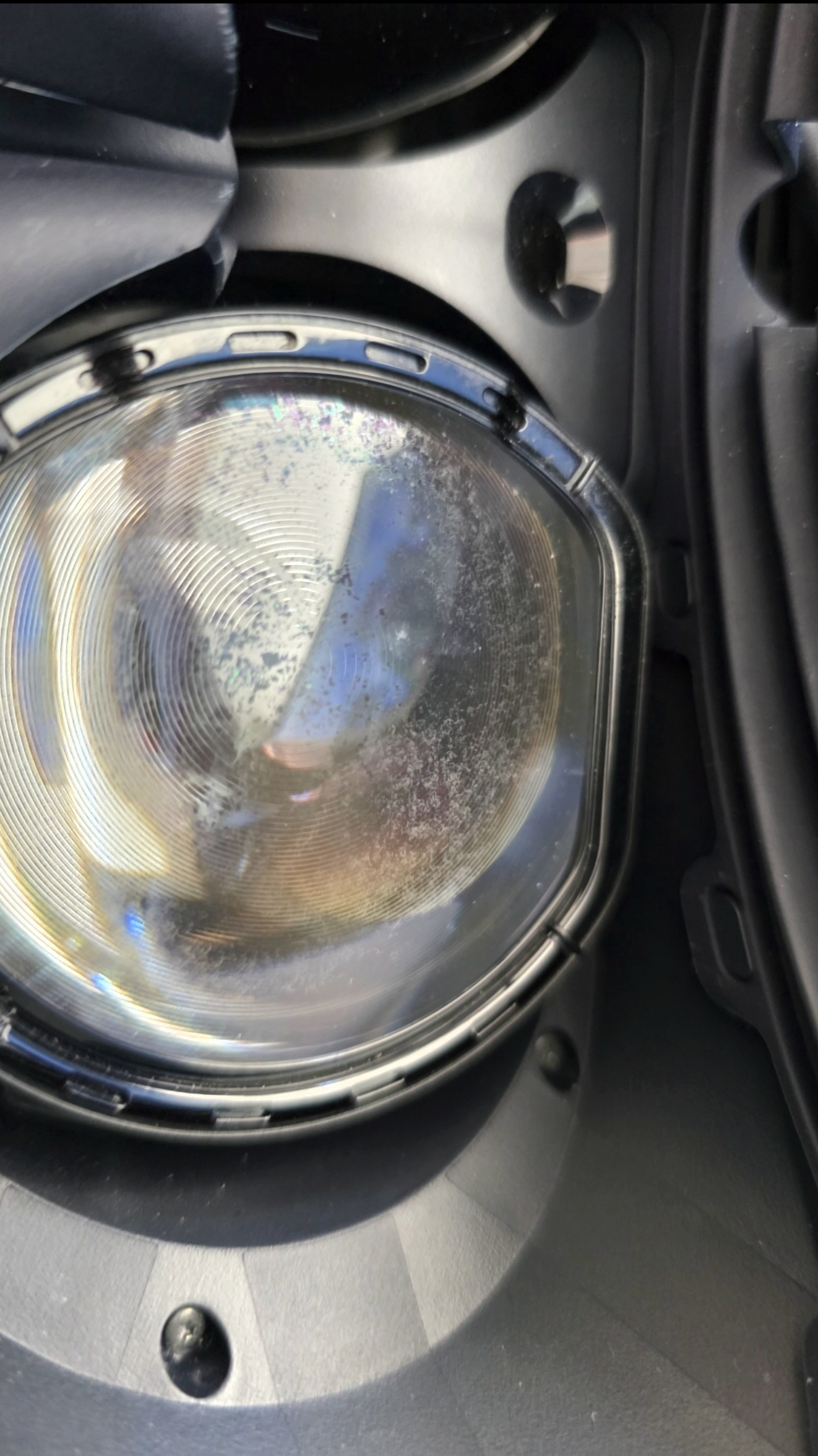
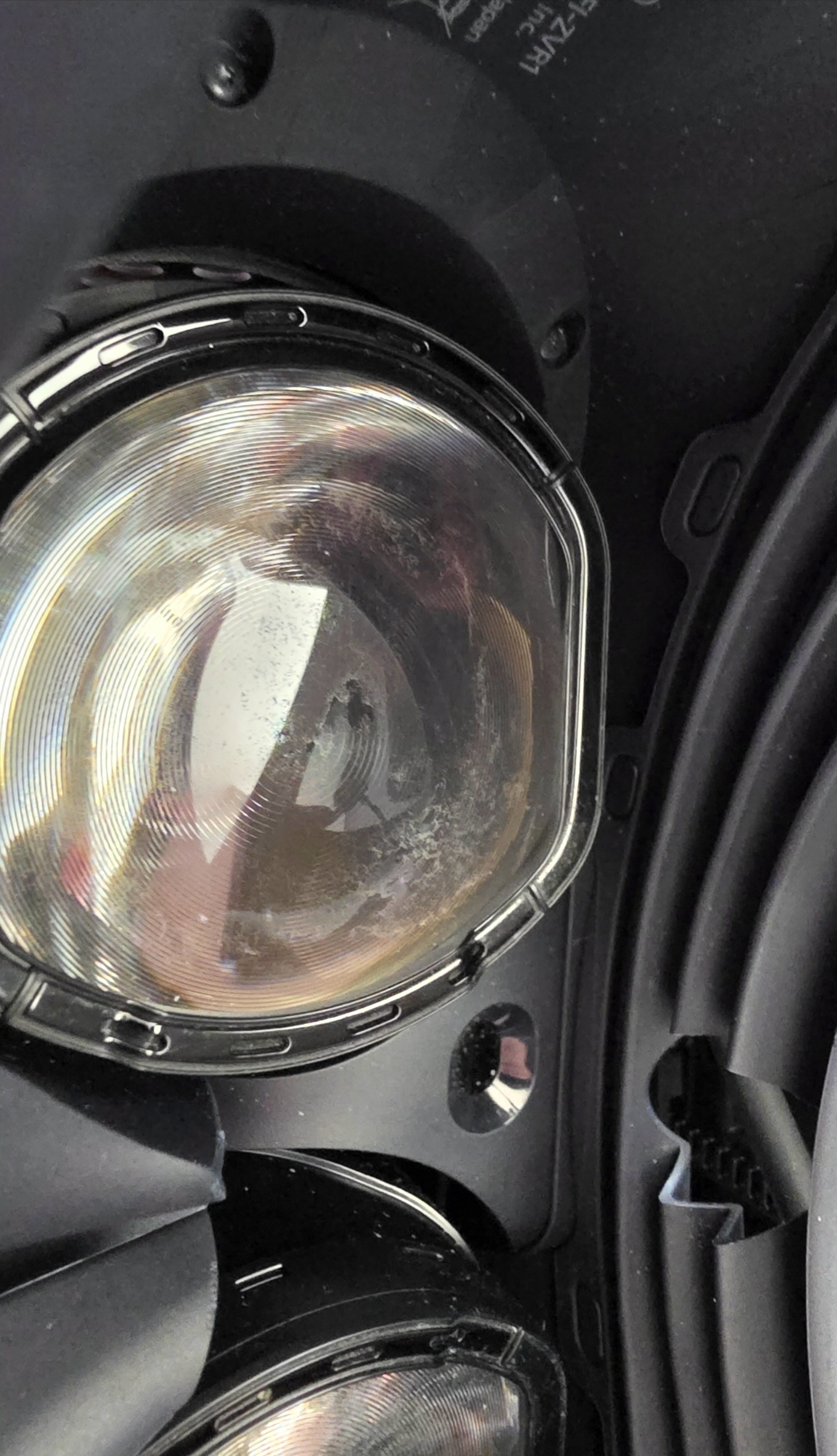
Fresnel lenses: outdated feeling vs pancake
• Fresnel lenses are the biggest "I want an upgrade" point.
• Drawbacks:
• Edge blur + chromatic aberration
• Not true edge-to-edge clarity
• Framed as a trade-off tied to OLED/price constraints.
• Despite that: they still call the visuals stunning overall.
Eye tracking: major value-add (PS5 + PC)
• Built-in eye tracking via headset cameras.
• Uses:
• Gameplay mechanics (example: Synapse telekinesis with eye targeting)
• Performance boosts (examples: GT7, No Man's Sky, Resident Evil) via foveated rendering-like benefits
• PC angle: with drivers unlocked, PSVR2 becomes the cheapest eye-tracked PCVR headset.
• Works best with NVIDIA
• AMD support is limited
• On base PS5: benefits apply if devs implement eye-tracking features.
Haptics + adaptive triggers: still top-tier
• Calls PSVR2 best-in-class for haptics/adaptives.
• Controller haptics are detailed + headset haptics too.
• Example: feel head impacts in shooters (Pavlov).
• Example: feel rain tapping in games.
• Downside: Sense controller battery ~ 4–5 hours depending on intensity.
• Adaptive triggers add resistance per weapon — many PSVR2 shooters use this.
Extra immersion: bHaptics suit support (optional, expensive)
• Mentions bHaptics suits: costly (about 2x PSVR2 price).
• Native support exists for some PSVR2 games (less than Quest/PC).
• Even audio-to-haptics can be cool (e.g., GT engine rev feedback).
Sense controllers: feature-rich but bulky + annoying to replace
• They like the features, but say the controllers feel big vs newer VR controllers.
• The outer tracking "orb" makes them easy to knock into things.
• Buying replacements is awkward: says you can only buy them separately via Apple Store now, stock varies.
Pricing: frequent deep discounts
• PSVR2 goes on sale often (Days of Play / Black Friday).
• They claim discounts can be huge (enough that it sold out in Europe last Black Friday).
• If you also want PCVR eye tracking, sales make PSVR2 an especially strong value.
Comfort: decent stock, better with mods
• Stock comfort is "pretty good," but:
• PSVR1 felt softer/more comfortable out of the box
• PSVR2 is heavier (~560g)
• Recommends comfort mods:
• Studioform comfort mod
• Globular Cluster
• Suggests they're not too expensive and worth it if you want a snug fit.
Accessories: actually healthy ecosystem now
• Says PSVR2 has lots of accessories now (more than PSVR1):
• Comfort mods
• Prescription / protective lenses (VR Rock mentioned)
• Gun stocks / recoil accessories
• HOTAS for flight sims
• Steering wheels for GT7, etc.
• Two "musts" they push hardest:
• Lens inserts (even non-prescription, for protection/peace of mind)
• Charging dock (biggest QoL upgrade; always-ready controllers)
Wired headset: pro or con depending on your taste
• They personally like wired: no headset battery anxiety.
• Cable is described as light/not too thick (compared to chunkier PCVR cables).
• But: if you're coming from wireless VR, tether can feel restrictive.
• If you mainly play seated sims (GT7 / flight sims), tether can be a feature (no mid-session battery ruining races).
UI / Home screen: feels lazy and outdated
• Biggest "non-hardware" complaint: PSVR2 home experience is just a floating flat screen.
• They wish Sony had a real interactive VR home environment like:
• SteamVR home
• Quest home
• They call it a missed "first impression wow" moment — but you'll probably ignore it once you're used to it.
Flat-screen gaming / movies: not ideal on PSVR2
• Because Fresnel lenses lack edge-to-edge clarity, flat-screen viewing can be annoying.
• Colors are great, but lens clarity makes movie viewing less appealing.
• Entertainment apps are lacking vs Quest/PC.
Games library: bigger than people think, but Sony support is weak
• They claim their PSVR2 library is approaching ~200 games.
• Big point: Sony barely supports PSVR2 anymore compared to what it "should."
• Sony-backed "big" titles mentioned across the lifespan:
• Launch-era heavy hitters: GT7, RE Village, RE4, No Man's Sky, Horizon Call of the Mountain
• Hitman (they imply Sony paid for timed exclusivity before PC)
• Upcoming/this year highlight: Microsoft Flight Simulator (claims Sony approached Asobo)
• But: indie + third-party support is the real backbone and "overlooked."
Indie/third-party gems list (their examples)
• Recent/featured examples:
• Aces of Thunder, Phasmophobia, The Midnight Walk, Alien Rogue Incursion, Metro Awakening
• Kayak VR Mirage, Zero Caliber, Arken Age, Waltz of the Wizard, Maestro (hand tracking)
• Behemoth, Red Matter 2, Madison, Legendary Tales, Into the Radius, The Light Brigade, Vertigo 2, Underdogs, etc.
• Takeaway: there's "a ton to play" across genres, and more coming.
Games sales: frequent, decent discounts
• Says PSVR2 game sales are basically constant.
• Discounts aren't as deep as Steam sometimes, but still worth tracking.
Entertainment apps: big missing piece
• Notes missing native apps/features compared to Quest/Steam:
• No native YouTube VR app
• No easy virtual cinema environments
• No native 360° YouTube video support
• Mentions RAD TV as a workaround for 360 video, but calls it roundabout.
• Bottom line: PSVR2 is primarily a gaming-first VR device, not a media consumption headset.
PCVR: PSVR2 becomes a strong hybrid headset (with one big requirement)
• PC adapter launched around Aug/Sep 2024 (their recollection).
• Biggest PC requirement: good Bluetooth
• Bad Bluetooth = tracking drops
• Good Bluetooth = "flawless"
• Strengths on PC:
• DisplayPort/USB-C wired = clean, non-compressed visuals + low latency
• Steam PSVR2 app is "perfectly serviceable" and setup is easy
• Eye-tracking drivers unlocked = major performance upside (especially on NVIDIA)
• They call it a great "daily driver" across both PC + PS5.
Final verdict
• They say PSVR2 has "aged like wine" and still recommend it.
• Best for: people who want great OLED colors, strong haptics, solid library, and a hybrid PS5 + PCVR setup.
• Main downsides: reprojection in some games, Fresnel lens clarity, weak Sony support, flat UI, and limited entertainment apps.