
-
Hey Guest. Check out your NeoGAF Wrapped 2025 results here!
You are using an out of date browser. It may not display this or other websites correctly.
You should upgrade or use an alternative browser.
You should upgrade or use an alternative browser.
Code Vein 2 has been Censored and uses translation for "Modern Audiences"
- Thread starter Gonzito
- Start date

The Cockatrice
I'm retarded?
Bandai Namco is compromised
They have been for quite some time now, but One Punch Man s3 pretty much put the final nail. Fuck em.


The Cockatrice
I'm retarded?
Lol who the fuck cares. These changes are insignificant.
Japanese words: "i love eating ass"
DEI Translation: "i am sexist"

Punished Miku
Banned
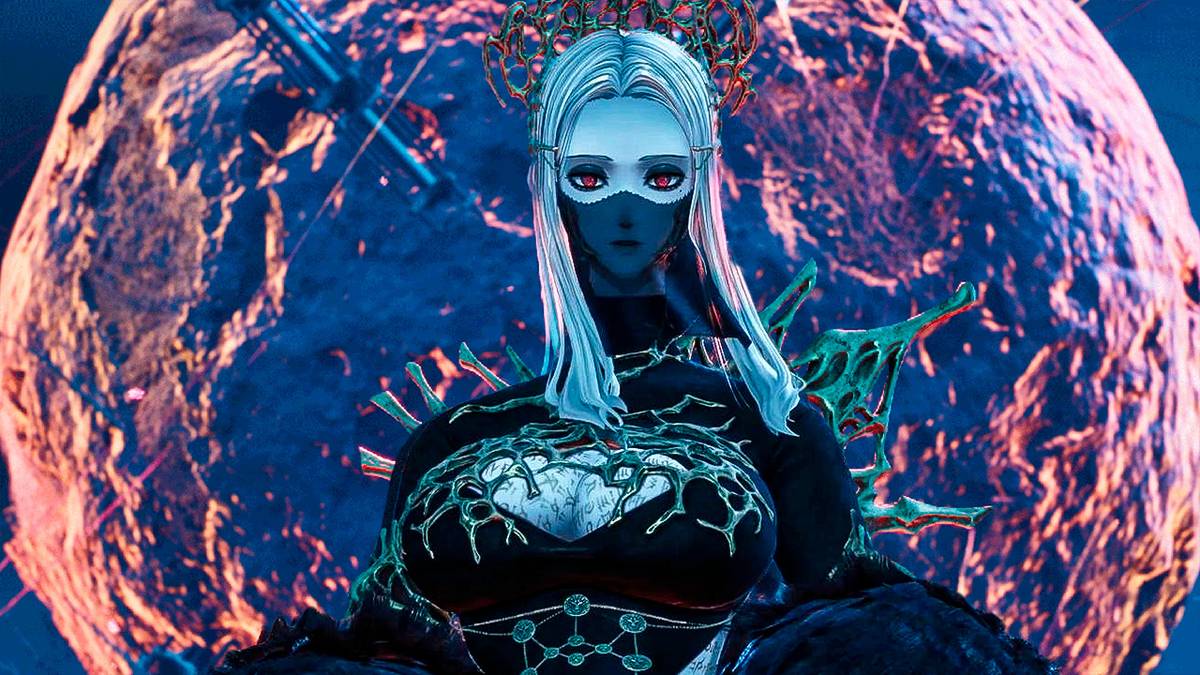
They even stuck a covid mask on her. The propaganda never ends.

Aldynes
Member
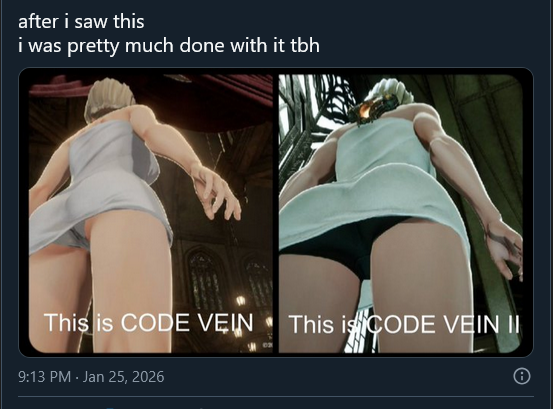
Again with that bullshit, companies need to understand that as good as the game gets, at release the majority of discussions will be about it's censorship and compromised state, rather than talking about the game's merits, CAPCOM did that with Onimusha 2 recently all the talk was about how they added more clothing to female and guess what happened.
It's pleases nobody in the end.
It's pleases nobody in the end.

diffusionx
Gold Member
I know translation is always an inexact and imperfect art but at some point the people who staffed up these departments became insane leftists who saw translation as a way to push their message, and even a decade+ on most companies seem to be fine with it. If they weren't, it is easier than ever to check their work, run it through ChatGPT and ask for times wheree it deviates from the main script for a modern American political message, they just don't care or are fine with it.
Last edited:

Lambogenie
Banned
It might seem insignificant, the cloth censoring, and I am for it where local culture (usually, heavily religious lead) is more stringent, but the secular western world? Nah, man, it's like I cant handle it and you're slowly making that choice for me. Age ratings exist for a reason so use them (but I also get publishers that do it to reach a specific rating, too).
If it's acrivisit lead though, get lost, please. You mad people.
If it's acrivisit lead though, get lost, please. You mad people.

forsakkenSoul
Gold Member
Bandai Namco is compromised
"There is a fine line between justice and bigotry" lol


Zathalus
Gold Member
These days I question everything from social media, especially when I have to hunt down the trailers myself. Let's ask ChatGPT!
The part you're asking about is:
君はきっと正義が狂器に変わる前に止めることができる人だと思うから。
Word-by-word:
正義 (seigi) – justice
が – (subject marker)
狂器 (kyōki) – literally "madness," "insanity," or "fanaticism*"
に変わる前に (ni kawaru mae ni) – before it turns into
止めることができる人 (tomeru koto ga dekiru hito) – someone who can stop it
だと思うから – because I think so
A literal translation is:
"Because I believe you're someone who can stop justice before it turns into madness."
So why did the official English use "bigotry" instead of "madness"?
狂器 (kyōki) is metaphorical here
In Japanese media, 正義が狂気に変わる is a common phrase meaning:
justice becoming fanaticism
righteousness turning zealous
moral conviction becoming dangerous/extremist
It often implies intolerance, judgment, or self-righteous cruelty, more than literal mental insanity. In other words, "madness" is literal, but the intended meaning is closer to:
zealotry
extremism
ideological intolerance
persecuting others in the name of justice
Which overlaps strongly with the English concept of bigotry. English localization aims for theme, not strict literalness
The English script chooses words that:
fit the character's personality
fit the setting
sound natural in English dramatic dialogue
deliver the intended narrative theme
If the character is warning about "justice turning into persecution," "bigotry" conveys that moral corruption better than "madness," which sounds like mental breakdown.
"Madness" carries different connotations in English
In English, "madness" tends to sound like:
losing sanity
chaotic behavior
mental instability
Japanese "狂気 (kyōki)" in moral contexts is closer to:
fanatical extremism
losing sight of true justice
becoming cruel while thinking you're righteous
So the localization team likely selected "bigotry" to express:
justice that becomes intolerance or oppression.
Which matches the narrative tone.
Well, that makes all rather good sense, doesn't it? I mean, we can all agree that literal translations between languages can often sound confusing, especially something like Japanese, and especially without cultural connotation. But naturally, nuance is dead these days, so let's get those outrage YouTube videos going from the regular crowd!
The panty stuff is dumb though, agreed on that.
The part you're asking about is:
君はきっと正義が狂器に変わる前に止めることができる人だと思うから。
Word-by-word:
正義 (seigi) – justice
が – (subject marker)
狂器 (kyōki) – literally "madness," "insanity," or "fanaticism*"
に変わる前に (ni kawaru mae ni) – before it turns into
止めることができる人 (tomeru koto ga dekiru hito) – someone who can stop it
だと思うから – because I think so
A literal translation is:
"Because I believe you're someone who can stop justice before it turns into madness."
So why did the official English use "bigotry" instead of "madness"?
狂器 (kyōki) is metaphorical here
In Japanese media, 正義が狂気に変わる is a common phrase meaning:
justice becoming fanaticism
righteousness turning zealous
moral conviction becoming dangerous/extremist
It often implies intolerance, judgment, or self-righteous cruelty, more than literal mental insanity. In other words, "madness" is literal, but the intended meaning is closer to:
zealotry
extremism
ideological intolerance
persecuting others in the name of justice
Which overlaps strongly with the English concept of bigotry. English localization aims for theme, not strict literalness
The English script chooses words that:
fit the character's personality
fit the setting
sound natural in English dramatic dialogue
deliver the intended narrative theme
If the character is warning about "justice turning into persecution," "bigotry" conveys that moral corruption better than "madness," which sounds like mental breakdown.
"Madness" carries different connotations in English
In English, "madness" tends to sound like:
losing sanity
chaotic behavior
mental instability
Japanese "狂気 (kyōki)" in moral contexts is closer to:
fanatical extremism
losing sight of true justice
becoming cruel while thinking you're righteous
So the localization team likely selected "bigotry" to express:
justice that becomes intolerance or oppression.
Which matches the narrative tone.
Well, that makes all rather good sense, doesn't it? I mean, we can all agree that literal translations between languages can often sound confusing, especially something like Japanese, and especially without cultural connotation. But naturally, nuance is dead these days, so let's get those outrage YouTube videos going from the regular crowd!
The panty stuff is dumb though, agreed on that.


HRK69
Member
Lol, insignificant… until your favorite scene gets rewritten to make someone feel more comfortableLol who the fuck cares. These changes are insignificant.

adamsapple
Or is it just one of Phil's balls in my throat?
Anyone who says shit like this was never really interested in the game in the first place, lol.


Gonzito
Gold Member
These days I question everything from social media, especially when I have to hunt down the trailers myself. Let's ask ChatGPT!
The part you're asking about is:
君はきっと正義が狂器に変わる前に止めることができる人だと思うから。
Word-by-word:
正義 (seigi) – justice
が – (subject marker)
狂器 (kyōki) – literally "madness," "insanity," or "fanaticism*"
に変わる前に (ni kawaru mae ni) – before it turns into
止めることができる人 (tomeru koto ga dekiru hito) – someone who can stop it
だと思うから – because I think so
A literal translation is:
"Because I believe you're someone who can stop justice before it turns into madness."
So why did the official English use "bigotry" instead of "madness"?
狂器 (kyōki) is metaphorical here
In Japanese media, 正義が狂気に変わる is a common phrase meaning:
justice becoming fanaticism
righteousness turning zealous
moral conviction becoming dangerous/extremist
It often implies intolerance, judgment, or self-righteous cruelty, more than literal mental insanity. In other words, "madness" is literal, but the intended meaning is closer to:
zealotry
extremism
ideological intolerance
persecuting others in the name of justice
Which overlaps strongly with the English concept of bigotry. English localization aims for theme, not strict literalness
The English script chooses words that:
fit the character's personality
fit the setting
sound natural in English dramatic dialogue
deliver the intended narrative theme
If the character is warning about "justice turning into persecution," "bigotry" conveys that moral corruption better than "madness," which sounds like mental breakdown.
"Madness" carries different connotations in English
In English, "madness" tends to sound like:
losing sanity
chaotic behavior
mental instability
Japanese "狂気 (kyōki)" in moral contexts is closer to:
fanatical extremism
losing sight of true justice
becoming cruel while thinking you're righteous
So the localization team likely selected "bigotry" to express:
justice that becomes intolerance or oppression.
Which matches the narrative tone.
Well, that makes all rather good sense, doesn't it? I mean, we can all agree that literal translations between languages can often sound confusing, especially something like Japanese, and especially without cultural connotation. But naturally, nuance is dead these days, so let's get those outrage YouTube videos going from the regular crowd!
The panty stuff is dumb though, agreed on that.


cireza
Member
OP is full of favorite scenes for sure lol.Lol, insignificant… until your favorite scene gets rewritten to make someone feel more comfortable


Bojji
Gold Member
Anyone who says shit like this was never really interested in the game in the first place, lol.
Anime erotic was the main selling point of the first game. I guess they fucked their sales with this move.


NeverYouMind
Member
There is a whole legion of gooners that buy into these franchises and make up a sizable part of their market. Dead or Alive 6 should be a cautionary tale.
Anyone who says shit like this was never really interested in the game in the first place, lol.
adamsapple
Or is it just one of Phil's balls in my throat?
These days I question everything from social media, especially when I have to hunt down the trailers myself. Let's ask ChatGPT!
The part you're asking about is:
君はきっと正義が狂器に変わる前に止めることができる人だと思うから。
Word-by-word:
正義 (seigi) – justice
が – (subject marker)
狂器 (kyōki) – literally "madness," "insanity," or "fanaticism*"
に変わる前に (ni kawaru mae ni) – before it turns into
止めることができる人 (tomeru koto ga dekiru hito) – someone who can stop it
だと思うから – because I think so
A literal translation is:
"Because I believe you're someone who can stop justice before it turns into madness."
So why did the official English use "bigotry" instead of "madness"?
狂器 (kyōki) is metaphorical here
In Japanese media, 正義が狂気に変わる is a common phrase meaning:
justice becoming fanaticism
righteousness turning zealous
moral conviction becoming dangerous/extremist
It often implies intolerance, judgment, or self-righteous cruelty, more than literal mental insanity. In other words, "madness" is literal, but the intended meaning is closer to:
zealotry
extremism
ideological intolerance
persecuting others in the name of justice
Which overlaps strongly with the English concept of bigotry. English localization aims for theme, not strict literalness
The English script chooses words that:
fit the character's personality
fit the setting
sound natural in English dramatic dialogue
deliver the intended narrative theme
If the character is warning about "justice turning into persecution," "bigotry" conveys that moral corruption better than "madness," which sounds like mental breakdown.
"Madness" carries different connotations in English
In English, "madness" tends to sound like:
losing sanity
chaotic behavior
mental instability
Japanese "狂気 (kyōki)" in moral contexts is closer to:
fanatical extremism
losing sight of true justice
becoming cruel while thinking you're righteous
So the localization team likely selected "bigotry" to express:
justice that becomes intolerance or oppression.
Which matches the narrative tone.
Well, that makes all rather good sense, doesn't it? I mean, we can all agree that literal translations between languages can often sound confusing, especially something like Japanese, and especially without cultural connotation. But naturally, nuance is dead these days, so let's get those outrage YouTube videos going from the regular crowd!
The panty stuff is dumb though, agreed on that.
You've gone about it to an extreme extent here, lol, but yes I generally agree that a literal translation is not always the best. Sentences have to be scripted how they make sense to a native language, otherwise you get issues like 'this guy are sick'. As long as the core intent of the script remains the same, localization flourishes are perfectly fine.
HRK69
Member
Deflection noted.OP is full of favorite scenes for sure lol.
You're turning a general principle into a personal jab because it's easier than addressing it
Don't pretend you addressed the point by mocking a position I didn't even take.
Punished Miku
Banned
There is a fine line between justice and kyoki*These days I question everything from social media, especially when I have to hunt down the trailers myself. Let's ask ChatGPT!
The part you're asking about is:
君はきっと正義が狂器に変わる前に止めることができる人だと思うから。
Word-by-word:
正義 (seigi) – justice
が – (subject marker)
狂器 (kyōki) – literally "madness," "insanity," or "fanaticism*"
に変わる前に (ni kawaru mae ni) – before it turns into
止めることができる人 (tomeru koto ga dekiru hito) – someone who can stop it
だと思うから – because I think so
A literal translation is:
"Because I believe you're someone who can stop justice before it turns into madness."
So why did the official English use "bigotry" instead of "madness"?
狂器 (kyōki) is metaphorical here
In Japanese media, 正義が狂気に変わる is a common phrase meaning:
justice becoming fanaticism
righteousness turning zealous
moral conviction becoming dangerous/extremist
It often implies intolerance, judgment, or self-righteous cruelty, more than literal mental insanity. In other words, "madness" is literal, but the intended meaning is closer to:
zealotry
extremism
ideological intolerance
persecuting others in the name of justice
Which overlaps strongly with the English concept of bigotry. English localization aims for theme, not strict literalness
The English script chooses words that:
fit the character's personality
fit the setting
sound natural in English dramatic dialogue
deliver the intended narrative theme
If the character is warning about "justice turning into persecution," "bigotry" conveys that moral corruption better than "madness," which sounds like mental breakdown.
"Madness" carries different connotations in English
In English, "madness" tends to sound like:
losing sanity
chaotic behavior
mental instability
Japanese "狂気 (kyōki)" in moral contexts is closer to:
fanatical extremism
losing sight of true justice
becoming cruel while thinking you're righteous
So the localization team likely selected "bigotry" to express:
justice that becomes intolerance or oppression.
Which matches the narrative tone.
Well, that makes all rather good sense, doesn't it? I mean, we can all agree that literal translations between languages can often sound confusing, especially something like Japanese, and especially without cultural connotation. But naturally, nuance is dead these days, so let's get those outrage YouTube videos going from the regular crowd!
The panty stuff is dumb though, agreed on that.
translator's note: kyoki means madness, insanity or fanaticism
Last edited:

I wasn't selling any
Member
Japanese games have been a safe harbor for quite some time, and I've always supported those game developers for that exact reason. It looks like it's about to end. One of the criteria that I consequently follow, is to never purchase a game that has any kind of DEI garbage in it. It is an absolute MUST for everyone who loves videogames to make as much noise about this kind of censorship as possible, everywhere where possible. It absolutely must hurt the developers and/or publishers, so they never do that again.
Zathalus
Gold Member
Wasn't that extreme, just found the trailers and copy pasted each transcript into ChatGPT and then asked what the fuck bro?You've gone about it to an extreme extent here, lol, but yes I generally agree that a literal translation is not always the best. Sentences have to be scripted how they make sense to a native language, otherwise you get issues like 'this guy are sick'. As long as the core intent of the script remains the same, localization flourishes are perfectly fine.
Seemed straight forward enough. Unless Bandai Namco got to them first.


Solarstrike
Member

Last edited:



Angry_Megalodon
Member
The idea of woke localizers bullying Asian creators is bad enough to not buy the game, regardless of how little those changes are. This is a root cause problem and it's much bigger than the end results. Fuck Bandai Namco and the pussy creators who don't revolt at their work being vandalized by activists. I won't pay a single euro for this crap.

Saber
Newd Member
Is there a lore reason why Neil Druckmann did the Code Vein 2 translation?
He was reading the internet and saw people saying the word "fun". Then he got triggered.
cireza
Member
Then, can you provide some examples of "favorite scenes" that were altered as you suggested ?Deflection noted.
You're turning a general principle into a personal jab because it's easier than addressing it
Don't pretend you addressed the point by mocking a position I didn't even take.
Bojji
Gold Member
I will translate it to bandai namco here as anime and dark souls genre fanatic aka their target audience, my wallet says:

It was a dark souls clone with companion mechanics and anime boobs. Solid game overall but it's obvious what they were doing with character designs like that lol


DeepEnigma
Gold Member
So that's what's become of the Maiden in Black ever since she made her way to Hollywood in hopes to have a starlet career.It was a dark souls clone with companion mechanics and anime boobs. Solid game overall but it's obvious what they were doing with character designs like that lol

adamsapple
Or is it just one of Phil's balls in my throat?
It was a dark souls clone with companion mechanics and anime boobs. Solid game overall but it's obvious what they were doing with character designs like that lol
+ 10 armor.

Danny Dudekisser
I paid good money for this Dynex!
This is exhausting.
I just wanted my slutty dark souls, you pack of retards.
I just wanted my slutty dark souls, you pack of retards.
Last edited:

HRK69
Member
"scenes" was just an illustrative example. Could be a scene, a line of dialogue, a character, literally anything.Then, can you provide some examples of "favorite scenes" that were altered as you suggested ?
For me it's about who gets to decide what's acceptable in someone else's content

Emmy Ator Best
Member
Blackrock always wins baby, Blackrock always wins


Clear
CliffyB's Cock Holster
Dunno about the context but I kinda prefer the fine-line between justice and bigotry over justice and madness. As the latter doesn't really make sense as definitionally justice aligns with order and madness is chaos aligned. Less of a fine line than polar opposites!
On the other hand bigotry, which I'm guessing is against vampires in the context of Code Vein, seems at least logical.
And for the record there is a fine line between (social) justice and bigotry! Because we see it pretty much constantly from wokists who used the whole "minority support" angle to justify legislating against groups they deem the majority.
On the other hand bigotry, which I'm guessing is against vampires in the context of Code Vein, seems at least logical.
And for the record there is a fine line between (social) justice and bigotry! Because we see it pretty much constantly from wokists who used the whole "minority support" angle to justify legislating against groups they deem the majority.


Plague Doctor
Member
I don't know why they do this. There's nothing good that comes from it.
Easiest answer. Hubris and narcissism.
There is someone in a place of power and a echo chamber around them that convinced people above them that this would improve sales based on their own specific feels.
It does not. It would be far easier to keep things that work and not rock the boat.
They will defend this decision or downplay it if this blows up in their faces.
It takes failure after failure before things become dire and the culture is flushed out of the pubs and studios.
Last edited:
Gonzito
Gold Member
you've heard the phrase give them an inches they'll take a mile rightLol who the fuck cares. These changes are insignificant.
and also reeeeeeeeeeeeeeeeeeeeeeeeeeeeeeeeeeeeeeeeeeeeeeeeeeeeeeeeeeeeeeeeeeeeeeeeeeeeeeeeeeeeeeeeeeeeeeee

kpopSuperstar
Member
No one in the western world would slap bigotry on there without trying to make a point.These days I question everything from social media, especially when I have to hunt down the trailers myself. Let's ask ChatGPT!
The part you're asking about is:
君はきっと正義が狂器に変わる前に止めることができる人だと思うから。
Word-by-word:
正義 (seigi) – justice
が – (subject marker)
狂器 (kyōki) – literally "madness," "insanity," or "fanaticism*"
に変わる前に (ni kawaru mae ni) – before it turns into
止めることができる人 (tomeru koto ga dekiru hito) – someone who can stop it
だと思うから – because I think so
A literal translation is:
"Because I believe you're someone who can stop justice before it turns into madness."
So why did the official English use "bigotry" instead of "madness"?
狂器 (kyōki) is metaphorical here
In Japanese media, 正義が狂気に変わる is a common phrase meaning:
justice becoming fanaticism
righteousness turning zealous
moral conviction becoming dangerous/extremist
It often implies intolerance, judgment, or self-righteous cruelty, more than literal mental insanity. In other words, "madness" is literal, but the intended meaning is closer to:
zealotry
extremism
ideological intolerance
persecuting others in the name of justice
Which overlaps strongly with the English concept of bigotry. English localization aims for theme, not strict literalness
The English script chooses words that:
fit the character's personality
fit the setting
sound natural in English dramatic dialogue
deliver the intended narrative theme
If the character is warning about "justice turning into persecution," "bigotry" conveys that moral corruption better than "madness," which sounds like mental breakdown.
"Madness" carries different connotations in English
In English, "madness" tends to sound like:
losing sanity
chaotic behavior
mental instability
Japanese "狂気 (kyōki)" in moral contexts is closer to:
fanatical extremism
losing sight of true justice
becoming cruel while thinking you're righteous
So the localization team likely selected "bigotry" to express:
justice that becomes intolerance or oppression.
Which matches the narrative tone.
Well, that makes all rather good sense, doesn't it? I mean, we can all agree that literal translations between languages can often sound confusing, especially something like Japanese, and especially without cultural connotation. But naturally, nuance is dead these days, so let's get those outrage YouTube videos going from the regular crowd!
The panty stuff is dumb though, agreed on that.