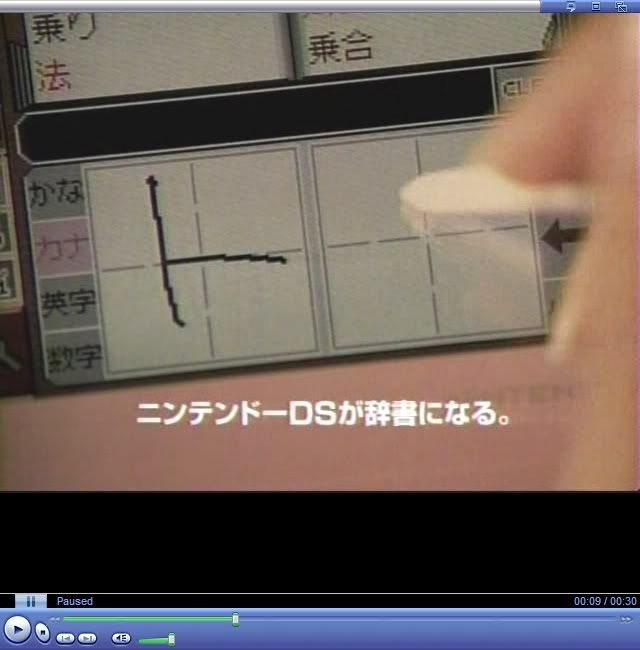
I used to own this years ago, IIRC one of only two Japanese dictionaries with stylus-based input at the time:
Being able to draw kanji is really handy if you:
1) Know less than 1000 kanji. After you get to that point, the kanji you don't know should be few enough that looking them up isn't such a pain, or you can try and wing it by guessing based on kanji you already know.
2) Know less than a couple dozen radicals. There's over 200 radicals (
list,
meanings), but if you know the names of even a handful you can narrow down most kanji searches far enough that searching isn't a pain. If you don't, then you're stuck with stroke order, which is by far my least favorite way of searching for kanji.
3) Can't make out a character. When text is small, blurry or in a strange font and you can't quite make out what it's supposed to be, you can copy it's shape roughly and see if any of the matches look right. This is pretty useful when reading text on a TV screen.
I outgrew that dictionary after about a year, but during that time it helped me out immensely. I didn't know the names of any radicals, and I screwed up the stroke count of complex kanji all the time, so being able to just draw them was a real time saver. I didn't have to have the right stroke order, or even stroke count; usually my crude approximations were close enough that I could pick the appropriate character out of the possible matches. As helpful as it was for kanji, as a dictionary it was complete crap. At the time, I paid 9800Y for it, which was a deal (most places sold it for 12,800Y). Luckily for today's students, Rakubiki Jiten looks better in every way, and is half the price! To me, it looks like a great choice as an introductory J<->E dictionary.