IbizaPocholo
NeoGAFs Kent Brockman
Obsidian Entertainment is pivoting to faster development cycles of 3-4 years per game by reusing technology, outsourcing, spacing releases, and balancing big and small projects to meet Microsoft's profitability pressures amid a challenging industry landscape.
Summary
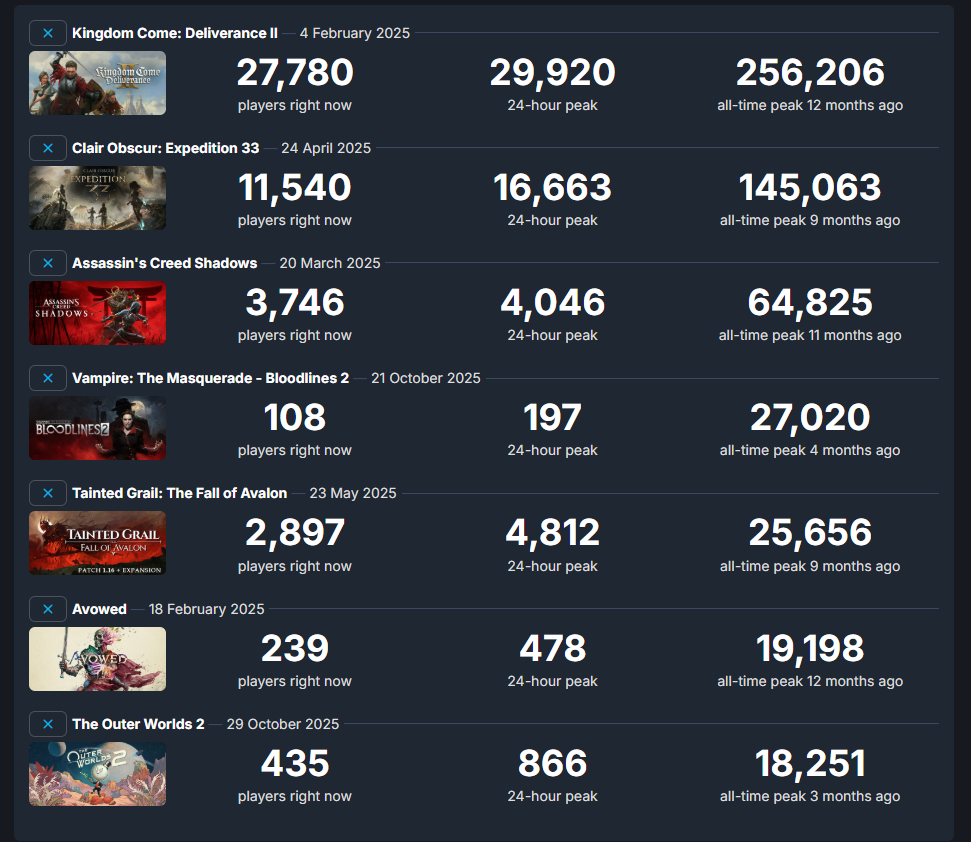
- Obsidian Entertainment, a Microsoft-owned Xbox studio in Irvine, California, released three games in 2025—Avowed (trippy fantasy RPG), Grounded 2 (survival game), and The Outer Worlds 2 (dystopian sci-fi RPG)—marking a prolific "Year of Obsidian," but Avowed and The Outer Worlds 2 failed to meet Microsoft's sales forecasts despite Grounded 2 being a hit.
- CEO Feargus Urquhart holds weekly breakfast meetings with his management team to discuss the studio's future, reflecting on underperforming games as learning opportunities rather than disasters, amid a shaky games market and turmoil in Microsoft's Xbox division pushing for higher profit margins.
- Development timelines for Avowed and The Outer Worlds 2 exceeded six years each, inflating costs; Urquhart aims to reduce this to three or four years per title by reusing technology across projects, avoiding rebuilding systems like animation or inventory screens every time, and embracing outsourcing.
- Grounded 2 was developed more efficiently by outsourcing to Eidos Montreal, with Obsidian senior staff like co-founder Chris Parker overseeing remotely, enabling quicker pivots such as cutting shared multiplayer "buggies" functionality to save months of development.
- The studio, with about 280 employees, was stretched thin supporting three simultaneous releases, leading to burnout; future plans include spacing releases to better manage resources, as noted by design director Josh Sawyer.
- Obsidian's history includes founding in 2003 after Interplay's near-bankruptcy, surviving on contracts for Star Wars, Fallout, and South Park games, near-collapse in 2012 after Microsoft's Stormlands cancellation (salvaged via Kickstarter), and acquisition by Microsoft in 2018.
- Avowed originated as an ambitious Skyrim-Destiny hybrid pitch during acquisition talks but lost multiplayer after two years and changed directors, extending development to nearly seven years.
- The Outer Worlds (2019) was a surprise hit selling 5 million copies; its sequel faced pandemic delays and tech challenges, with director Brandon Adler noting dislike for long dev cycles of five to seven years.
- Industry context: Game development costs have risen from seven figures in the 1990s to nine figures today, leading to widespread layoffs (tens of thousands since 2023, including at Xbox), studio closures, and project cancellations; Xbox faces flat revenue growth, declining console sales, and shift to AI priorities post-$69 billion Activision Blizzard acquisition.
- Microsoft's Xbox imposes a 30% profit-margin target on studios; Obsidian benefits from Game Pass subscriptions, critical acclaim, and long-tail RPG sales that boost hardware, as stated by Xbox GM Mary McGuane.
- Strategies for sustainability: Juggle multiple projects (big and small, new games plus DLC for Outer Worlds 2 and Grounded 2), retain staff, avoid headcount bloat, pursue moderate successes over trends; no third Outer Worlds planned but continuing Avowed universe.
- Leadership transition: Urquhart grooming lieutenants Justin Britch (33) and Marcus Morgan (36), who presented "Obsidian's 100-Year Plan" at D.I.C.E. Summit emphasizing consistent output for breakout hits.
- Lessons from 2025 releases: Consider adding features like player crimes/arrests in Avowed or stronger companions in Outer Worlds 2 for engagement; Urquhart emphasizes making games people want to play and buy.
- Past efficiency example: Fallout: New Vegas (2010) cost $8 million and took under two years by reusing Fallout 3 tech.
- Pentiment (2022) was a low-cost, critically acclaimed niche success, showing value in smaller projects; Xbox praised for funding creative range.
Last edited: