
-
Hey Guest. Check out your NeoGAF Wrapped 2025 results here!
You are using an out of date browser. It may not display this or other websites correctly.
You should upgrade or use an alternative browser.
You should upgrade or use an alternative browser.
Tornado in Florida (Pictures)
- Thread starter Suikoguy
- Start date
- Status
- Not open for further replies.
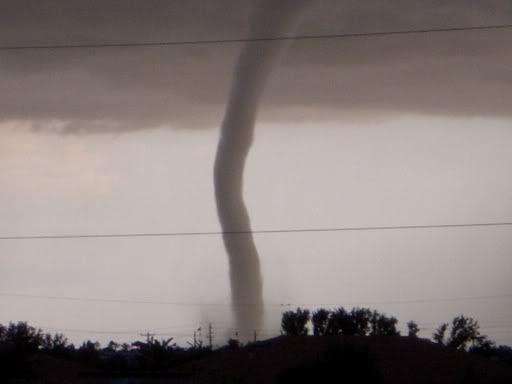
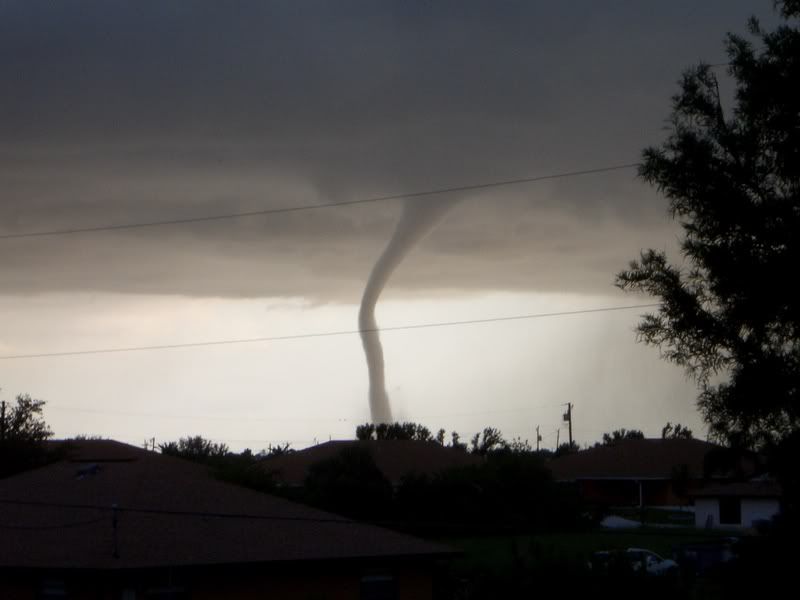
http://datalib.library.ualberta.ca/tornado/
I wasn't actually where the tornado touched down, but I can remember seeing it from my bedroom window.
I wasn't actually where the tornado touched down, but I can remember seeing it from my bedroom window.
CabbageRed
Member
Are those pic taken by you? If so, great job and I envy your proximity as I've always wished to witness one. I assume one day I'll have to head up to the great lakes to go water spout hunting.
Suikoguy
I whinny my fervor lowly, for his length is not as great as those of the Hylian war stallions
Taken on top of the roof on my house,
about 40 mins ago.
The tornado pictured touched down in the harbor by Punta Gorda, and then moved onto land. Based on what i've been able to acertain, it did not effect many, if any people. However, its too soon to tell.
Edit:
I did not take the picture, my brother took it.
And another thing, the weather channel needs to speed their warning scroller up, its hillarious when it says "Act Quickly" yet you could read act quickly 6 times while your waiting for the next word.
about 40 mins ago.
The tornado pictured touched down in the harbor by Punta Gorda, and then moved onto land. Based on what i've been able to acertain, it did not effect many, if any people. However, its too soon to tell.
Edit:
I did not take the picture, my brother took it.
And another thing, the weather channel needs to speed their warning scroller up, its hillarious when it says "Act Quickly" yet you could read act quickly 6 times while your waiting for the next word.
CabbageRed said:Are those pic taken by you? If so, great job and I envy your proximity as I've always wished to witness one. I assume one day I'll have to head up to the great lakes to go water spout hunting.
I was outside playing tennis one day when a tornado hit in Ohio and I was scared shitless as I had no experience with tornados up until that point. The tornado was actually really small and probably lasted less than a minute but we all fell to pieces. I don't think it would be that bad if you were inside, but damn it seemed like the world was coming to an end when we saw it. There was one guy we were playing tennis with from Ohio and he was more familiar with them, he did the smart thing and laid down in a ditch near the courts while we all ran like chickens with our heads cut off back to our dorm. :lol
Btw, do tornados usually just appear out of nowhere like the one I saw did? The weather was literally perfect like 3 minutes before it happened.
Those are really cool pictures.
I've never witnessed one up-close and personal, but have been in storms that have produced them. In my area, there are a lot of hills and valleys, so it would be tough to see one very clearly.
Not that I would want to, they scare the shit out of me after one destroyed an elementary school and a wing of my old high school less than 5 miles away from my house at that time. There were people found dead lying in the roads and one incident of a child floating in someones swimming pool.
I've never witnessed one up-close and personal, but have been in storms that have produced them. In my area, there are a lot of hills and valleys, so it would be tough to see one very clearly.
Not that I would want to, they scare the shit out of me after one destroyed an elementary school and a wing of my old high school less than 5 miles away from my house at that time. There were people found dead lying in the roads and one incident of a child floating in someones swimming pool.
Suikoguy
I whinny my fervor lowly, for his length is not as great as those of the Hylian war stallions
bionic77 said:Btw, do tornados usually just appear out of nowhere like the one I saw did? The weather was literally perfect like 3 minutes before it happened.
It had not rained up to that point, it certainly seemed like it, although there was a brief power outage and lots of lightning about 10-15mins prior. I lived through Hurricane Charley (Cat 4), so this actually seemed kinda tame, before that I was afraid to death of them.
Suikoguy said:It had not rained up to that point, it certainly seemed like it, although there was a brief power outage and lots of lightning about 10-15mins prior. I lived through Hurricane Charley (Cat 4), so this actually seemed kinda tame, before that I was afraid to death of them.
Man, I can't see the pics from work, but if I could I would have them record them and use it for the 10:00 newscast. We never get tornado stories in Miami unless the hurricanes bring them about.


Dice
Pokémon Parentage Conspiracy Theorist
Not if you know what tornadic conditions are like, I can always tell just my the look, feel and smell of things.bionic77 said:Btw, do tornados usually just appear out of nowhere like the one I saw did? The weather was literally perfect like 3 minutes before it happened.
Here is how a tornado is formed:
http://www-nmcp.med.navy.mil/newsweath/tornado.asp
Though that isn't really descriptive enough. The rolling pin sort of effect on the air makes a very distinct type of wind, it carries a different sort of energy about it, you can feel the difference in the way pressure and temperature are going, and you can smell the difference probably because of how dirt and water are tossed around in it. Also if clouds are around, sometimes it'll make those look different, like sort of like giant bubble wrap. Huge towering clouds are a sign of the updrafts that activate the tornado.
Now what the site there doesn't really describe well is what happens when the updraft pulls the air up. Obviously before it goes vertical we don't have sideways tornadoes, so we know the power comes from something else. So basically first of all the "rolling" wind effect comes from hot and cold winds blowing in different directions in the upper and lower atmosphere, understanding this makes it obvious why they usually occur in open plains.
When it gets pulled vertically (which usually happens at the front or sometimes back of the storm because of how the wind currents slam into each other) it keeps the rotation and sort of folds in half moving upward, this makes two invisible cylinders that spin as they rotate around each other. The thing is, the opposing wind currents that made the rolling wind is still blowing, so it blows around them and pushes them together and since they are folding up in a curve, this side-blowning air also gets swept upward and concentrates in power.
The two cylinders begin to combine where they fold together up near the cloud, creating the funnel and pulling the cloud down. If the wind conditions are stable enough the two continue to merge and pull the funnel down to the ground. understanding this you can see how ditches and hills would interfere with the whole process. Though sometimes tornadoes form on mountainsides when the wind comes over them just right, but they're usually smaller and unstable.
Dice said:Not if you know what tornadic conditions are like, I can always tell just my the look, feel and smell of things.
Here is how a tornado is formed:
http://www-nmcp.med.navy.mil/newsweath/tornado.asp
Though that isn't really descriptive enough. The rolling pin sort of effect on the air makes a very distinct type of wind, it carries a different sort of energy about it, you can feel the difference in the way pressure and temperature are going, and you can smell the difference probably because of how dirt and water are tossed around in it. Also if clouds are around, sometimes it'll make those look different, like sort of like giant bubble wrap. Huge towering clouds are a sign of the updrafts that activate the tornado.
Now what the site there doesn't really describe well is what happens when the updraft pulls the air up. Obviously before it goes vertical we don't have sideways tornadoes, so we know the power comes from something else. So basically first of all the "rolling" wind effect comes from hot and cold winds blowing in different directions in the upper and lower atmosphere, understanding this makes it obvious why they usually occur in open plains.
When it gets pulled vertically (which usually happens at the front or sometimes back of the storm because of how the wind currents slam into each other) it keeps the rotation and sort of folds in half moving upward, this makes two invisible cylinders that spin as they rotate around each other. The thing is, the opposing wind currents that made the rolling wind is still blowing, so it blows around them and pushes them together and since they are folding up in a curve, this side-blowning air also gets swept upward and concentrates in power.
The two cylinders begin to combine where they fold together up near the cloud, creating the funnel and pulling the cloud down. If the wind conditions are stable enough the two continue to merge and pull the funnel down to the ground. understanding this you can see how ditches and hills would interfere with the whole process. Though sometimes tornadoes form on mountainsides when the wind comes over them just right, but they're usually smaller and unstable.
Well I was born in Pennsylvania where tornados are pretty rare and I never thought I would see one.
I don't know if they all form like the one I saw did, but what I remember was the weather was perfect and there wasn't a cloud in the sky while we were playing tennis. And then it was like a line of black clouds was rolling in at jet speed. The black clouds pretty much covered a formerly cloudless sky in a few minutes and then it was deathly quiet. Even as ignorant as we were about tornados we knew that wasn't normal weather so we were already in the process of collecting the balls when the tornado just came out of nowhere.
As I said we all went to pieces, never thought I could panic like that before I saw it. :lol
And it was a pretty insignificant tornado in the scheme of things, but it seemed life threatening at the time. It is nice to live on the east coast where we don't have to worry about hurricanes, or tornados, or earthquakes.

Suikoguy
I whinny my fervor lowly, for his length is not as great as those of the Hylian war stallions
doodSuikoguy said:
http://maps.google.com/maps?q=32909
Pretty crazy pictures, I've yet to see an actual Tornado but a few years back one touched down near my school but didn't last long enough for me to see it once I knew what happened
CabbageRed
Member
- Status
- Not open for further replies.