• Hey Guest. Check out your NeoGAF Wrapped 2025 results here!

Best and worst architecture, city planning, or living arrangements in games (nonsim).

Speevy

Banned
Has anyone ever thought about how the people live in your favorite games? You walk by a town, and it's certainly designed for your easy access. You can enter doors, traverse rooftops, and in many cases see certain people bustling about.

Obviously we have not reached the point where everyone seems to be doing anything more than walking around in a pre-determined pathway infinitely, but that doesn't stop the player from thinking about it. For example, what sorts of food might these people eat? Do they have access to water? Can they even get out of their homes without a ladder or flying machine?

These are some questions that are definitely unique to video games.

How about the indoors? Have you ever seen an especially well-designed home in a game? How about something totally ridiculous that no one could possibly live in? I obviously don't mean designs that work or don't work merely because of a lack of features. If a game's scope only lets a house have one room and a kitchen table, that's where a person lives.

I'm talking about the places that are designed to be explored by the player, and you consider the feasibility of the place's actual residents. For example, have you ever found a room that was totally cut off from the rest of a mansion or castle? Did you see a room that would make a welcome addition to your home if you were an eccentric billionaire?

Finally, there's the aesthetic aspect of it. Games have been becoming more and more intricate in terms of the HD details, and significantly less so in terms of what the player must imagine is there. So you get more detail and the expense of lore-building. On the plus side, there are often cities in games that look quite similar in terms of scope to a storied city. You look across the city and see hundreds of buildings that are surely teeming with people. There are also ruins which evoke thoughts of a long-buried civilization.

So how do you feel about this? Do game designers need to pay more attention to this, or is it a completely trivial issue? Do you notice these details in games?
 
Worst: The Witcher 2. The way the cities are laid out is super confusing and maze-like. I would feel bad for people who actually lived in such places. It's one of my main gripes with the game.
 
Outside of a sim, I'm not sure where there's a situation that it's really important. The first Need for Speed: Most Wanted had gas stations and I think it also had restaurants, but the game was about making a car go. The streets also didn't lead to dead-ends and it was a wall-planned map for a town, but you're whizzing by everything, so while I noticed they were there, I don't know that it mattered.

There was that black-and-white part in Fallout 3, and the neighborhood there had homes with actual dedicated rooms like actual houses, but they were just sort of in the way of finding the item or the objective.

But it's a level of detail that would be cool to see. Just not sure what the situation is where it's a necessity.
 
Worst: The Witcher 2. The way the cities are laid out is super confusing and maze-like. I would feel bad for people who actually lived in such places. It's one of my main gripes with the game.

What? That game has some of the most believable towns compared to the convenient artifices you typically see.
 
I dont know if this qualifies, but a full fledged Midgar from FFVII, would be quite a depressing and amazing sight in terms of architecture.
 
I get more annoyed in rpgs where towns seem advanced enough but don't have safe roads outside that leads to the next town. Why have a road if the enemy encounter chance is the same as walking on the grass/forest.

edit: I appreciated the toilets they put in ff7. I think that was the first time I saw a proper restroom in jrpgs. Maybe chrono trigger had it, but I don't remember.
 
That's something I always think about when playing.

The first exemple I'm thinking about is Skyrim. I feel like the cities all have what they need to have, but they're also way smaller than what npcs would lead you to believe, which create this weird contrast that makes you feel it's not believable (though I know it can't be much bigger because of the game's limitations and because it's probably better for gameplay).

And that works in Fallout 3, because the cities are similarly created but are never really described as big massive places from where everyone's coming. They're just rusted "temporary" settlements.
 
The Last of Us has a lot of great details in the world, even combining them with notes nearby. The Sewer place where those people have lived seemed great at creating a believable locations.
 
Yo people in Pokemon, where in the fuck do most of you guys sleep? Like bohemians on the floor, or on top of large snorlaxs you all conveniently have hidden in Pokeballs? Because it sure isn't on the beds that almost none of you seem to have.
 
I was having a conversation with a friend the other day: when did game designers first need to be legitimate "architects" in terms of level design?

I'm guessing around Halo 1. Up until that era, the 3D was abstract enough that buildings and rooms were not designed to a realistic standard. Even games like Half-Life 1, metal Gear Solid, etc.. The rooms were more like boxes with windows and office chairs and desks strewn randomly.

Now you get games like Killzone Shadow Fall where I get the impression they pretty much have real architecture designers on staff.
 
Not sure if this qualifies, but Infamous 1. That game bugged the shit out of me, because when you were climbing a building, so often the next ledge was just out of reach of your jump, so it was poorly designed and badly affected the parkour/climbing elements of the game. Infamous 2 fixed this, as it was one of the best designed games this generation, but man.....Infamous 1 will not be missed after Infamous 2.

I feel like saying Assassin's Creed, as although the architecture is based on real life, I felt the scale was wrong and too cluttered. Why were there no open doors? Do these people live on the street and never go inside? Like WTF, it felt so damn artificial (pre-emptive "I know the Animus constructed it so therefore it is technically artificial....nevertheless it is based on the architecture of that time and should be an accurate representation").
 
Yo people in Pokemon, where in the fuck do most of you guys sleep? Like bohemians on the floor, or on top of large snorlaxs you all conveniently have hidden in Pokeballs? Because it sure isn't on the beds that almost none of you seem to have.

So much this. Not to mention the main characters parents must sleep in the dining room, seeing as the second floor is all your room.
 
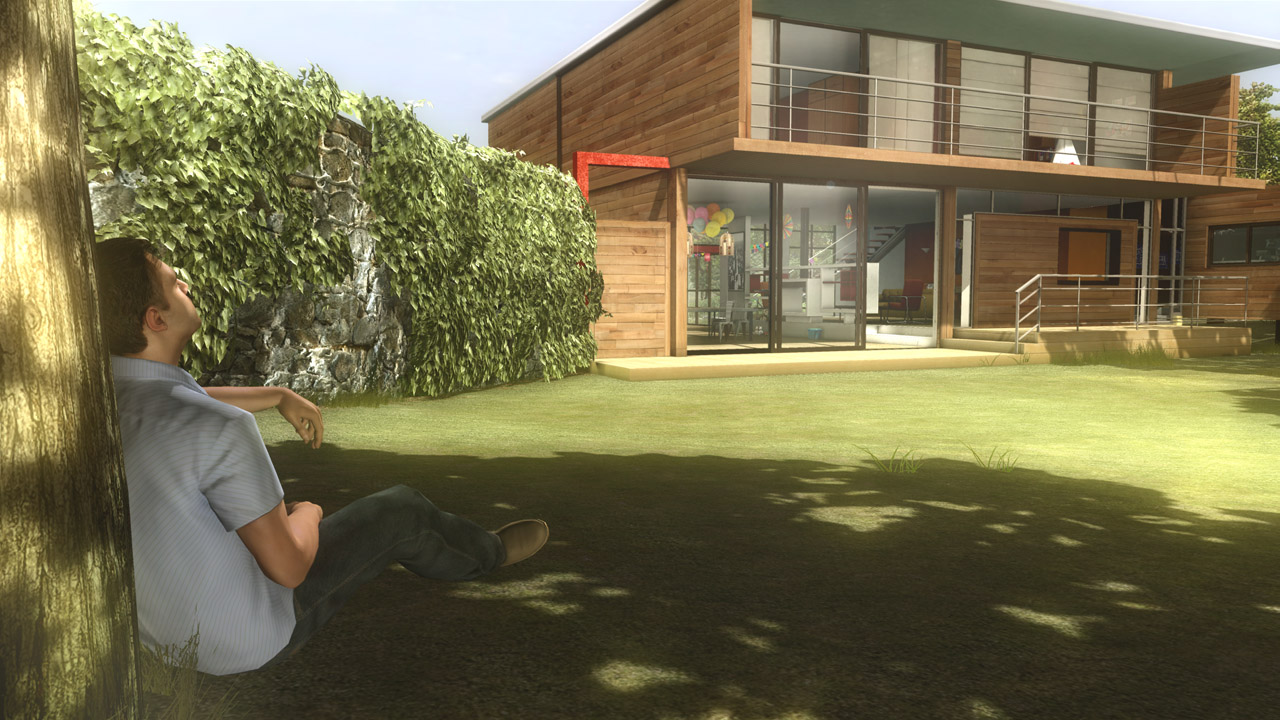
Ethan Mars' home in heavy rain always made me jealous. Absolutely beautiful modern design with a ton of glass and hardwood flooring. A place for everything and everything in its place. The game immediately contrasts the home with his post-divorce pad, and boy is that depressing. Dark, dank, with peeling wallpaper and ancient sensibilities.
 
I really liked the apartment in Deus Ex: HR. I'm on my phone so no pics. It may not have been practical; I just remember it looked cool.
 
Ys Seven on the PSP actually has interiors for pretty much everybody's home in the towns, and they're all different and pretty much not used in game unless you go into every house looking for random NPC comments.

I was kinda surprised at the amount of effort they put into that.
 
I think some might have missed the point... I don't think the OP means, what's the worst designed game from your perspective as the gamer (ie, a ledge is too far or a city has dead ends in a racing game), but as if you were a person in that setting living in that city / town.

At least, that's how I thought OP meant it.

I felt this way about many sections in the latest Tomb Raider in the sections that were set in the antagonists wasteland city. I thought it was interesting just how close the sewers were to the rest of the city... and, obviously, there are no kitchens, bedrooms, or anything else, that you can see... No toilets... No real running water other than this never ending stream of poop water that is below every threadbare house.

Further, I wondered what are all of these guys on remote outposts even doing on their daily patrols...? Up in the highest mountain section, this freezing cold area with nothing but a radio tower, where do these dozens of guys live? Are they really patrolling for the off chance that a ship wrecks on the coast and some explorer scales that mountain to send a distress signal from the radio tower? ... why not just take down the tower alltogether?

Anyway.
 
And how can one not mention the Hazuki estate from Shenmue! I love walking around and touching stuff. Feels incredibly real and is enhanced by the sense of time in the game. Conversely, its the only real estate in the game. Everybody else lives in traditional apartments.
 
Original tomb raider.. Laura Crofts house. Nothing practical... all of those boxes... The hidden secret room behind stacks of boxes..

9nZom7J.jpg
 
Ethan Mars' home in heavy rain always made me jealous. Absolutely beautiful modern design with a ton of glass and hardwood flooring. A place for everything and everything in its place. The game immediately contrasts the home with his post-divorce pad, and boy is that depressing. Dark, dank, with peeling wallpaper and ancient sensibilities.
Was an awesome house for sure:

 
I was having a conversation with a friend the other day: when did game designers first need to be legitimate "architects" in terms of level design?

I'm guessing around Halo 1. Up until that era, the 3D was abstract enough that buildings and rooms were not designed to a realistic standard. Even games like Half-Life 1, metal Gear Solid, etc.. The rooms were more like boxes with windows and office chairs and desks strewn randomly.

Now you get games like Killzone Shadow Fall where I get the impression they pretty much have real architecture designers on staff.

You mean in the sense that they should bring some degree of verisimilitude to the buildings that they were creating? I think you can trace back that necessity as far back as the old Thief games, couldn't you? I don't remember very well. You could see in System Shock 2 some degree of care put into how some of the ship was designed, too, though the sense of claustrophobia was clearly paramount in the level design.

Fantasy games have always stuck to fantasy architectural archetypes, but i remember even Star Ocean 2 having some nicely designed homes that did not fall into the "it's a wooden igloo with beds next to the over" stereotypes.
 
Man i was disappointed with the size of the cities in Skyrim. So damn small. Pretty much the size of the cities in Morrowind and yet they were walled off and required a load to get in! Seems like they were desired that way because of the constraints of the hardware, but I would not want to live in such a small town where I can see the other end of town from any other point in town.
 
A lot of games have houses that seem to entirely lack toilets. It's quite disturbing. This is especially the case in older RPGs.

Other games though have toilets and put sweet loot into them. Also disturbing.
 
I've wondered before why there are so many food markets where the player can't buy food.

I can see what they sell, but I'd like to be able to buy it even if it doesn't benefit me from a gameplay standpoint.
 
rJ9rZu3l.png


Cerulean City.

The only way in and out of Town for people without a Pokemon is to walk through a dude's house.
 
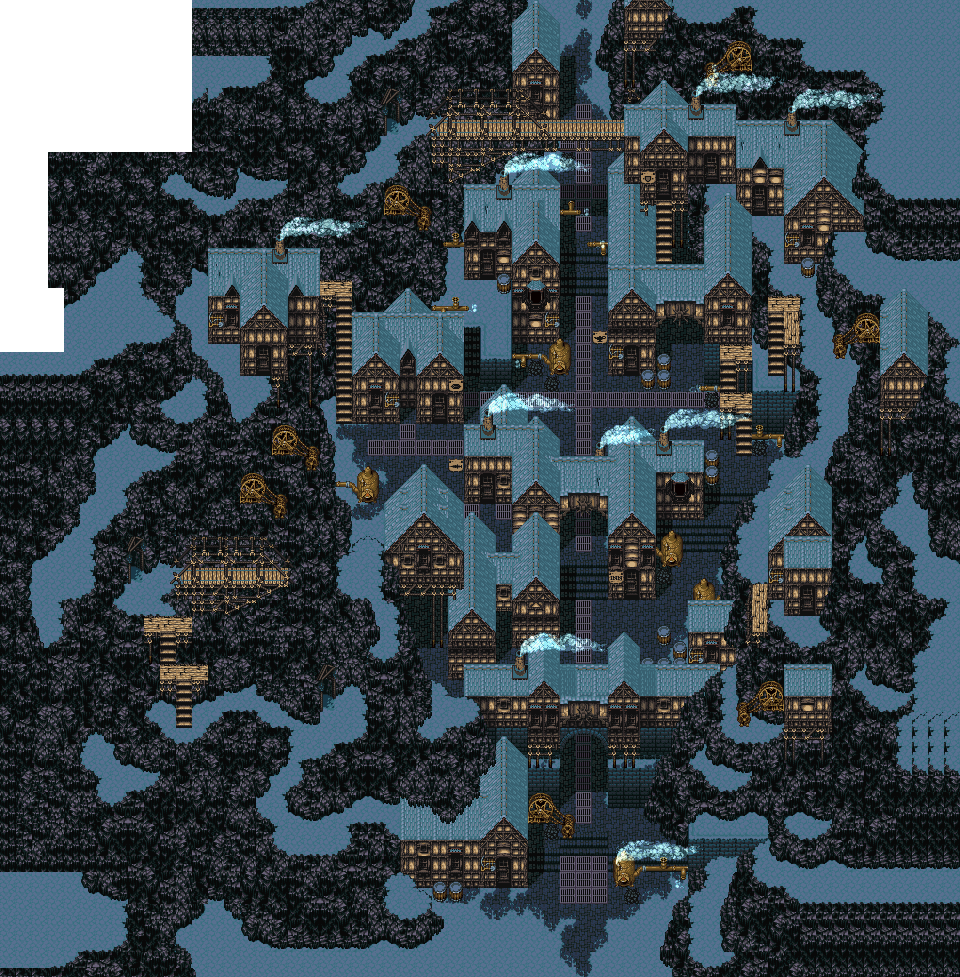
I think that mundane details that are often missed in townbuilding can be vital for giving the player more appreciation for the story and background. Let's compare two similar areas: Blighttown from Dark Souls, and the Valley of Defilement from Demon's Souls. Both have rickety wooden construction above a poisonous swamp, and both are home to deformed humanoids. Neither is a place you would ever want to live, but only one actually looks like a place people live in.

Blighttown is conspicuously missing an actual town. Do the blighted just sleep comfortably on rotting wood? Where are the roofs? Do they have any other activities besides attacking travelers? What is the water wheel even for?

Compare to the Valley of Defilement. In the upper section, there are plenty of distinct living quarters with roofs and hay piles for the depraved ones to sleep in. The remains of rats and horses and a few cooking fires show us what and how the people eat. In the fetid swamp, there are a few depraved ones forging on islands of debris, but the majority of them live in a large settlement held out of the water by stilts. There is a great wall to protect the town inhabitants from outsiders, with a marked path guarded by giant depraved ones leading to its one entrance. The settlement's location is important: It is atop a field of valuable Dark Moon Grass and is next to the plague lake where the people prey to their demonic saint, the Maiden Astrea.

See the difference? Where Blighttown feels like a transit zone with humanoid monsters, the Valley of Defilement feels like a living and breathing community. You are intruding upon the depraved ones' home and, in the last area, their most holy temple, so their hostility makes more sense and Maiden Astrea's kindness doesn't seem misplaced.
 
Xenoblade. Why is the Bionis built to scale, yet all the towns are only like a couple of city blocks long?

Dunban's house has no toilet. Does he pee out the window?
 
Xenoblade. Why is the Bionis built to scale, yet all the towns are only like a couple of city blocks long?

Dunban's house has no toilet. Does he pee out the window?

This bothered me until I finished Colony 6.

OT: Windfall Island. Where do those people live? Why is the Windmill over the Jails? The photographer's house has a separate room that you can only reach by going outside and riding a magical leaf to.
 
Bumping this thread because I love seeing the sort of weird "towns" people have submitted.

I don't think a confusing layout is that unrealistic, though; there are a lot of real-life cities that weren't planned and ended up being maze-like. I think it only becomes unrealistic when the layout has houses in the middle of roads or silly things like that.
rJ9rZu3l.png


Cerulean City.

The only way in and out of Town for people without a Pokemon is to walk through a dude's house.
The best part is the back exit in his house was recently made, so before then you were out of luck if you didn't own a Pokemon with Cut.

The Metroid series is full of environments that don't quite have the right necessities for living. It took us over ten Metroid games to get a pair of bathrooms... And there aren't even toilets in the stalls!
bathroom-entrance.jpeg

You also can't go into the men's bathroom, and I can't decide if that's funny or stupid.
 
In general, most cities are poorly designed if one were to apply them to Urban Design standards. I'm sure Urban Planners don't exist alongside game developers.

Or maybe they do.

On another note, BioShock is basically architecture porn, and I love it.
 
Wei Shen's apartments in Sleeping Dogs were just plain weird. I don't know much about architecture so I can't articulate it too well but everything just seemed off scale and poorly laid out.
 
Worst: The Witcher 2. The way the cities are laid out is super confusing and maze-like. I would feel bad for people who actually lived in such places. It's one of my main gripes with the game.

Have you ever been to a real-life medieval city? Have you been to France, Italy, Poland? The Witcher 2 is 100% true to the architecture and urbanisation of XV centuries.
 
Worst: The Witcher 2. The way the cities are laid out is super confusing and maze-like. I would feel bad for people who actually lived in such places. It's one of my main gripes with the game.

This is a terrible opinion. The town's were cramped for a reason. It's suppose to feel claustrophobic. The town at the end of the game is difficult to navigate, but that's because it's in ruins and most of the pathways are blocked by debris.
 
Alan Wake probably had the most realistic environments of any recent game. Bright Falls felt incredibly authentic, as did the mental institution and brief New York sequences.
 
I was having a conversation with a friend the other day: when did game designers first need to be legitimate "architects" in terms of level design?

I read somewhere that Perfect Dark on the N64 used an architect for many of the building designs. The skyscraper in the beginning had quite believable interior plans.
 
I've always felt that Shenmue and it's sequel will hold this crown for ages. Such great design, painstaking attention to detail, unparalleled to this day as far as I'm concerned.
 
I love the general layout of the Imperial city in Oblivion. Wonderfully symmetric and geometrically simplistic. It makes perfect sense from a lore perspective and makes the city architecturally accessible to players. Furthermore, splitting the city into bite-sized districts that separate functions makes finding a specific place way easier. On top of all that, it also feels very lived in. People just go about their lives, and everybody actually has a house with kitchen, bedrooms, etc. (this is one of the things that annoys me most in some RPGs - having houses that nobody would ever want to live in because they're too small or because vital furniture is missing). Even the guards go on and off duty and spend some time in the towers that house their quarters (which you can also go into). By comparison, most of Skyrim's larger settlements feel like a complete mess (I'm looking at you, Windhelm and Falkreath).
 
Have you ever been to a real-life medieval city? Have you been to France, Italy, Poland? The Witcher 2 is 100% true to the architecture and urbanisation of XV centuries.
Indeed. Almost every European city is like that. It is what you get when cities grown organically instead of being planned like some major American cities.
 
Top Bottom