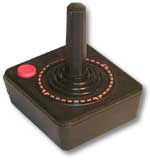
In 1982 Atari released the first controller with an analog stick for their Atari 5200 home console. However, the non-centering joystick design proved to be ungainly and unreliable, alienating many consumers at the time.
In 1996 Nintendo introduced the modern analog stick on their Nintendo 64 controller. Unlike the D-pad, the analog stick allowed for varying levels of pressure and 360-degree control, translating into more precise movements in games such as Super Mario 64. Incidentally, Super Mario 64 DS was criticized by some for imprecise control due to lack of an analog stick on the Nintendo DS.
Super Mario 64 was released in Japan on 23 June 1996. On 5 July 1996, Sega released NiGHTS Into Dreams for their Saturn console in Japan; bundled with it was the Saturn 3D control pad which featured an analog stick intended to give the player more fluid control over that game's flight-based gameplay.
Sony's response was to release the DualShock in 1998. In an effort to outdo Nintendo, the DualShock featured not one, but two analog sticks as well as two motors (one for "rumbling", one for "vibrating"). (Note: In 1999, Ape Escape became the first major video game to require the use of two analog sticks.)
Since then, all major video game console controllers have included two analog sticks, with the exception of the Sega Dreamcast controller.

 , numbers of buttons isn´t a problem, but for novice players (who i think nintendo is trying to atract) is a big problem. I really want to know how they will make videogames easy and fun


 It was something like just a month after I bought it that the DualShock was announced for US release...