LectureMaster
Or is it just one of Adam's balls in my throat?
Hi everyone. Today we've got a bonus issue of Game On featuring an interview about one of last week's most exciting video-game announcements.
'Larian Studios Unleashed'
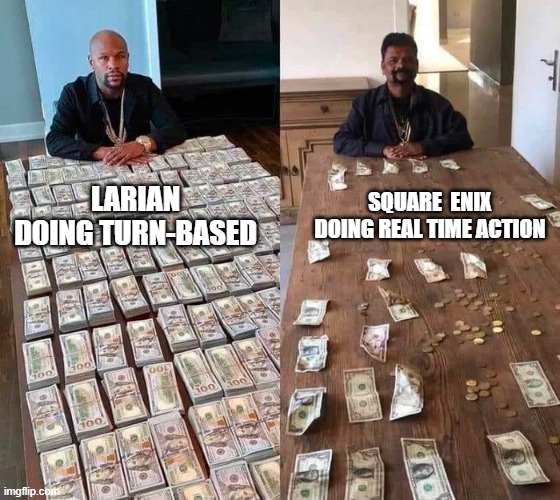
Larian Studios has hit the big time. Until somewhat recently, only hardcore fans had even heard of the Belgian video-game developer, which was founded in 1996 and specialized in turn-based role-playing games filled with elves and wizards. But thanks to the release of 2023's Baldur's Gate 3, Larian has become one of the most-beloved game companies, and its next project has been the subject of speculation for more than two years.Last week at The Game Awards (a ceremony that ostensibly exists to honor this year's games but is mostly for announcing new ones), Larian revealed Divinity, its next big game — a departure from Baldur's Gate 3 and a return to the dark fantasy universe in which Larian previously operated.
This time, there's a lot of pressure. Baldur's Gate 3, licensed from Hasbro Inc. and based on Dungeons & Dragons, ranks among the best-reviewed games of all time and won Game of the Year from countless media outlets. It has sold more than 20 million copies, Swen Vincke, Larian's founder, chief executive officer and creative director, said in an interview. That makes it one of the best-selling games ever, which gives Larian the resources to keep expanding but also ramps up the pressure for the company's next game.
Speaking to me on Dec. 11 in a hotel suite in downtown Los Angeles ahead of the awards ceremony, Vincke said Larian plans to do an early-access release of Divinity, as the company has with previous games, although it's unlikely to be out in 2026. He wouldn't offer many specifics about the new game other than to say it will continue to iterate on the studio's previous work.
"This is going to be us unleashed, I think," Vincke said. "It's a turn-based RPG featuring everything you've seen from us in the past, but it's brought to the next level."
At first, Larian had planned to continue working with Hasbro's Wizards of the Coast division on Dungeons & Dragons, but Vincke said he and his team spent a few months working on a new project before realizing they weren't feeling the excitement they once did.
"Conceptually, all of the ingredients for a really cool game were there except the hearts of the developers," he said.
They abandoned that game last year and pivoted to Divinity, a franchise that Larian also happens to own. "Baldur's Gate 3 was a good game and I'm proud of it, but I think this one is going to be way better," Vincke said, noting that the underlying systems of Dungeons & Dragons were difficult to translate from tabletop to digital gaming. "Here, we're making a system that's made for a video game. It's much easier to understand."
For this game, the developers are making some big bets. They recently switched to a new engine — in video-game parlance the technology and tools used to make a game — which has led to some growing pains that Vincke says will be worthwhile. The team is hoping to improve their systems for streaming content into the game and doubling down on the cinematic storytelling that worked so well in Baldur's Gate 3.
Larian is trying to find ways to cut down on development time and aims to finish Divinity in less time than Baldur's Gate 3, which took six years to make because of its scale and Covid-19 disruptions.
"I think three to four years is much healthier than six years," Vincke said.
One thing they're not doing is getting smaller. One tactic for reducing the development time is to develop many of Divinity's quests and storylines in parallel rather than in a linear fashion. That's requiring significantly bigger writing and scripting teams than Larian ever had before.
But at the same time, Vincke said, "the creative process itself actually is something you cannot accelerate." Giving writers, designers and artists time to iterate and explore ideas is what led to the success of Baldur's Gate 3. "People underestimate how many times we're implementing something and realize in the middle that it's just not going to work," Vincke said.
Under Vincke, Larian has been pushing hard on generative AI, although the CEO says the technology hasn't led to big gains in efficiency. He says there won't be any AI-generated content in Divinity — "everything is human actors; we're writing everything ourselves" — but the creators often use AI tools to explore ideas, flesh out PowerPoint presentations, develop concept art and write placeholder text.
The use of generative AI has led to some pushback at Larian, "but I think at this point everyone at the company is more or less OK with the way we're using it," Vincke said.
The success of Baldur's Gate 3 has allowed Larian to keep growing and stay in step with Vincke's ambitions. The studio now has 530 employees across seven offices in Europe, North America and Asia. For Vincke, the growth has been unexpected.
"I think a lot of founders have the same problem," he said. "I have to be large, otherwise I can't make my video game. With growth suddenly comes a whole bunch of responsibilities that you didn't necessarily think you were ever gonna have, but you have them and then you make the best of them. Size exposes you to new problems that you couldn't imagine existed."
Vincke and his wife own the majority of Larian shares, while Tencent Holdings Ltd. maintains a significant minority stake. Vincke says the Chinese company is represented on his board of directors but doesn't influence how Larian operates. Without Tencent's support, Larian wouldn't have been able to take a swing like Baldur's Gate 3.
"It gave me the confidence to say, OK, I'm never gonna end up at the fuel station anymore, calling my wife to say I can't pay," he said.
Now, thanks to the previous game's tremendous success, Larian is in a healthy financial position. Vincke says that all of the Baldur's Gate 3 cash will allow the company to double down on even more narrative experimentation for Divinity. Players loved Baldur's Gate 3, in part because they were constantly making significant decisions, some of which could have ripple effects throughout the game. Every playthrough could feel different, depending on which faction the player chose as an ally, where they chose to go and what they chose to do.
Vincke says his developers want to expand that type of storytelling even further for Divinity.
"The idea is that when you talk to fellow journalists about the game, you'll have completely different stories," Vincke said. "We're doing a couple of things that you haven't seen in RPGs before, I think."