• Hey Guest. Check out your NeoGAF Wrapped 2025 results here!

Are Plato and Aristotle the most influential humans that have ever lived?

Been reading quite a lot of philosophy and history in the past year or so and I never knew just how much those two (and to an extent Socrates of course) influenced human history. It doesn't seem to matter about whom you read, almost all of (Western) history of thought has their roots with these three Greeks. Like, I never knew that even Christianity would have never became what it now is without having incorporated Greek philosophy in its teaching. Fascinating...

Is there anyone else who can top these minds?
 
Einstein and and Neils Bohr.
Basically redefined modern physics and made everything before obsolete.
 
Last edited:
Been reading quite a lot of philosophy and history in the past year or so and I never knew just how much those two (and to an extent Socrates of course) influenced human history. It doesn't seem to matter about whom you read, almost all of (Western) history of thought has their roots with these three Greeks. Like, I never knew that even Christianity would have never became what it now is without having incorporated Greek philosophy in its teaching. Fascinating...

Is there anyone else who can top these minds?

Although they were important, I don't think stoicism, platonism cynicism or any philosophy from ancient Greece really had such an impact that I would consider them to be the most influential humans ever.

You said that almost all western history and thoughts have their roots tied to these two individuals. Can you expand on that?
 
Last edited:
Although they were important, I don't think stoicism really had such an impact that I would consider them to be the most influential humans ever.

You said that almost all western history and thoughts have their roots tied to these two individuals. Can you expand on that?
You seem to confuse Aristotle and Plato (no stoics) with Seneca.
 
Sorry, but no.
Philosophy has done little for the field of physics.
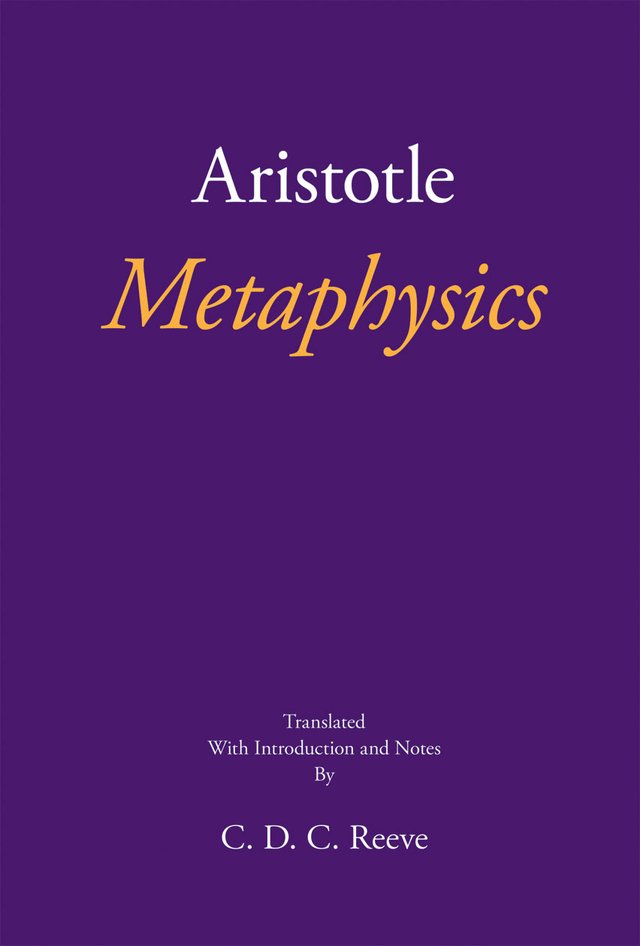
Do you even...

9781624664397.width-640.jpg


The word "atom" comes from Greek.
 
Last edited:
Do you even...

9781624664397.width-640.jpg


The word "atom" comes from Greek.

Those things are so far apart, they could be different dimensions.

I'll grant you that at least Aristotle had a more grounded method of observation of the natural world. At least compared to Plato.
 
I'm at the gym. Edited my post. My point was just that I don't think any are contenders for the title.

I'm pretty sure Zeno the founder of Stoicism, no?
Yes, that was Zeno.

Have you read Greek philosophy? I never knew myself until I actually dived into it. It keeps blowing my mind. Be it about morals, physics, politics, religion. It literally doesn't matter about who you read, from Hitler over Marx to Einstein, Newton and Spinoza. Everyone read those Greeks and built upon their thoughts in his own way. You could almost say that without Plato's and Aristotle's writings human society would be completely different today, which is pretty wild.
 
Although they were important, I don't think stoicism, platonism cynicism or any philosophy from ancient Greece really had such an impact that I would consider them to be the most influential humans ever.

You said that almost all western history and thoughts have their roots tied to these two individuals. Can you expand on that?
Christianity arguably has stronger roots in Neoplatonism than Judaism as far as theology is concerned. There's a pretty clear line of transmission from Platonism -> Neoplatonism -> Christianity. Plato influenced Christianity, so his contributions have permeated in a variety of ways… including Islam.

Between Christianity and Islam I'd say it's a pretty iron clad argument tbh
 
Those things are so far apart, they could be different dimensions.

I'll grant you that at least Aristotle had a more grounded method of observation of the natural world. At least compared to Plato.
The thought patterns are cohesive and build upon each other. Of course it became something different after 2000 years of thought expansion but more often than not Plato and Aristotle seem to be the root. So yes, even for someone like Newton. His thoughts also built upon the knowledge he was taught.
 
Last edited:
The thought patterns are cohesive and build upon each other. Of course it became something different after 2000 years of thought expansion but more often than not Plato and Aristotle seem to be the root. So yes, even for someone like Newton. His thoughts also built upon the knowledge he was taught.

What you are doing is the argument that whoever came first is the most important, because everyone else came later and had to be influenced by them.

But when you compare what came out of modern physics, such as Einstein and Bohr's, the achievements are too many to be ignored.
It's not just that Relativity is the most accurate model of the universe we had ever created until then. It's also that it led to almost everything we have today. Computers, satellites, transistors, internet, communications, medicine devices, etc.
The whole modern world is built on modern physics.

I'm not saying that Aristotle wasn't important for his time. I'm saying just saying that there are other people that are more important for human advancement.
 
Last edited:
What you are doing is the argument that whoever came first is the most important, because everyone else came later and had to be influenced by them.
Well, yes, that's my point here, literally.

Do you think that without Plato and Aristotle Einstein and Newton could have even made their discoveries? Given their influence in not only the root thoughts about physics but also politics and religion I daresay not. Which would make them the most influential humans that have ever lived.
 
Well, yes, that's my point here, literally.

Do you think that without Plato and Aristotle Einstein and Newton could have even made their discoveries? Given their influence in not only the root thoughts about physics but also politics and religion I daresay not. Which would make them the most influential humans that have ever lived.

Yes, they could.
Calculus is not bottlenecked by ancient philosophy.
 
What you are doing is the argument that whoever came first is the most important, because everyone else came later and had to be influenced by them.

But when you compare what came out of modern physics, such as Einstein and Bohr's, the achievements are too many to be ignored.
It's not just that Relativity is the most accurate model of the universe we had ever created until then. It's also that it led to almost everything we have today. Computers, satellites, transistors, internet, communications, medicine devices, etc.
The whole modern world is built on modern physics.

I'm not saying that Aristotle wasn't important for his time. I'm saying just saying that there are other people that are more important for human advancement.
The argument here limiting not just Einstein and Bohr (but any hard scientist) is time. On one hand Plato has endured thousands of years and on the other hard sciences as we've learned are prone to paradigm changes that create a new torchbearer.
 
But politics and religion is... and without those two... believe it or not... no education for both Newton and Einstein.

Education was not an exclusive thing to ancient Greece.
If you want a bottleneck for Calculus, that would be something like the Indo-Arabic numbers. For example.
But not Plato and Aristotle.
 
Alexander. he helped spread Aristotle's teachings. Connected the world in a way that had never been done before.

After that Newton. Then Einstein.

But if we look at the modern world, the most influential people are religious figures from the three main religions who have shaped the last 2000 years. Moses, Jesus and Mohammed.
 
Education was not an exclusive thing to ancient Greece.
I was just trying to find out where Newton was educated and look what I find... Do you find here something familar?

In June 1661, he was admitted to Trinity College, Cambridge as a sizar—a sort of work-study role. At that time, the college's teachings were based on those of Aristotle, whom Newton supplemented with modern philosophers such as Descartes and astronomers such as Copernicus, Galileo, and Kepler. In 1665, he discovered the generalised binomial theorem and began to develop a mathematical theory that later became infinitesimal calculus. Soon after Newton had obtained his degree in August 1665, the university closed down as a precaution against the Great Plague of London. Although he had been undistinguished as a Cambridge student, Newton's private studies at his home in Woolsthorpe over the next two years saw the development of his theories on calculus, optics and the law of gravitation. In 1667 he returned to Cambridge as a fellow of Trinity.

Oh, and I read Descartes. MASSIVLY influenced by Aristotle.
 
Last edited:
I was just trying to find out where Newton was educated and look what I find... Do you find here something familar?

In June 1661, he was admitted to Trinity College, Cambridge as a sizar—a sort of work-study role. At that time, the college's teachings were based on those of Aristotle, whom Newton supplemented with modern philosophers such as Descartes and astronomers such as Copernicus, Galileo, and Kepler. In 1665, he discovered the generalised binomial theorem and began to develop a mathematical theory that later became infinitesimal calculus. Soon after Newton had obtained his degree in August 1665, the university closed down as a precaution against the Great Plague of London. Although he had been undistinguished as a Cambridge student, Newton's private studies at his home in Woolsthorpe over the next two years saw the development of his theories on calculus, optics and the law of gravitation. In 1667 he returned to Cambridge as a fellow of Trinity.

Oh, and I read Descartes. MASSIVLY influenced by Aristotle.

You realize that is just the curriculum of that school. It doesn't mean that without Aristotle, he would never would have been able to develop calculus.
 
You realize that is just the curriculum of that school. It doesn't mean that without Aristotle, he would never would have been able to develop calculus.
And you realize that Newton's discoveries are not just about him learning numbers, right? Because you sure are trying your best to make it seem so.

That said, what I just found on wiki while checking about Newton proves exactly my point. It seems impossible to read about important thinkers without somewhere either Aristotle or Plato being mentioned, which is why I made this thread. It's not about single discoveries that helped us get to where we are today. I know most of those came after the enlightenment.

But no matter what you do, the common thread always seem to be Aristotle and Plato.
 
Last edited:
Yes, that was Zeno.

Have you read Greek philosophy? I never knew myself until I actually dived into it. It keeps blowing my mind. Be it about morals, physics, politics, religion. It literally doesn't matter about who you read, from Hitler over Marx to Einstein, Newton and Spinoza. Everyone read those Greeks and built upon their thoughts in his own way. You could almost say that without Plato's and Aristotle's writings human society would be completely different today, which is pretty wild.

Yes. I'm a lover of Diogenes.

Regarding your argument, you're essentially echoing the 20th century philosopher Alfred North Whitehead, who famously remarked that the entire European philosophical tradition is but "a series of footnotes to Plato."

Do I agree? Perhaps. I'd need to give it more thought. We might argue that it was Jesus (who was a real historical figure for those laughing) who shaped the heart of western civilisation. However, as you noted, even the great theologians had to use Plato and Aristotle to make sense of their faith.
 
Both are pretty based, but in the last 2 years or so, I've actually been thinking about Plato quite a bit more than Aristotle - because of what's going on politics-wise in the word.
 
For those going through Christianity route, there's an argument for Constantine as well making Christianity legal in the Roman Empire and helping its growth
 
Last edited:
Aristotle is the most influential non-religious figure in the history of Western thought.
I would like this but the 2025 gaf recap says that this evillore chump is my most liked poster so I don't want to seem like a suck-up :p

Influence is a tricky term. I bet some economist writer has actually formulated some theorem that has more indirect affect on us than we can ever appreciate.
 
For those going through Christianity route, there's an argument for Constantine as well making Christianity legal in the Roman Empire and helping its growth
IIRC Christianity was wide spread in Europe long before Constantine made it the official religion
 
If Aristotle was so good then why didn't the Romans or Greeks make it to the moon? On the way there were many figures who really made his ideas more into the ones that made the modern world, people usually talking about Aquinas, but the voice who most clearest lays out the productive line of thinking that made our world is probably William of Ockham.
 
Most likely, although I personally hold Nietzsche and Carl Jung as some of the greatest modern philosophers, although the latter is more of a psychiatrist than philosopher. Still hugely influential though.
 
Aristotle is mostly known because of who he taught. His pupil Alexander the Great is more influential than him.
 
Top Bottom