• Hey Guest. Check out your NeoGAF Wrapped 2025 results here!

Laura Fryer - Deleted Dev Post Reveals Huge Highguard Red Flags

winjer

Member


Highguard launched to massive backlash, layoffs, and a viral deleted dev post full of raw pain. As former Xbox executive producer on Gears of War, I feel for anyone facing this, especially on their first game. In this video, I explore what went wrong, from echo chambers and hype blindness to internal and external communication.

Positivity is good, but taken to extreme creates eco chambers and in eco chambers, hard truths don't land. Letting small issues grow into big issues, before anyone notices.
 
Last edited:
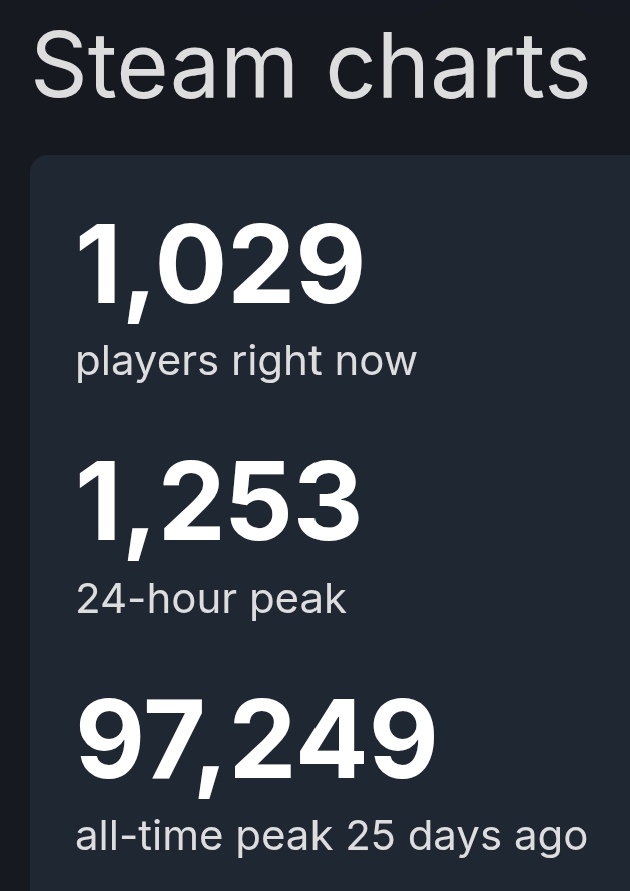
APF6UqJZX4LRpgmH.jpg
 
Is it my impression, or she from time to time uses the 'As former Xbox executive producer on Gears of War' title as a validator? Like , 'that's why my opinion matters more than others...' ?
Let's be real - it's somewhat necessary for her to do that because this is a male space of Man children that would throw her opinion down the tube with comments like "gomake me a sandwich. "
 
Careful. I hear on certain parts of the internet Laura is now considered an alt-right pipeline and is not to be platformed.....

Why? Cause she uses her decades of experience in the industry and questionis dumb shit in said industry happening today. She doesn't carry the water and the narrative like the others.

That's all it takes these days to get that label at the purple place.
 
Last edited:
Is it my impression, or she from time to time uses the 'As former Xbox executive producer on Gears of War' title as a validator? Like , 'that's why my opinion matters more than others...' ?
uh....retarded take?

If you listen to her tone and demeanor, you can tell she's coming from a place of experience and mentorship. These kinds of videos feel like they're not directed at us, the consumers; they're aimed more at actual devs and leadership at these studios
 
Positivity is good, but taken to extreme creates eco chambers and in eco chambers, hard truths don't land. Letting small issues grow into big issues, before anyone notices.
Toxic positivity is a cancer and makes people become so fake. Toxic negativity is the extreme end of our negative emotions and it can be quite destructive.

However those emotions are true. Toxic positivity slowly builds a foundation of lies that people start believe. If you want to lie, lie to someone else but never lie to yourself.

When game studios make this mistake, they fail big time. You can always tell which studios were affected by this cancer because they start attacking their potential consumer base once the veil of toxic positivity is removed.
 
Last edited:
Is it my impression, or she from time to time uses the 'As former Xbox executive producer on Gears of War' title as a validator? Like , 'that's why my opinion matters more than others...' ?
Everyone in the entertainment industry uses something like this, so it's ok to her to use it too. Also, she did awesome stuff, and this game was one of the reasons that increased the RAM of the console
 
uh....retarded take?

If you listen to her tone and demeanor, you can tell she's coming from a place of experience and mentorship. These kinds of videos feel like they're not directed at us, the consumers; they're aimed more at actual devs and leadership at these studios

And consumers that actually care about "HOW" their hobby works.
 
Is it my impression, or she from time to time uses the 'As former Xbox executive producer on Gears of War' title as a validator? Like , 'that's why my opinion matters more than others...' ?
Let that sink, "former". As in, clinging to that "former" because she no longer is.

Any particular reason you guys are triggered over this? Did you feel like your masculinity was challenged or something?
 
Any particular reason you guys are triggered over this? Did you feel like your masculinity was challenged or something?
The fact that you are acting like her protector is VERY telling about the necessity to be a white knight wanna be 🙃

And i AGREE with her, echo chamber is the worst aspect of any corporate environment, a corporate becomes BLIND of any criticism.

But you dont need to shove your credentials (or in this case, former credentials) every now and them to make your (her) opinion have more value :) It makes it (the opinion) fells less valuable and created a group of users, like wecan see here that belives her opinion must not be questioned... in other words...like almost an... echo chamber :-D
 
Interesting video; it's well worth a watch.

What I find so bizarre is how Western-centric this culture of blaming the customer is. And it's not just video game developers—you see Hollywood doing exactly the same thing with their films.

As greedy as Eastern companies like Nintendo can be, they don't blame customers for their Wii U failing or for people disliking games such as Paper Mario: Sticker Star. However, had these same products been made in the West, we'd probably have had several Twitter rants by now from disgruntled developers complaining about how stupid or bigoted their own fans are.
 
Can't wait for the insightful videos about the failure of Horizon Hunters... something or other, once that has launched and cratered.

It's amazing that these studios and publishers keep wasting millions on sauceless slop.
 
Interesting video; it's well worth a watch.

What I find so bizarre is how Western-centric this culture of blaming the customer is. And it's not just video game developers—you see Hollywood doing exactly the same thing with their films.

As greedy as Eastern companies like Nintendo can be, they don't blame customers for their Wii U failing or for people disliking games such as Paper Mario: Sticker Star. However, had these same products been made in the West, we'd probably have had several Twitter rants by now from disgruntled developers complaining about how stupid or bigoted their own fans are.
My personal theory is that the positive reinforcement only discipline model, and the my kid is always right and the teachers are always wrong parenting style, which seemed to become popular in the 90's, are paying massive dividends these days.

Participation trophies too. All tied in.
 
Last edited:
The fact that you are acting like her protector is VERY telling about the necessity to be a white knight wanna be 🙃

And i AGREE with her, echo chamber is the worst aspect of any corporate environment, a corporate becomes BLIND of any criticism.

But you dont need to shove your credentials (or in this case, former credentials) every now and them to make your (her) opinion have more value :) It makes it (the opinion) fells less valuable and created a group of users, like wecan see here that belives her opinion must not be questioned... in other words...like almost an... echo chamber :-D
The way you type reminds me of another poster.

doctorwho-nine.gif
 
I'm not trying to downplay her work on explain this entire situation, but this is as obvious as it gets.
Positivity is not that good. Not because everything has to be about dislike or negativity, but positivity brings nothing good if you want a proper feedback. And the reason is because in that positive enviroment any form of criticism can be viewed, used or denoted as hate. Thats the very principle of toxic positivity. You can't say anything bad about it.
Another obvious thing, that you don't make game for the devs. You make game for the customers. "We believe it's a good game" certainly is the perfect example of that.
Thats why when I look out for games I don't go reading the positive comments, I often go reading the negatives ones. Positive ones almost gives no red flags, no proper explanation and certainly omit things that would be often be a deal for a person.
 
Interesting video; it's well worth a watch.

What I find so bizarre is how Western-centric this culture of blaming the customer is. And it's not just video game developers—you see Hollywood doing exactly the same thing with their films.

As greedy as Eastern companies like Nintendo can be, they don't blame customers for their Wii U failing or for people disliking games such as Paper Mario: Sticker Star. However, had these same products been made in the West, we'd probably have had several Twitter rants by now from disgruntled developers complaining about how stupid or bigoted their own fans are.

It's almost like western AAA devs feel entitled to success, praise, and devotion from the consumers no matter what they say or what they put out. Why? Cause they worked real hard and did their bestest.

And their only recourse to being rejected in the market is to blame the consumer and call it toxicity. It's a childish mentality.

Many, many, many things failed that were made by people better than you and me. Accept it, dust yourself off, and move on. Learn from failute to set yourself up for a better chance at success next time.
 
Last edited:
"Entertainment isn't food. You don't have to buy or play it."

I feel like this should be put onto one of those inspirational posters and sent to everybody working in game dev. Seems like that industry houses some of the most self-entitled individuals on the planet right now.
 
winjer winjer Feel free to post this summary in OP

Context: deleted Highguard dev post after layoffs
• Video is reacting to a now-deleted post from a Highguard dev.
• Dev shipped his first game, then most of the team got laid off right after launch.
• Laura Fryer emphasizes: shipping a debut title is huge, and the emotional whiplash is brutal.
• Post starts with joy (Game Awards week hype) then immediately turns to being mocked once the trailer dropped.
• Dev frames it as "gamer negativity" killing the game before it got a fair chance.

Hard truth #1: "Lightning in a bottle" confidence is often a red flag
• Laura Fryer's industry take: when a team feels unstoppable internally, that can be the loudest warning sign.
• The post is described as full of certainty: insiders/friends saying it's a mainstream hit, can't flop, endlessly replayable.
• Contrast with her experience shipping big titles (mentions Gears of War):
• Even when they believed in the game, they were terrified.
• Bugs, late cinematics, internal debates, awareness of what was broken.
• Key point: entertainment isn't a necessity like food—people don't have to buy/play it.
• Blind positivity can create an echo chamber ("a fish can't see the water").
• Hard truths bounce off.
• Small issues grow unnoticed.

Echo chambers can show up in hiring too
• Laura Fryer describes her worst leadership hire: universally praised, no visible red flags, still failed.
• New personal rule: if nobody can articulate weaknesses, dig deeper or pass.

Apex baggage + "indie freedom" can be a trap
• Game was marketed with "from the makers of Apex Legends," raising expectations for lightning to strike twice.
• Team also celebrated "indie freedom" with no big publisher oversight.
• Retrospective suggestion: external eyes/oversight may have been crucial.
• Theory: they may not have understood the full conditions that made Apex successful, so they couldn't recreate them.

Why postmortems matter (especially for new studios)
• Postmortems aren't just about fixing problems.
• They're about understanding what worked and why, so success can be replicated.
• Laura Fryer's warning: if there's no real internal pain—no hard fights over the work—you should worry.
• Healthy teams "brawl" over ideas (raised voices, heated debates).
• Good teams cool off, apologize, and keep building.
• If feedback stays polite/surface-level, blind spots grow.
• If you don't wrestle internally, the internet will do it for you—and it's harsher.

Hard truth #2: you must own the product end-to-end (pitch → credits)
• Laura Fryer argues you own the entire product experience from day-one pitch through launch and beyond.
• Post implies the team got blindsided by the Game Awards spotlight.
• Geoff Keighley liked it and gave them a free TGA slot (a gift you don't turn down).
• But: big spotlight only helps if you're ready.
• Polished pitch locked in.
• Marketing assets prepped and "banked."
• One founder later said they could've made a better trailer that communicated the unique gameplay loop, not just "looked entertaining."
• Laura Fryer's takeaway: by late production, communicating your pitch should be muscle memory—trailers, socials, interviews are extensions of the evolving pitch.

Why didn't they go on offense after backlash?
• Laura Fryer questions: after the negative reaction, why go quiet and stick to the old plan?
• Argument: context shaping is critical—don't leave the narrative in a bad place.
• People wanted more info; you should feed them and steer perception.
• Example from Gears:
• Communications were tight and focused with one strong public voice.
• Lead designer communicated design decisions internally (team alignment), to publisher, and later to press.
• Messaging was practiced/refined for months before going public.
• Conclusion: one or two people who can do public-facing messaging well are "worth gold" for hype + damage control.

Review bombs + tutorial drop-offs: harsh reality of player behavior
• Dev claimed ~14,000 review bombs in under an hour, many quitting before finishing the tutorial.
• Laura Fryer's blunt take: you can't expect players to play the tutorial.
• People don't read manuals; gamers owe devs nothing.
• Players have infinite choices and make split-second, sometimes unfair judgments.
• But also: brutal reviews are still a "gift" in one sense—at least people engaged.

Possible alternative: delay launch, run a closed beta
• Laura Fryer understands the instinct to "let the game do the talking" and why they went dark.
• Admits it's possible comms wouldn't have been enough to turn sentiment around.
• But suggests:
• Pause launch.
• Do a closed beta.
• Use the time to address concerns + refine communications before going fully live.
• Acknowledges hindsight bias: easier to see options in the rearview mirror.
• Hopeful note: if downsizing keeps the studio alive, they may still win fans over time.

Main lessons / takeaway
• Laura Fryer expresses empathy for the devs; she's shipped games that received painful reactions too.
• Learn from failure:
• Foster brutal internal honesty + resilience.
• Spot hype bubbles early ("if it feels too good to be true, it probably is").
• Own the full experience—from first screenshot/interview to player reception.
• You're always in the spotlight; "pitch to player" is one continuous narrative you must manage.

Side tangent: external ownership skepticism (Epic/Gears anecdote)
• Laura Fryer references a period when a major Chinese company bought ~40% ownership in Epic without strings attached.
• Notes that at the time, despite Epic's tech/engine strength, there was internal skepticism that "Gears was a fluke," and ideas were frequently doubted.
• Implied point: ownership structure and external stakeholders can shift culture, expectations, and confidence around projects.

 
Careful. I hear on certain parts of the internet Laura is now considered an alt-right pipeline and is not to be platformed.....

Why? Cause she uses her decades of experience in the industry and questionis dumb shit in said industry happening today. She doesn't carry the water and the narrative like the others.

That's all it takes these days to get that label at the purple place.
Did the purple place ban her?
 
Did the purple place ban her?

I believe so. They locked a thread about one of her videos as to "not platform her views".

Ironic. Laura is considered one of the pioneering female execs in video game history back in the 2000s. But now... she has the wrong opinions and they treat her as persona non grata....
 
Last edited:
Any particular reason you guys are triggered over this? Did you feel like your masculinity was challenged or something?
Not really, in fact I'm the one who says the gaming industry is extremely misogynist. But when you cling to a former title to make content and get clicks... it's like those "former Nintendo marketing guys". "Former" means your career already peaked and you stuck with that title, even if you are no longer there.
 
Last edited:
Top Bottom