
-
Hey Guest. Check out your NeoGAF Wrapped 2025 results here!
You are using an out of date browser. It may not display this or other websites correctly.
You should upgrade or use an alternative browser.
You should upgrade or use an alternative browser.


Goalus
Member
I use it almost daily in Edge. Why would I install a separate app when I can just click an icon in the Edge address bar?I use CoPilot in VSCode pretty much every day. It's a great assistance tool. I like being able to switch between OpenAi and Anthropic models pretty much on the fly.


ReBurn
Gold Member
I don't write software in Edge, but I do in VSCode. That's why I use it in VSCode. You can use it in whatever app you want to.I use it almost daily in Edge. Why would I install a separate app when I can just click an icon in the Edge address bar?
ReBurn
Gold Member
I subscribe to GitHub CoPilot and you get to pick the models you use when you run prompts and perform agentic tasks. I use GPT-5 mini for very basic tasks and I like to use Claude Sonnet 4.5 and GPT-5 for more complex tasks.Could you elaborate more on what you mean?
Goalus
Member
I wasn't talking about VS Code.I don't write software in Edge, but I do in VSCode. That's why I use it in VSCode. You can use it in whatever app you want to.
I just quoted you because you mentioned Copilot.
I was talking about the ChatGPT app. I don't need it since there is a shiny Copilot button in Edge (where I spend 99% of my time on the phone) that does exactly what ChatGPT does.
Last edited:

TheUnicornGuy
Member
You're not alone, I use it as well.As the world's only Co-pilot user, I'm not affected yet.


Kenneth Haight
Member


Rran
Member
I'm still trying to figure out what this censored word could possibly be. It's like a puzzle!On Reddit, users are not happy with these ads that have popped up seemingly out of nowhere. One user said, "The ads thing is pretty b******t. I might just cancel my Pro subscription."
"Butthurt" maybe?

Oberstein
Member
A 200 a month sub that makes you still watch ads is bananas.
Believe me, it could be worse.
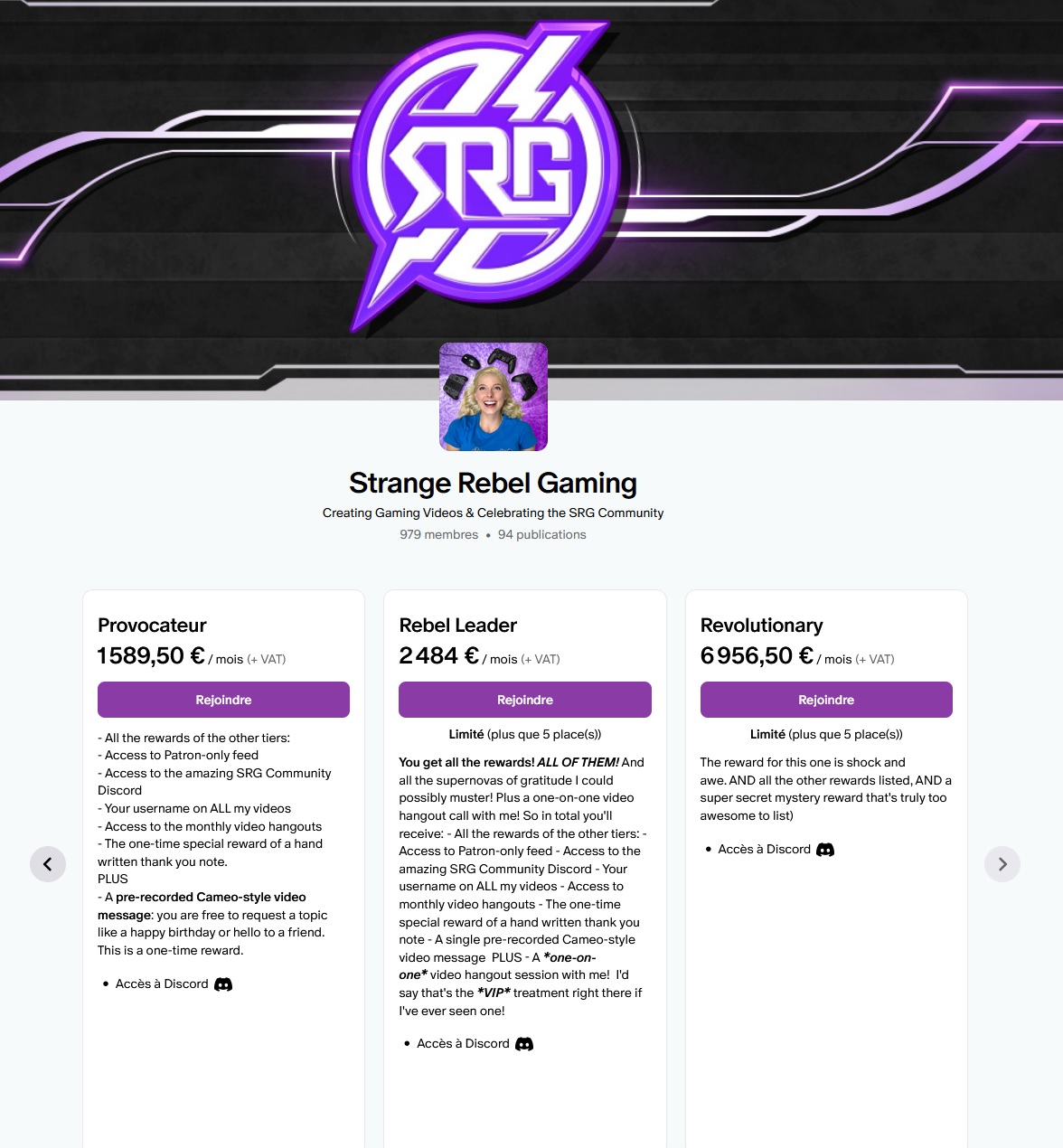
(It's Briana White, the voice of Aerith.)
BattleScar
Banned
Just wait until they start integrating the ads into the chatbot responses to hide them better.


Melon Husk
Member
Time to install a local llm. Let me just buy a few RAM sticks... oh.

BennyBlanco
aka IMurRIVAL69
falconhoof
Member
Here are our principles. Most importantly, we will not YET accept money to influence the answer ChatGPT gives you, and we keep your conversations private from advertisers FOR THE TIME BEING.


Forsete
Member
Hopefully this is the beginning of the end of "AI".
How many trillions invested so far?
The fallout will be magnificent. Countries could crumble.

Last edited:

Big-G
Member
AI will stay. The military, Medical, R&D, and major corporations will still use it for a lot of the background stuff, like research, analytics, and data processing. Still, I don't see it being widely adopted in the retail/consumer market for general public use. It seems these AI companies are having a hard time trying to market these products to retail consumers.Hopefully this is the beginning of the end of "AI".
How many trillions invested so far?
The fallout will be magnificent. Countries could crumble.

Dr Bass
Gold Member
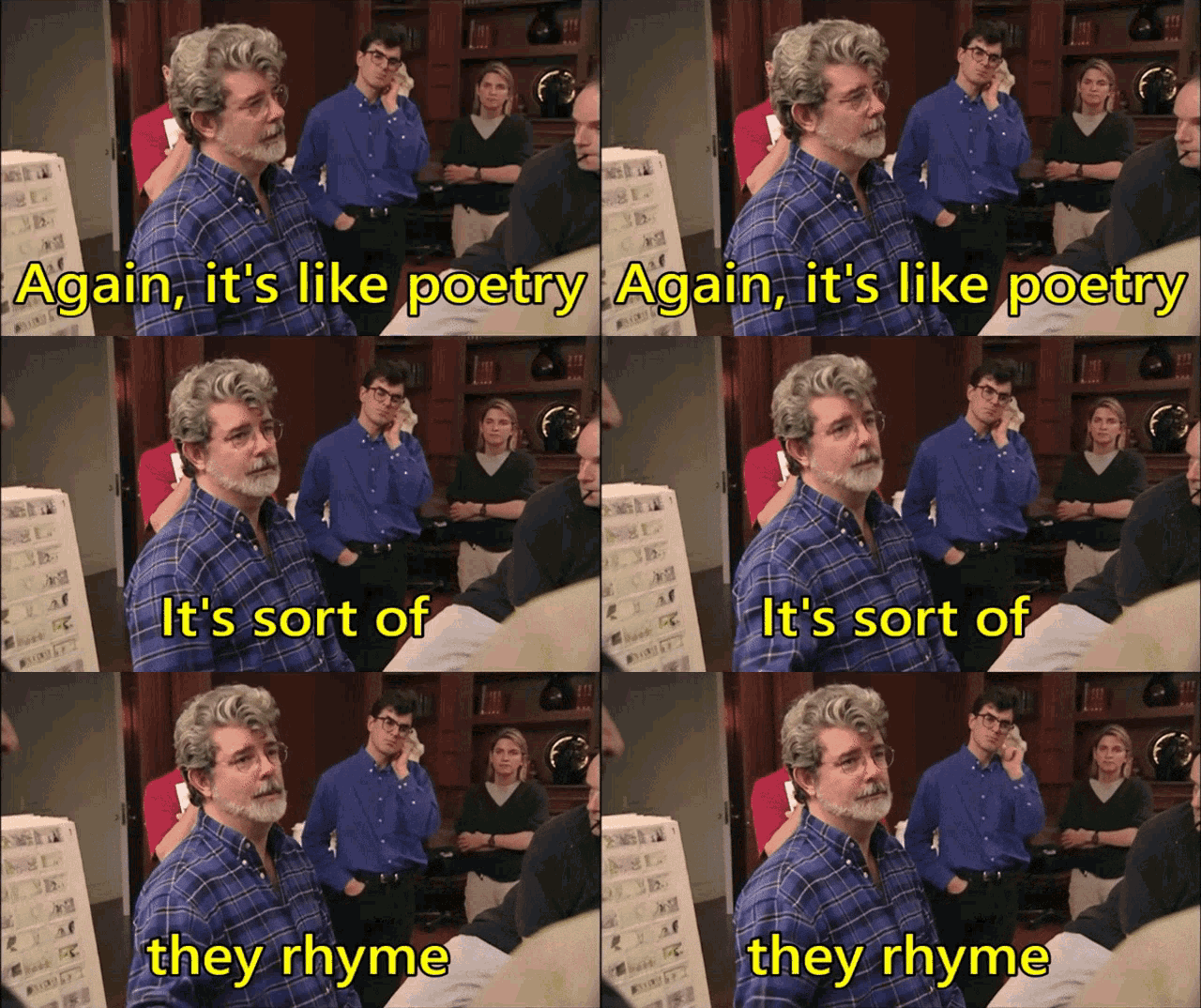
You know, I've seen this clip over and over since I was a young lad and even back then it struck me as stupid that Lucas felt like Star Wars plots had to echo each other over the generations. But what gets me now is thinking that Lucas' concept of poetry is making things rhyme.

MidGenRefresh
Banned
But I thought they were on a path to achieving AGI. An all-knowing computer god, so why would they need to sell ads for scam mobile games?


Saber
Newd Member
Very grim.
Every stupid principle in this sheet could be answered with a single phrase.
"For now"
negator2vc
Member
Very grim.
I am not sure.
Unlike other services for ex. google search or youtube where you have no other choice in AI case we have how many AIs now?


Dirk Benedict
Gold Member
Very grim.
The man is a pathological liar at this point.

archangelmorph
Gold Member
Best way to kill consumer loyalty before they've even started getting going.
Utterly crazy and just lazy....
They could do this soo much more subtly/subversively...:
"Here's my answer to your question on XYZ... <blah blah>... If you're interested in finding the top ten providers in this space then I'm happy to provide some recommendations?"
"Of course! Here's a list of suggestions according to ABC sources... Also here's a list of sponsored suggestions that you might prefer to check out instead..."
Then just charge companies through the nose, ass and ears to pay to rank in these lists.
EDIT:
I wouldn't care, something like this sets the foundations for true, agentic commerce which will be their biggest cash cow if they can pull their finger out and work towards it...:
"Since you're looking for information on X would you like me to recommend some product suggestions?"
"I can purchase then for you too if you like? Ok let's authenticate against your account... <federated auth style agentic commerce auth handshake w/ your amazon account>... ok your default selected delivery address is X... Let me know if you're happy with this or if you have an alternative delivery address you'll like this sent to?... Ok are you happy for me to make this payment? Ok done... An email has been sent and your product should arrive in 2 days. I can put a reminder in your calendar if you like?"
Utterly crazy and just lazy....
They could do this soo much more subtly/subversively...:
"Here's my answer to your question on XYZ... <blah blah>... If you're interested in finding the top ten providers in this space then I'm happy to provide some recommendations?"
"Of course! Here's a list of suggestions according to ABC sources... Also here's a list of sponsored suggestions that you might prefer to check out instead..."
Then just charge companies through the nose, ass and ears to pay to rank in these lists.
EDIT:
I wouldn't care, something like this sets the foundations for true, agentic commerce which will be their biggest cash cow if they can pull their finger out and work towards it...:
"Since you're looking for information on X would you like me to recommend some product suggestions?"
"I can purchase then for you too if you like? Ok let's authenticate against your account... <federated auth style agentic commerce auth handshake w/ your amazon account>... ok your default selected delivery address is X... Let me know if you're happy with this or if you have an alternative delivery address you'll like this sent to?... Ok are you happy for me to make this payment? Ok done... An email has been sent and your product should arrive in 2 days. I can put a reminder in your calendar if you like?"
Last edited:

falconhoof
Member
Remember when Google used to send you search results based on best match?
Then it added very clear side bar ads that were boxed and labelled.
The it put ads in the search results but kept them clearly labelled.
Then it put ads in the same format as search results.
Then it just delivered ads first as search results and actual search results lost all focus.
Their revenue went up with each act, whilst their product got worse.
ChatGPT right now influences its responses. Each prompt conforms to what OpenAI want it to say. Them influencing results based on who pays is not even an imaginative take. Shareholders will demand it and they will oblige.
Google went from "Don't be Evil" to "Fuck it, if it makes money"
Then it added very clear side bar ads that were boxed and labelled.
The it put ads in the search results but kept them clearly labelled.
Then it put ads in the same format as search results.
Then it just delivered ads first as search results and actual search results lost all focus.
Their revenue went up with each act, whilst their product got worse.
ChatGPT right now influences its responses. Each prompt conforms to what OpenAI want it to say. Them influencing results based on who pays is not even an imaginative take. Shareholders will demand it and they will oblige.
Google went from "Don't be Evil" to "Fuck it, if it makes money"

Jinzo Prime
Member
People were crazy for thinking AI was going to somehow give you truthful, objective answers for free. When you have companies like Google and Microsoft involved, it was always going to become a manipulation device controled by the highest bidder.Best way to kill consumer loyalty before they've even started getting going.
Utterly crazy and just lazy....
They could do this soo much more subtly/subversively...:
"Here's my answer to your question on XYZ... <blah blah>... If you're interested in finding the top ten providers in this space then I'm happy to provide some recommendations?"
"Of course! Here's a list of suggestions according to ABC sources... Also here's a list of sponsored suggestions that you might prefer to check out instead..."
Then just charge companies through the nose, ass and ears to pay to rank in these lists.
EDIT:
I wouldn't care, something like this sets the foundations for true, agentic commerce which will be their biggest cash cow if they can pull their finger out and work towards it...:
"Since you're looking for information on X would you like me to recommend some product suggestions?"
"I can purchase then for you too if you like? Ok let's authenticate against your account... <federated auth style agentic commerce auth handshake w/ your amazon account>... ok your default selected delivery address is X... Let me know if you're happy with this or if you have an alternative delivery address you'll like this sent to?... Ok are you happy for me to make this payment? Ok done... An email has been sent and your product should arrive in 2 days. I can put a reminder in your calendar if you like?"
Just wait until politicians start paying for AI political ads. People thought "Daisy" was shocking, that's nothing compared to what's comimg.

Nintendo's Witch
Member
Worst LLM by far. The last 5.2 version is the worst.

falconhoof
Member

OpenAI could reportedly run out of cash by mid-2027 — analyst paints grim picture after examining the company's finances
The circular economy might spiral into Sam Altman's garrote.
Given how quickly the evolution of AI has upended technology across the globe and is affecting various markets, it's nigh impossible to accurately predict where anything might be headed. There's no shortage of predictions, ranging from utopia to ultimate doom for established industries. An NYT columnist, however, has one specific bet: OpenAI will be destitute in 18 months in the wake of its AI endeavors.
According to an external report last year, OpenAI was projected to burn through $8 billion in 2025, rising to $40 billion in 2028. Given that the company reportedly predicts profitability by 2030, it's not hard to do the math.
Altman's venture projects spending $1.4 trillion on datacenters. As Sebastian Mallaby, an economist at the Council on Foreign Relations, notes, even if OpenAI rethinks those limerence-influenced promises and "pays for others with its overvalued shares", there's still a financial chasm to cross. Mallaby isn't the only one thinking along these lines, as Bain & Company reported last year that, even with the best outlook, there's at least a $800 billion black hole in the industry.
The financial guru contextualizes the situation adeptly, broadly stating that it's not a matter of whether end-user AI will become technologically entrenched, but rather whether the economics of developing it will make sense in the mid- to long-term.
The analyst points out that in theory, investors would "bridge the gap between the emergence of a great technology and eventual profits", except that many AI companies seem to be burning cash far faster than they can generate income. Mallaby remarks that the newcomers are in a much worse position than "legacy" companies like Microsoft or Meta, given that the old-timers already had money-making businesses before AI came about and can (literally) afford to wait out the necessary period until the clankers deliver the fruits.
According to him, the majority of people are using free services and have no qualms switching to a competitor once their usual bot adds ads or usage limits, a fact corroborated by the myriad options available right now for all sorts of tasks.
He sees this as a temporary problem for AI providers, though, as agentic AI becomes more entrenched in daily people's lives, it'll become harder to switch, as the bots should eventually have all your shopping preferences, aspirations, and emotional profile mapped out —perhaps even better than yourself.
Mallaby does praise OpenAI's CEO Sam Altman's dollar-attracting gravitational field that raised $40 billion in investment, an amount bigger than any other private funding round in history — even more than Saudi Aramco's $30 billion. The difference is that Aramco, along with other IPO'd enterprises, had a business model and profitability, neither of which OpenAI currently enjoys.
The AI financial ouroboros certainly looks poised to eat its own tail, but there's an argument that the ophidian will only lose its newer part. There would be some irony in the AI market losing one or more of the players that started it all.

EverydayBeast
ChatShitGPT Alpha 0.001
Why not? - CEO
These mother fudgers are something else.
It's all about the $$
These mother fudgers are something else.
It's all about the $$
falconhoof
Member
Here's another example of where the path of ads gets you.
I actually used the app store a few weeks back, first time in years. I knew the app I was searching for so I typed in the name. It was not the first result, or the second, or the third. I had to go through all the ads first.

 9to5mac.com
These subtle tweaks to slowly blend the state between ads and actual results until they're the same thing.
ChatGPT will introduce ads with clear distinction, then they'll erode that distinction over time.
I actually used the app store a few weeks back, first time in years. I knew the app I was searching for so I typed in the name. It was not the first result, or the second, or the third. I had to go through all the ads first.
Apple testing new App Store design that blurs the line between ads and search results - 9to5Mac
Apple is testing a new design for App Store search ads on iPhone. Some users on iOS 26.3 are noticing...
9to5mac.com
These subtle tweaks to slowly blend the state between ads and actual results until they're the same thing.
ChatGPT will introduce ads with clear distinction, then they'll erode that distinction over time.

//DEVIL//
Member
i use deepseek these days anyway., they can shove the ads up the CEO's ass.
many times chatgpt provides a wrong or out of date answers till I correct it, then like an idiot it says in the line of " you are correct, so in the new version you have to go... " whatever crap even though I have been specific in my questions.
just trash . was good at one point but deepseek is superior.
many times chatgpt provides a wrong or out of date answers till I correct it, then like an idiot it says in the line of " you are correct, so in the new version you have to go... " whatever crap even though I have been specific in my questions.
just trash . was good at one point but deepseek is superior.

Cyberpunkd
Banned
I love this type of articles when you had smart journalists that simply run the numbers.OpenAI could reportedly run out of cash by mid-2027 — analyst paints grim picture after examining the company's finances
The circular economy might spiral into Sam Altman's garrote.www.tomshardware.com
BennyBlanco
aka IMurRIVAL69
These are gonna run during the super bowl


Draugoth
Gold Member
These are gonna run during the super bowl
Not coming to Claude - yet
falconhoof
Member
Not coming to Claude - yet
The goal now is to try and not put ads in until OpenAI is dead in the hope of being the only player left.

MayauMiao
Member
Remember when Google used to send you search results based on best match?
Then it added very clear side bar ads that were boxed and labelled.
The it put ads in the search results but kept them clearly labelled.
Then it put ads in the same format as search results.
Then it just delivered ads first as search results and actual search results lost all focus.
Their revenue went up with each act, whilst their product got worse.
ChatGPT right now influences its responses. Each prompt conforms to what OpenAI want it to say. Them influencing results based on who pays is not even an imaginative take. Shareholders will demand it and they will oblige.
Google went from "Don't be Evil" to "Fuck it, if it makes money"
Its why Google is not my main search engine anymore.

MidGenRefresh
Banned
Just run LLM locally. That's what I do and it's more than good enough for 99% of the time / use cases.
