• Hey Guest. Check out your NeoGAF Wrapped 2025 results here!

Gaijin

Status
Not open for further replies.
sprsk said:
A quick lesson on the English language.


The words:

Harakiri
Geisha
Samurai


Are Japanese words "bastardized" and used in regular English conversation. In fact, English as a language is almost nothing but these kind of words. There is nothing wrong with using native words as long as you use them correctly.

Now, on the topic of the word "Gaijin" if you've never been to Japan, it's probably kind of stupid to use it. If I'm back at home talking to a fellow American who has been to Japan discussing something about the way Japanese people react towards us, then I think the use of "Gaijin" is totally appropriate.

It's all about the usage. "Gaijin" doesn't really just mean foreigner anymore, it's a group of people. It's kind of an "us vs. them" sort of thing.

I wouldn't chastise people for inserting Japanese into their speech if only they are using it in a specialized manner -- perhaps when there is no English word to replace it (Such as with Harakiri Geisha and Samurai).

You know what the sad thing is? I'm convinced that some white people using the word "gaijin" identify themselves as part of the Japanese in-group. I consider myself fortunate that my Japanese classes in college had no weeaboos enrolled (or if there were any, at least they weren't blatant).
 
sprsk said:
Yeah, even people who know a good amount of English and what not use the term.

I'm not usually offended by it, but as usual Japanese people are totally oblivious to their own insensitivity.

DING DING DING. They are especially real assholes about appearances. Even things you can't change about yourself. It's my least favorite thing about Japanese people, and it's not just a little pet peeve.
 
20atnhy.gif


2vmvz3o.png
 
sprsk said:
A quick lesson on the English language.


The words:

Harakiri
Geisha
Samurai


Are Japanese words "bastardized" and used in regular English conversation. In fact, English as a language is almost nothing but these kind of words. There is nothing wrong with using native words as long as you use them correctly.

Now, on the topic of the word "Gaijin" if you've never been to Japan, it's probably kind of stupid to use it. If I'm back at home talking to a fellow American who has been to Japan discussing something about the way Japanese people react towards us, then I think the use of "Gaijin" is totally appropriate.

It's all about the usage. "Gaijin" doesn't really just mean foreigner anymore, it's a group of people. It's kind of an "us vs. them" sort of thing.

I wouldn't chastise people for inserting Japanese into their speech if only they are using it in a specialized manner -- perhaps when there is no English word to replace it (Such as with Harakiri Geisha and Samurai).

Well said.
 
Zefah said:
What?

Yeah they do. To most people the word simply means "non-Japanese" and they use it wherever they might be on this planet.

You know Japanese people who come to the west and declare everybody who lives there to be gaijin? Because everyone I've known has basically said "we're the gaijin here." What you're saying is the direct opposite if everyone I've ever known.
 
Rahxephon91 said:
Are American things really not popular in Japan? For some reason I have my doubts.


It's greatly greatly exaggerated on the internet. American movies are kinda popular here (some of the more big budget stuff, Pirates, Disney) Music is popular with music fans, kids will know about some stuff, if it comes over here but it's not like everyones bumpin' Kanye West and shit.
 
sprsk said:
A quick lesson on the English language.


The words:

Harakiri
Geisha
Samurai

While we are giving lessons, can someone explain to me the difference between Harakiri and Seppuku? Wikipedia intimates that there is a difference, but I can't find explicitly what that is. They also seem to translate to nearly the same thing.
 
prodystopian said:
While we are giving lessons, can someone explain to me the difference between Harakiri and Seppuku? Wikipedia intimates that there is a difference, but I can't find explicitly what that is. They also seem to translate to nearly the same thing.


Harakiri means just that, you slice open your stomach (and then someone cuts your head off) It's an old samurai way of suicide. It's kinda hard to do it now a days, what with katana (hey another loan word) being illegal and all.

Seppuku is just suicide.
 
sprsk said:
Harakiri means just that, you slice open your stomach (and then someone cuts your head off) It's an old samurai way of suicide. It's kinda hard to do it now a days, what with katana (hey another loan word) being illegal and all.

Seppuku is just suicide.

Really? Fucking Wikipedia is steering me wrong.

Skiptastic said:
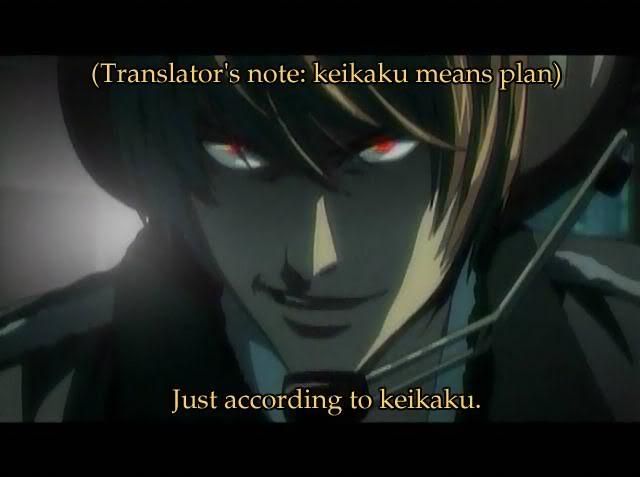
Good...all according to keikaku.

What does keikaku mean?

sorry:lol
 
sprsk said:
It's greatly greatly exaggerated on the internet. American movies are kinda popular here (some of the more big budget stuff, Pirates, Disney) Music is popular with music fans, kids will know about some stuff, if it comes over here but it's not like everyones bumpin' Kanye West and shit.

Don't forget Snoopy and McDonald's.

But yeah, American stuff isn't nearly as popular as one would imagine. Given the choice, the Japanese folks tend to prefer their own nation's products. The trade deficit with the US is indicative of this.

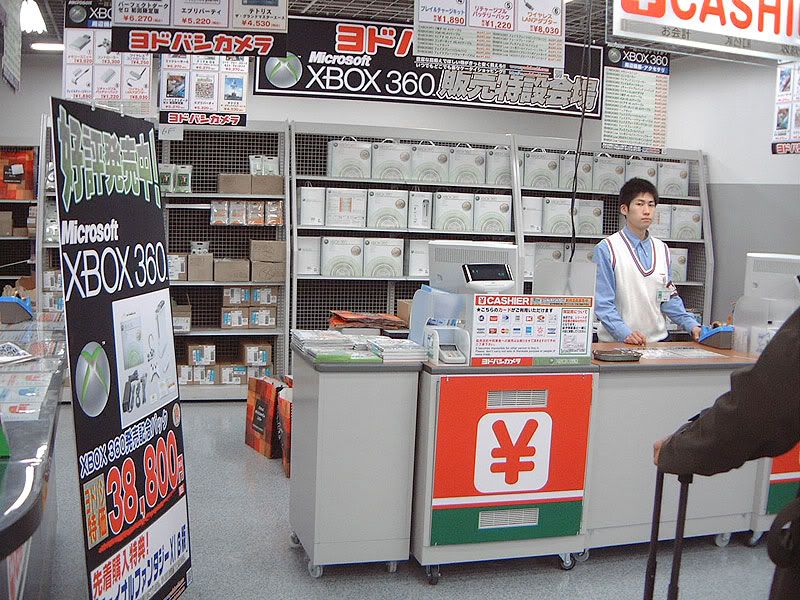
Also, this:

360-japan.jpg


prodystopian said:
What does keikaku mean?

keikaku.jpg
 
prodystopian said:
While we are giving lessons, can someone explain to me the difference between Harakiri and Seppuku?

They're the same thing, hara kiri is just a coarser way to say it. Both are written almost the same way.
 
prodystopian said:
So is there a difference between harakiri and seppuku?

Also, I knew the keikaku joke, I just felt I had to say it.

Here you go.

Wikipedia said:
The most famous form of seppuku is also known as harakiri (腹切り, "cutting the belly") and is written with the same kanji as seppuku but in reverse order with an okurigana. In Japanese, the more formal seppuku, a Chinese on'yomi reading, is typically used in writing, while harakiri, a native kun'yomi reading, is used in speech. Harakiri is the more common term in English, where it is often mistakenly rendered "hari kari".
 
Cheesemeister said:
Here you go.

So my misunderstanding is, what are the other forms of ritual suicide? This is especially confusing because it says that seppuku translates to stomach cutting (hara kiri is cutting the belly, same thing to me), but then says that hara kiri is 'the most famous form'. So what is the difference? The 'harshness' explanation seems reasonable to me.

Thanks for explaining.
 
prodystopian said:
So is there a difference between harakiri and seppuku?

Also, I knew the keikaku joke, I just felt I had to say it.

It's quite simple:

You got: Harakiri, Seppuku, and Jisatsu (suru for the verb)
You got: Penetration, Love making, and sex.

Penetration is the actual physical description of what is going on. In this case, harakiri: hara meaning abdomen, and kiri being a conjugation of the verb "kiru" meaning to cut.

Love making is a flowery term indicating motives behind the action. It adds meaning to the act. Seppuku is just that. There is some ritualistic reason for the suicide. (and the act is carried out by a certain standardized way)

Sex ( originally I had fucking, but it's not accurate, even if it's funnier.) Sex is the word for the act, not the physical description or an implied meaning. That's Jisatsu: literally meaning Killing oneself.
 
prodystopian said:
So my misunderstanding is, what are the other forms of ritual suicide? This is especially confusing because it says that seppuku translates to stomach cutting (hara kiri is cutting the belly, same thing to me), but then says that hara kiri is 'the most famous form'. So what is the difference? The 'harshness' explanation seems reasonable to me.

Thanks for explaining.

Read more about it.

Wikipedia said:
A specialized form of seppuku in feudal times was known as kanshi (諌死, "death of understanding"), in which a retainer would commit suicide in protest of a lord's decision. The retainer would make one deep, horizontal cut into his stomach, then quickly bandage the wound. After this, the person would then appear before his lord, give a speech in which he announced the protest of the lord's action, then reveal his mortal wound. This is not to be confused with funshi (憤死, indignation death), which is any suicide made to state dissatisfaction or protest. A fictional variation of kanshi was the act of kagebara (陰腹, "shadow stomach") in Japanese theater, in which the protagonist, at the end of the play, would announce to the audience that he had committed an act similar to kanshi, a predetermined slash to the stomach followed by a tight field dressing, and then perish, bringing about a dramatic end.
General Akashi Gidayu preparing to commit Seppuku after losing a battle for his master in 1582. He had just written his death poem, which is also visible in the upper right corner.

Some samurai chose to perform a considerably more taxing form of seppuku known as jūmonji giri (十文字切り, "cross-shaped cut"), in which there is no kaishakunin to put a quick end to the samurai's suffering. It involves a second and more painful vertical cut on the belly. A samurai performing jumonji giri was expected to bear his suffering quietly until perishing from loss of blood, passing away with his hands over his face.
 
Regarding the Seppuku / Harakiri thing, there are many different theories about how the two came about and why Harakiri is found in so many foreign dictionaries while it is never used in modern day Japan, but the fact of the matter is that "harakiri" is just not used in Japan today. Sure it comes up in discussions of how foreigners use it along with other strange examples like "Mount Fuji-san", etc... but today pretty much only "seppuku" is used.

Most likely "harakiri" was the proper Japanese many many years ago and like many other Japanese words the reading changed from "kunyomi" to "onyomi" (for those who understand Japanese at all) like "mikado" = "tennou" and "makiba" = "bokujyou", etc...

There is a history of harakiri being used in Japanese, but nothing really modern. Other ways to say the same meaning include "kappuku", "hara wo mesu", "hara wo kiru", etc...

In modern day Japan the most common way to say "cut open one's stomache" is "seppuku". It also doesn't necessarily imply anything ceremonial.
 
LiveFromKyoto said:
The hilarious part is that gaijin is a borderline slur - it's definitely not the "correct" term.


That's the worst part. The mumbling weeaboo fucktards that say this, are aware of its negative connotation. The fact that they continue to use it shows a self-loathing sense of subservience to the superior culture that produces whatever schoolgirl hentai they're jizzing over currently.
 
Given the short thread title, I was expecting this:
JamesClavell_Gai-Jin.jpg


I was sadly disappointed the thread didn't really have much to do with the concept... The Japanese have a lot of troubles to sort out, most of them rooted in a history they won't let go of.
 
JayDub said:
Anyway, as the discussion continued, someone raised their hand and said, "Foreigners in Japan are looked at..." at which point they were interrupted by someone, "excuse me, the proper term for "foreigner" is "gaijin."

the proper term these is "gaikokujin"

funny thing is I remember when I started my teaching career in the states and I was eating lunch with some of my students who started taking normal college level classes (no longer my ESL students) and one guy says something about gaijin to the other and I say "hey you are in the states so technically you are a gaijin here." and he got so livid about "no! I am not gaijin!" of course his buddies took the bait and started calling him a gaijin and he got so pissed he just left....

good times..
 
Rahxephon91 said:
Are American things really not popular in Japan? For some reason I have my doubts.
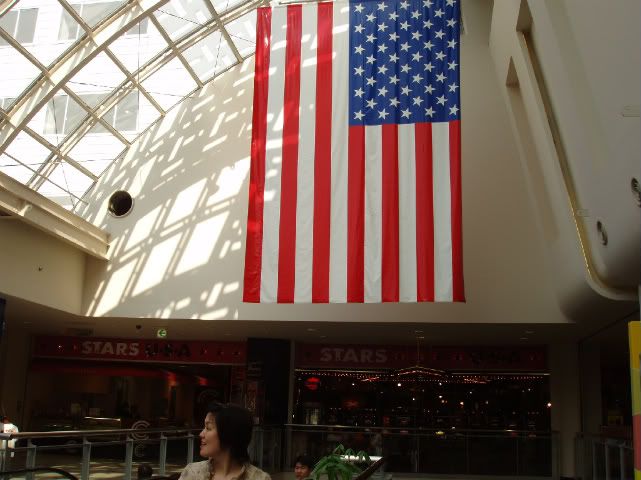
I took this picture in Funabashi in Chiba Prefecture back in 2004.

134-StarsUSA-1.jpg


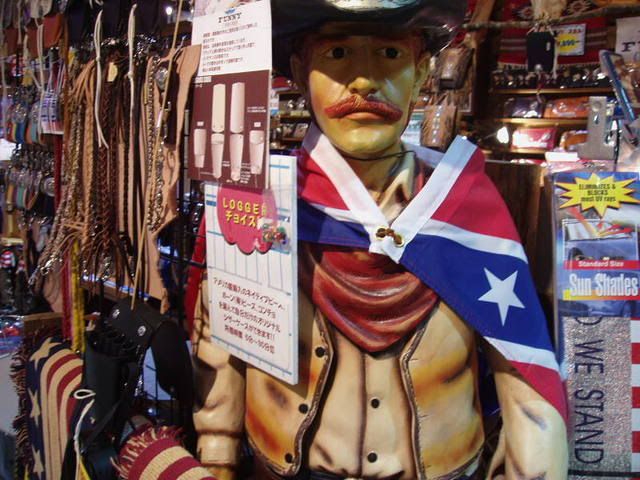
Here's an example of some of the stuff you could find inside.

137-ConfederateCowboy.jpg


I wouldn't say it's popular, but it's funny to see "American" culture caricatured from a Japanese perspective much in the way "Japanese" culture is perceived in America.
 
To people implying American culture isn't particularly popular in Japan:'

What? Are you guys serious? It's so pervasively dominant in their culture that maybe they probably don't recognize it, but American culture is 1000 times more popular in Japan than Japanese culture is here. So much so that I don't even know where to begin.

However, do you think there are "transnationals" (Used alluding to the psychological state of being a transsexual), who think that even though they were born Japanese, they've always identified with Americans more? Well, it depends. There are a lot people who usurp the black hipster culture from the US in dress and music. Korea is worse in this regard. I don't know if it stems from the same sort of self-hatred we attribute to (another loan word) "Otaku."
 
vas_a_morir said:
To people implying American culture isn't particularly popular in Japan:'

What? Are you guys serious? It's so pervasively dominant in their culture that maybe they probably don't recognize it, but American culture is 1000 times more popular in Japan than Japanese culture is here. So much so that I don't even know where to begin.

Yes, I'm serious. Forget for a moment that they all dress in western clothes, and just look at how they act. It's not American in the slightest. I'll give just one aspect as an example.

Japanese people, from what I've observed, will never talk to clerks, etc. unless they absolutely have to. Even then, it'll be mumbled and without eye contact. At the grocery store I go to, there are even cards at the register to put in your basket if you brought your own bags and don't need plastic ones -- just so people don't have to actually talk to the clerk. Today on the train I saw a system for ordering sushi by placing black, plastic chips with the sushi names inscribed on them just so the customer wouldn't have to say anything to the chef. Can you imagine the bulk of the American populace being so inhibited?
 
Cheesemeister said:
Yes, I'm serious. Forget for a moment that they all dress in western clothes, and just look at how they act. It's not American in the slightest. I'll give just one aspect as an example.

Japanese people, from what I've observed, will never talk to clerks, etc. unless they absolutely have to. Even then, it'll be mumbled and without eye contact. At the grocery store I go to, there are even cards at the register to put in your basket if you brought your own bags and don't need plastic ones -- just so people don't have to actually talk to the clerk. Today on the train I saw a system for ordering sushi by placing black, plastic chips with the sushi names inscribed on them just so the customer wouldn't have to say anything to the chef. Can you imagine the bulk of the American populace being so inhibited?

Well, Americans would never bow to anybody, either. That's not what we are talking about, I thought. We are talking about Otaku, who love Japanese comics, tv, and movies, and because they like these things, believe they identify with Japan more than their parent culture.
 
vas_a_morir said:
To people implying American culture isn't particularly popular in Japan:'

What? Are you guys serious? It's so pervasively dominant in their culture that maybe they probably don't recognize it, but American culture is 1000 times more popular in Japan than Japanese culture is here. So much so that I don't even know where to begin.

However, do you think there are "transnationals" (Used alluding to the psychological state of being a transsexual), who think that even though they were born Japanese, they've always identified with Americans more? Well, it depends. There are a lot people who usurp the black hipster culture from the US in dress and music. Korea is worse in this regard. I don't know if it stems from the same sort of self-hatred we attribute to (another loan word) "Otaku."

I don't agree with this statement at all, how exactly is self-identifying with a culture that shares your passions a form of self-hatred?
 
Cheesemeister said:
Yes, I'm serious. Forget for a moment that they all dress in western clothes, and just look at how they act. It's not American in the slightest. I'll give just one aspect as an example.

Japanese people, from what I've observed, will never talk to clerks, etc. unless they absolutely have to. Even then, it'll be mumbled and without eye contact. At the grocery store I go to, there are even cards at the register to put in your basket if you brought your own bags and don't need plastic ones -- just so people don't have to actually talk to the clerk. Today on the train I saw a system for ordering sushi by placing black, plastic chips with the sushi names inscribed on them just so the customer wouldn't have to say anything to the chef. Can you imagine the bulk of the American populace being so inhibited?

The US grocery store I goto even have self-checkout areas that are completely unmanned -- just so people don't have to talk OR see the clerk.

The sushi thing I think is more of a time saving thing. Decide what you want when foot traffic is heavy in line and pay while you're still in line. That way you can sit down, get your food, eat, then walk right out without waiting for an incompetent waiter/waitress to go get your cheque, take your payment, and bringing it back promptly (which as we all know sometimes doesn't happen).
 
rykomatsu said:
The US grocery store I goto even have self-checkout areas that are completely unmanned -- just so people don't have to talk OR see the clerk.
I think those are actually to avoid paying cashiers and baggers :lol They can normally also fit 2 where one line use to be in.
 
rykomatsu said:
The US grocery store I goto even have self-checkout areas that are completely unmanned -- just so people don't have to talk OR see the clerk.

The sushi thing I think is more of a time saving thing. Decide what you want when foot traffic is heavy in line and pay while you're still in line. That way you can sit down, get your food, eat, then walk right out without waiting for an incompetent waiter/waitress to go get your cheque, take your payment, and bringing it back promptly (which as we all know sometimes doesn't happen).

I never thought clerk avoidance was the point of self-checkout lines. Rather, it's a way for stores to save money on labor.

The sushi ordering system with plastic chips was advertised specifically as a way to avoid talking to the chef. The guy ordering had a thought bubble that said, "I'm too shy to talk!"
 
harSon said:
I don't agree with this statement at all, how exactly is self-identifying with a culture that shares your passions a form of self-hatred?

Not always, but I think with "otaku," not just nerds who like various nerdy things including Japanese things like most Gaffers, but people who literally like things because they are Japanese, "squint" and give peace signs to the camera shots, change their names on facebook to katakana or even worse, made up Kanji even though there is no practical reason for it: Yes, I think when it reaches that point, it has some psychological reason for it.

Crapanese.jpg


This guy wants to be something he's not. I'm not saying he's wrong for doing this, and if it makes him happier, he should do it, just like how I feel with Transsexuals, but it is what it is.
 
the irony is most people who have a problem are dorks with anime avatars who have never even stepped foot in japan.
 
Cheesemeister said:
The sushi ordering system with plastic chips was advertised specifically as a way to avoid talking to the chef. The guy ordering had a thought bubble that said, "I'm too shy to talk!"

Well, some sushi chefs ARE intimidating to talk to...i pretty sure that's more of a marketing thing than the real reason behind the sushi thing, considering you mentioned it was at a train station.

I mean, the food tickets were essentially, from what I remember, created for a few reasons:
1. lower cost of labour
2. prevent dine'n'dash
3. help optimize inventory of perishibles
4. convenience
 
vas_a_morir said:
Not always, but I think with "otaku," not just nerds who like various nerdy things including Japanese things like most Gaffers, but people who literally like things because they are Japanese, "squint" and give peace signs to the camera shots, change their names on facebook to katakana or even worse, made up Kanji even though there is no practical reason for it: Yes, I think when it reaches that point, it has some psychological reason for it.

Crapanese.jpg


This guy wants to be something he's not. I'm not saying he's wrong for doing this, and if it makes him happier, he should do it, just like how I feel with Transsexuals, but it is what it is.

Try telling that to someone who's crazy into otaku, and they'll curse you out in Japanese. Nothing worse than someone mixing Japanese insults within an english sentence: "You're a baka, desu!"

The FUCK?!
 
JayDub said:
Try telling that to someone who's crazy into otaku, and they'll curse you out in Japanese. Nothing worse than someone mixing Japanese insults within an english sentence: "You're a baka, desu!"

The FUCK?!

lol

i called an old friend out on something like that. he responded with something along the lines of "since you're japanese, i would have thought you out of all people would be accepting of it". that was the last time we talked :P i guess he was really butthurt or something.
 
Jake. said:
the irony is most people who have a problem are dorks with anime avatars who have never even stepped foot in japan.

I can't help but think that was a pot-shot at me. Well, first of all, it's from a comic book. Second of all, anybody on GAF calling another person a dork is rather redundant. This is a video game forum, dude. Thirdly, I have never set foot in Japan, and as such, I don't claim to be an expert:lol on Japanese culture. I do, however, deal with a lot of Americans who obsess over Japan every day. And finally, You missed the point completely.

There is not problem with people liking things they like. The real problem is when somebody takes something, anything, and tries to make it their identity. I've done this before. When I reinvented myself in 8th grade as a "skater." To be honest, I said "I'm going to become a skateboarder" then, I worked to learn how to skate and like it just so I could pad my rep. And, it came out of a self-hatred for myself, too. I was tired of trying to be accepted by people who didn't want me around. My self esteem took such a beating that I said "Fuck it. I'm going to smoke pot, ride my skateboard, and if I act like I don't give a fuck, I can't have my feelings hurt. We call these things adolescent "phases." I completely understand the mentality of trying to adopt this "Otaku" lifestyle.
 
Status
Not open for further replies.
Top Bottom