
• Hey Guest. Check out your NeoGAF Wrapped 2025 results here!

'Atomic Bomb-Like' Tornado Damage in Oklahoma

Status
Not open for further replies.
What the fuck are you talking about?

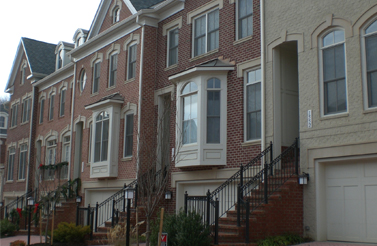
Due to shared walls a row house would only have the front wall and rear wall exposed to the storm winds. You would not have the risk of debris or wind hitting the interior walls thus providing those two walls extra strength. Because of this less surface area of your home is exposed to the winds and debris. Is it really that hard to comprehend?
 
I understand that. But I feel that due to the engineering of them.

These.
SYAA.jpg


Would hold up better than this.


I know the winds are very powerful but the difference in engineering must have a difference. 4 walls for debris to hit vs 2. In a row house I can position myself against a wall that isn't feeling the full force of the storm vs a free standing home. I know both will receive damage but I believe the row homes would fare better.

The surface area of a row home that is experiencing the full winds and debris of the storm is less than a free standing home and it seems that physics would back up the idea of less damage.

No, just No

2011 Tuscaloosa Tornado an EF4 (under criticism, because 64 dead from it alone and 2nd or 3rd costliest tornado ever, should be an easy EF5)

Large section of an apartment building was swept completely away. A 34-ton railroad trestle support structure was thrown 100 feet up a hill, and 35.8-ton coal car was thrown 391 feet.

That was from between 180 and 190 mph winds.
 
I think the part that annoyed me was when you started throwing around phrases like "the difference in engineering must have a difference" and "structural integrity" when you aren't actually basing this on anything other than conjecture.
 
No, just No

2011 Tuscaloosa Tornado an EF4 (under criticism, because 64 dead from it alone and 2nd or 3rd costliest tornado ever, should be an easy EF5)


That was from between 180 and 190 mph winds.

I understand that. My post isn't that damage will be severe. It is simple in regards to the severity of destruction. Even if a row house was a 8/10 destruction vs a free standing 9/10 destruction that is a difference. To simply claim that all building, all designs and all methods of engineering perform the same in a tornado is frankly insuffiecient to me because given all the variables of construction I refuse to believe that the damage is uniform regardless of the engineering behind the structure.

I think the part that annoyed me was when you started throwing around phrases like "the difference in engineering must have a difference" and "structural integrity" when you aren't actually basing this on anything other than conjecture.

I'm basing it on the idea which I refuse in that the engineering of a building has ZERO impact on the overall damage.
 
"8/10 destruction vs a free standing 9/10 destruction"
"frankly insuffiecient to me"
"Given all the variables of construction"
"I refuse to believe"

Is this a joke? If I'm being trolled just tell me. I'll let it happen but just tell me.
 
Due to shared walls a row house would only have the front wall and rear wall exposed to the storm winds. You would not have the risk of debris or wind hitting the interior walls thus providing those two walls extra strength. Because of this less surface area of your home is exposed to the winds and debris. Is it really that hard to comprehend?

it flattened a school.. and no, it would turn everything inside those homes into swiss cheese from the debris. your best luck is literally underground, locked in.
 
I'm basing it on the idea which I refuse in that the engineering of a building has ZERO impact on the overall damage.
It would seem the engineering, materials, and cost required to even begin attempting to build a "tornado-proof" house is worlds beyond what is feasibly possible or reasonable. What would be more reasonable would be more research into making affordable and easy-to-construct safe rooms.
 
I need to research into if skyscrapers or domed stadiums have ever gotten a full blown hit from an EF4 or EF5. Closest I can think of, is the Georgia Dome got clipped by one, but I don't think it was "a full hit."

I'm thinking, the skeletal structure of a skyscraper might/should still be standing. It's problem is, all the walls and windows of each floor have blown out, and odds are, anything on the floors went with them, leaving just the skeletal structure. But hey, "it's still standing"
 
"8/10 destruction vs a free standing 9/10 destruction"
"frankly insuffiecient to me"
"Given all the variables of construction"
"I refuse to believe"

Is this a joke? If I'm being trolled just tell me. I'll let it happen but just tell me.

it flattened a school.. and no, it would turn everything inside those homes into swiss cheese from the debris. your best luck is literally underground, locked in.

Jesus. I'm not debating these things. I'm simply trying to see if a difference in structure would affect damage from a storm. You guys apparently believe that no matter what the design of the structure they will all suffer exactly the same from a storm. I guess I need to make myself clearer. I am talking about the difference between half a wall standing and no wall standing.

It would seem the engineering, materials, and cost required to even begin attempting to build a "tornado-proof" house is worlds beyond what is feasibly possible or reasonable.

I'm NOT saying tornado proof.
 
Sort of. Basements are the way to go in this area.

Well, yeah, basements to protect lives, but full dwellings would have to be built completely underground in order to protect them from tornados. There isn't a lot you can do to strengthen a building against them.

I am talking about the difference between half a wall standing and no wall standing.

Half a wall vs no wall is basically the same thing; both houses are totaled, in both homeowners were just as likely to lose their lives if they didn't seek shelter.
 
Jesus. I'm not debating these things. I'm simply trying to see if a difference in structure would affect damage from a storm. You guys apparently believe that no matter what the design of the structure they will all suffer exactly the same from a storm. I guess I need to make myself clearer. I am talking about the difference between half a wall standing and no wall standing.

whats the most practical solution though? of course it's been thought out, but it's too costly, so you build a basement/bombshelter instead.

no one is arguing that a structure can survive, but why risk it? even if a building is standing, inside would be absolute chaos if it were to be hit. broken glass, metal, wood, etc become like bullets.
 
Half a wall vs no wall is basically the same thing; both houses are totaled, in both homeowners were just as likely to lose their lives if they didn't seek shelter.

And this I guess is the disconnect. I'm not talking about human survival, just structural integrity.

no one is arguing that a structure can survive, but why risk it? even if a building is standing, inside would be absolute chaos if it were to be hit. broken glass, metal, wood, etc become like bullets.

It is simply a thought on structural integrity.
 
Rebecca drove in the opposite direction as the tornado and escaped, returning to the house about 45 minutes later to see whether her cats had survived, only to find her husband there, searching for her and their son in the rubble that had been their home.

“We just burst into tears. It was awesome,” Rebecca told Wolf.

“Well, you’re blessed. Brian, your husband, is blessed. Anders is blessed. . . . We’re happy you’re here. You guys did a great job and I guess you got to thank the Lord, right?” Wolf wondered.

“Yeah,” Rebecca said, noncommittally.

“Do you thank the Lord for that split-second decision?” Wolf pressed.

“I-I’m-I’m-I’m actually an atheist,” Rebecca responded, apologetically.

“You are? Alright, don’t thank the Lord,” said Wolf.


http://www.washingtonpost.com/blogs...62e07fe-c269-11e2-914f-a7aba60512a7_blog.html

Lol, you go, girl. Actually a little surprised to see an atheist in Oklahoma. Hope she doesn't get flack from her family.
 
@konka - you still have flat surfaces in your scenario. The best way to build to survive high winds is to build spherical homes.
However, you still have debris like cars, trees, telephone poles, and any number of things.
 
And this I guess is the disconnect. I'm not talking about human survival, just structural integrity.


It is simply a thought on structural integrity.

so one one giant home made up of little homes is better than one small home structurally.

no shit.
 
Remember, most brick homes built now in America are just brick verneer, basically a shell around a wood frame. Not really all that better than siding or whatever. Load bearing brick construction is a different game, but not many could afford that these days. None of that would really matter for these types of storms anyway.
 
And this I guess is the disconnect. I'm not talking about human survival, just structural integrity.

Considering that structural integrity would be completely compromised in both hypotheticals, I don't understand how it would make a difference. Half a wall standing vs no wall standing both mean the house would have to be bulldozed. So there is no reason to even speculate about it.
 
Damn, those trees look like they're almost stripped of bark.

They more than likely are. There are still tree 'remnants' like that around here stripped of bark. There were also some streets here where patches of pavement was ripped up (from the April 27th storm).

No, just No

2011 Tuscaloosa Tornado an EF4 (under criticism, because 64 dead from it alone and 2nd or 3rd costliest tornado ever, should be an easy EF5)

I live in Pleasant Grove, which is where it hit after it left Tuscaloosa and Concord/Hueytown. It was at it's peak strength when it hit here as there were homes that even the foundation was gone and basements collapsed. IMO it was an F5 as it went through here; that was something I will NEVER forget.
 
Does anyone else think Ricky Gervais' tweet earlier was kind of douchy?


This whole situation makes me very sad. I hope everyone can get through this and get back on their feet soon.
 
Does anyone else think Ricky Gervais' tweet earlier was kind of douchy?


This whole situation makes me very sad. I hope everyone can get through this and get back on their feet soon.


No, I think it was hilarious and needed to be said. I'm tired of people offering their prayers as help. Your prayers will do exactly jackshit.
 
They more than likely are. There are still tree 'remnants' like that around here stripped of bark. There were also some streets here where patches of pavement was ripped up (from the April 27th storm).


I live in Pleasant Grove, which is where it hit after it left Tuscaloosa and Concord/Hueytown. It was at it's peak strength when it hit here as there were homes that even the foundation was gone and basements collapsed. IMO it was an F5 as it went through here; that was something I will NEVER forget.

Yeah, I was in McCalla when they went through. The big one went 5 miles north of us, while 2 or 3 small tornado's were south of us (the ones that went through West Blocton). Just a crazy day, watching it live as it started and tore through T-Town. When they showed tracking movements, it really did look like it was coming right at us (as I'm sure you had that same feeling). Like "oh snap...that's 5-10 minutes away. Is there really a safe enough place to survive this?"

Pleasant Grove hasn't had any luck avoiding Tornado's, 98 and 2011.
 
I understand that. My post isn't that damage will be severe. It is simple in regards to the severity of destruction. Even if a row house was a 8/10 destruction vs a free standing 9/10 destruction that is a difference. To simply claim that all building, all designs and all methods of engineering perform the same in a tornado is frankly insuffiecient to me because given all the variables of construction I refuse to believe that the damage is uniform regardless of the engineering behind the structure.


I'm basing it on the idea which I refuse in that the engineering of a building has ZERO impact on the overall damage.

Once the front and backs are compromised, it's game over. Doesn't matter if there's a wall standing still if everything else around it is gone.

But yeah, once the front and back is gone, the rest of the walls just fall like dominoes.
 
I've been hearing that basements aren't common in the area that was hit. Why on earth would basements not be pretty much mandatory in all of Oklahoma and the rest of that area of the country that are hit with devastating tornadoes every year? I live in Indiana and I'm surprised at how few houses around here have basements when we have severe storms every year.
 
I've been hearing that basements aren't common in the area that was hit. Why on earth would basements not be pretty much mandatory in all of Oklahoma and the rest of that area of the country that are hit with devastating tornadoes every year? I live in Indiana and I'm surprised at how few houses around here have basements when we have severe storms every year.

Because the soil makes it cost-prohibitive.
 
From what little I know, most house failures are due to roof damage or failures. The wind catches under the eves or a hole in the roof and turns the roof into effectively a parachute. Once the roof comes off there's barely anything holding the walls against horizontal sheer. The corners hold out as long as they can but the massive wind against the large wall easily overpowers them. Once you lose your ceiling rafters your house is pretty much toast in the horizontal winds.
 
almost nothing can stand a full grown F5 twister except an underground bunker.
These things sandblast the bark off trees, lift up trains and suck up asphalt off the street.

Like many mentioned already: the main problem is the debris. they found skeletonized people after strong tornados because the combination of sand and strong wind sandblasted the skin and flesh off their bones.

I'm very interested in twisters since my childhood and I know many things about them. the power they are able to generate is terrifying to say at least.

Sandblasted Tree:
QTgCiIv.jpg


asphalt sucked off streets:
H7ZHsyS.jpg

iWfvrwu.jpg


you know how much force it takes to bend a steel beam?
A1VwofT.jpg

rBlfSxc.jpg

9L2lvRh.jpg
 
Indeed, steel and heavy concrete gets twisted and smashed to pieces in these things.

Even some of these tornado proof house concepts still have a pretty high degree of being torn apart in the debris field, or if a big truck or piece of farm equipment weighing 10+ tons gets thrown like a softball into your wall.
 
"Tornado-proofing" a structure can only go so far. Being deep underground is your best bet to stay safe; an EF4 or EF5 tornado that directly hits your house does not care what your house is made of. Even if you can build a structure that somehow stands up to near-300 MPH winds, it's not likely it can withstand a barrage of debris such as train cars being thrown around like styrofoam.
 
Can we seriously stop bitching about how OK people build their houses?

For fuck's sake, I get it that we're trying to discuss how to further prevent this kind of tragedy, but some people are coming off as "Why didn't they do this in the first place?". Now is not the fucking time.
 
I understand that. My post isn't that damage will be severe. It is simple in regards to the severity of destruction. Even if a row house was a 8/10 destruction vs a free standing 9/10 destruction that is a difference. To simply claim that all building, all designs and all methods of engineering perform the same in a tornado is frankly insuffiecient to me because given all the variables of construction I refuse to believe that the damage is uniform regardless of the engineering behind the structure.


I'm basing it on the idea which I refuse in that the engineering of a building has ZERO impact on the overall damage.

There' also more material to fall on the occupants. In an Ef4 or above (which exceeds any cyclone or hurricane rating scale) you are only safe underground or in a structure that is reinforced enough to withstand a bomb.
 
So this thread is full of know-it-alls claiming building a basement is "impossible" or "unfeasible" in Oklahoma. Turns out, that was a massive load of bull.

NYT had a large article today about it. The cost? A paltry $4,000 in a new home.

And only 10% of the homes build which were destroyed last time have one. Oklahoma refuses to regulate Tornado safety standards - not even schools are required to have any shelter.
 
So this thread is full of know-it-alls claiming building a basement is "impossible" or "unfeasible" in Oklahoma. Turns out, that was a massive load of bull.

NYT had a large article today about it. The cost? A paltry $4,000 in a new home.

And only 10% of the homes build which were destroyed last time have one. Oklahoma refuses to regulate Tornado safety standards - not even schools are required to have any shelter.
It's not bullshit, it actually is harder to build a basement in Oklahoma than in many other places. The red clay soil is extremely susceptible to water and heat (as a homeowner, I can verify this) so basements are extremely prone to cracking and leaking. Nobody said it's impossible, but there are real reasons that there are few basements.

The best solution IMO is to require in-ground tornado safety shelters to be built in new constructions, and for the state/FEMA to subsidize their installation in existing homes. Either that, or requiring residents to have escape plans to buildings that do have basements (churches, courthouses, etc.) in the event of a storm.

At the same time, let's remember how random and unpredictable tornadoes are. This isn't like Hurricane Sandy when we can be reasonably sure what the consequences of another storm will be. Investing massively in tornado shelters may save some lives, but events in which an underground shelter is necessary are exceedingly rare.
 
So this thread is full of know-it-alls claiming building a basement is "impossible" or "unfeasible" in Oklahoma. Turns out, that was a massive load of bull.

NYT had a large article today about it. The cost? A paltry $4,000 in a new home.

And only 10% of the homes build which were destroyed last time have one. Oklahoma refuses to regulate Tornado safety standards - not even schools are required to have any shelter.

How much would an underground bunker cost that could hold 500 students and 100 staff? Fuck off.

I'm sure they could build a bank vault the size of a gymnasium since it's so economically feasible.

xatop3.jpg


concretestick.jpg
 
Status
Not open for further replies.
Top Bottom