
You are using an out of date browser. It may not display this or other websites correctly.
You should upgrade or use an alternative browser.
You should upgrade or use an alternative browser.
Why is Nintendo still so secretive with announcements? Switch 2 feels oddly empty for the future
- Thread starter Midway-AGNC-
- Start date


Windom Earle
Member
Don't be so hard on Nintendo. They only had an eternity to prepare a proper launch window catalogue.
And parts of the audience are happy with the lukewarm slop that was delivered so far.
And parts of the audience are happy with the lukewarm slop that was delivered so far.

Trilobit
Absolutely Cozy
Based on how most of its game library seems to consist of upgraded Switch 1 games, they should have named the console Switch 2.0.
You should upgrade to jester makeup and try to get a job for a king.I keep telling myself it's because the next 3D Mario is juuuust around the corner.
I'm almost out of clown makeup.

Mozza
Member
Nintendo rarely tell you about games that are coming in a couple of years, it's more stuff just around the corner. I am betting there will be a Direct very soon into the new year.One thing that has been bothering me lately is how little Nintendo is willing to show about its future, especially now that we're heading into the Switch 2 era. Right now, this is basically what we know is coming:
And that's… kind of it.
- Animal Crossing: New Horizons – Nintendo Switch 2 Edition (Jan 15, 2026)
- Mario Tennis Fever (Feb 12, 2026)
- Fire Emblem: Fortune's Weave (2026)
- Splatoon Raiders (TBA)
- Super Mario Bros. Wonder – Nintendo Switch 2 Edition + Meetup in Bellabel Park (2026)
- Yoshi and the Mysterious Book (2026)
A part of this lineup is made up of re-releases or enhanced versions. That's fine as supporting content, but even if you count Splatoon as a system seller, which it arguably is for a large portion of Nintendo's audience, where is the big, forward-looking hit that generates long-term hype for 2026 and beyond? There's still no clear flagship reveal on the horizon, no major new IP, and no ambitious sequel that signals what the platform's future really looks like.
What makes this feel worse is the contrast with what we just saw at the Video Game Awards. Other publishers weren't shy about revealing games planned not only for 2026, but even further out. Whether those games slip or not is beside the point. Those announcements give players a sense of direction, a roadmap, and confidence that something substantial is being built.
Nintendo's philosophy, on the other hand, still revolves around announcing games at the last possible moment. One of the most common defenses of this strategy is the idea that announcing games early is inherently bad, because some titles end up being revealed five years before launch. But that's an extremely binary and exaggerated way of framing the issue. The alternative to announcing a game five years early isn't to announce everything two months before release and keep the future completely opaque. There is a wide middle ground between those extremes.
Even vague reveals, early teasers, or project confirmations help establish momentum and long-term confidence. Right now, Nintendo's silence doesn't feel disciplined, it feels unnecessarily closed off. Instead of building anticipation, it creates uncertainty and invites speculation about whether the next few years are actually planned out or just being drip-fed year by year. Another argument that often comes up is that Nintendo is in a position of comfort, "swimming in money," and therefore doesn't need to worry about hype cycles, communication, or public perception. But financial success doesn't invalidate criticism. If anything, it raises expectations.
At this point, the question isn't whether Nintendo can afford to stay quiet, it's whether this continued secrecy is actually beneficial for the Switch 2 ecosystem in the long run. Wouldn't it make more sense to show what's coming, set expectations, and give players confidence in the platform's future instead of keeping everything hidden until the last minute?
Curious to hear what everyone thinks.
Edit: Pokopiia, Tomodachi Life and Rhythm Heaven are also coming.
Nintendos focus is to make each game get its own time period to shine, with advertisement and launch dates not overlapping if possible, so as to not make the games compete directly against each other for attention. Mario Kart in June, Donkey Kong in July. Or how the focus was on Kirby with directs in november and then launch and only then focus on Metroid Prime 4. Which can also be a negative, since it limited the opportunity to focus on Metroid Prime 4 before launch.
This also means that they tend to limit the announcement of new games in Nintendo directs to a smaller time period, to make us concentrate on the games we, hopefully for Nintendo, will actually spend money on right away.
This also means that they tend to limit the announcement of new games in Nintendo directs to a smaller time period, to make us concentrate on the games we, hopefully for Nintendo, will actually spend money on right away.
Last edited:

Pasta la Vista
Member
As someone who doesn't own one, it seems to have a good amount of first party support already out of the gate (but nothing for me in particular).
Feels like we're still a couple years away from a new Zelda announcement. Really curious to see what they do with the next one.
Feels like we're still a couple years away from a new Zelda announcement. Really curious to see what they do with the next one.


Robb
Gold Member
That'll be published by Level 5.What about Professor Layton ?

NeoIkaruGAF
Gold Member
They just released a game announced seven years prior.
With the current development times, and big projects from other devs being cancelled every week, they probably want to be sure they're going to actually release a game before announcing it.
With the current development times, and big projects from other devs being cancelled every week, they probably want to be sure they're going to actually release a game before announcing it.

CentralScrutinizer
Member
Because third party lineup is stacked.
Nintendo typically doesn't announce games really far out.
Tears of the Kingdom being delayed by Covid and existing in the public consciousness for four years before release was an anomaly.
Metroid Prime 4 being announced and cancelled and rebooted and existing in the public consciousness for 8 years before release was an anomaly.
This typically isn't how Nintendo handles these things.
Nintendo typically doesn't announce games really far out.
Tears of the Kingdom being delayed by Covid and existing in the public consciousness for four years before release was an anomaly.
Metroid Prime 4 being announced and cancelled and rebooted and existing in the public consciousness for 8 years before release was an anomaly.
This typically isn't how Nintendo handles these things.
Last edited:

GoldenEye98
posts news as their odd job
Why are they announcing literal software patches 6 months in advance (Super Mario Bros Wonder)
CentralScrutinizer
Member
Ehh, I think we can let that one slide since it was wrapped in with the 40th anniversary direct for Mario. It's also a content expansion as well.Why are they announcing literal software patches 6 months in advance (Super Mario Bros Wonder)
Last edited:

Poppinfresh
Member
You don't deserve the effort it would take me to formulate a more nuanced response so instead, I just point out the obvious: You're acting like a pathetic kid throwing a temper tantrum because Nintendo exists and your replies in this thread reveal that you're trying to engage in even more pathetic console war BS.Notice how the response isn't actually engaging with the argument about communication strategy, timing of announcements, or long-term confidence.
Grow up.
Get a hobby that isn't posting on GAF

yurinka
Member
You must be new at Nintendo: it's normal to see 6 times more games announced for PS than for Nintendo in an event like the TGA.Why is Nintendo still so secretive with announcements? Switch 2 feels oddly empty for the future
They released this year MK, Donkey Kong, Pokemon and Metroid. That's a lot for them, they only have one or two major games per year.
Now that last month they relased to of them, it will take them maybe a handful months to announce the next couple big games. Very likely will be the next 3D Mario (there's the 40th Mario anniversary) and Animal Crossing.
Last edited:

Fbh
Member
Because they don't have to, and this way they can have multiple directs with announcements during the year instead of revealing their entire lineup for the next 3 years at once and then mostly having to limit their shows to "updates".
Their heavy reliance on their historic franchises also helps. We don't need an announcement to know they'll release a new Zelda, Mario, Animal Crossing, Pokemon, etc
Their heavy reliance on their historic franchises also helps. We don't need an announcement to know they'll release a new Zelda, Mario, Animal Crossing, Pokemon, etc
Last edited:
Other than a select few titles they announced way too early, Nintendo has been like this through the entire Switch lifestyle. For comparison, here is what we knew, first party wise, on Dec 31 2017 for the Switch (basically the same time frame we are in now with the Switch 2):
Bayonetta 1/2 - Feb 2018
Kirby Star Allies - Mar 2018
Yoshi, Metroid Prime, Bayonetta 3 - Who knows?
Yes, that is all we knew. So we are actually in a much better place now than we used to be.
As for why Nintendo does it, well, why not? They have probably figured out that long wait between announcement and release don't have any impact on sales, so why not just wait until you have a good idea when the game releases. Better that than the embarrassing situation of Metroid where it took 8 years to release. A cynical view may also say that, by stringing people along with release schedule only 6 months out or whatever, people may be more inclined to buy a game they were only on the bubble of buying since they might figure nothing better will release afterwards. Is that true? I don't know, I'm not a CEO of a multi-billion dollar corporation. But whatever the case, Nintendo would rather focus on the immediate future than hyping up internet message boards.
Bayonetta 1/2 - Feb 2018
Kirby Star Allies - Mar 2018
Yoshi, Metroid Prime, Bayonetta 3 - Who knows?
Yes, that is all we knew. So we are actually in a much better place now than we used to be.
As for why Nintendo does it, well, why not? They have probably figured out that long wait between announcement and release don't have any impact on sales, so why not just wait until you have a good idea when the game releases. Better that than the embarrassing situation of Metroid where it took 8 years to release. A cynical view may also say that, by stringing people along with release schedule only 6 months out or whatever, people may be more inclined to buy a game they were only on the bubble of buying since they might figure nothing better will release afterwards. Is that true? I don't know, I'm not a CEO of a multi-billion dollar corporation. But whatever the case, Nintendo would rather focus on the immediate future than hyping up internet message boards.
Poppinfresh
Member
That's because Nintendo is smart enough to know that 99% of their customer base don't care about internet message boards.Nintendo would rather focus on the immediate future than hyping up internet message boards.
If only Sony and other developers would learn this lesson too...

RoboFu
One of the green rats
Does this help op?
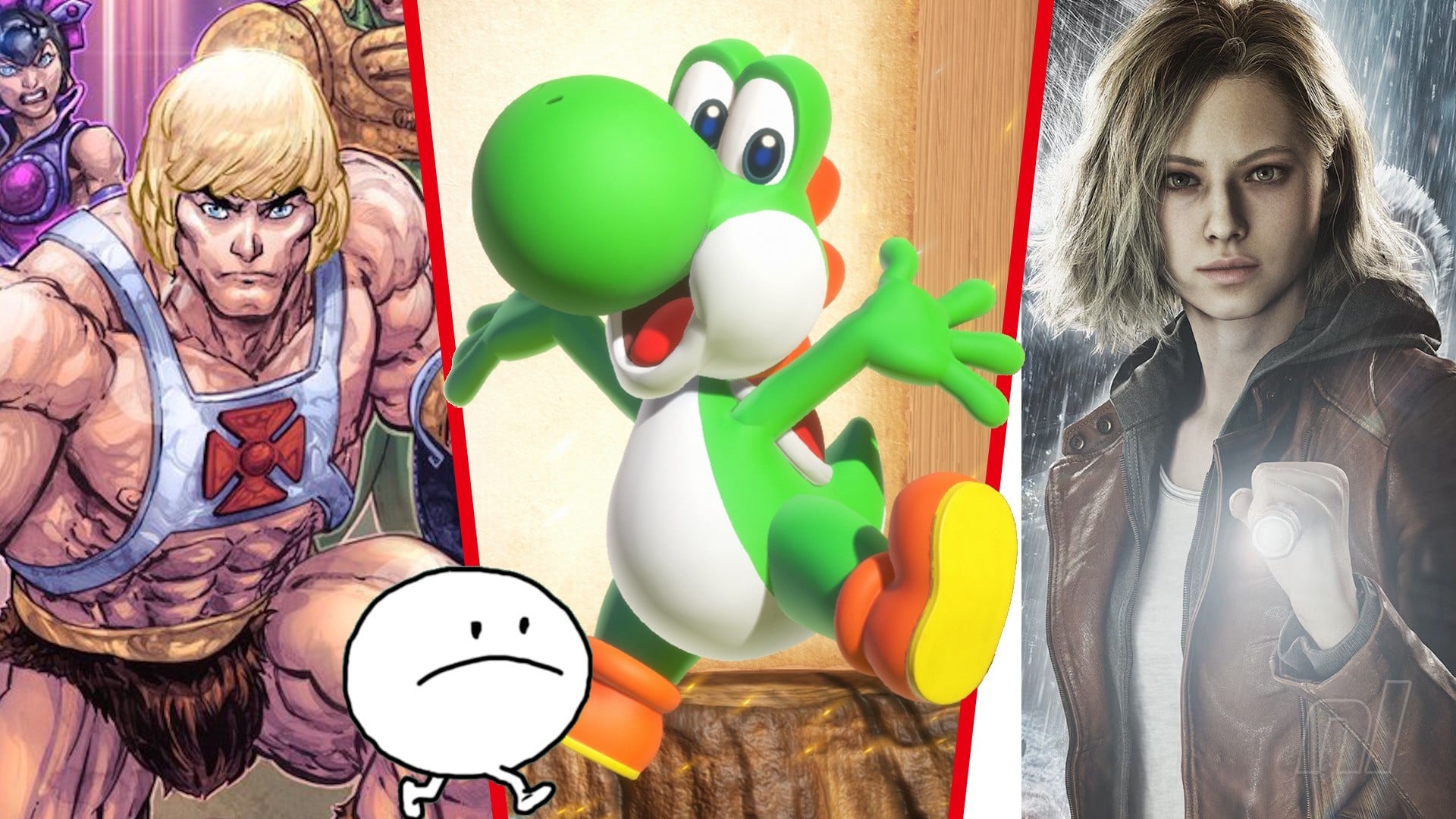
 www.nintendolife.com
35 Upcoming Nintendo Switch 1 & 2 Games To Look Forward To In 2026
The very best Switch 1 & 2 games coming soon
www.nintendolife.com


leo-j
Member
Well considering Sony has been very tight lipped about their projects too. Just 3 big games coming out in the next year or two from their first party (Wolverine, Saros, and Naughty dog's game) … they aren't announcing games 4-5 years early anymore it seems. Last was Wolverine. Plus they have the big third party games like Halo, Forza, Phantom blade, Control, and all that jazz.That's because Nintendo is smart enough to know that 99% of their customer base don't care about internet message boards.
If only Sony and other developers would learn this lesson too...

Alexios
Cores, shaders and BIOS oh my!
Probably don't want any more hype for now, coasting on the system & Kart, hence they released with a DK instead of main Mario, Air Riders instead of Smash etc., saving up the big guns for when they need the boost/can fulfill the demand.
You know some things are coming anyway, Zelda, Mario, Splatoon (shown) Xenoblade or whatever Monolith, don't need more BOTW/Prime 4 waits. I'm curious for all the new shit they'll have to show though, this gen's ARMS, Kid Icarus, etc.
Would be neat to see some that don't pan out but I was gutted for it, thought of Burning Rangers.
 www.unseen64.net
You know some things are coming anyway, Zelda, Mario, Splatoon (shown) Xenoblade or whatever Monolith, don't need more BOTW/Prime 4 waits. I'm curious for all the new shit they'll have to show though, this gen's ARMS, Kid Icarus, etc.
Would be neat to see some that don't pan out but I was gutted for it, thought of Burning Rangers.
Cosmic Walker [Wii - Cancelled] - Unseen64
Preserving Details, Screenshots, Videos & more Lost Media for Cosmic Walker [Wii - Cancelled] Help us to remember cancelled video games!
www.unseen64.net
Last edited:

Hunter 99
Member
There is a hell of a lot of discussion on this thread. OP, if nintendo switch 2 is your primary and only console you play then i believe there is a lot of content available now. Secretive they may be or not, even 2026 has quite a bit already announced.
Personally for me it's my secondary console and I'll buy maybe 5-10 games in its lifespan.(I'm only interested in Zelda,Mario maybe a bit of Dk that's 2d and lugis mansion.) Regardless of some of the 3rd party titles coming to switch 2 I will always play them on ps5.
This has been a pattern with all my nintendo consoles from childhood and owning a NES through to switch. I only owned 10 games max throughout its life per console.
Your defo getting some heat on the discussion so don't stress it man.
Personally for me it's my secondary console and I'll buy maybe 5-10 games in its lifespan.(I'm only interested in Zelda,Mario maybe a bit of Dk that's 2d and lugis mansion.) Regardless of some of the 3rd party titles coming to switch 2 I will always play them on ps5.
This has been a pattern with all my nintendo consoles from childhood and owning a NES through to switch. I only owned 10 games max throughout its life per console.
Your defo getting some heat on the discussion so don't stress it man.


Gambit2483
Member
Drops/announces more games in 6 months after launch than Sony did 2 years into PS5...They just dropped some huge ip lol Metroid prime 4 , DK, and a new Mario kart. It's literally been less than a year. And they have a lot of new games being ported over.
"Why is Nintendo so secret and silent? Switch 2 might be in trouble. I'm worried, guys."
Last edited:

justiceiro
Marlboro: Other M
Basically... you only care about 3d Mario, 3d Zelda or smash. Would you be happier if they drop a "tear of the kingdom sequel is now in development" with nothing to show for?
Dude, Nintendo is finally bringing a diverse line up on ages. A Yoshi game that with a unique artstyle. They have a fucking from software exclusive coming up. Tomodachi is not my favorite franchise, but sells a lot.
It's clear Mario team was working on donkey Kong until now. It's clear Zelda team barely finished tear of the kingdom. And Sakurai was working on something other than smash just now.
You will have to wait years to have anything that they can show, and I'm all for it, nothing more boring that gaming announcement with no gameplay.
I mean, you don't need to get excited about things you don't know about, and I understand that you have to buy consoles even without games, before they get more expensive. But, it's about the same games over and over, don't pretend it's not.
Dude, Nintendo is finally bringing a diverse line up on ages. A Yoshi game that with a unique artstyle. They have a fucking from software exclusive coming up. Tomodachi is not my favorite franchise, but sells a lot.
It's clear Mario team was working on donkey Kong until now. It's clear Zelda team barely finished tear of the kingdom. And Sakurai was working on something other than smash just now.
You will have to wait years to have anything that they can show, and I'm all for it, nothing more boring that gaming announcement with no gameplay.
I mean, you don't need to get excited about things you don't know about, and I understand that you have to buy consoles even without games, before they get more expensive. But, it's about the same games over and over, don't pretend it's not.

Midway-AGNC-
Member
You don't have a nuanced response because you don't have an argument. All you've got left is childish name-calling and edgy one-liners, hoping that sounding loud somehow makes you right.You don't deserve the effort it would take me to formulate a more nuanced response so instead, I just point out the obvious: You're acting like a pathetic kid throwing a temper tantrum because Nintendo exists and your replies in this thread reveal that you're trying to engage in even more pathetic console war BS.
Grow up.
Get a hobby that isn't posting on GAF
If insults are the only thing you can contribute, that says a lot more about you than it does about me. Get the fuck out of here.
The discussion is about how and when Nintendo announces its own titles, not about how many games PS shows, or how people are supposedly "used to it." You're arguing against something I never said, this thread is about Nintendo first-party games.You must be new at Nintendo: it's normal to see 6 times more games announced for PS than for Nintendo in an event like the TGA.
They released this year MK, Donkey Kong, Pokemon and Metroid. That's a lot for them, they only have one or two major games per year.
Now that last month they relased to of them, it will take them maybe a handful months to announce the next couple big games. Very likely will be the next 3D Mario (there's the 40th Mario anniversary) and Animal Crossing.
And you're doing exactly what I called out in the OP from the start.I read all of your posts (unfortunately).
You keep talking about them announcing games only immediately before release or 6 months max.
This isn't true. They do announce games longer before release. Pokemon ZA was announced in Feb 2024. Tomodachi collection in March this year. Fire Emblem as well could very easily be a year out. How long before release was Tears of the Kingdom announced?
Some games they announce well before release, some games just a few months before.
You say you want a middle ground, so what is your middle ground when they already do announce games 1+ year out?
You want every single game to be announced years in advance?
You're cherry-picking one or two examples and trying to pass them off as the norm, while conveniently ignoring the broader pattern, which is that the majority of Nintendo announcements happen very close to release. That's the whole point. Exceptions don't invalidate a pattern, and pointing to Pokémon, Tomodachi, or TotK doesn't magically erase how Nintendo usually operates.
Then, to top it off, you fall right back into the same tired fallback I already addressed: "so what, do you want games announced years in advance?" No. I explicitly said I don't. Repeating that strawman after it's been answered multiple times doesn't strengthen your case, it just reinforces the echo-chamber mentality I was criticizing. Same recycled arguments, same distortions, same attempt to shut down criticism instead of engaging with it.
Because Nintendo has always had a much larger first-party lineup than Sony and relies far more heavily on it to promote and sell its systems? Unless we're suddenly living in an alternate reality where Nintendo is being carried by third-party support.Drops/announces more games in 6 months after launch than Sony did 2 years into PS5...
"Why is Nintendo so secret and silent? Switch 2 might be in trouble. I'm worried, guys."
The comparisons a lot of people are making with Sony are ridiculous. Sony depends on third-party games to sell its systems, and the same goes for Microsoft. Yes, many of their first-party games sell well and are ambitious, but neither company relies on first-party titles to promote their hardware in the same way Nintendo does, not even close.
So when someone says "Sony has the same number of games announced," that's a flawed and misleading argument. If anything, it highlights how thin Nintendo's announcements currently are, because first-party games are the main driving force behind Nintendo hardware sales. Do they have third-party support? Sure. But Nintendo doesn't position or leverage third-party games as core system sellers the way Sony and Microsoft do. Unfortunately, that's the case, even though it arguably shouldn't be.
Last edited:
You're literally doing the exact thing I criticized in the OP and then acting shocked when it gets called out.
You take an extreme example and use it as a blanket justification. In your case, it's "sales prove Nintendo is right, therefore the discussion is over." That's the same binary thinking I pointed out from the start. Either announce games five years in advance or shut up and accept two-month announcements. No middle ground allowed.
And that's the flaw. Asking for a reasonable middle ground isn't some outrageous demand. It's not "I want to wait five years." It's "why does everything have to be hidden until the last possible second, even when projects are clearly far along?" Yet every time this gets questioned, the response is the same rehearsed line: sales, sales, sales. As if financial success magically invalidates any critique of strategy or communication.
Call it whatever you want, but when criticism is instantly dismissed with the same talking points and questioning that mindset is treated like heresy, that's exactly how an echo chamber works. Whether you personally identify as a Nintendo fanboy or not doesn't really matter. The reaction pattern is the same, and it perfectly illustrates the point I was making in the first place.
You've got the whole thing entirely backwards. You can't isolate a communications strategy from sales success because the entire point of a communication strategy is to generate sales. You've also taken it as a given that early announcements are a find thing on their own terms, which is a conclusion that is not at all served by evidence.
NOBODY cares about giving you a roadmap for their future plans. Not just Nintendo, nobody. In the vast majority of cases, game announcements are meant to generate excitement which sells hardware now and the game when it's released. When things are going well (and right now for Nintendo they're going very well) that's the only purpose of early announcements. So if Nintendo's sales are strong then by definition their communications strategy is working.
Yes there are other reason to do super early announcements. Nintendo announced a lot of games at E3 2017 (including Metroid Prime 4)well in advance of their ship dates to reassure customers the Wii U's software droughts wouldn't be repeated. They announced the shift of Prime 4 to Retro to explain why the game was taking so long. Bethesda put up a glorified poster for Elder Scrolls VI to tell people they hadn't forgotten the series as they ported Skyrim to every platform under the son while pushing Fallout 76 and Starfield. Naughty Dog put out a trailer for The Heretic Prophey to show they still exist and are making something, because their last new game came out in 2018.
None of those announcements were made out of some sort of generosity or to keep customers informed; they were made to send a specific message. Nintendo is currently in a place with hardware and software sales that they don't need to send those other messages, so they're keeping their announcements focused only on what will actually move games.
CentralScrutinizer
Member
You'll get Ocarina of Time 3D HD for $70 and you'll like it.All I know is Nintendo better fucking free Wind Waker HD & Twilight Princess HD and both Metroid Prime 2 & 3 from their WiiU & Wii prisons.
Zelda's 40th next year is an ideal time!
Midway-AGNC-
Member
That argument sounds tidy on the surface, but it breaks down once you look at how marketing and consumer behavior actually work.You've got the whole thing entirely backwards. You can't isolate a communications strategy from sales success because the entire point of a communication strategy is to generate sales. You've also taken it as a given that early announcements are a find thing on their own terms, which is a conclusion that is not at all served by evidence.
NOBODY cares about giving you a roadmap for their future plans. Not just Nintendo, nobody. In the vast majority of cases, game announcements are meant to generate excitement which sells hardware now and the game when it's released. When things are going well (and right now for Nintendo they're going very well) that's the only purpose of early announcements. So if Nintendo's sales are strong then by definition their communications strategy is working.
Yes there are other reason to do super early announcements. Nintendo announced a lot of games at E3 2017 (including Metroid Prime 4)well in advance of their ship dates to reassure customers the Wii U's software droughts wouldn't be repeated. They announced the shift of Prime 4 to Retro to explain why the game was taking so long. Bethesda put up a glorified poster for Elder Scrolls VI to tell people they hadn't forgotten the series as they ported Skyrim to every platform under the son while pushing Fallout 76 and Starfield. Naughty Dog put out a trailer for The Heretic Prophey to show they still exist and are making something, because their last new game came out in 2018.
None of those announcements were made out of some sort of generosity or to keep customers informed; they were made to send a specific message. Nintendo is currently in a place with hardware and software sales that they don't need to send those other messages, so they're keeping their announcements focused only on what will actually move games.
Yes, communication strategies exist to drive sales, but reducing their purpose to "sell hardware now" is an oversimplification. Building awareness, anticipation, and long-term confidence is also a core function of marketing. If early announcements were only useful when sales are bad, publishers wouldn't keep doing them when things are going well. The idea that strong sales automatically mean the communication strategy is optimal is a post-hoc justification, not evidence.
And the claim that early announcements don't matter on their own terms just isn't true. Hype and anticipation are fundamental to marketing. A game that has time to build mindshare, discussion, and expectations has a far better chance of standing out in a crowded market than one revealed and released in a tight window. That's basic advertising logic. You don't just flip a switch at launch and expect maximum impact.
Even the examples you listed prove the opposite point. Those announcements weren't charity, but that doesn't make them pointless. They created visibility, maintained brand presence, and shaped perception over time. That same logic applies even when sales are strong. Announcing games earlier isn't about generosity, it's about momentum. Choosing not to leverage that momentum just because things are currently going well doesn't mean the strategy couldn't be stronger, it just means Nintendo is playing it safe. Questioning whether that caution is actually beneficial long-term is entirely valid.
The reaction to this post says more about how some people chose to read than about what was actually being said.You can't really compare the level of ambition here. Yes, the number of announced games might look similar on paper, but the type of games being announced is very different. Outside of Splatoon and maybe Mario Tennis, Nintendo's current Switch 2 lineup is mostly made up of remasters, enhanced editions, or smaller-scale franchises like Yoshi and Fire Emblem. Those aren't big, forward-looking bets meant to define the platform's next phase.
Meanwhile, Sony and Microsoft are anchoring their lineups with large, high-budget projects like Marvel's Wolverine, Fairgame$, Intergalactic, Fable, State of Decay 3, Forza Horizon 6, and The Outer Worlds 2. These are clear statements of long-term ambition. So saying the lineups are "on par" just because the list length is similar misses the point. This isn't about quantity, it's about scale, intent, and what those announcements say about the future of each platform.
At no point was that an attack on the quality of Nintendo's games or an attempt to start a console war. That's a lazy interpretation. The point was always about scale, scope, and strategic positioning, not "good games vs bad games." A game can be excellent and still not be a high-budget, long-term pillar meant to define the next phase of a platform. Those things aren't mutually exclusive.
Turning that comparison into "so you're saying Nintendo's games are worse" is childish and dishonest. It reduces a discussion about communication, ambition, and future signaling into tribal fan behavior. No one is dismissing Splatoon, Yoshi, or Fire Emblem. The argument is that Sony and Microsoft use announcements of large projects to communicate long-term vision, while Nintendo currently shows very little of that. Laughing it off or framing it as a console war just highlights how hard it is for some people to separate structural criticism from an emotional defense of a company they like.
Last edited:

HYDE
Member
Yes…yes I will. But I will still continue asking for the other ones. Hell throw in Majoras Mask 3D HD while you're at it.You'll get Ocarina of Time 3D HD for $70 and you'll like it.
Also, Nintendo needs to remake Super Mario 64 so damn badly.
Last edited:

phant0m
Member
Which is honestly better. Getting trailers for shit not coming out for 3+ years completely sucks the hype out of TGA for me.Nintendo's marketing strategy is to primarily focus on games releasing in the next couple months. They want you to buy what they're selling now, and then to buy what they tell you to next.
Like if the last trailer was just like 5 mins of GTA6 gameplay Geoff's poll would be 90% A ratings

kpopSuperstar
Member
That's a negative, not a positive.Fairgames$
Nintendo likes to show gameplay from near-finished games and build their promotional campaigns after reveal.
I like it, and I think most do.
Even if their exclusives haven't hit that top-tier level, they have released exclusives at a very high rate. The system just released and we got 5-6 relatively big games already.
We know we will get 2D and 3D Zelda, 2D and 3D Mario, a new Smash Bros, a new Animal Crossing and the next-gen Pokemon. We don't need vague announcements about releases years in advance for these franchises.

Dice
Pokémon Parentage Conspiracy Theorist
I don't only play a console for its exclusives, so no, it isn't empty to me. I still need to finish Bananza, am currently enjoying Hades II, looking forward to RE9 soon, and also have DQ3, FFT, Suikoden 1&2, Romancing Saga 2 and Story of Seasons Grand Bazar. Also having Kirby Air Riders yet to purchase and soon Mario Tennis and MHS3 so soon it is a lot. Still, I also want to check out the 2D Ninja Gaiden and Shinobi and Switch 2 feels like the best place for those. Plenty going on with the system.
Midway-AGNC-
Member
Nintendo fans say this all the time, but the behavior tells a different story. Every time there's a Direct drought or a big event goes by without announcements, the community immediately jumps into heavy speculation, anxiety, and constant "what's next?" threads. There are real doubts about what's coming and when. That doesn't look like a fanbase that's perfectly comfortable with silence.I like it, and I think most do.
If people truly didn't care about knowing what's ahead, there wouldn't be this nonstop cycle of rumors, wishlists, and concern about future lineups. The fact that those discussions exist so intensely suggests the opposite: many fans actually want more clarity and reassurance, even if they don't like to admit it.

Zannegan
Member
Alternatively, it suggests that a short hype cycle is more engaging than a drawn out one. You can force the evidence to fit your narrative, or you can take people (and statistics) at their word. *shrug*Nintendo fans say this all the time, but the behavior tells a different story. Every time there's a Direct drought or a big event goes by without announcements, the community immediately jumps into heavy speculation, anxiety, and constant "what's next?" threads. There are real doubts about what's coming and when. That doesn't look like a fanbase that's perfectly comfortable with silence.
If people truly didn't care about knowing what's ahead, there wouldn't be this nonstop cycle of rumors, wishlists, and concern about future lineups. The fact that those discussions exist so intensely suggests the opposite: many fans actually want more clarity and reassurance, even if they don't like to admit it.
Midway-AGNC-
Member
These two things are not directly related. A short hype cycle doesn't explain or justify the constant anxiety, speculation, and recurring doubts about what's coming next. That's not "forcing a narrative," it's just observing the obvious: this behavior stems from a lack of clarity about the future, not from some collective preference for silence. Anticipation with a bit of predictability is not the same thing as leaving the audience in the dark, and conflating the two only sidesteps the actual point.Alternatively, it suggests that a short hype cycle is more engaging than a drawn out one. You can force the evidence to fit your narrative, or you can take people (and statistics) at their word. *shrug*