• Hey Guest. Check out your NeoGAF Wrapped 2025 results here!

What are you reading? (October 2015)

Status
Not open for further replies.
Enjoy book 2. It is as enjoyable as the first. Unfortunately 3 falls far short. Overall I'll recommend the series for historical fiction lovers, but it does use the typical Follett Formula(tm) that's in almost all of his books.

I'm reading 3 now and quite enjoying it. Almost done with it actually. I skipped most of 2 because I can't read Holocaust stuff any more.

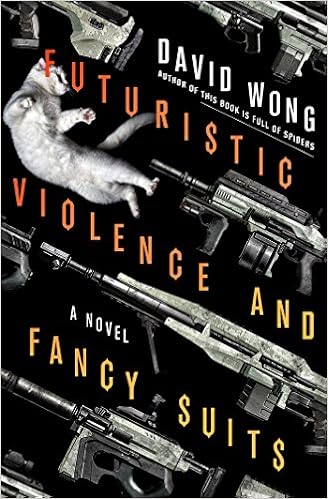
Anybody else looking forward to this one releasing next week? His first 2 books were fun reads. He's got a great knack for truly funny social commentary, IMO.

51K-KsvBa1L._SX326_BO1,204,203,200_.jpg
 
I finished Slavery By Another Name: The Re-Enslavement of Black Americans from the Civil War to World War II by Douglas A. Blackmon today. It was maybe the most horrifying book about American slavery I've read.

We should rename this era of American history known as the time of "Jim Crow segregation." How strange that decades defined in life by abject brutalization came to be identified in history with the image of a largely forgotten white actor's minstrel performance - a caricature called "Jim Crow." Imagine if the first years of the Holocaust were known by the name of Germany's most famous anti-Semitic comedian of the 1930s. Let use define this period of American life plainly and comprehensively. It was the Age of Neoslavery. Only by acknowledging the full extent of slavery's grip on U.S. society - its intimate connections to present-day wealth and power, the depth of his injury to millions of black Americans, the shocking nearness in time of its true end - can we reconcile the paradoxes of current American life.

Some low-lights:

The horror of the mortality rates and living conditions was underscored by the triviality of the alleged offenses for which hundreds of men were being held. AT the end of the 1880s, thousands of black men across the South were imprisoned in work camps only for violations of the new racial codes, completely subjective crimes, or no demonstrable crime at all. Among the "felons" sold to the Pratt Mines in 1890, seven men were working for the crime of bigamy, four for homosexuality, and six for miscegenation - an offense almost solely prosecuted against black men who engaged in sex with white women. Many others had been arrested and sold for ostensible crimes that explicitly targeted blacks' assertions of their new civil rights: two for "illegal voting" and eleven on a conviction for "false pretense," the euphemism for new laws aimed at preventing black men from leaving the employ of a white farmer before the end of a crop season.

The application of laws written to criminalize black life was even more transparent in the prisoners convicted of misdemeanors in the county courts. Among county convicts in the mines, the crimes of eight were listed as "not given." There were twenty-four black men digging coal for using "obscene language," ninety-four for the alleged theft of items valued at just a few dollars, thirteen for selling whiskey, five for "violating contract" with a white employer, seven for vagrancy, two for "selling cotton after sunset" - a statute passed to prevent black farmers from selling their crops to anyone other than the white propery owner with whom they sharecropped - forty-six for carrying a concealed weapon, three for bastardy, nineteen for gambling, twent-four for false pretense. Through the enforcement of these openly hostile statutes, thousands of blacks realized that they could only be secure only if they agreed to come under the control of a white landowner or employer. By the end of 1890, the new slavery had generated nearly $4 million in current terms, for the state of Alabama over the previous two years.

Records of Milner's various mines and slave farms in southern Alabama owned by one of his business partners - a cousin to an investor in the Bibb Steam Mill - tell the stories of black women stripped naked and whipped, of hundreds of men starved, chained, and beaten, of workers perpetually lice-ridden, and barely clothed.

An unintended distinction between antebellum slavery and the new forced labor system became increasingly clear - and disastrous for the men captured into it. Slaves of the earlier era were at least minimally insulated from physical harm by their intrinsic financial value. Their owners could borrow money with slaves as collateral, pay debts with them, sell them at a profit, or extent the investment through production of more slave children. But the convicts of the new system were of value only as long as their sentences or physical strength lasted. If they died while in custody, there was no financial penalty to the company leasing them. Another black laborer would always be available from the state or a sheriff. There was no compelling reason not to tax these convicts to their absolute physiological limits.

The private guards who staffed the slave labor mines and camps were vulgar, untrained, and often inebriated. Placed under the complete control of the companies and businessmen who acquired them, the laborers suffered intense physical abuse and the deprivation of food, clothing, medical care, and other basic human needs. Guards, rarely supervised, hung men by their thumbs or ankles as punishment. Convict slaves were whipped for failure to work at the rate demanded by their oversees, commonly receiving as many as sixty or seventy lashes at a time. Accounts of men or women lashed until skin literally fell from their backs were not uncommon. Convicts who attempted repeated escapes were subject to many of the same torturous restraints as their slave forebears - shackles, balls and chains, or objects riveted to iron cuffs or collars to limit their mobility.

When girlfriends or mothers of young black men came begging at the jailhouse, he couldn't help but be tempted. The carnal pleasures of taking a black girl when you pleased had been a privilege of rich white men for so long in the South. Now simple men like Eddings could do the same - telling girls to come around to the jailer's room for an hour of compulsory sexual performance in exchange for a favor to their man inside. It was hardly even furtive. Guards did the same at hundreds of jails. At the lumber camps in southern Alabama, women seeking the freedom of their men were simply arrested when they arrived, chained into their cells, and kept to serve the physical desires of the men running the camps. The slave camps and mines produced scores of babies - nearly all of them with white fathers.

[...] Governor Blease asserted it was the nature of every African American women to want sex at any opportunity. "Adultery seems to be their most favorite pastime," he said. "I have . . . . very serious doubts as to whether the crime of rape can be committed upon a negro.

Younger and smaller men - and the dozens of pubescent boys forced into the shafts - on their first days faced a terrible initiation. Argued over - often violently - by the convicts with bitter months and years of time in the mine behind them, the boys were pushed into corners of the pitch black mine rooms, beaten into submission with the handles of the pickaxes or rough leather belts worn by the men, and raped daily and nightly.

Of 648 forced laborers at the mine in 1888 and 1889, 34 percent did not survive. At the Pratt Mines, 18 percent died. All but a handful were black. Another visitor in the same period wrote the Alabama governor that every slave worker who had been at the mine for at least six months had contracted dysentery. He called the death rate "enormous, frightful, astonishing."

In the first two years that Alabama leased its prisoners, nearly 20 percent of them died. In the following year, mortality rose to 35 percent. In the fourth, nearly 45 percent were killed.
 
The Thirty Years War by C.V. Wedgwood is good. Not Roger Crowley's City of Fortune level of fantastic in its presentation but still good nonetheless.
 
I finished Slavery By Another Name: The Re-Enslavement of Black Americans from the Civil War to World War II by Douglas A. Blackmon today. It was maybe the most horrifying book about American slavery I've read.


Some low-lights:

Have you seen the PBS documentary?
 
I have not seen the PBS documentary. Is it similarly horrifying?

Well, I havent read the book so I can't compare, but it is definitely horrifying. It has been a while, but one of the main themes that they address is BS black 'criminality' to get slaves that they can basically kill in the mines, debt peonage, etc. I don't remember them talking about rape though... I guess it shouldnt surprise me that that awful shit didnt drastically decline after the end of official slavery

It is really well done and definitely worth a watch (though perhaps less so for you since you read the book)
 
I know it's short, but I'm having trouble getting through The Martian. I'm 100 pages in. I don't need everything to be intense, but there's no conflict so far. I'll stick with it though.
 
I know it's short, but I'm having trouble getting through The Martian. I'm 100 pages in. I don't need everything to be intense, but there's no conflict so far. I'll stick with it though.

?

I'm pretty sure I remember the first 100 pages being loaded with it.
 
As anyone who has ever done a book club knows, when someone doesn't read the book, the correct response is to shame them by calling them a turd 💩. Today, that person is icarus "I'm down for whatever" daedelus, Q.U.E.E.N. Turd of the Turd Club. I have to say first off that If I didn't love and respect her, I wouldn't do this to her. Anyway, she was required to read Guns, Germs, and Steel (something I should note she already read years ago according to her GAF posts, and so she probably could have faked it and claimed to have re-read it for this) or The Mote in God's Eye. Has anyone seen her post impressions of these books? I haven't. You can't see the invisible. BURN. YA BURNT.

You might be thinking "hey, man, that's harsh". She's been busy. Of course she has. We all have. Someone's gotta chop the wood and sow the fields. There's only so much time in a day. It's a pretty unreasonable thing to expect a person to read such long, tough books in only a week or two... wait, she got her book recommendation mid-July? She's had two and a half months to get this done?!?!? She took part in a 17 person book club and she's one of only 2 who didn't finish? That she gave me a personal guarantee that she'd finish and post her impressions here?

shame shaaaame shaaaaaaaaaame 💩

Perhaps the books were too challenging for icarus. When she signed up for this, she did say--in her own words--"I can't guarantee that I will finish what you recommend me. Ideally, softball me with a light 150 page novella." In lieu of reading either of her actual two assignments, she can read something more her speed:
oInCgGH.jpg


Description:


At 144 pages, this heroic crown of flyover diarrhea 💩 is just under her limit and well suited for icarus "turd 💩" daedelus.

In fairness, she had more important things going on, like reading the books I'd suggested. :)
 
Ship of Fools looks excellent. If I can put a dent into the sixty billion things I'm reading, I'll pick it up.
 
?

I'm pretty sure I remember the first 100 pages being loaded with it.

Maybe he means how very little of the conflict is on-going? The MC solves everything very quickly and easily, to such a degree that I can see it being difficult for some to invest in the situation.
 
I've never been one for reading novels.. but recently I have been reading a lot of Asimov.

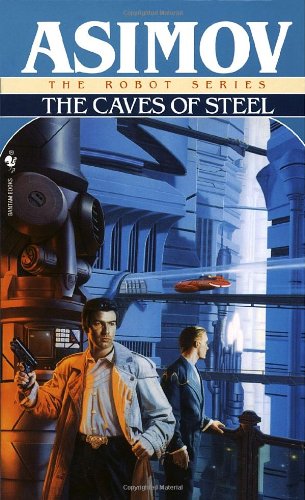
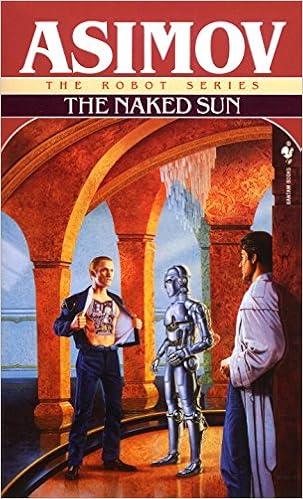
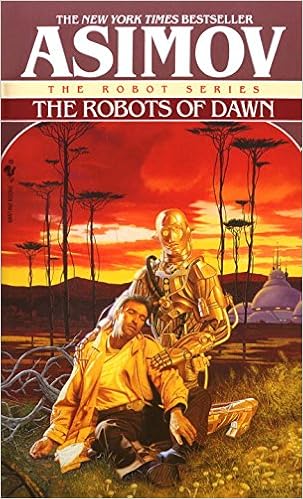
I just need to read "Prelude to Foundation" to finish the Foundation series. And in the last week I read "I, Robot", "The Caves of Steel", and "The Naked Sun". I have ordered "The Robots of Dawn", but I probably won't get that for a couple of days.

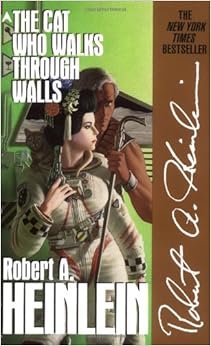
For now though I think I might try reading a random Heinlein. I've never read his novels before but I picked up one from a used bookshop. It is called "The Cat who walks through Walls" or something like that.

Anyway, I usually do all of my reading on a computer (or textbook, when necessary). Who knew fiction could be so much fun.

edit: I just realized people are using images, so here's your tl;dr ---

Just finished:
51zqjUOBlEL._SY344_BO1,204,203,200_.jpg
51uUJnj7UjL.jpg
51DGnT-aqzL._SX301_BO1,204,203,200_.jpg


To read next:
51RWYsXK67L._SX301_BO1,204,203,200_.jpg
51VDacBjGhL._SY344_BO1,204,203,200_.jpg
 
Every issue he's faced with so far is dealt with pretty much instantly.

So I guess I mean tension rather than conflict.

Oh, I see. Yeah. To me the main throughline of "oh shit I'm stuck on Mars" worked pretty well to carry things forward, but I suppose the immediate tension isn't always high. In between Murphy's Law occurrences, anyway. :P
 
Really struggling with Karen Memory. It's the most boring book I've read this year. The characters do nothing for me, the setting doesn't and neither does the plot and I don't like the way it's written. Thankfully I'm almost done and it's a really short book so I'll power through today and move on.
 
Got my fancy new 300ppi paperwhite today and finished up The Trees by Conrad Richter. Usually I like these type of stories but this one just didn't click. The imagery of the woods at the start was amazing and the writing was tense but I didn't manage to connect with anything story-wise. I appreciate it being well researched at least, something like 1600 pages of journals and stories about the Ohio Valley from the 18th century was put into this trilogy.
 
I'm reading 3 now and quite enjoying it. Almost done with it actually. I skipped most of 2 because I can't read Holocaust stuff any more.

Too upsetting? I didn't think it was that graphic, but I honestly don't remember.

Just finished

w4Z3BEY.jpg


Absolutely fantastic. For some reason I assumed he was going to be mailing it in by book 5, but he did a deep delve into some character backstories and also really shook up the status quo.

Where Cibola Burn was a very local story, Corey went the opposite direction with Nemesis Games. My only disappointment was that it ended too abruptly. But I guess I can understand since the series has 4 more books to go and elements of this new plot line could conceivably go the distance.
 
Reading lots of stuff in parallel right now, which is seldom a good idea, but it is what it is

Plato - Timaeus : Started on this because I read somewhere that Plato outlines his theory of music in it. What it really is though is Plato's version of the Genesis, how the world was created (musical theory plays a part in this though) by the One God. I was also surprised to find out that the legend of Atlantis is included in this dialogue, must be one of the first?

Jonathan Franzen - Purity : 2/3 in. The book is very, very Franzenesque. If you like Franzen, you're going to like Purity. It has a bit more of mystery, almost like a detective novel plot though, which I don't remember being the case in The Corrections and Freedom. The characters are all pure Franzen though. :p

Daniel Dennet - Consciousness Explained - 1/2 wayish, very well written on a very complex matter. I'm by no means a new atheism/stem evangelical, but I admire the intellectual honesty and bravery of books like this and Dawkins Selfish Gene, and Pinkers The better Angels of our Nature. It's always good to read solid books of directions you're not personally most comfortable with, I guess? Perhaps the most inspiring things about these book is the willingness to commit 100 % to your hypothesis, indicated by the bombastic titles. Evolutionary biologists as historians nevertheless remain something to be healthily skeptical about. I think it's great that these sort of grand theses becomes more widespread, but vary of the almost colonial ambitions some of their supporters seem to express (that it's the only way to make history a real science etc.)
 
Life is setup to prevent you from reading. I basically cram all of it into my two days off from work because those days are the only ones where I feel like I can actually become invested in what I'm reading. I try to read on the subway to work sometimes but my train ride is only 10 minutes each way so I average about 20 measly pages every workday. It's maddening.

Yeah, I chose my words not to say that I'm too busy to read, I've just been into a lot of other things, especially my long golf hiatus which has brought back that addiction. Certainly already not liking the short days coming back.. I'll miss hanging out on my balcony in the evenings and reading that way.

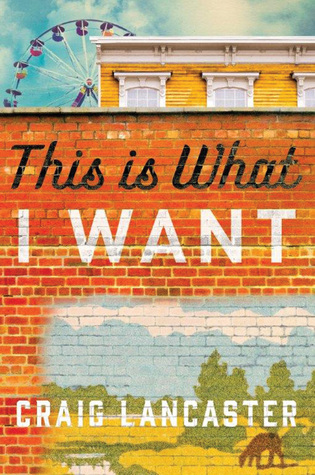
ShaneB (and fellow 600 Hours of Edward fans), Craig Lancaster has a book on sale for $1.99 today on Amazon


This Is What I Want by Craig Lancaster

Started it not long after it came out. Just didn't hook me at the time. Just been downhill with his other stuff since Edward is such a great character.

Again Mak I shall recommend to you The Child Thief!
 
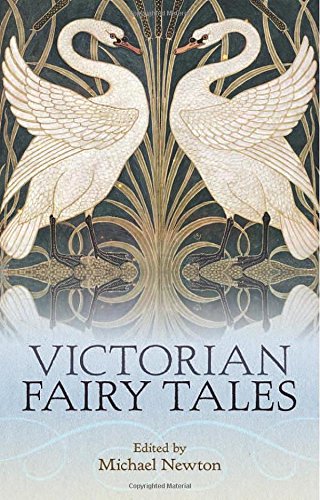
I started reading Victorian Fairy Tales, a collection of, uh, Victorian fairy tales edited by Michael Newton. There's some minor annotation, and the stories selected "range from pure whimsy and romance to witty satire and darker, uncanny mystery." So far I've read the Prologue, which consists of Rumpel-Stilts-kin and The Princess and the Pea, and then started Victorian Fairy Tales proper with Robert Southey's version of The Three Bears (basically before the old woman was changed into a little girl and then into Goldilocks), and John Ruskin's The King of the Golden River. I'm currently on The Rose and the Ring; so far The King of the Golden River is my favorite. Next up is George MacDonald's The Golden Key. I don't really remember what it was about (aside from a golden key), but I did really enjoy MacDonald when I read him last.

51Ik4bSr7LL.jpg
 
Too upsetting? I didn't think it was that graphic, but I honestly don't remember.

Well, once I saw the writing on the wall with some of the characters I stopped. I don't even know how graphic it was. Just the whole concept of the Holocaust is so upsetting to me, and I've already seen/read enough books about it, that I just can't take it any more.

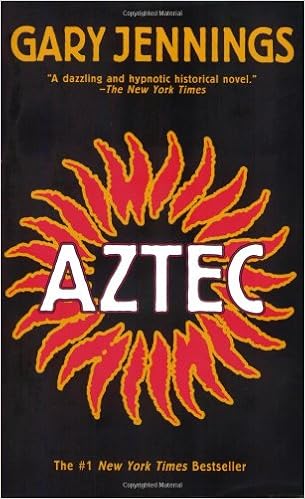
Speaking of upsetting books, that reminded me of the most horrifying book that I've ever read, that I had to put down 3/4 of the way through because... WHAT THE FUCK!? Seriously messed up book, for anyone brave enough to give it a try:

51VHJWi%2BQ2L._SX303_BO1,204,203,200_.jpg
 
^ Aztec is fantastic. I put it right up there with The Long Ships as one of the best adventure books ever.

Finished Ghettoside* and now on to The Victorian City


The Victorian City: Everyday Life in Dickens' London by Judith Flanders


*I have so many mixed feelings about the ultimate message of this book, which I understood to be, in order for black on black violence to decrease police must have a more aggressive stance on arrests and punishment for said crimes. Lets assume that hypothesis is accurate - the book itself describes a community in Compton who not only DO NOT want police involved with their affairs but seem to prefer vigilante justice and purposefully contaminate crime scenes and refuse to cooperate with authorities who are trying to pursue arrests. It feels like the police in Los Angeles are in a catch 22. They're damned for trying to solve crimes and damned for not solving crimes.

No matter what you think needs to be done to fix the problem, the story of the Tanelle family (and consequently all people affected by violence in Compton) is tragic and heartbreaking. Its all so pointless. So many lives ruined for nothing.

EDIT: ShaneB - I'll definitely look into that.
 
I'm about to go to bet and need a new book now. Is "Gone Girl" any good? Opinions seems to be kinda mixed on goodreads.com and Amazon.
 
Continuing the trials and tribulations of Matthew Shardlake in the second novel of the series DARK FIRE. I love these books personally and I know nobody who had even heard of them let alone read them. A fantastic vision of 15th century London showing just how much of a dark and frankly horrifying time it was to be alive.

Highly recommended.

Next up: Fleuberts Parrot by Barnes
 
It's emotionally draining and impossible to put down. I liked it a lot.

This is not a lie. Spoilers for everyone else:

I 'fell in love' with Amy in the first half of the book because it remined me so much of when I was dating my wife. So to have everyone turned on its head in part two was an emotional roller coaster. I had no idea who I hated more by the end, but I sympathize with Nick more. He's sticking around for his kid whereas she's just psycho. He's not a good guy by any stretch but she's way way worse.
 
Finished Carr He Who Whispers. The first half was superb, really liked the novel structure up until
the second "murder" happens. Very few suspects and I'm not a fan of "this entire story relies on these two characters not meeting in this small time-frame", in this particular case, the Professor and Steve/Harry.

With this, I'm done with Carr for a while. Still need to finish S.K. Night Shift.
 
Did she get trapped under a physical copy of Story of the Stone?

Pffft. She read it before I did! When I talked to her about it, she happened to have started it in Chinese, though I don't know how far that project got.

No, this is about other books. :)
 
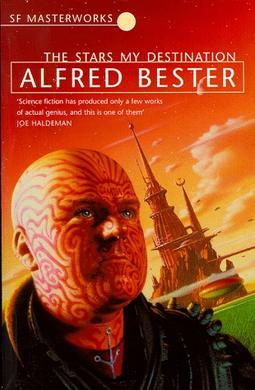
I really dislike The Stars My Destination for reasons I can no longer remember.
 
I read After Appomattox: Military Occupation and the Ends of War today. It's rather dry reading, and very frustrating to read with the benefit of hindsight. Every time the author mentions Republicans who want to reduce the size of the army or who think that the mere fact of extending voting rights on paper will be sufficient to secure the rights of freedmen I think about how that ended up going. And it is immensely frustrating to see that the orgy of violence - including one estimate that more than 50,000 African Americans had been murdered between emancipation and 1887 - doesn't produce a change of opinion in the benighted of some Republican congressmen.
 
I am a few pages from the end of Elantris by Branson Sanderson. It seems like 90% of the book is world building and then Sanderson hastily wraps everything up when he realizes he should get around to an ending.

Not sure what I will get to next. I haven't had as much time for books lately.
 
Finished up Twelve Kings in Sharakhai by Bradley P. Beaulieu last night. This was a really good book. I may as well be blunt about it. Great characters, specially the main character who is a strong woman but no where near perfect, a well thought out world which is different than most fantasy that's out there, the story and plot move along well, and it's fun to read which is bonus points. There was one plot point at the end that bothered me a little, but I over looked it as the rest of the book is so well done.

Now onto Dendera by Yuya Sato.

p22-hadfield-dendera-a-20150201.png
 
Over halfway through 77 Shadow Street by Dean Koonz, but I am not really enjoying it all that much. There are some decent horror images here, but the characters and story just aren't doing anything for me.
 
I started reading Victorian Fairy Tales, a collection of, uh, Victorian fairy tales edited by Michael Newton. There's some minor annotation, and the stories selected "range from pure whimsy and romance to witty satire and darker, uncanny mystery." So far I've read the Prologue, which consists of Rumpel-Stilts-kin and The Princess and the Pea, and then started Victorian Fairy Tales proper with Robert Southey's version of The Three Bears (basically before the old woman was changed into a little girl and then into Goldilocks), and John Ruskin's The King of the Golden River. I'm currently on The Rose and the Ring; so far The King of the Golden River is my favorite. Next up is George MacDonald's The Golden Key. I don't really remember what it was about (aside from a golden key), but I did really enjoy MacDonald when I read him last.

51Ik4bSr7LL.jpg

Honestly, I love that shit.
I know it's been overused in absolutely everything, but the original stories are just so awesome and usually much darker than they make them out to be in pop culture. I would also recommend reading some Scandinavian Folklore tales, I had this book with Swedish ones:

swedish-folk-tales.jpg


Truly grim. But awesome. And weird.
 
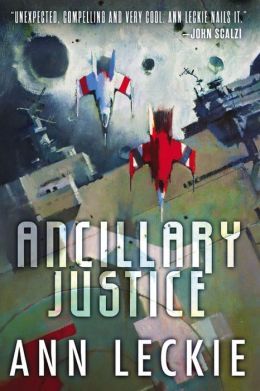
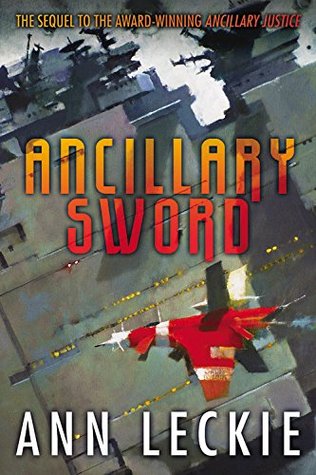
Been a while. During September, I read both Ancillary Justice and Ancillary Sword, by Ann Leckie.


Both were pretty enjoyable, though I prefered Justice to Sword. Justice had a much more interesting scope and story to tell, while Sword felt a bit domestic in it's pettier squabbles. Great character development though, which was welcome. It looks like the third part is coming out very soon, so I've got that to look forward too as soon as it arrives.

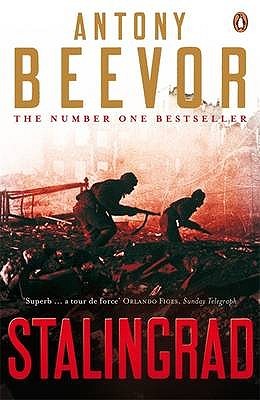
Then, for some light pleasant reading, I picked up Anthony Beevor's Stalingrad. Very well researched, and certainly a fascinating account of the destruction of the 6th Army and the city of Stalingrad. Exceedingly bleak.

 
Sectorseven--I was a kid when Splinter came out, and I lost it with that book. I thought it was amazing and really set up what I hoped the sequel would be like. Ah, the folly of youth. Now, if you feel uncomfortable when Leia kisses Luke in Empire, be assured that Splinter can make you feel even more skeezed out.

Been reading this:

517CzT9ohiL._SX322_BO1,204,203,200_.jpg


It's been wonderful so far. I'm not sure why I've put off reading it for so long.
 
Re-reading World War Z right now. Not sure what I'll do next, but a co-worker just started reading Brave New World, so I might re-read that one again soon.
 
Status
Not open for further replies.
Top Bottom