• Hey Guest. Check out your NeoGAF Wrapped 2025 results here!

What are you reading? (October 2015)

Status
Not open for further replies.
Jouw-gezicht-zal-het-laatste-zijn-LR_2.png


Dutch translation of a Portuguese, well-received debut (not translated in English so far, for all I know). Original titel is O Teu Rosso Será o Último (Your Face will be the last). Gut was fired from his job and used his severence package to write a book, which he dreamed of, but never had the time for before. Won a big price for unpublished novels and got a publication deal.

Just one chapter in, but I only stopped reading because my wife came to bed and doesn't like it when I have the lights on for reading. Like the prose and the universe he creates. It's about a family in a remote Portuguese village around the time of the revolution. On the day of the revolution one of the villagers is found murdered, and no one nows who did it or why.

Heard this mystery is abandoned in the next chapters though. Every chapter is like a short story, and only at the end everything falls into place. I heard from some people they didn't like the book because of this, but I'm intrigued. It's only 160 pages, so I'll be trough it pretty fast.
 
Read 77 Shadow Street by Dean Koontz. I found it lacking. The characters were not good and one or two flat out sucked, I'm looking at you Winny and Mickey Dime. I must admit the initial horror mystery was interesting, until you had the answers. Then things kind of went into a who cares phase, but I was so close to the ending that I finished it, by the last 50 pages I was more interested in being able to say I finished it than the actual reading of it. All in all it wasn't a terrible book, but it isn't one that will be remembered.

I mean, you were reading Dean Koontz, what did you really expect? I remember enjoying his books in high school but I tried re-reading some of them and wow. Brave, stolid Man A meets meek, waify Woman B. They hate each other (or fall in love immediately) and then Weird Shit Happens. They have sex, sometimes Weird Sex. They defeat The Bad Thing. The end.

But Phantoms was the bomb, yo.
 
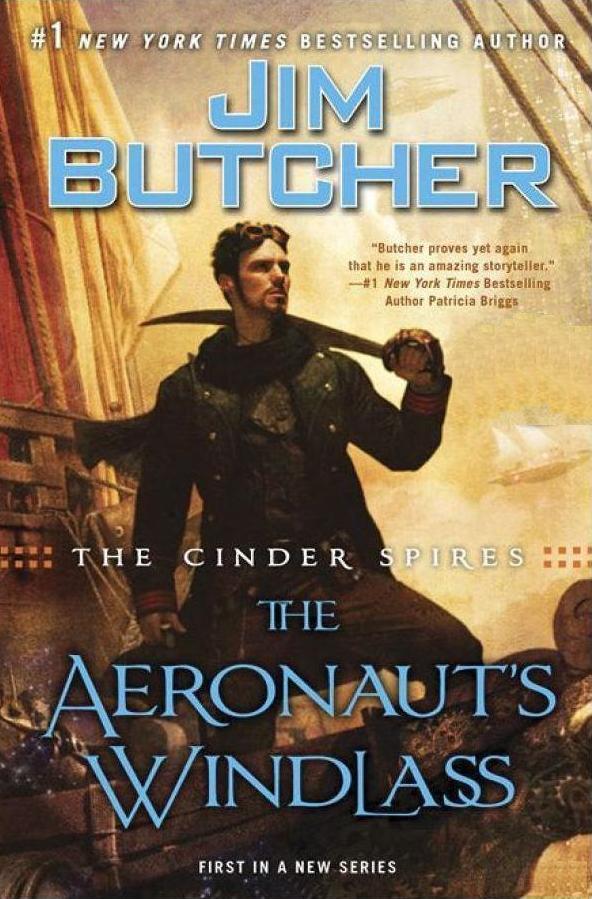
The-Cinder-Spires-The-Aeronauts-Windlass.jpg


First time I have bought a Hardback in ages. Love a bit of Jim Butcher so this was a no brainer. Currently about 15% of the way on and really enjoying it so far.
 
This Victorian London book is pretty interesting so far. Never knew about the problems with the paving of the roads or the predatory toll booths.
 
Finished:

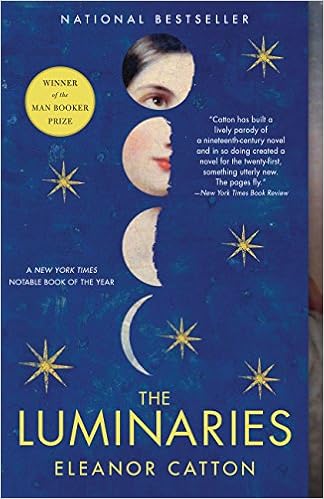
51LSmZWntfL._SX322_BO1,204,203,200_.jpg


A mixed bag. The writing, as has already been discussed, is great. Her character descriptions are brilliant. HOWEVER. This is very much a tribute to the fat slab Victorian novels, and insomuch, it's heavily plot-driven and that plot isn't all that interesting and the characters are either good, neutral, or evil, and there's never a bit of doubt as to who is who . I can't help but think that the Booker committee was taken by how young Catton is and how radically different this book was from her first. 3/5, if I'm being generous.

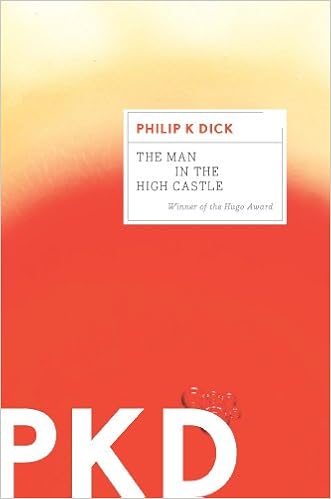
41lVoL7uY9L._SX329_BO1,204,203,200_.jpg


Someone mentioned that this cam early in Dick's career, and it does indeed feel like he's trying to mess with the reader's head (near the end, mind you) before he really figured how to do it well. Odd writing, very choppy - almost stream of consciousness in parts. I'd be interested to see how TV adapts this. The story itself isn't especially compelling, so I'm wondering if they punch it up, or simply use the 'Axis won WWII' concept, which isn't exactly a novel concept. I could easily see a good screenwriter building upon what Dick has here and maybe turning out one of the 'movie better than the book' exceptions. 3/5 again.
 
I'm still reading book two of the Black Fleet trilogy, Call to Arms and I'm digging it really hard. Both books aren't really anything special but the action is pushing all kinds of the right buttons for me. Almost everything happens on the bridge of a big star ship and it gives me these Battlestar Galactica vibes when they're calling out orders and acknowledgements. It's far more enjoyable than it has any right to be. I love it.
 
Bouncing between Virginia Woolf's A Room of One's Own and Kafka's The Castle. Need to read some contemporary stuff, badly. Hopefully that Purity hold at the library comes through at an opportune time.
 
I mean, you were reading Dean Koontz, what did you really expect? I remember enjoying his books in high school but I tried re-reading some of them and wow. Brave, stolid Man A meets meek, waify Woman B. They hate each other (or fall in love immediately) and then Weird Shit Happens. They have sex, sometimes Weird Sex. They defeat The Bad Thing. The end.

But Phantoms was the bomb, yo.
First Dean Koontz book, so I didn't know what to expect.
 
Just finished the Tawny Man trilogy and the first two books of The Fitz and the Fool by Robin Hobb. I am glad I went back to this series. (spoilers for Fool's Quest)
I was surprised at Fitz formally recognized as FitzChivalry after all this time, but it was a good direction to take the series because I was getting tired of Fitz rusting away in his little country manor. That had to get shaken up.

Currently reading:


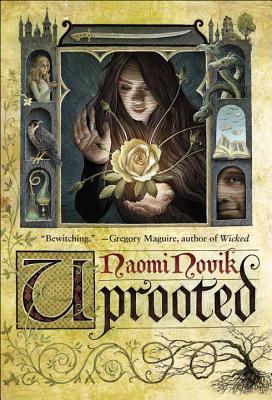
Uprooted by Naomi Novik

It's light and refreshing, like a fairy tale for grown ups. I haven't read anything by Naomi Novik before so I might pick up the Temeraire series at some point.
 
50 pages into The Shining Girls by Lauren Beukes, I like how there is no build up to the
time travel
, it is just there from the beginning. A little confused, but in a good way that has me intrigued so far.
 
Just finished the Tawny Man trilogy and the first two books of The Fitz and the Fool by Robin Hobb. I am glad I went back to this series. (spoilers for Fool's Quest)
I was surprised at Fitz formally recognized as FitzChivalry after all this time, but it was a good direction to take the series because I was getting tired of Fitz rusting away in his little country manor. That had to get shaken up.

I recently finished Tawny Man and I'm deciding whether to go to Fitz and Fool or try the Rain Wilds books. I guess you skipped them.
 
I recently finished Tawny Man and I'm deciding whether to go to Fitz and Fool or try the Rain Wilds books. I guess you skipped them.

I tried the Liveship books, but couldn't get into them. Skipped Rain Wilds altogether, but there were some parts in Fitz and the Fool that I think I would have appreciated more if I had read Rain Wilds.
 
Now about 70% into The People in the Trees. Some of the subtlety has been lost:
in the beginning I was analyzing Norton's relationships with those around him for clues as to whether he was capable of the sexual abuse for which he was jailed, but now certain events have just spelled it out and some of the ambiguity has been lost.
But on the other hand, that's been made up for by the increasingly complex and moving story itself, which is really remarkable.

I can best describe it as a totally fascinating character study so far. I should be on track to finish it tomorrow.
 

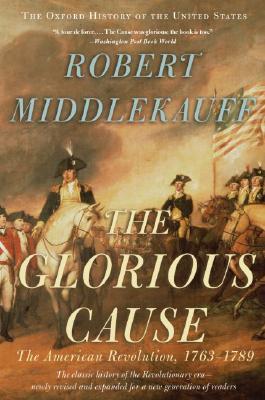
I am currently re-reading this as one of my books in my 'actually learn and remember US history' project, and it is honestly more insightful than I remember. It is interesting now that I have read a fair amount of books on US history is that that knowledge is letting me make new connections and insights into a book that I have previously read. I don't think I have ever re-read a non-fiction book so this is an interesting experience for me.

I don't know if this is a new insight or I just simply forgot it because the author makes it very clear (perhaps I was just super dense on my first read? - ill go with forgetful though), and that is that it is really wrong to think of the American Revolution as a fight over taxation without representation.

I have always heard that being the main cause, and it honestly did not really click with me. I mean, how the hell can you get passionate over taxation without representation? The author makes the point that the ideology underneath that principle was the cause of the revolution, and that principle is liberty.

America's conception of liberty essentially derived from the 18th century English Commonweathmen who saw liberty and power in a constant battle, and that representative government had to check executive, arbitrary power to ensure liberty. If not, there would be tyranny and the people would be turned into slaves.

The Sugar Act, Stamp Act, Declaratory Act, Townsend Acts, Tea Act, quartering British troops in Boston, Custom Agents, British military courts, and wresting official positions from local control by having England pay their salary instead of the local populace were all seen as evidence of a conspiratorial plot perpetuated by the British ministry and parliament to strip away the colonies' rights and liberty, institute tyranny, and turn them all into slaves whose sole purpose is to enrich the mother country.

You might think this is a bit crazy, but it all makes sense if look at it from the perspective of colonists at this time who imbued the ideology of the 18th century commonwealth men. All of those above instances were instances of arbitrary power that was unchecked by a representative body because the colonies had no representatives in Parliament. Therefore, these colonists thought their liberty and rights were being eroded and that Parliament was slowly instituted a tyrannical and arbitrary government in the colonies.

This all came to a head with the Boston Tea Party, and more specifically, Parliament's response. Parliament took away Boston's liberty and rights, took away their representative government and instituted a government based on tyranny and arbitrary power. This galvanized the other colonies because they realized that this could be easily done to them in the future. In the eyes of the colonies, Boston was simply fighting to preserve its liberty in the face of arbitrary British power. The colonies likely asked themselves, what would stop the British from doing what it did to Boston if we decided to stand for our liberties and rights? It is better to stand together in order to fight Britain to preserve liberty and rights than have each of the colonies be picked off one by one and have the colonies be turned into another India.

That explanation, one of ideology, fear, passion, and rights makes FAR FAR more sense than simply saying it was about taxation without representation. Sure, it was about that, but that definitely does not get to the heart of the issue, and one that was definitely not explained to me, or at least made clear (might have forgot it, but I doubt it) in my high school American history class.

I am only about 1/3rd of the way through on the re-read, but it has definitely re-enforced my desire to read The Ideological Origins of the American Revolution by Bernard Bailyn. Along with American Slavery and American Freedom, this book makes it seem that it is absolutely necessary to understand the ideology and colonists conceptions in order to understand the revolution and Colonial/Early American society. Best way to do it is to read that book because that is where both are getting their ideas on Early American ideology and thought. So yea, that is the next book that I am reading.

 
Extract from The Farthest Shore, by Ursula K. Le Guin
Perhaps Sparrowhawk felt this, for in that foggy night off the shores of Wathort he began to talk to Arren, rather haltingly, about himself. “I do not want to go among men again tomorrow,” he said. “I’ve been pretending that I am free. . . . That nothing’s wrong in the world. That I’m not Archmage, not even sorcerer. That I’m Hawk of Temere, without responsibilities or privileges, owing nothing to anyone. . . .” He stopped and after a while went on, “Try to choose carefully, Arren, when the great choices must be made. When I was young, I had to choose between the life of being and the life of doing. And I leapt at the latter like a trout to a fly. But each deed you do, each act, binds you to itself and to its consequences, and makes you act again and yet again. Then very seldom do you come upon a space, a time like this, between act and act, when you may stop and simply be. Or wonder who, after all, you are.”

How could such a man, thought Arren, be in doubt as to who and what he was? He had believed such doubts were reserved for the young, who had not done anything yet.

The boat rocked in the great, cool darkness.

“That’s why I like the sea,” said Sparrowhawk’s voice in that darkness.

.

Young Adult fantasy novel. 1972
 
I need to reread all of Earthsea, it's about time I revisit that world.
 
I started Flowers for Algernon today and finished half the book. Not what I expected at all, but it's pretty great. Definitely worth the $1.99 it went on sale for last month.
 
I need to reread all of Earthsea, it's about time I revisit that world.

How much you get out of a story is sometimes about how much you bring to the table.

So if there has been a sizable gap, between now and when you last read it, this might be one of those series that is worth a reread.
 
I need to reread all of Earthsea, it's about time I revisit that world.
Be ready for the tears.

I actually started a reread about four years ago but only got through the first two. I should start on that again. They aren't exactly long reads.

A Wizard of Earthsea:
The part where Ged finds half of the Ring of Erreth-Akbe on the island with the old heirs breaks my heart every fucking time. I can't read it without crying. I dunno why that part in particular always stands out (in an already amazing novel).
 
i think i read earthsea when i was in high school. pretty sure i read the quartet.

looking for more reads. Any good deals on amazon for kindle atm? Otherwise I'll dip into my digital stockpile (or go off on one of my ventures for decent homicide detective non-fiction)
 
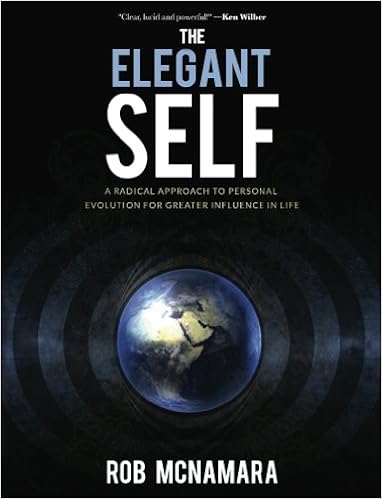
The Elegant Self

417J3QrnM-L._SX380_BO1,204,203,200_.jpg


Sort of a further development of Robert Kegan's work mixed with Wilber's Integral Theory along with the author's real world examples. It's kind of knocking my head around.
 
This Victorian London book is pretty interesting so far. Never knew about the problems with the paving of the roads or the predatory toll booths.

Think I'll check this one out.

Bouncing between Virginia Woolf's A Room of One's Own and Kafka's The Castle. Need to read some contemporary stuff, badly. Hopefully that Purity hold at the library comes through at an opportune time.

A Room of One's Own inspired me quite a lot in writing about literature.
 
Do you guys know of any books like Gangs of New York that focus on the 60s-70s-80s?

Love, love that book but would like something set in the "grimy" period of NYC in the above era rather than the 18th and 19th century.
 
What's the best translation of Anna Karenina, if anyone knows or has an opinion. Mumei?

I haven't read it. I believe the most popular is Pevear and Volokhonsky, though I recently saw a newish translation by Marian Schwartz that has gotten high praise. Since both translations have been praised so effusively, I suppose you should read a few pages - maybe even a chapter - of both, and pick the one that you prefer.
 
I just finished Us by David Nicholls - a really gripping read, albeit nothing profound, and Never Let Me Go By Ishiguru, which I liked in theory more than in concept. Its dryness and dullness has a function and purpose, which I like, but makes it no fun to actually read.

Now I am about to start Kokoro by Soseki.

Question for you ebook readers - does a Kindle end up being more economical (UK here)?
 
Any 19th century American novel recommendations (edit: excluding Henry James)? I don't like The Scarlet Letter.
 
Any 19th century American novel recommendations? I don't like The Scarlet Letter.

The Portrait of a Lady
Washington Square

Basically anything by Henry James (even though some of his books were published after 1900 :p)
 
There's ereaderiq (you can select UK/US/CA stores on the top left of the screen) which seems to catch a lot of them, though not all. You can limit the search function to certain price ranges, and you can also import/set up wishlists with the prices you're prepared to pay and it will notify you if titles hit that mark.

thanks man, noticed it was in the OP as well.

I think what I just really want is for this thead to tell me when I should buy cheap good books to throw in my digital stockpile
 
On to One Piece 5, still Madogiwa no Totto-chan. Nothing in English now but just finished Pattern Recognition, which was interesting but didn't make a big impression.
 
Reading "the profession of violence, rise and fall of the kray twins". Very enjoyable so far. I'll see the movie when I'm done with the book.
 
The Portrait of a Lady
Washington Square

Basically anything by Henry James (even though some of his books were published after 1900 :p)

Forgot to exclude Henry James. I have to write an essay on a 19th century American novel and my lecturer/marker doesn't like him. We are free to chose Henry James but I'd rather not have that bias affect my grade.

Set or written in 19th century America?

The novel can be set or written anywhere, but the author must be American and the novel published before 1901.
 
Just finished "Martian Time Slip" (and Ubik earlier) by Philip K. Dick, now I'm reading Valis. After that maybe another of his books or Lem's.
 
Forgot to exclude Henry James. I have to write an essay on a 19th century American novel and my lecturer/marker doesn't like him. We are free to chose Henry James but I'd rather not have that bias affect my grade.


The novel can be set or written anywhere, but the author must be American and the novel published before 1901.

McTeague is really good, and has a lot to unpack.
 
I have no interest in ships, whales, exploration and island settings. I similarly avoid anything sea related in films.

Man, my life wouldn't be complete without Patrick O'Brian, so I have ZERO idea where you're coming from...which, while not written in the 1800s, might as well have been...
 
No offence to your lecturer, but if he gives students poor grades for writing an essay about one of the greatest authors of all time, he's a bit of a tool
 
I started reading "A Brief History of Seven Killings" and I'm finding it hard to stay invested in the characters. I have to keep referring to the front of the book to keep the many characters straight and the only one that I've liked so far is the guy at the beginning talking about death. That was interesting and set a tone for me that the rest of the book - starting with the very next chapter - struggles to match.
 
I started reading "A Brief History of Seven Killings" and I'm finding it hard to stay invested in the characters. I have to keep referring to the front of the book to keep the many characters straight and the only one that I've liked so far is the guy at the beginning talking about death. That was interesting and set a tone for me that the rest of the book - starting with the very next chapter - struggles to match.

I think this is probably the only book I've read where the cast list has been absolutely necessary for me! But it hasn't ruined my enjoyment, it's just a part of it. I don't think I like any of the characters, though it's a bit tough not to find someone called Josey Wales rather interesting, at least :) Actually a lot of the names are great. Anyway I just stuck with it and got more invested over time, though I'm not at the halfway point yet, so.

eta. I did think there was some kind of difference between the first chapter and the rest, I don't know if it was tone or what, but it took a little adjusting to. I don't think the rest is less good, though.
 
Status
Not open for further replies.
Top Bottom