• Hey Guest. Check out your NeoGAF Wrapped 2025 results here!

What are you reading? (October 2015)

Status
Not open for further replies.
Seems like you have a flawed understanding of genetics if you are focusing so much on this single gene thing. Most studies on the subject suggest that 50-80% of the variability in IQ scores can be explained by heredity. The fact that no one understands the exact genetic mechanism for the heredity of intelligence is irrelevant.

Well the point of the book is on the "single gene" thing determining "trait of interest" ( i mentioned it is focused on biological determinism). The book offers more than 5 chapters of discussion on inheriting intelligence. There are also numerous books out there exploring the same thing for inheriting intelligence both "for" and "against."

Also why would I have a flawed understanding of genetics for the single gene thing.Single gene mutations exist for medical diseases. I imagine people in this field of studying human behavior using genes to determine what they are interested in would love to have a single gene to explain whatever trait their interested in.
 
That would be too extreme a statement to answer. There is an obvious heritage link in terms of systemic reproduction (ape + ape = ape), so claiming 'none' is scientific nonsense by default. Moving the goalpost in this way from 'not just one gene' to an imaginary maximum (that is literally impossible) is not exactly fair game.
The entire reason I keep asking this is that it's such an absurd claim that I can't believe Dedication Through Light can possibly be representing the book correctly. It's not me moving the goalposts, it's me asking "did you seriously try to kick the ball way the fuck over there?"
 
Well the point of the book is on the "single gene" thing determining "trait of interest" ( i mentioned it is focused on biological determinism). The book offers more than 5 chapters of discussion on inheriting intelligence. There are also numerous books out there exploring the same thing for inheriting intelligence both "for" and "against."

Also why would I have a flawed understanding of genetics for the single gene thing.Single gene mutations exist for medical diseases. I imagine people in this field of studying human behavior using genes to determine what they are interested in would love to have a single gene to explain whatever trait their interested in.

Simplifying genetics a bit, specific genes code for specific proteins. Single gene mutations lead to disease, because having a misshapen or non-functional protein will mess up the function of whatever tissues or cells it is supposed to be part of.

Intelligence in the form that something like an IQ test can measure will be the result of overall brain structure, neural networking, hormone regulation through childhood development, etc. No one would expect it to be regulated by a single gene/protein.

I don't see much room to claim that intelligence/IQ is not pretty strongly hereditary without discarding most of the studies on the subject. Perhaps the problem here is that intelligence is a physical trait, not a human behaviour. I don't think that every behaviour in our lives is genetically deterministic either, but most physical traits are to some extent.
 
I don't see much room to claim that intelligence/IQ is not pretty strongly hereditary without discarding most of the studies on the subject. Perhaps the problem here is that intelligence is a physical trait, not a human behaviour. I don't think that every behaviour in our lives is genetically deterministic either, but most physical traits are to some extent.

What are the studies that are suggesting its strongly hereditary?
 
What are the studies that are suggesting its strongly hereditary?

This is not my field, but you can do some Google Scholaring if you are interested. However, from what I gather, Intelligence is sort of like human height. Environment plays the biggest factor if you are malnourished/impoverished throughout parts or all of childhood. If you are one of the lucky ones who is raised in an afluent environment, you are much more likely to hit your biological potential, which makes the variance at that level mostly genetic and epigenetic.

Using citations as a measure of acceptance/importance, here are a couple of commonly cited studies:

http://www.jstor.org/stable/1132055?seq=1#page_scan_tab_contents (over 800 citations)

http://pss.sagepub.com/content/14/6/623.short (over 300 citations)
 
The entire reason I keep asking this is that it's such an absurd claim that I can't believe Dedication Through Light can possibly be representing the book correctly. It's not me moving the goalposts, it's me asking "did you seriously try to kick the ball way the fuck over there?"

He didn't. Watch for where the domain is applied:

No that wasnt my own claim that was his as well as the claims of the other articles and additional readings cited in the book. Intelligence wouldnt be hereditary or able to be predicted by parents. The proof offered (by the author) is if you give the children of these parents access to early education programs and schools with more resources then they can perform in school just as well as other children. So the big part of intelligence would involve things external to biology and rather factors such as access to a variety of early education programs. So nothing there for education and intelligence would be in the "genes."

I think the most you could predict is if this family stays living in this city which is lacking these resources then their child could potentially be behind children in other areas. If it could be predicted in the genes, then how would children of families that had parents never finish middle school and such, go on to college?

This goes to the 'hard causal' route of "there is predictor X, therefore Y must occur" when applied to a concept like genes, education, or intelligence (usually measured in IQ). Since the author can demonstrate that this route is false, one can conclude that the correlative pair of intelligence and education is not hard dependent on the parents' indicators (of the same type) when measured and conceived in this way for this theoretical model.
That conclusion does NOT apply to anything beyond that model (like partial, complex or fuzzy causal models) or the grander scheme (which is why I called it goal post moving) of whether or intelligence is at all inheritable.

But his (the author's) reason for discrediting that specific route (and no other) lies with its use in the political discourse, where all of this applies to (as far as I can tell). So when DTL summarized the book as an answer to my question, he did not include that mention of the domain where this statement applies, but did not suggest what you read into it. And most likely didn't mean to either. The clause 'within this model' was missing from the end of the quoted post's first paragraph.
But I can see why you would read it that way. My background is in sociology, so I made that mental note right off the bat. Unless the author completely slipped up somewhere, I doubt the claim is made in an all-inclusive manner anywhere in the book. In particular because any academic editor would have picked it off during editing.
 
Started To The Lighthouse by Virginia Woolf. My initial impression is that a brilliant writer is constrained by self imposed rules. One, it desensitizes the reader to her insight because that's all there is and it's always in the moment and two, it feels contrived.

I suppose that observation means nothing if you haven't read it, or maybe even if you have. Put it another way, for the first 30 pages all I've got on my plate is bacon. I like bacon, it's delicious, but I can't make a meal of it and you're starting to turn me against it. Yes Virginia, you can smoke some serious bacon, but I'm keeping my fingers crossed for something else along the way.


Just over a third of the way in and I'm done, the sheer dullness of it is too much to overcome. An entire book(I assume) jumping around from one internal monologue to another with nothing to tie it together. And this is adhering to what you may expect from a realistic sort of thing, meaning rambling thought, emotion, and errant impressions. The difference between your average narrator diving into a character's thoughts for a while and this is stark. Early on I thought I would sift through it for the gems that do coalesce from time to time(this isn't without talent for a description of someone's behavior or trait), later I retreated to the notion that I would just brute force my way through this short book... none of that is happening.

Oh well, on to something else.
 
Finished the Imperial Tea Time Trilogy last week and loved every tea drinking page of it. Also read Shadows of Self which I also loved.

Next up:

22544764.jpg
 
I've been reading another web serial recently (I've previously talked about Worm and of course HPMOR). This one is slightly harder to recommend as whole-heartedly as the other two... but I'll save that for the end.

The story is "Mother of Learning," and here's how the author totally undersells it:

It's a lot more fun than he makes it sound. The main character is great. He starts off as a grouchy teenage misanthrope who just wants to be left alone to do his own thing, but he grows and learns a whole lot over the course of the story, while never losing his core. He's not absurdly overpowered or a great hero or a chosen prophesied one or anything like that--another character fills that role. Zorian is just stubborn and a little bit paranoid and willing to buckle down and do the hard work.

Time loops are something you don't see a lot of outside of fanfiction. They're much easier in fanfic because the reader already knows all the characters, all the places, all the events that are supposed to happen. In an original story that all needs to be set up, and the author does an excellent job of it. We're introduced initially to a small but key portion of the world and characters and events, and then get to see everything from different angles and get a sort of depth perception. One of the things done really well is the development of even minor throwaway characters into interesting people who clearly have their own lives and their own plans.

The world feels something like a mashup of Harry Potter and Dungeons & Dragons at first, though it soon develops a depth of its own, with enough details dropped here and there that it feels like a lived-in place. The magic system is well-designed and interesting to learn about (after a few initial expository hiccups), which is just as well, since our guy is at a school of magic.

The author also makes great use of foreshadowing and dropping clues. Some minor things we see early on turn out to be really important. Some things we thought we understood on the first go-round turn out to have always been about something else entirely. And then, of course, sometimes a cigar is just a red herring. At least for now.

Which leads me to the downsides, both of which are substantial. First, the story is unfinished. It's been going regularly for years at this point, but I'm pretty sure it's only about two thirds of the way through. Meaning it's likely to be at least a couple more years before it's totally done. Sorry. Second, and probably worse, the prose is... kind of rough. Not just in the "Brandon Sanderson writes middling prose" sense of being pedestrian and sometimes clunky, but in that there are poor word choices, odd stylistic issues, and a really irritating tic of the author's where random verbs will be in present rather than past tense. He seriously needs an editor or at least a proofreader. That said, the storytelling and character development and so on are enjoyable enough that I can grit my teeth and wade through the bits in the prose that bug me.

I have to give the author props for avoiding a few common failures of Groundhog Day-style time loop stories. One is repetition. Despite the title, repetition is actually kept to a minimum. The most prominent thing that's repeated each go-round is Zorian's annoying little sister jumping on him to wake him up at the start of each loop. Otherwise, anything that's just going to be the same is skipped over, or at worst skimmed through in narrative summary. Another common failure is a lack of danger or tension. If your hero just wakes up anew every time they die, what could they possibly have to fear? ... Oh, but that would be telling.

This is really really really good. I honestly like it better than Worm as well, mostly because Worm made me too horrified, depressed, and hopeless.

It not being completed kinda sucks, but I had no problem with the writing, and actually found the author to be a pretty good writer. Perhaps my expectations are subconsciously lowered for online novels like this, but I thought he was able to convey the correct atmosphere and tones in scenes, was able to give characters distinct voices, and didnt have any distracting grammatical errors that I saw.

So yea, keep me posted on any other online novels that find. Recently, I have been getting into Chinese Xianxia web novels (translated). The translators have stated that they have received permission from the original authors, but I still won't post it in case it is frowned upon. Two that I think are very good are Against the Gods and I Shall Seal the Heavens. Basically think of a martial arts novel, but all the people have crazy powers and its everyone's goal to get stronger and kick some ass. So yea, don't expect War and Peace, but it is good fun.
 
Just finished Shadows of Self and found it very disappointing. IMO only a shadow of the Mistborn books.

The characters never feel like they have a stake. In the original series it seemed like everyone involved had suffered the absolute most under the system they were overthrowing. I didn't care for the characters in SoS because I didn't know why half of them were even there.

It was an enjoyable read, but nothing memorable. Very uninspired.
 
This is really really really good. I honestly like it better than Worm as well, mostly because Worm made me too horrified, depressed, and hopeless.
Fair. Worm is dark as fuck.

It not being completed kinda sucks, but I had no problem with the writing, and actually found the author to be a pretty good writer. Perhaps my expectations are subconsciously lowered for online novels like this, but I thought he was able to convey the correct atmosphere and tones in scenes, was able to give characters distinct voices, and didnt have any distracting grammatical errors that I saw.
Awesome! I mainly mentioned it because it was something that stuck out to me as annoying and I didn't want people to be caught by surprise. It really is just minor errors and a few prose-level tics. But it's the sort of thing that can convince people not to bother reading something because it's usually a red flag marking an inexperienced or weak writer. In this case though, the author's really solid on the other aspects of writing.
 
Started reading Quicksilver by Neal Stephenson. I recently read Seveneves, The Diamond Age and Anathem as well, so I'm on a bit of a Stephenson kick.

Aside from that, I'm mostly reading articles about microbial ecology and trying to lay down the basis for my doctoral research, so I'm not reading as much for fun as I usually would be.
 
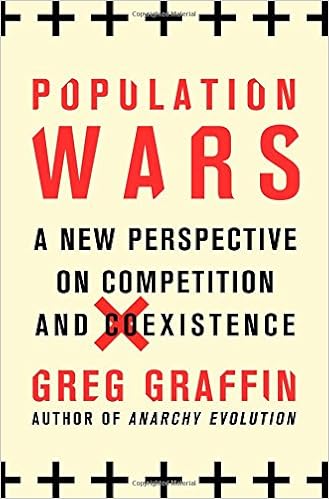
A third through Population Wars: A New Perspective on Competition and Coexistence by Greg Graffin.

Just realized that these books have the same issue Ive realized with some of the science papers I read for my field (allergy and asthma), in that no matter the text everyone always puts the same "surprising" statement. For example in these evolution books it seems everyone ALWAYS has to say the statement "did you know humans and chimps share X% of the same DNA sequence!" (though this book used 99%, another used 99.5%)." I just wonder if there are other examples they could use.
 
Started reading Quicksilver by Neal Stephenson. I recently read Seveneves, The Diamond Age and Anathem as well, so I'm on a bit of a Stephenson kick.

Aside from that, I'm mostly reading articles about microbial ecology and trying to lay down the basis for my doctoral research, so I'm not reading as much for fun as I usually would be.

Compared to Diamond Age and Seveneves, how is Quicksilver?

Reading Shadows of Self by Brandon Sanderson at the moment. Will probably read Warbreaker afterwards into November.
 
The entire reason I keep asking this is that it's such an absurd claim that I can't believe Dedication Through Light can possibly be representing the book correctly. It's not me moving the goalposts, it's me asking "did you seriously try to kick the ball way the fuck over there?"

Whilst I agree that it's an out there claim, this is a book, not a medical journal entry. Perhaps we should allow some licence, and disagree with the author's point rather than taking shots at the reviewer. :)


Having said that... I personally do think intelligence is much less to do with genes than a fifty fifty split.

To me Ferral children, who never recover I.Q. levels to more 'normal' levels and the demonstrable effects of 'class' in exams, for example, prove that environment is more of an influence than genetics.
 
Trying my second ebook ever with a digital version of Cibola Burn

I tried, and eventually gave up on my last ebook (Book of the New Sun) because of the irritating frequency of spelling errors and weird word changes. I brought it up in a prior "what are you reading thread" and was told this type of issue was commonplace with digital books.

Giving the format another go here. At least with this book I'm already familiar with characters, place names, vernacular etc... so if something is amiss it will be easy to gloss over and not get confused. Book of the New Sun had a lot more going on, so it was difficult to tell whether a word was mispelled or new because of the amount of universe specific language the series uses. The Expanse series is pretty pulpy so I'm not too concerned.
 
Finished reading Kenzaburo Oe's A Personal Matter, really enjoyed Bird's struggle but Bird being such a coward soured a lot of it for me. It's a shame really.

Onto Dance Dance Dance by Murakami and Amsterdam Stories by Nescio. At this stage, reading Murakami novels feels like rewatching that same movie again and again but picking up different things each time you watch it.
 
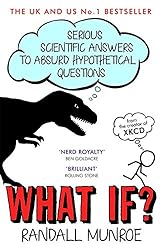
Just finished reading What If? By Randall Munroe.
There isn't much content different from the blogs but I hadn't read all of them yet so to was pretty great.
51keX8ZARoL._UY250_.jpg


Just about to start Station Eleven now
 
Finished reading Kenzaburo Oe's A Personal Matter, really enjoyed Bird's struggle but Bird being such a coward soured a lot of it for me. It's a shame really.

It might help to remember that the story is semi-autobiographical; I think that Bird's portrayal is meant to be almost self-flagellatory, a way of working through his shame about his reaction to the news about his son by exaggerating both the severity of his son's condition (his son in real life is much better off) and the ugliness of his own reaction.

Try reading Rouse Up, O Young Men of the New Age!; it's a much more affirming work, I think.
 
Reading The Death of Dulgath by Michael J Sullivan now (early copy because I backed the kickstarter). It is nice to come back to fantasy after a long hiatus. Especially a light-hearted series like the Ryria Chronicles.
 
Iptixgg.jpg


Just finished the Imperial Radch, errr, Tea Time Trilogy and I thought it was wonderful and wrapped up very well. I need more science fiction like this and Iain M Banks in my TBR pile.

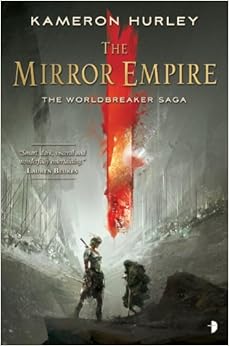
Not sure what to read next, maybe Kameron Hurley's Mirror Empire.

51Fm4%2BJGhcL._SY344_BO1,204,203,200_.jpg
 
I tried, and eventually gave up on my last ebook (Book of the New Sun) because of the irritating frequency of spelling errors and weird word changes. I brought it up in a prior "what are you reading thread" and was told this type of issue was commonplace with digital books.

These sort of errors occur with eBooks of older releases, due to the method of digitization used during conversion—wherein old paper manuscripts are scanned, and then an algorithm converts the flat scanned image into text. In this situation, publishers should take the time to give the book a proper copyedit, to catch all of the digitization errors. Most don't unless its a very high profile release.

Newer books with digital manuscripts—anything published in, say, the past decade—don't require digitization, and should be identical to the published physical copy of the book.
 
Finished Colorless Tsukuru Tazaki And His Years Of Pilgrimage by Haruki Murakami.

Great book. Tip: Read it while listening to Around from Hotline Miami 2 OST. Not kidding, it fits incredibly well.

I found it to be a bit better than Kafka On The Shore by the same author, the ending was way better. I've been struggling with keeping my concentration on finishing a book, but somehow with this one I've been able to just read 130 pages in a single setting.

Feels a bit nostalgic and sad. Not as surreal as Kafka On The Shore, but has what might be the perfect dose of irrational. Just a little bit here and there. Liked it a lot.

On to finishing Robert A. Heinlein's The Moon Is A Harsh Mistress!
 
These sort of errors occur with eBooks of older releases, due to the method of digitization used during conversion—wherein old paper manuscripts are scanned, and then an algorithm converts the flat scanned image into text. In this situation, publishers should take the time to give the book a proper copyedit, to catch all of the digitization errors. Most don't unless its a very high profile release.

Newer books with digital manuscripts—anything published in, say, the past decade—don't require digitization, and should be identical to the published physical copy of the book.

The words typically are fine, but I've noticed a number of books have weird page-formatting going on, extra space between each paragraph, for example. It makes reading feel disjointed for me, and something I've never encountered in a paperback book from a real publisher.
 
It's depressing. I think it's been about a month (maybe less) since I finished Authority, the second book in the Southern Reach trilogy, and I'm still waiting for whoever to return Acceptance to the library so that I can check it out.

This is what I get for trying to save a little money. -_-
 
It's depressing. I think it's been about a month (maybe less) since I finished Authority, the second book in the Southern Reach trilogy, and I'm still waiting for whoever to return Acceptance to the library so that I can check it out.

This is what I get for trying to save a little money. -_-

Buy the hardbound book with all three?
 
I have three new books on my desk and I don't know which to read first. Book nerd problems?

The Taming of the Queen by Philippa Gregory (probably this one, I haven't read much about Catherine Parr)
The 19th Wife by David Ebershoff, and
Sorcerer to the Crown by Zen Cho.
 
I have three new books on my desk and I don't know which to read first. Book nerd problems?

The Taming of the Queen by Philippa Gregory (probably this one, I haven't read much about Catherine Parr)
The 19th Wife by David Ebershoff, and
Sorcerer to the Crown by Zen Cho.

I can't speak for the other two, but Sorcerer to the Crown is delightful.
 
These sort of errors occur with eBooks of older releases, due to the method of digitization used during conversion—wherein old paper manuscripts are scanned, and then an algorithm converts the flat scanned image into text. In this situation, publishers should take the time to give the book a proper copyedit, to catch all of the digitization errors. Most don't unless its a very high profile release.

Newer books with digital manuscripts—anything published in, say, the past decade—don't require digitization, and should be identical to the published physical copy of the book.

Got about 40 pages in last night and everything seems like it's in order. I see what you're saying now, as these books were definitely created with digital publishing in mind.

I'll just have to order a physical copy of Book of the Mew Sun eventually.
 
revival-stephenking-cover-uk-hodder-stoughton--static.jpg


Finished off Revival today, my first Stephen King book. I really enjoyed it, though I did feel it dragged on a bit here and there along the story. Overall, the beginning drew me in immediately, and the ending was so bleak and unsettling, but just as great.

Not sure what to read next...
 
Finished Sorcerer to the Crown, by Zen Cho.

I wish there were more action bits, but overall I enjoyed it quite a bit. The characters are delightful.

I can't speak for the other two, but Sorcerer to the Crown is delightful.

I wrote the above before reading this, but yes!
 
Finished Population Wars

Population Wars subtitle suggests that the book would provide a new perspective on competition and coexistence. The writer, frontman and songwriter for a band called Bad Religion as well as holder of degrees in Zoology, Anthropology, and Geology, attempts to provide a new perspective on in about 250 or so pages.

I enjoyed most of the book that was focused on leading theories put forth from Darwin’s Origin of Species: survival of the fittest and natural selection. Survival of the fittest was an idea that gave him the desire to write about coexisting. In a world of only the fit surviving many crimes against man have been committed. In looking through the competitive lens at the work place, when only the strong companies survive many workers are put out of work (manufacturing boom and decline in America leaving many cities and towns essentially dead, many people out of homes from bad mortgages of the 2007 era). As an idea it is one that could work in science in some cases but not always. Populations of organisms survived the big five extinction events (the extinctions happened due to them not changing fast enough to extreme changes), and in general many populations are resilient even if there are more fit organisms around (Elms and American Chestnut ravaged by fungus went from a population of millions to now a few thousands, but still survive). Though the main point was this science concept is not one that is fit for applying to a non-biological setting. Natural selection was spoke of in a way to say that it is not really that important for populations of organisms, though it may seem that it selects some traits there is often no explanation for why or how it determines which are better. An example given was a ladybug that has various levels of spots, it didn’t appear that having more spots or less spots gave a competitive advantage to the ladybug. Other trivial characteristics to other organisms were given which are difficult to explain using competition and natural selection. Furthermore it appears that it is difficult or even impossible to use a natural selection and competition based mindset to explain how mitochondrion and other endosymbiotic events were able to get into the animal and plant genomes. Analysis of the human genome appears to show there are many parts of the genome which appear to have no aspects under selection.

I did take two issues with two things the writer said:

  1. Humans have no purpose in life
  2. Free will doesn’t exist
Humans have no purpose in life: Coming from a teleological standpoint, I like to be of the opinion that there is a purpose for the existence of everything in life. Though I may not be able to see or identify what the purpose is I think there is a purpose for everything. This could be traced back to early earth to present. There is an abundance of oxygen, so then organisms that use oxygen develop. Organisms develop on sea, so more sea creatures are developed. Organisms develop on land since there are plants on land that want to have their seed spread across the Earth. Etc. Saying that humans have no purpose just sits odd with me as it kind of gives humans no meaning, nothing to live or strive for. Though I also take the viewpoint that humans are not more special than other organisms. He does imply that humans should be stewards of the Earth and to be happy (so not to cause unhappiness to others), however he additionally takes a pro-human standpoint at the end of the day. The reason for this is if humans are not stewards and continue to pollute the earth or not protect species things will be worst for us.

Free will doesn’t exist: I found this point most interesting but also the most open ended. This kind of idea seems like the thing that would be resolved if a gene for it existed. I would think free will existed since each one of can do what each one of us wants to do. Instead the writer is of the viewpoint that humans are automata that simply respond to stimuli, these responses are dictated by decisions made by our ancestors and social milieu. He reached this belief based on the inability to determine where free will came from. If we take free will as any other trait, and traits arise through heredity, then which ancestor of humans, apes, four legged creatures, did it arise in and pass on in? I think it is an excellent discussion and deserved a bit more time but I also had to disagree with the viewpoint. I believe that free will does exist because I do not think our genes would dictate our whole lives in a cause and effect manner. New things arise when things work in concert with one another so perhaps free will arose due to the way our genes and their products have come together. Just because one does something yesterday or similar to the history doesn’t imply they would do that again tomorrow. Consciousness was proposed as an explanation that he was willing to entertain but then immediately went to saying that animals display varying levels of consciousness, but we currently have no way to determine if they have free will.

Overall this was a pretty intriguing book. There were many more things covered in the book such as early Earth history in more detail. Translations of science concepts to explaining political was covered in a few paragraphs. A bit of detail was covered on natural disasters and some extinction stories. And lastly there was a very intriguing chapter on the human immune system (Bubonic Plague and Ebola).

Science wise it did require a bit of background knowledge on a few concepts but could have gone deeper and used higher terminology on others. There was quite a bit watered down in the molecular biology aspects. Though perhaps it was made to be easier and more accessible but when this stuff was watered down I found myself pretty bored at some of the science discussions. Additionally for anyone in the life sciences many of the experiments mentioned are pretty well know (penicilum, amino acids from inorganic compounds after being sparked, industrial melanism in the peppered moth, etc), I believe I only came across two I never encountered before. More NEW knowledge could have been used. And on this front, I would have liked more of an overview of research rather than Bad Religion and traveling stories.
 
It might help to remember that the story is semi-autobiographical; I think that Bird's portrayal is meant to be almost self-flagellatory, a way of working through his shame about his reaction to the news about his son by exaggerating both the severity of his son's condition (his son in real life is much better off) and the ugliness of his own reaction.

Try reading Rouse Up, O Young Men of the New Age!; it's a much more affirming work, I think.

Yeah, I got that it was autobiographical and found it great in that aspect but I just can't disassociate my dislike for Bird as a character from it.

I'll definitely check out Rouse Up.
 
Just finished Ship of Fools. Thanks, Maklershed, for recommending it. Though it was not the horror book I expected, I liked it very much. It was a very easy read and flowed well. I finished it in just four days without trying hard at all.

Now to move on to the next one. It'll probably be The Sad Tale of the Brothers Grossbart but I'll finalize my decision tonight.
 
Just finished Ship of Fools. Thanks, Maklershed, for recommending it. Though it was not the horror book I expected, I liked it very much. It was a very easy read and flowed well. I finished it in just four days without trying hard at all.

Now to move on to the next one. It'll probably be The Sad Tale of the Brothers Grossbart but I'll finalize my decision tonight.
Nice - glad you liked it too. :b
 
PP3wSQk.jpg


I'm about 20% into the book now and not sure if I like it just yet. The overall premise seems a little lame but it does keep me reading. I hope the story gets less ridiculous once some background is shed on The Long Walk. Supposedly, it's among the better Stephen King books so I'm confident it'll pick up eventually.
 
Just hit the 3/5th mark of Cloud Atlas. I am in love with it, but I had some issues with the Sloosha chapter, but that's mostly due to the writing prose. Mitchell is quite brilliant so far. I am incredibly impressed by the diversity of his writing style.

Cloud Atlas is ruining my other affair with Make It Stick. Sorry, Piecake, for not giving your book of the year its proper attention.
 
Read about 175 pages of City on Fire this weekend and enjoyed myself. Sure, with almost 800 pages left to go it may overstay its welcome, but so far, so good.
 
Still reading the book on Victorian London. Its really interesting and a lot of fun but damn its a big book. I'm gonna have to read a bunch of small ones after this to get that 50 in.
 
That's the dude who turned down a Hugo nom this year, right? Marko Kloos? Curious to hear more about these.

Okay. I'm intrigued.

Yes they are by Marko Kloos. Not sure about that Hugo nom though. Just finished the second book and I'm hooked, but I love this genre, so I'm fairly easy to please with it.

It's your standard Military Sci-Fi book starting with training camp and moving onto actual service. It has a slightly different take on the goings on with Earth while colonization of other planets is happening. Instead of a we're expanding because we're humans and we can, it's mostly out of need of an overpopulated Earth. People entering service is like a golden ticket off of Earth. Giant metroplexes a la Judge Dredd (i.e. NYC is now 100 million people, Boston stretches all the way to New Hampshire) in serious poverty and crime. The main enemy is human in that it's a conglomeration of China, India, and Russia fighting for habitable planets to colonize.

I enjoyed it a lot, just finished the second book which was a little weaker but I'm starting the 3rd book. The action is top notch (maybe only beaten by Armor by Steakley), character development is meh, and the politics aren't as strong as Scalzi's books but are there. But altogether if you like Scalzi, Hadleman, Heinlen, you'll still love it. It's B-tier compared to those, but those are pretty lofty books to live up to. The first half of the first book is phenomenal and then the second half is hit or miss for most. He expands on the first half in some other short stories that I've yet to read since I'm hooked on the main story line.
 
It's your standard Military Sci-Fi book starting with training camp and moving onto actual service. It has a slightly different take on the goings on with Earth while colonization of other planets is happening. Instead of a we're expanding because we're humans and we can, it's mostly out of need of an overpopulated Earth. People entering service is like a golden ticket off of Earth. Giant metroplexes a la Judge Dredd (i.e. NYC is now 100 million people, Boston stretches all the way to New Hampshire) in serious poverty and crime. The main enemy is human in that it's a conglomeration of China, India, and Russia fighting for habitable planets to colonize.

Thanks for the write up, but that bolded part pretty much tanked most of my interest in the book.
 
Thanks for the write up, but that bolded part pretty much tanked most of my interest in the book.

Well I'm not spoiling anything (; Remember I said the second half took a weird twist?

Actually here is a spoiler for you aidan, might change your mind, since I do think you'll like it:

3/4 of the way through the book they encounter an alien race that is far advanced and not so nice! This basically sets up the second book.
 
I've been reading another web serial recently (I've previously talked about Worm and of course HPMOR). This one is slightly harder to recommend as whole-heartedly as the other two... but I'll save that for the end.

This is really really really good. I honestly like it better than Worm as well, mostly because Worm made me too horrified, depressed, and hopeless.

It not being completed kinda sucks, but I had no problem with the writing, and actually found the author to be a pretty good writer. Perhaps my expectations are subconsciously lowered for online novels like this, but I thought he was able to convey the correct atmosphere and tones in scenes, was able to give characters distinct voices, and didnt have any distracting grammatical errors that I saw.

So yea, keep me posted on any other online novels that find.

Seconded. I'm up to chapter 15 and so far I love it. This is what I've been looking for since HPMOR and Worm. Please don't hesitate to post more recommendations, Cyan!
 
Just hit the 3/5th mark of Cloud Atlas. I am in love with it, but I had some issues with the Sloosha chapter, but that's mostly due to the writing prose. Mitchell is quite brilliant so far. I am incredibly impressed by the diversity of his writing style.

Cloud Atlas is ruining my other affair with Make It Stick. Sorry, Piecake, for not giving your book of the year its proper attention.

You should be!
 
Status
Not open for further replies.
Top Bottom