• Hey Guest. Check out your NeoGAF Wrapped 2025 results here!

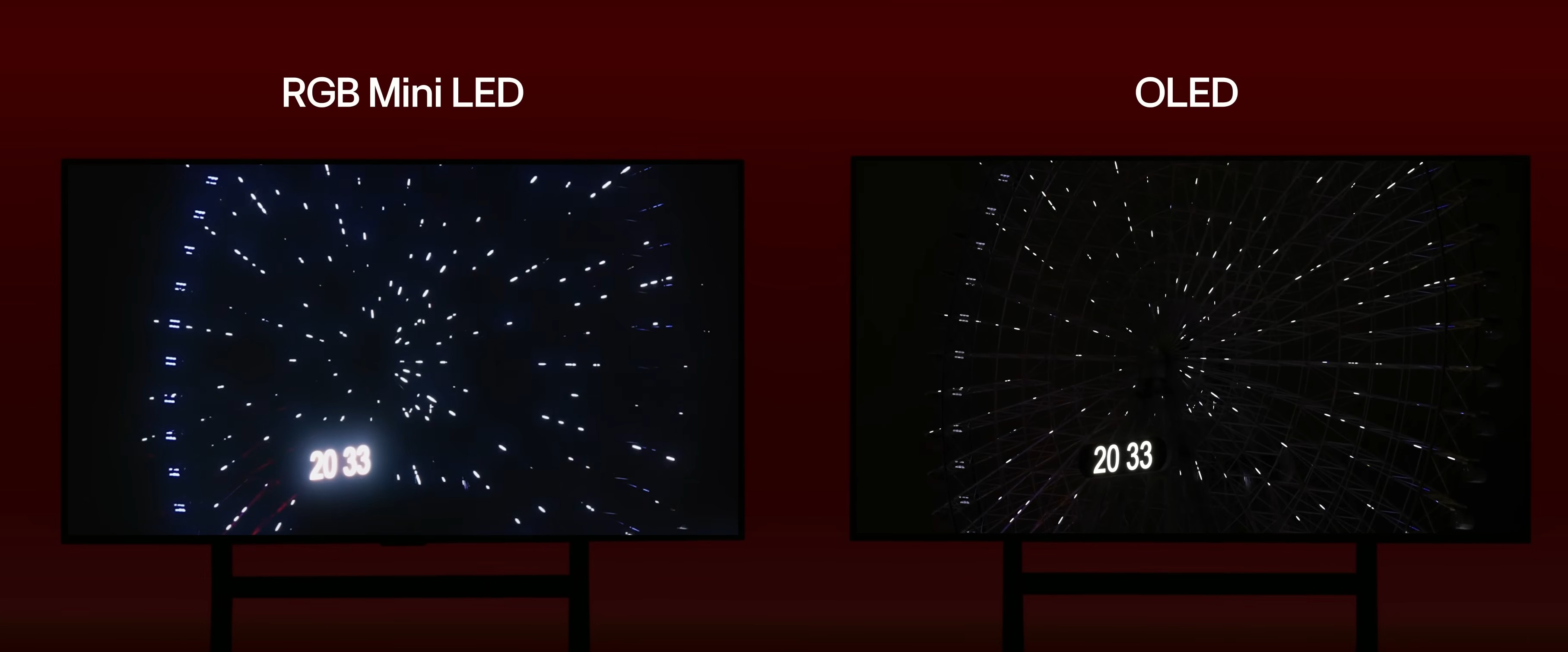
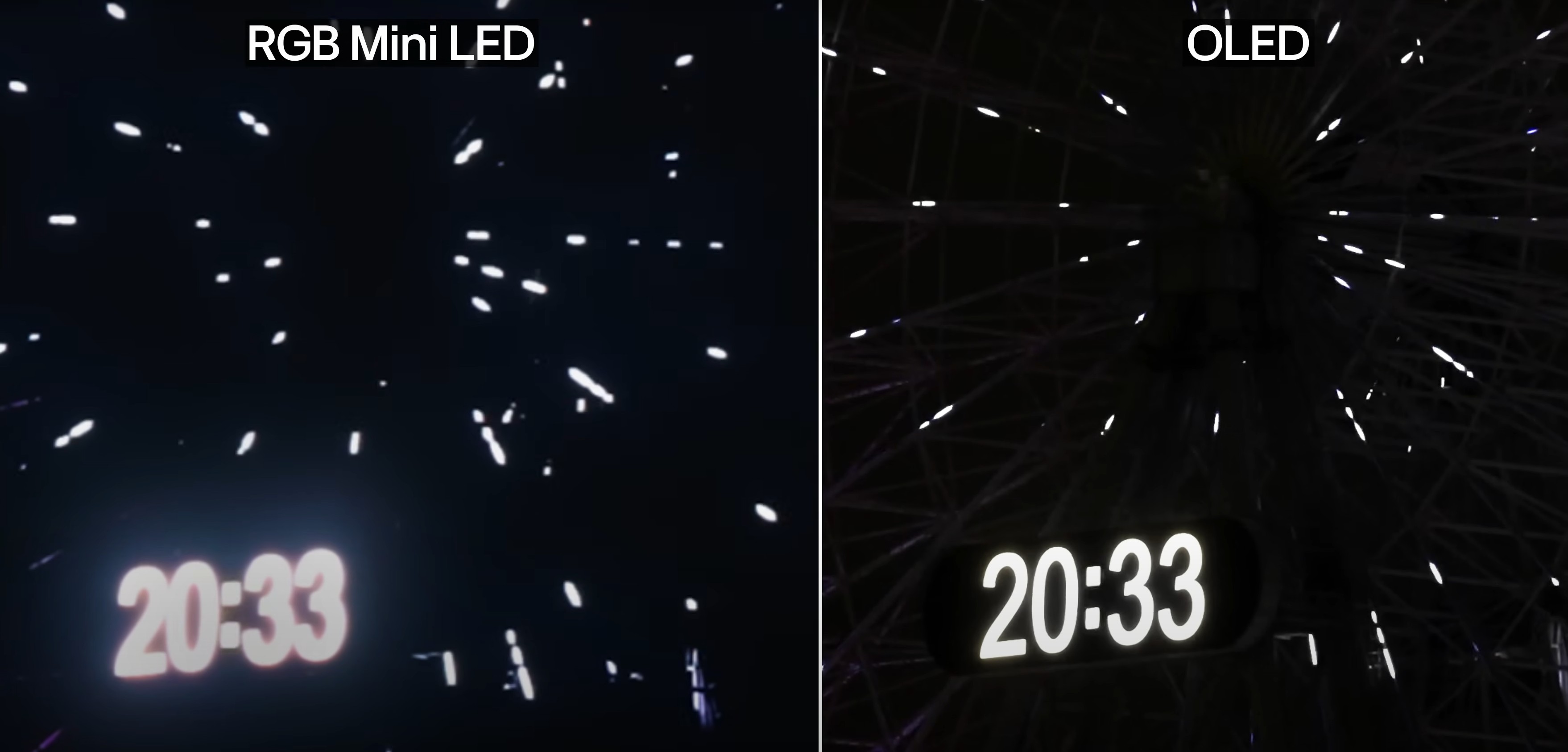
LG shitposting about RGB Mini LED

Full coverage of BT2020 is nice but barely anything can show it, most content is still stuck in Rec.709. Same is true with HDR, it's not treated well by content creators:


And 2026 RGB models are rumored (or confirmed?) to have less dimming zones than current top mini leds, so despite having smaller leds they may have more blooming (probably not Sony tv).

From what I've seen online, they might use a special filtering layer (like a mask) that will handle excess light by filtering as much of it out, reducing light leakage and possibly keeping blooming to a minimum. Current mini leds can handle this really well, there's a possibility this might go further than that.
 
Well they're not wrong. As much advanced mini-LED can get any sort of back-lit LCD is still going to have their quirks.

Its a bit much though lol. See it more of a condescending video for normies and non tech guys to quash hype for new display tech.
 
Last edited:
QD-OLED doesn't have that problem unless light is directly shining on the screen but no OLED looks good in a bright room.

I worked with every QD-OLED panelled TV from Samsung and Sony since their inception in 2021/22 and on the shop floor the ambient black level raise was evident on all of them.

The lights in the shop were suspended 20+ feet above the TVs so there was no direct light on the screen. Thats why its called ambient black level raise.

I sometimes did afterhours sessions with staff or customers where the lights were severely dimmed and you could still see it.

Samsung use of the matte coating on the S95C/D/F made it even more obvious for sure, but the Sony was still affected.

I dont think its the end of rhe world or anything, but it is there.
 
I worked with every QD-OLED panelled TV from Samsung and Sony since their inception in 2021/22 and on the shop floor the ambient black level raise was evident on all of them.

The lights in the shop were suspended 20+ feet above the TVs so there was no direct light on the screen. Thats why its called ambient black level raise.

I sometimes did afterhours sessions with staff or customers where the lights were severely dimmed and you could still see it.

Samsung use of the matte coating on the S95C/D/F made it even more obvious for sure, but the Sony was still affected.

I dont think its the end of rhe world or anything, but it is there.
Some people idiots people actually try to remove the matte coating. The picture looks a lot better, but going at your expensive tv with a chisel or a knife is just dumb.


All tvs can die or break. My mother has Toshiba QLED (not mini led) that died after one year (angry red/green blinking light), it was still under warranty (2 years) so they replaced/repaired it.

I had few LCD tvs and monitors and none of them failed me (I sold all of them after few years of usage). My first OLED is issue free after 3 years of heavy usage.
 
All tvs can die or break. My mother has Toshiba QLED (not mini led) that died after one year (angry red/green blinking light), it was still under warranty (2 years) so they replaced/repaired it.

I had few LCD tvs and monitors and none of them failed me (I sold all of them after few years of usage). My first OLED is issue free after 3 years of heavy usage.
His channel is full of LG failures.
 
All tvs can die or break. My mother has Toshiba QLED (not mini led) that died after one year (angry red/green blinking light), it was still under warranty (2 years) so they replaced/repaired it.

I had few LCD tvs and monitors and none of them failed me (I sold all of them after few years of usage). My first OLED is issue free after 3 years of heavy usage.
Those Toshiba's aren't even Toshiba's. They are rebranded Hisense TVs, so it's no wonder it didn't last.
 
Last edited:
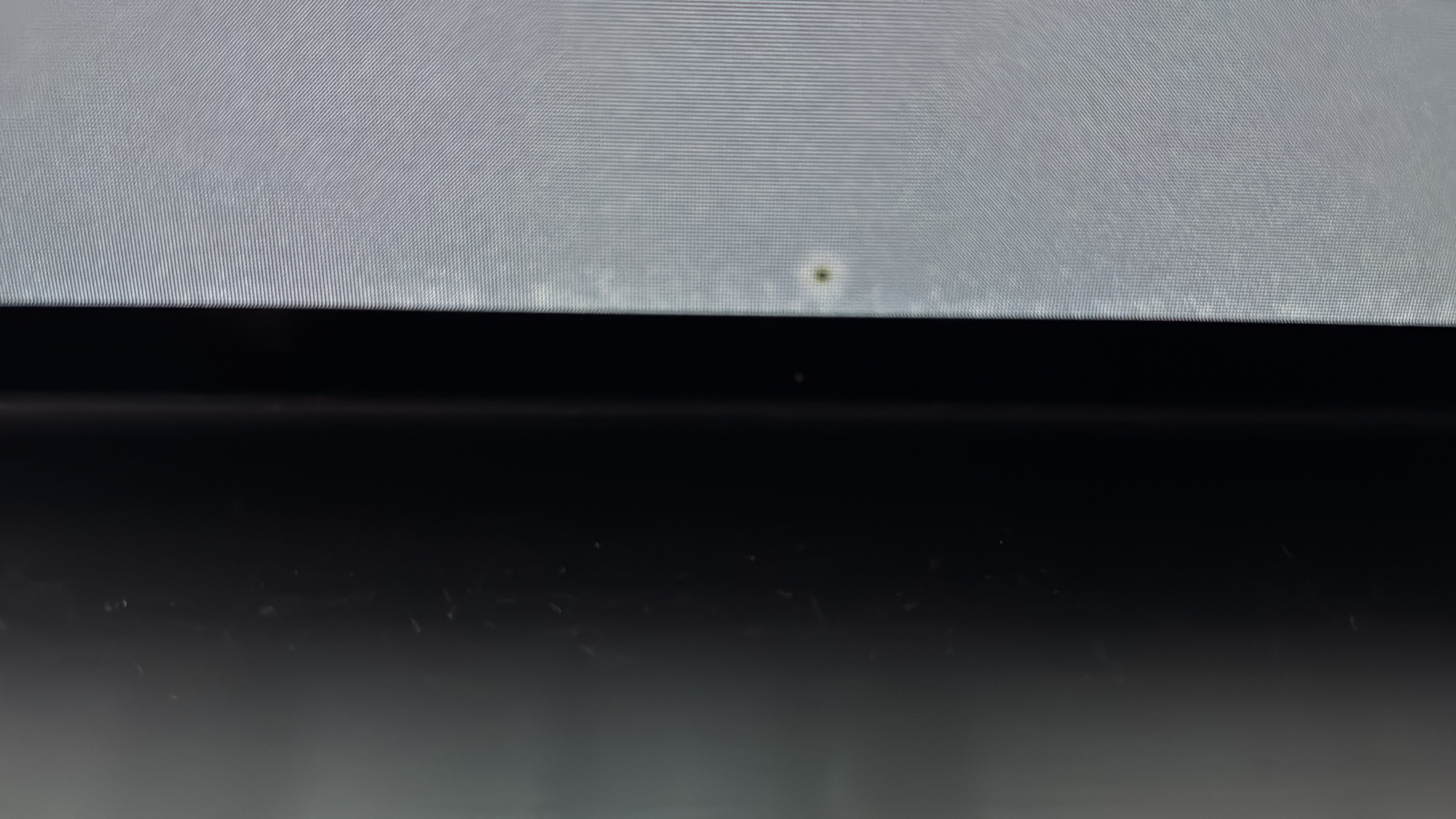
I got an LGC3. Rarely use it and I am getting burn in and dead pixels at the edges of the panel. Recently bought a 75 inch TCL for a fraction of the price of the C3 and I am very happy with it. You get a lot of bang for your buck with TCL. 144 mhz, HDR 10, Dolby Vision, etc. As much as I love the vividness of my OLED, I don't think I will ever purchase one again.
 
It's just another LCD, nothing wrong with that statement.

So bloom still not fixed on LCD:

NesInN7BclGXDetq.jpg
WFRjt9077FUJkn6r.jpg
This is hyperbole, my TV never looks like this lol
 
I got an LGC3. Rarely use it and I am getting burn in and dead pixels at the edges of the panel. Recently bought a 75 inch TCL for a fraction of the price of the C3 and I am very happy with it. You get a lot of bang for your buck with TCL. 144 mhz, HDR 10, Dolby Vision, etc. As much as I love the vividness of my OLED, I don't think I will ever purchase one again.
cjeaZGpmExjbAlev.gif
 
Selective off angle with over exposure pictures.
I never see it when looking directly at my LED displays.

If they can get the zone count and processing right.... RGB LED is going to be great.
I've seen some bloom in very specific conditions (like pitch black room + a single white element over pitch black BG) but not like that, I'm still moving to OLED next year but mostly because Samsung has issues with HDR + VRR in RDNA2+ cards and I need a bigger set, I've been happy with my QN90B so far
 
Last edited:
And that means LG has high failure rate? Based on this channel?


Yeah, it's the same shit as "Nokia" or "Motorola". But Hisense tvs have good reputation in recent years.


Show us.
It's impossible because the cameras highly overexpose the bloom, you'd have to check with your own eyes somewhere
 
And that means LG has high failure rate? Based on this channel?


Yeah, it's the same shit as "Nokia" or "Motorola". But Hisense tvs have good reputation in recent years.


Show us.
He's just one example.
Examples are all over including in this thread.

Unless you have a super nice camera pictures can cause blooming.
So I don't know if he can. I would if not for what I just said.
 
I've seen some bloom in very specific conditions (like pitch black room + a single white element over pitch black BG) but not like that, I'm still moving to OLED next year but mostly because Samsung has issues with HDR + VRR in RDNA2+ cards and I need a bigger set, I've been happy with my QN90B so far
The QN90B is a very good TV that Samsung completely fucked up post 1310 firmware, but it has a lot of blooming. A mate of mine has one and it's got significant blooming even with full local dimming enabled.
 
Last edited:
He's just one example.
Examples are all over including in this thread.

Unless you have a super nice camera pictures can cause blooming.
So I don't know if he can. I would if not for what I just said.

And what sample is that?

RTINGS had mostly LCD screen failures after their 2 year torture test while OLEDs were still strong (outside of burn in of course). But we still don't know how it works on global scale.
 
Blooming is not nearly as bad as people make it out to be. If you buy a quality brand tv and it's an upper end model most people aren't going to notice any issues. You have to be watching a completely black screen with only closed captioning turned on, and watch from an off angle for it to be very offensive. I'm still using a 2018 tcl 6 series and have no complaints and LED's have only gotten better. OLEDs are still king but the gap has shrunk by a lot.
 
This is hyperbole, my TV never looks like this lol

1. it is a shitty tv even something like the base Sony mini led is not nearly as bad
2. the brightness is turned way up to show every little trace of blooming.


I just bought a Sony Bravia 8 2 oled which is great ,but I am also thinking of getting a Sony Bravia RGB mini led when they come out for another room.
 
The QN90B is a very good TV that Samsung completely fucked up post 1310 firmware, but it has a lot of blooming. A mate of mine has one and it's got significant blooming even with full local dimming enabled.
AFAIK the local dimming may increase the blooming, BTW, haven't noticed anything on an updated, what exactly did happen?
 
After 5 years mixed usage my LG 65CX OLED has been repaired twice. One for a faulty psu and just a week or two ago it was exhibiting dead/dying pixels. So the entire screen was replaced under warranty.

eIkztShUEoNzkdGK.jpeg

It has a great picture but is now out of warranty so when it goes, I will be checking out to see what's on offer.
 
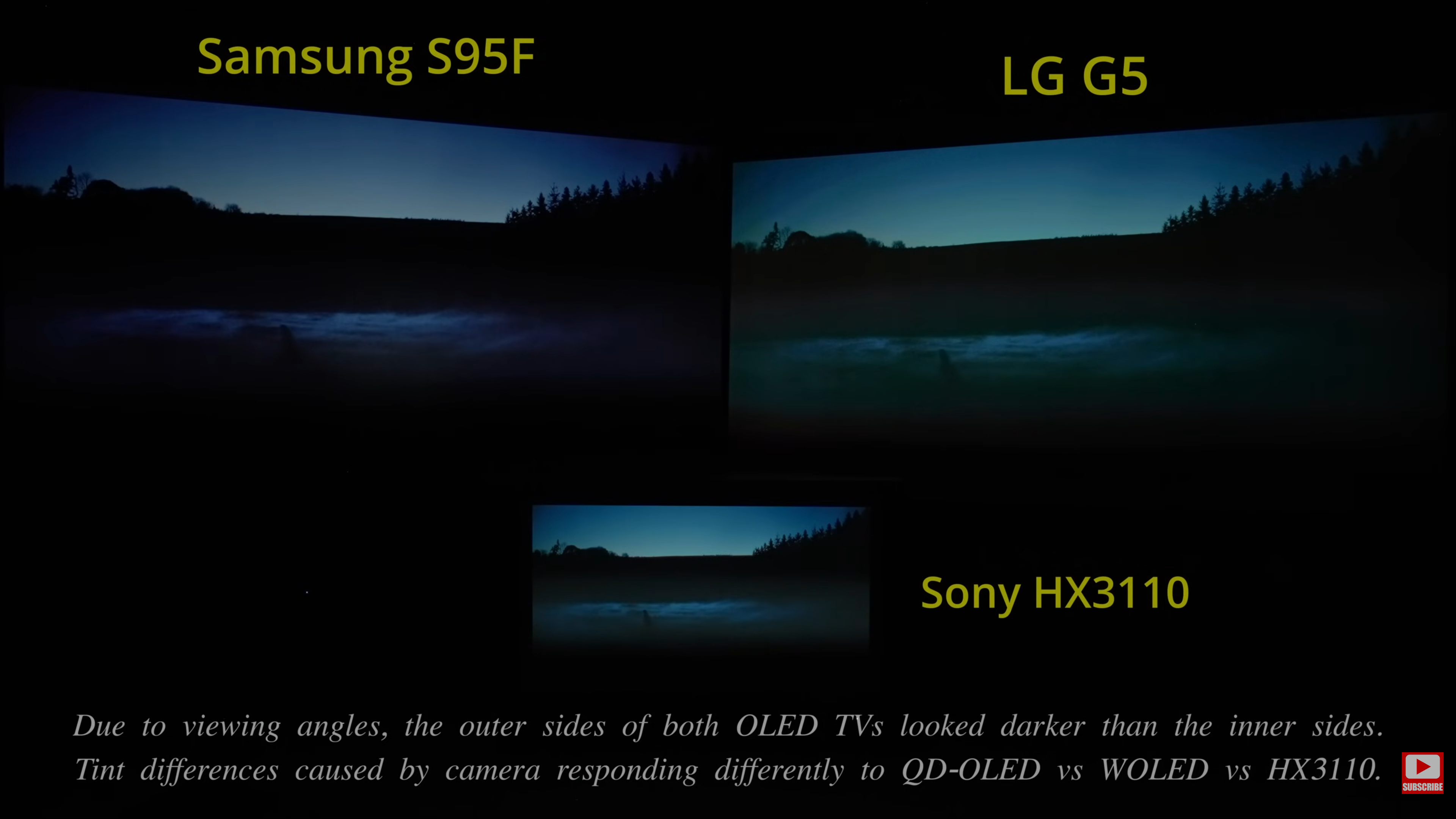
Higher contrast, not black crush. In reality you will still see those details on G5 but capture from camera in SDR can't show it without either blowing out TCL or crushing G5.

S95B (1st gen QD-OLED) had issues with black crush (not nearly as much as your screenshot suggests) but that was a problem with how Samsung tuned these TVs and has improved a lot since then.

What Nx87 says in that thread certainly doesn't apply to all WOLEDs, I had some older sets from Panasonic/Sony/LG few years ago and they showed everything down to ~68 at least (64 being black). Usually Sony and Panasonic sets are better tuned for shadow details from factory than LG/Samsung, especially in SDR.
 
Last edited:
My LG C1 broke a few months ago, so I upgraded to a Xiaomi S mini LED 2025, Cost me around 700$ for 55 inch model.

Long story short, It's really good. brightness is insanely high. i think it's has around 308 local dimming zones on the 55-inch model, which gives it amazing black level and great contrast. makes it very close to OLED. But it's not perfect, Occasionally you can notice a very slight blooming effect here and there. If you're looking for a TV with very high brightness and vibrant colors, Mini LEDs are good choice
 
And in their test LG OLEDs had very good results.


Looks like reference monitor in this review:

xQoDSjxLKiAeTjxD.png
LG haven't won the best TV award from the "majority" of reviewers in years.
LG keep trying to make a better OLED tech than Samsung's QD-OLED and come up short.

That channel is comical and can't be taken serious.
 
LCD is not a replacement for OLED, even the newest models still have the same problems that tvs had 20 years ago (but of course much less apparent). And first gen of RGB mini LEDs doesn't look impressive at all (worse than normal mini LEDs in some aspects). LCDs just got brighter and brighter in recent years (oleds as well).

True replacement for OLEDs is mico led or something like Qdel.
Why is that a true replacement?
 
The tech will scale far better as well. OLED still has yield problems as screen size increases. Margins were already thin on displays, and now OLED manufacturers are having to stack layers to compete, further cutting into profits. It's no surprise at all that a deal was struck to push Copilot on LG TVs, and why Sony has abandoned OLED as their flagship TV tech.
 
I got a Samsung S95F QD OLED a couple of months ago and it's almost too bright at times and I have the brightness turned down a little, nobody should be scared that a newer OLED or QD OLED isn't bright enough.
Yeah, i turn the brightness of my a95L down to 15. I think the default was like 35 or 40 and is blindingly bright at night.
 
LCD is not a replacement for OLED, even the newest models still have the same problems that tvs had 20 years ago (but of course much less apparent). And first gen of RGB mini LEDs doesn't look impressive at all (worse than normal mini LEDs in some aspects). LCDs just got brighter and brighter in recent years (oleds as well).

True replacement for OLEDs is mico led or something like Qdel.

TCL's RGB inkjet OLED looks viable too. Although I don't know if it displays the full color gamut as well as QD-OLED, which is important to me. I wish QD-OLED monitors were cheaper
 
Creating "Micro RGB" is deliberately confusing marketing from LG and a bit annoying as they're the same tech as mini-LED. When actual Micro LED tech becomes mainstream, that's the gamechanger but it'll be confusing terminology now.
Yes, I hate when companies do this crap. It's hard enough to keep it straight and then I have to explain all this tech down to my parents, siblings and then take extra time with my grand parents lol

The life of a tech guy.
 
No doubt RGB mini LED is impressive but I feel some here are probably getting a bit too dismissive of OLED technology, it's hardly standing still. The G5 is a very bright TV, not just for an OLED but in general. Perfectly usable in a bright room. The G6 will be even brighter, likely with over 3000 nits peak. I wouldn't be so quick to proclaim the end of OLED quite yet.

Same goes for the S95F. And probably the newer S95G.
 
No doubt RGB mini LED is impressive but I feel some here are probably getting a bit too dismissive of OLED technology, it's hardly standing still. The G5 is a very bright TV, not just for an OLED but in general. Perfectly usable in a bright room. The G6 will be even brighter, likely with over 3000 nits peak. I wouldn't be so quick to proclaim the end of OLED quite yet.

Same goes for the S95F. And probably the newer S95G.
Is OLED longevity keeping up with the brightness increases? I'd have 2nd thoughts if that extra brightness also means burn-in happens faster.
 
Is OLED longevity keeping up with the brightness increases? I'd have 2nd thoughts if that extra brightness also means burn-in happens faster.

Exactly. Most of us are weary of OLED due to the durability of the tech. Many of us having experienced issues firsthand. Not interested in a glass cannon.
 
Last edited:
Is OLED longevity keeping up with the brightness increases? I'd have 2nd thoughts if that extra brightness also means burn-in happens faster.

Exactly. Most of us are weary of OLED due to the durability of the tech. Many of us having experienced issues firsthand. Not interested in a glass cannon.

G5 is tandem OLED, from AI:

"Tandem OLEDs significantly reduce burn-in risk compared to single-layer OLEDs by stacking two emissive layers, spreading the electrical load and reducing strain on each layer, leading to longer lifespans, higher sustained brightness, and better efficiency, effectively tackling the primary weakness of traditional OLEDs while maintaining superior contrast and black"

And G3, G4 had MLA tech that maximized light output. LG seems smart enough not to drive their panels too much while still achieving more and more brightness (main selling point these days).
 
Last edited:
G5 is tandem OLED, from AI:

"Tandem OLEDs significantly reduce burn-in risk compared to single-layer OLEDs by stacking two emissive layers, spreading the electrical load and reducing strain on each layer, leading to longer lifespans, higher sustained brightness, and better efficiency, effectively tackling the primary weakness of traditional OLEDs while maintaining superior contrast and black"

That's the thing Bojji, I don't want to worry about burn in at all. I don't want to babysit a TV neither. I want to max it out and run it as much as I want with any content I want displayed on the screen without fear. If the G5 is a rating 10 display and the Bravia 9 is a rating 8 display, I would take the 8 that's more durable without a second thought.
 
That's the thing Bojji, I don't want to worry about burn in at all. I don't want to babysit a TV neither. I want to max it out and run it as much as I want with any content I want displayed on the screen without fear. If the G5 is a rating 10 display and the Bravia 9 is a rating 8 display, I would take the 8 that's more durable without a second thought.

Oled is not for everyone, that's for sure. It all depends on what is the most important for end user, I preferred black levels, contrast, no blooming etc. over pure brightness output (while HDR is still great thanks to infinite contrast). And I can accept risk of burn in and that you have to make some changes in how you use your screen vs. LCD (hide task bar, low brightness for HUD elements or dynamic HUD in games etc.).

But people that have different needs will avoid OLED tvs. Mini LEDs (and upcoming RGB LEDs) are good enough for most folks.
 
G5 is tandem OLED, from AI:

"Tandem OLEDs significantly reduce burn-in risk compared to single-layer OLEDs by stacking two emissive layers, spreading the electrical load and reducing strain on each layer, leading to longer lifespans, higher sustained brightness, and better efficiency, effectively tackling the primary weakness of traditional OLEDs while maintaining superior contrast and black"

And G3, G4 had MLA tech that maximized light output. LG seems smart enough not to drive their panels too much while still achieving more and more brightness (main selling point these days).
Asus uses tandem OLED monitors and they claim it increases longevity by 60%.

If the LG G6 also supports 240 Hz(and still has that 5 year panel warranty), I might make the switch to OLED again.
 
Top Bottom