• Hey Guest. Check out your NeoGAF Wrapped 2025 results here!

Why The Dreamcast Still Would Have Failed Without The PS2

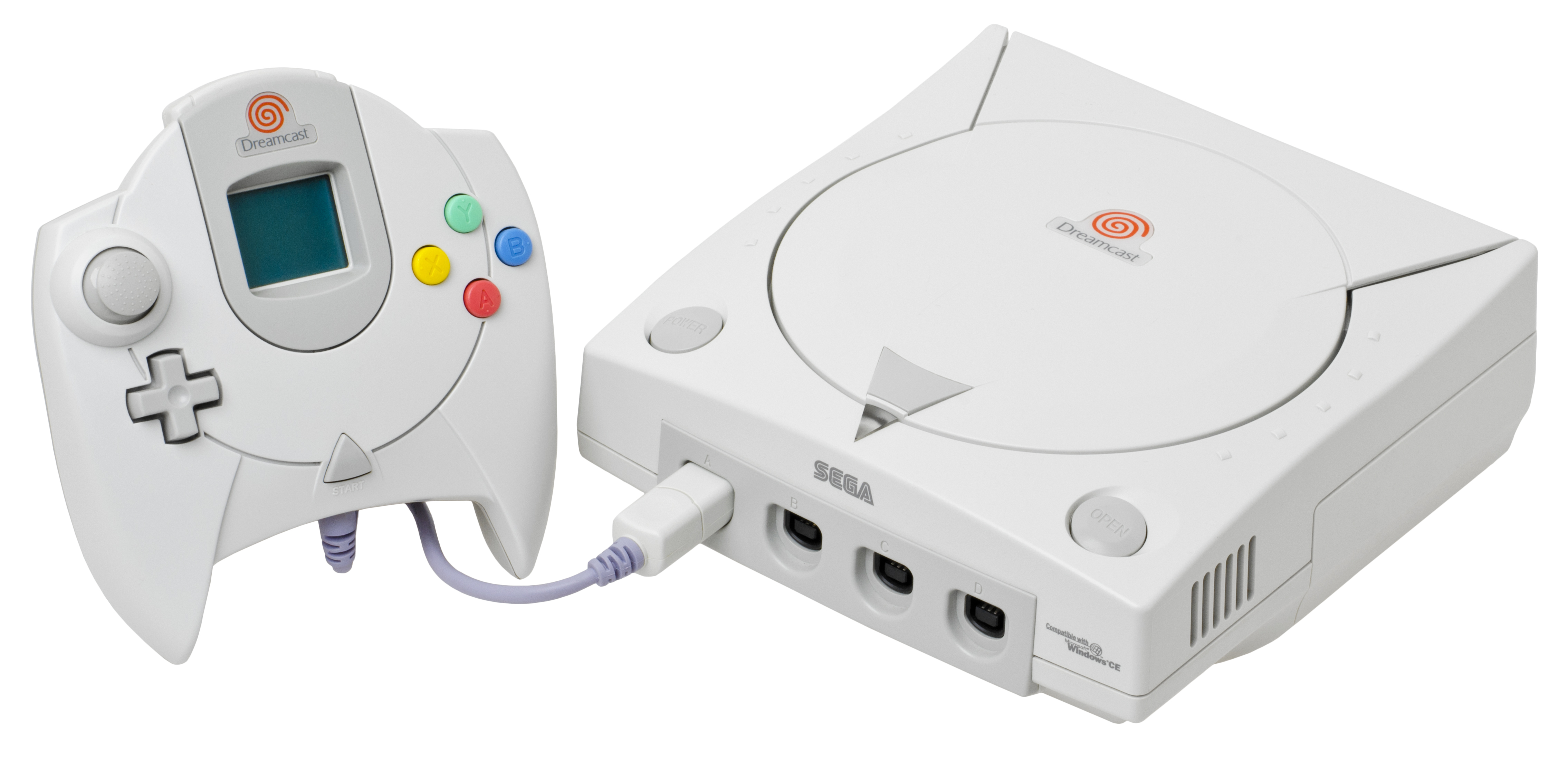
Dreamcast-Console-Set.jpg


Before I begin, know that the Dreamcast is one of my favorite consoles ever, is legendary, and in many was state of the art when it released in 1998/1999.

There are two main reasons why the console would have ended up underperforming, despite it's strong start.

1) Lack of a second analog stick, leading to games simply just skipping the console or not working on it.

Consoles starting in the sixth gen
were utilzing the right analog stick for camera and aiming controls (Halo Combat Evolved laid the blueprint in 2001 for FPS controls on consoles), among other mechanics as well.

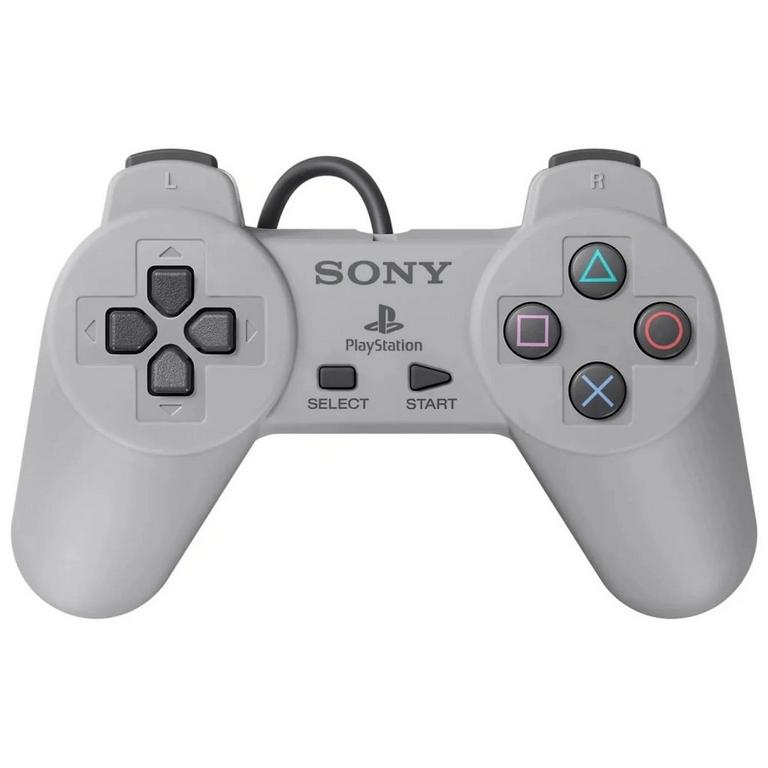
6th_Gen_Controllers.jpg


2) GD-ROMs (Dreamcast's disc format) were limited in storage capacity, holding around a max of 1 GB.

This meant most games, especially RPGs or Open-World games would have been multiple discs on the Dreamcast, compared to its competitors.

Sega lacked the foresight to know where gaming was heading, and for whatever reason thought low storage (needed to be DVD) and one analog stick was sufficient.

I will admit, Sega did know online gaming was the future and the Dreamcast was indeed prepped for that, however.

This would have been a costly mistake, even without the PS2 dominating the gen sales wise.

515Ceao0c3L._AC_UF1000,1000_QL80_.jpg


PS2 ended with 160 million+ sales.
 
Last edited:
Taking out PS2 you get folks waiting for Emotion Engine sight unseen, take out Xbox as they came in thanks to the SEGA developments, they even worked together, so you just get GameCube which relied even less on the 2nd stick/extra buttons & came later with less than 500MB bigger discs :P

Anyway, many (most?) PS2 era top tier classics barely did anything with the right stick. From MGS to GTA, Final Fantasy, Resident Evil 4, Wind Waker, Twilight Princess & Metroid Prime, the Dreamcast would have been fine with such games/genres/styles and successors to its RPG, fighting, racing, sports & arcade games. Maken X controls like Metroid Prime. If folks wanted Halo-like T/FPS, they'd have the choice of an eventual twin stick controller (PS had no trouble making it its new default with few real/good dual analog games) or mouse & keyboard, though PS2 beat Xbox with little of it.

Even when you need more buttons, you more often than not still have the 4 (8?) d-pad directions as back then it used to be available as alternative to analog controls or even do nothing while nowadays it's very commonly used as additional inputs (ie weapon/items in Souls) so it could have been used for things like items, menus, actions in MGS & Zelda type games where people say you totally need extra shoulder buttons, on top of other clever still decently intuitive stuff like hold L then tap R to toggle stuff one way, hold R then tap L for the reverse, etc. Personally I'm also partial to the old GoldenEye/Perfect Dark single stick defaults as with the right gameplay it's weighty and physical like controlling an action game character in FPV, auto aiming what's roughly ahead Doom style (or lock on like Prime) and precision aiming RE4 style. I liked the option in later FPS like TimeSplitters. Though games like MDK2 were great with the face buttons as WASD, left stick as look/aim, L to jump/glide/jetpack/whatever, R to shoot and the d-pad to switch and use weapons/items/scopes/gadgets etc. Sure, after 25 years it's the reverse of what you're used to but it worked and works 🤷‍♂️

Not that PSP isn't proof enough, it has identical inputs (worse analog) and did just fine from Monster Hunter to God of War to MGS to GTA to Final Fantasy to Syphon Filter to SOCOM to Daxter to Resistance to Tomb Raider to Medal of Honor to racing to (S/J/A)RPGs to fighting, sports and more.

And yes I know about the claw grip crap but that was way over the top and unnecessary for sane folks, I played Monster Hunter a TON on that system and just momentarily tapping a direction for my character to face that and then tapping the camera button to recenter it (or even moving my thumb from the stick to the d-pad during long animations) was more than enough and became second nature, in the heat of battle or not. Though the series later made it so the recenter button just faced the boss monster (and in PSO there's automatic flying boss camera etc.) so, it's all design 🤷‍♂️

Edit: I forgot about 3DS having the same controls (its FPS tended to use the touch screen for aiming, possibly to their detriment sacrificing other inputs, but other games didn't). So the DC died in 2001 but its controls survived in Sony to 2011 and Nintendo to 2017 proving it wasn't the issue. Of course I don't claim the stick didn't have many great uses, just that it wasn't that big a deal just yet considering you could still have some of the greatest games of the whole generation doing little with it, and plenty others that did more could have been tweaked like them without it being so weird!

Idk about the space, it seems enough for epic RPGs like Skies of Arcadia, maybe they'd focus less on FMV doing stuff real time like that instead if they wanted to be on DC, even Grandia II has some of the in-engine stuff on Dreamcast done in (meh) FMV on PS2, the GTA III port has fit on a CD-R, Vice City would fit on a GD-Rom etc. I didn't think changing discs was a big deal, it was done a lot on PS, PCs had tons of install CDs and it wasn't overdone on Dreamcast and could have probably been trimmed with less duplicate files (it helped loading) etc., the max was like 4 Discs for rare games like D2/Shenmue 2. Voice acting and FMV was mostly for the highest end games, your average JRPG didn't have as much as Square's to think they would all need a ton of discs for the Dreamcast to have the genre or anything, most like the Persona or Tales of series would probably be on just 2 🤷‍♂️

I'd have probably enjoyed it if it lived on but got different types of games because of this rather than be like current gen where every system gets the same stuff in slightly different performance/resolution. Like FFVII started way different on N64 and turned to something else to utilize PS discs too. Of course I'm not defending their decision to not take the Saturn 3D Control Pad which was better if they were gonna go with this design. Maybe they were being Nintendo-like in an approach trying to simplify things to attract non gamers like Nintendo with Wii for example, it could have worked. It's not like DC died over a lack of games, it got tons and fast, so, had it lived on, even with mainly SEGA support with successors to its varied catalogue tuned to its hardware and whatever third parties could fit their games without many discs, that would still mean a pretty meaty library for us all.​
 
Last edited:
I agree about the second analog stick. The Dreamcast pad wasn't going to be able to keep up with more modern games but i guess they could fix that by releasing a dual analog version with a few extra buttons later on.

I also agree the GD ROM was a factor but not because of limited storage reasons, like you mentioned they could just release games in multi-discs. It's just that it wasn't a DVD like the upcoming PS2 had. The PS2 being a next-gen console and a cheap DVD player in the same package was a massive deal.

I already mentioned this in another thread but i would add the Dreamcast was released too early, during the peak of PS1/N64. PS1 users were busy with games like RE2 and the upcoming Metal Gear Solid while N64 users could finally play Ocarina of Time, a massive game they waited for 3 full years. It was a mistake releasing the console during that time. In addition, being released too early meant the early games such as Sonic Adventure were rushed (too much jank left) and it was also flooded with too many 5th gen ports in the west.

utilzing the right analog stick for camera and aiming controls (Halo Combat Evolved laid the blueprint in 2001 for FPS controls on consoles
I'm not going to mention Goldeneye because it's way of doing dual analog controls was maybe too niche and clunky but i will say Alien Resurrection on PS1 did those controls before Halo did. Halo simply make those controls the standard because of how much of a success it was.
 
Last edited:
I think it was doomed to falter and fail regardless of design and technical merit.

Sega had already burned a lot of goodwill with all the silly console variants of the 16/32 era and failed to capture any Western mindshare with the Saturn.

They had to absolutely knock it out of the park with DC. It had good games, but no 'everyone wants this' games.

The first year of a console is almost always seriously lacking in wide appeal killer apps. They just didn't have the cash to survive that initial build up.
 
Sega had already burned a lot of goodwill with all the silly console variants of the 16/32 era and failed to capture any Western mindshare with the Saturn.

The realest answer. Also, I'd add that much of the Dreamcast's library consisted of ports of arcade games, with percieved short-term replay value. It was devastatingly light on adventure-style games you could sink your teeth into, the kind of experiences PS2 would be swamped with from day one.
 
Yep it would always fail. But for the most part because their games didn't sell. Without PS2 there would still be Nintendo and probably Microsoft. And another more wealthy competitor trying.

in hindsight the controller was a definite issue, with having less buttons than competitors. Sans VMU its probably one of the worst controllers I ever had. But that could've been circumvented with a revision. Even the Nights pad was superior.

Storage could also be circumvented probably, much like Nintendo got away with its mini-DVD which was about the same as GD-Rom. Not always ideal, but not a dealbreaker.

However one problem with 1998 was how fast the 3D technology moved. It was a period of transition. And many companies would surface, and fall. Which is also why Sega was in this 3DFX debacle, and they did look like the most promising with their VooDoo technology. But then you had Diamond, Nvidia, ATi etc with technology moving forward like every month. For storage this time was just before DVD became widespread consumer tech as well.
 
Dreamcast-Console-Set.jpg


Before I begin, know that the Dreamcast is one of my favorite consoles ever, is legendary, and in many was state of the art when it released in 1998/1999.

There are two main reasons why the console would have ended up underperforming, despite it's strong start.

1) Lack of a second analog stick, leading to games simply just skipping the console or not working on it.

Consoles starting in the sixth gen
were utilzing the right analog stick for camera and aiming controls (Halo Combat Evolved laid the blueprint in 2001 for FPS controls on consoles), among other mechanics as well.

6th_Gen_Controllers.jpg


2) GD-ROMs (Dreamcast's disc format) were limited in storage capacity, holding around a max of 1 GB.

This meant most games, especially RPGs or Open-World games would have been multiple discs on the Dreamcast, compared to its competitors.

Sega lacked the foresight to know where gaming was heading, and for whatever reason thought low storage (needed to be DVD) and one analog stick was sufficient.

I will admit, Sega did know online gaming was the future and the Dreamcast was indeed prepped for that, however.

This would have been a costly mistake, even without the PS2 dominating the gen sales wise.

515Ceao0c3L._AC_UF1000,1000_QL80_.jpg


PS2 ended with 160 million+ sales.
You are forgetting the main reason: anyone that has owned a sega console but the most hardcore sega fans were completely burn out with the company. That's why nobody gave them another opportunity. Funnily enough that is a lesson that companies to this day haven't learn.
 
The Mega CD, 32X and Saturn killed the Dreamcast. Having no EA games was a shocker too, when people had started buying the yearly Fifa/Madden. The controller had a tamogotchi in it and looked like a mess in shop demos when they took it out - how could they go with a worse design PS1 and N64?

It was DOA.

I get the nostalgia for it on here - I had an Amiga CD32 and loved that thing - but it was a terrible idea and put the final nail in the coffin for Sega hardware.
 
Last edited:
I still remember standing in line to get my dreamcast on 9/9/1999. It was a midnight launch so ended up watching the Sixth sense in the theater and then stood in line for 45 mins. Watched 2 major dorks have a 25 min argument over Dragonball Z. Picked up Sonic Adventure, Ready 2 Rumble, and NFL2k football (wanted crazy taxi but was delayed). Got home about 2 am and hooked it up to my (at the time decent size) 27 inch tube tv. Going from n64 to this was a HUGE LEAP. The next couple of years with the Dreamcast was by far some of the best gaming period. My first online games with Chu Chu Rocket and NFL2k and the built in internet browser was nice. Such a fun time in gaming.
 
Last edited:
Piracy killed the beast.

I remember seeing the first screenshots of Virtua Fighter for the Dreamcast. Coming from Mist64, this was a game-changer. But then I got the GameCube anyway, because Star Wars. Sorry, Sega.
 
Piracy did nothing.

Piracy was publicly available in summer 2000 or so. Their software sales were already laughable by then with second wave (or third, since Japan was a year before) dropping off massively. They couldn't promote software if their lives depended on it. They went with the most weird ad campaigns and promoted the most odd titles like Seaman. Sega basically had no clue.

The one thing they did was advertising the console as a cheap and online next-gen system. This worked at the 199 entry price. Plus, with the console already out in Japan for about a year meant they had ample software ready. But I felt there was a never a plan B. Just move as much as possible and burn all funds at launch week and hope for the best. Playstation Vita was kind of launched in the same way.
 
all who had DC in the first years know what really happened

all DC technical limits considered, yet the first games wave was fabulous

both hardware and games had absolutely reasonable prices, but it just went destroyed from a fried air colossus opponent hype
 
Last edited:
Dreamcast and Gamcube suffered similar console design philosophy issues that were set in place long before their release. Reliance on first party IP, limited storage media and missing what would be the default controller configuration for that generation. You could also argue not recognising the changing age and tastes of gamers with the games they wanted to play.
 
Dreamcast was goated with a better library than most other consoles at its premature passing. It had a high number of quality exclusives, games like Soul Calibur and Shenmue that just hadn't been possible before. Some of the best games went on to release on PS2 and Gamecube after the console died which added to their reception. For those of us that had the console day 1 and bought and played all the games it was one of a kind. The innovation was also off the scale with crazy peripherals, games and things like the VMU.

Personally, having experienced games like Phantasy Star Online on launch and the sheer number of quality games, I can't think of a better time I've had gaming other than when I picked up a SNES, N64 or latter Xbox 360 years.

In the end, piracy was rife, PS2 went on to shift a ridiculous number of units and took the market. Sega ended up going down swinging, although they failed, cant ask more than that.
 
Last edited:
Taking out PS2 you get folks waiting for Emotion Engine sight unseen, take out Xbox as they came in thanks to the SEGA developments, they even worked together, so you just get GameCube which relied even less on the 2nd stick/extra buttons & came later with less than 500MB bigger discs :P

Anyway, many (most?) PS2 era top tier classics barely did anything with the right stick. From MGS to GTA, Final Fantasy, Resident Evil 4, Wind Waker, Twilight Princess & Metroid Prime, the Dreamcast would have been fine with such games/genres/styles and successors to its RPG, fighting, racing, sports & arcade games. Maken X controls like Metroid Prime. If folks wanted Halo-like T/FPS, they'd have the choice of an eventual twin stick controller (PS had no trouble making it its new default with few real/good dual analog games) or mouse & keyboard, though PS2 beat Xbox with little of it.

Even when you need more buttons, you more often than not still have the 4 (8?) d-pad directions as back then it used to be available as alternative to analog controls or even do nothing while nowadays it's very commonly used as additional inputs (ie weapon/items in Souls) so it could have been used for things like items, menus, actions in MGS & Zelda type games where people say you totally need extra shoulder buttons, on top of other clever still decently intuitive stuff like hold L then tap R to toggle stuff one way, hold R then tap L for the reverse, etc. Personally I'm also partial to the old GoldenEye/Perfect Dark single stick defaults as with the right gameplay it's weighty and physical like controlling an action game character in FPV, auto aiming what's roughly ahead Doom style (or lock on like Prime) and precision aiming RE4 style. I liked the option in later FPS like TimeSplitters. Though games like MDK2 were great with the face buttons as WASD, left stick as look/aim, L to jump/glide/jetpack/whatever, R to shoot and the d-pad to switch and use weapons/items/scopes/gadgets etc. Sure, after 25 years it's the reverse of what you're used to but it worked and works 🤷‍♂️

Not that PSP isn't proof enough, it has identical inputs (worse analog) and did just fine from Monster Hunter to God of War to MGS to GTA to Final Fantasy to Syphon Filter to SOCOM to Daxter to Resistance to Tomb Raider to Medal of Honor to racing to (S/J/A)RPGs to fighting, sports and more.

And yes I know about the claw grip crap but that was way over the top and unnecessary for sane folks, I played Monster Hunter a TON on that system and just momentarily tapping a direction for my character to face that and then tapping the camera button to recenter it (or even moving my thumb from the stick to the d-pad during long animations) was more than enough and became second nature, in the heat of battle or not. Though the series later made it so the recenter button just faced the boss monster (and in PSO there's automatic flying boss camera etc.) so, it's all design 🤷‍♂️

Edit: I forgot about 3DS having the same controls (its FPS tended to use the touch screen for aiming, possibly to their detriment sacrificing other inputs, but other games didn't). So the DC died in 2001 but its controls survived in Sony to 2011 and Nintendo to 2017 proving it wasn't the issue. Of course I don't claim the stick didn't have many great uses, just that it wasn't that big a deal just yet considering you could still have some of the greatest games of the whole generation doing little with it, and plenty others that did more could have been tweaked like them without it being so weird!

Idk about the space, it seems enough for epic RPGs like Skies of Arcadia, maybe they'd focus less on FMV doing stuff real time like that instead if they wanted to be on DC, even Grandia II has some of the in-engine stuff on Dreamcast done in (meh) FMV on PS2, the GTA III port has fit on a CD-R, Vice City would fit on a GD-Rom etc. I didn't think changing discs was a big deal, it was done a lot on PS, PCs had tons of install CDs and it wasn't overdone on Dreamcast and could have probably been trimmed with less duplicate files (it helped loading) etc., the max was like 4 Discs for rare games like D2/Shenmue 2. Voice acting and FMV was mostly for the highest end games, your average JRPG didn't have as much as Square's to think they would all need a ton of discs for the Dreamcast to have the genre or anything, most like the Persona or Tales of series would probably be on just 2 🤷‍♂️

I'd have probably enjoyed it if it lived on but got different types of games because of this ratnalogher than be like current gen where every system gets the same stuff in slightly different performance/resolution. Like FFVII started way different on N64 and turned to something else to utilize PS discs too. Of course I'm not defending their decision to not take the Saturn 3D Control Pad which was better if they were gonna go with this design. Maybe they were being Nintendo-like in an approach trying to simplify things to attract non gamers like Nintendo with Wii for example, it could have worked. It's not like DC died over a lack of games, it got tons and fast, so, had it lived on, even with mainly SEGA support with successors to its varied catalogue tuned to its hardware and whatever third parties could fit their games without many discs, that would still mean a pretty meaty library for us all.​
It was the lack of a second analog stick and using gd roms over dvds.
 
As the post by Alexios Alexios pointed out, the 2nd stick was a none factor for the majority of the 00s. When the Dreamcast came out, it was impressive. And just like the ps1, Dreamcast could have gotten a dual analog controller.
 
Genuine question: Were GameCube's mini-disks , and to a lesser degree, since it didn't compete for long, the Dreamcast's GD-ROMS that much of an handicap for devs compared to simple/double layers DVD?

I am asking this because I'm comparing this situation to N64 vs PSX/Saturn. I'll never repeat enough how releasing a console with 8 MB cartridges in 96 was retarded. But I digress. What I mean is that back then, it was tiny, expensive and you couldn't have multi cartridge games to at least mitigate a bit the storage problem.

Now on the GameCube/Dreamcast front, it was a lot different: multi-disks games were possible, it wasn't hugely expensive to produce like cartridges and I don't remember multiplats DC/GC games having to compromise over FMVs, Streamed audio or any other content. I won't say it wasn't a problem when you look at the maths of 8.7 GB of a double layered DVD vs 1/1.5 GB. But with the advancement of compression tech was that really that big of a handicap for devs?
 
Last edited:
The realest answer. Also, I'd add that much of the Dreamcast's library consisted of ports of arcade games, with percieved short-term replay value. It was devastatingly light on adventure-style games you could sink your teeth into, the kind of experiences PS2 would be swamped with from day one.
Yes, that is another thing.

Consoles were moving away from at home arcade experiences while a lot of DC's library were shorter but fun, arcade games/ports.
 
Last edited:
The realest answer. Also, I'd add that much of the Dreamcast's library consisted of ports of arcade games, with percieved short-term replay value. It was devastatingly light on adventure-style games you could sink your teeth into, the kind of experiences PS2 would be swamped with from day one.
100%

I had bought a Genesis 2 years after SNES, I enjoyed a lot on it.

Then bought into the 32X, which had.. nothing! I owned:
Star Wars Arcade - Average at best on a good day
Doom - in name only. PC blew it away
Knuckles Chaotix - where is 32 bit? It looked alright, but wasn't even fun compared to Sonic 3 & Knuckles
Virtua Fighter - fun for a few months
Virtua Racing - fun for a couple weeks

The music was still mostly farty FM synthesis, barely improved voice samples, and no games really had a vibrant color palette. The rest of the library was barely upgraded 16 bit shovelware.

Still, I bought into the Saturn hype and got it at launch:
Panzer Dragoon - really cool for a few weeks
Dayona - really fun for a few weeks
Virtua Fighter - fun again for a few weeks
Astal - ok it looks nice but what a snore fest
Dark Savior - ZZZZZzzzzz

It certainly didn't help that magazines at the time were hyping Saturn up so much.

From Gamefan August 1995:
"Astal is a visual force. These are easily the best visuals ever to grace a video game." 95
"The second best Saturn game so far behind Panzer is Astal." 94
"In the graphics department this game has no peers" 97

Uh ok yeah sure guys. What a snooze fest!

Ended up getting Sega Rally, Virtua Fighter 2, Panzer Dragoon Zwei and Saga, Nights into Dreams, Guardian Heroes, a whole bunch of import Capcom fighting games with the 4MB RAM cart. And yeah these were all terrific but talk about slim pickings.

It certainly didn't help that only AM2 was able to make the 3d graphics shine.

Sega Rally and Virtua Fighter 2 looked amazing, the high res mode that Virtua Fighter 2 used was gorgeous, but otherwise most 3d games looked and moved like hot ass. Actually I wish they looked like hot ass, then I might have been impressed lmao.

I'm sure I'm forgetting some games that I really enjoyed, but in all honesty, besides some of the arcade ports I felt REALLY burned by Sega after all this. The few good single player games were very short. Within a few short years it felt like throwing over $1000 into a bonfire.

And once I got a Playstation 1 with that incredible library of games that only continued to get better, I never bothered to look at Sega again.

And frankly, I didn't miss much because Sega ended up doing pretty much exactly the same thing with Dreamcast. Really snazzy arcade ports, very light on content, no meat on its bones, very little to play long term.

 
Last edited:
The Mega CD, 32X and Saturn killed the Dreamcast. Having no EA games was a shocker too, when people had started buying the yearly Fifa/Madden. The controller had a tamogotchi in it and looked like a mess in shop demos when they took it out - how could they go with a worse design PS1 and N64?

It was DOA.

I get the nostalgia for it on here - I had an Amiga CD32 and loved that thing - but it was a terrible idea and put the final nail in the coffin for Sega hardware.
Honestly though, the VMU when used correctly was really cool.

Resident Evil Code Veronica for example, displayed your pulse on the screen.

Conceptually, the VMU was an interesting idea.

Imagine what it could have evolved to, over time.

Also, as mentioned in this thread missing out on EA titles was a huge loss.
 
Piracy did nothing.

Piracy was publicly available in summer 2000 or so. Their software sales were already laughable by then with second wave (or third, since Japan was a year before) dropping off massively. They couldn't promote software if their lives depended on it. They went with the most weird ad campaigns and promoted the most odd titles like Seaman. Sega basically had no clue.

The one thing they did was advertising the console as a cheap and online next-gen system. This worked at the 199 entry price. Plus, with the console already out in Japan for about a year meant they had ample software ready. But I felt there was a never a plan B. Just move as much as possible and burn all funds at launch week and hope for the best. Playstation Vita was kind of launched in the same way.
Gaming online back then in the late 90s was definitely niche, at the time.

A lot of areas didn't have Internet access, let alone broadband access.

Sega had the right idea about online, and it's future implications but society wasn't quite ready at the time for it.
 
Honestly though, the VMU when used correctly was really cool.

Resident Evil Code Veronica for example, displayed your pulse on the screen.

Conceptually, the VMU was an interesting idea.

Imagine what it could have evolved to, over time.

Also, as mentioned in this thread missing out on EA titles was a huge loss.

VMU was awesome. The fact you had a screen with information was forward thinking, and taken out it was sort of a mini gameboy. But at the same time this controller was so backwards.

The buttons etc are already being discussed, but what about that cord being at the bottom?

Anyway VMU was great. Sadly the tech still ran on CR2032 batteries ofcourse, and the plugged in controller didn't charge it whatsoever.
 
It's impossible to analyze the Dreamcast situation without the PlayStation brand in the picture.

What the DC offered in your living room was revolutionary. The Dreamcast's texture quality and image crispness were still impressive after the console was dead. I got a used DC in 2003 and the image blew me away even if I had a PS2 and a GC.
The controller was absolutely fine. The standard had not been set yet at the time. Dual-analog controls were far from mainstream adoption. Even the GC went its own way with its controller. And the Dreamcast still has the best analogue stick in a pack-in controller ever. The VMU was also a cool addition.
GD-ROMs would also have been perfectly fine. Again, even the GC went its own way there.

No, PlayStation is what really killed the Dreamcast, for these reasons:
- the PS1 destroyed the Saturn
- the PS1 shifted the market's taste from arcade experiences to cinematic, story-driven games which required more memory just for audio dialogue and CG movies. This alone made what Sega planned to offer with the DC obsolete before it was even in the planning stage
- the PS2 promised more of that, with more capable storage media, and Sony already had the support of the whole market granted forever before the DC even released

The DC would absolutely have been competitive against Nintendo with the DC, all things made equal. But Sony had changed too much to picture that scenario. The DC was a reaction to the PS1, and the GC was a reaction to the PS2 which tried too hard to be different to compete. There's no way you can interpret what happened back then without the PS1 and 2 looming over everything.
 
No it wouldn't have failed without PS2 and Sega would have not killed it.

Retrospectively the lack of DVD and less memory than PS2 were the main problems. Also The MGS2 demo did a lot to sell PS2.

Finally many PS2 owners used it as their main DVD player and it was a very important deciding factor before buying such expensive console.
 
Dreamcast-Console-Set.jpg


Before I begin, know that the Dreamcast is one of my favorite consoles ever, is legendary, and in many was state of the art when it released in 1998/1999.

There are two main reasons why the console would have ended up underperforming, despite it's strong start.

1) Lack of a second analog stick, leading to games simply just skipping the console or not working on it.

Consoles starting in the sixth gen
were utilzing the right analog stick for camera and aiming controls (Halo Combat Evolved laid the blueprint in 2001 for FPS controls on consoles), among other mechanics as well.

6th_Gen_Controllers.jpg


2) GD-ROMs (Dreamcast's disc format) were limited in storage capacity, holding around a max of 1 GB.

This meant most games, especially RPGs or Open-World games would have been multiple discs on the Dreamcast, compared to its competitors.

Sega lacked the foresight to know where gaming was heading, and for whatever reason thought low storage (needed to be DVD) and one analog stick was sufficient.

I will admit, Sega did know online gaming was the future and the Dreamcast was indeed prepped for that, however.

This would have been a costly mistake, even without the PS2 dominating the gen sales wise.

515Ceao0c3L._AC_UF1000,1000_QL80_.jpg


PS2 ended with 160 million+ sales.
Firstly, there would be no reason why Sega wouldn't couldn't bring out a dual analogue controller, they had a similar situation with the Saturn, once they got wind of what the N64 controller brought to the table....also there was a DVD -ROM drive planned for the console but it never saw release...(though I guess with PS2 offering the better storage, instead of having to pay on top would be key...) The other point being Metal Gear Solid 2 was a key system seller as well, which from what has been said here on NeoGaf, the Dreamcast wouldn't have been able to do...Sega knew all too well that their name had been dragged in the dirt with the debacle of the Saturn and 32x, hence why they kept the SEGA branding low key for the Dreamcast, as if it was it's own independent brand...I think it certainly stood a good chance in carrying on beyond 2001 up until 2004 at the most.
 
Top Bottom