thicc_girls_are_teh_best
Member
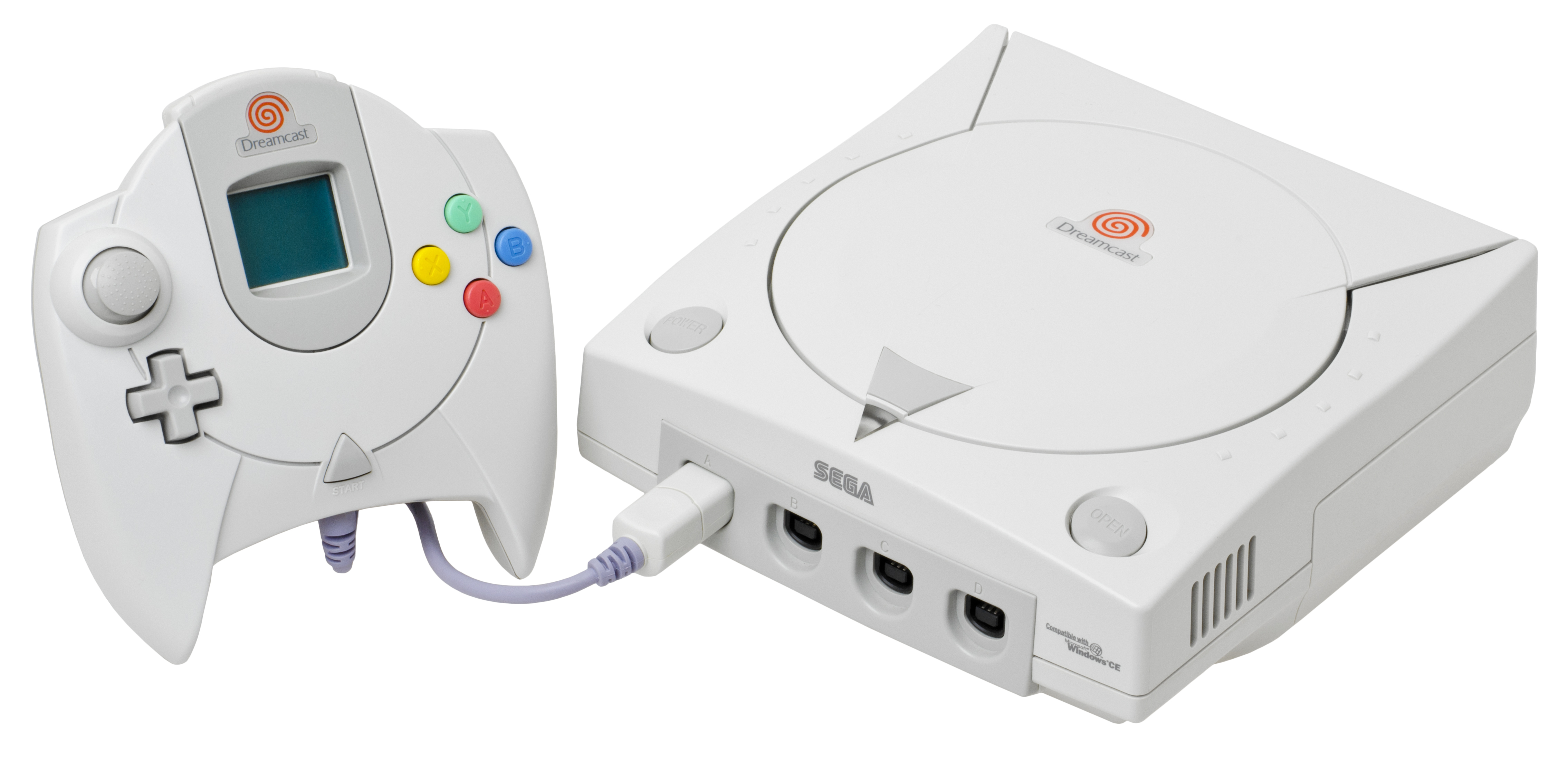
Before I begin, know that the Dreamcast is one of my favorite consoles ever, is legendary, and in many was state of the art when it released in 1998/1999.
There are two main reasons why the console would have ended up underperforming, despite it's strong start.
1) Lack of a second analog stick, leading to games simply just skipping the console or not working on it.
Consoles starting in the sixth gen were utilzing the right analog stick for camera and aiming controls (Halo Combat Evolved laid the blueprint in 2001 for FPS controls on consoles), among other mechanics as well.

Okay, this might've became a problem over time. Even if SEGA released an updated controller with dual sticks, it wouldn't be the default controller with all systems, so devs could not develop around that controller for 100% guaranteed install base adoption. Though an argument could be made that people who'd play games requiring the 2nd analog stick would just buy the new controller, and devs could still implement a fallback control scheme for users with single-stick pads.
2) GD-ROMs (Dreamcast's disc format) were limited in storage capacity, holding around a max of 1 GB.
This meant most games, especially RPGs or Open-World games would have been multiple discs on the Dreamcast, compared to its competitors.
Sega lacked the foresight to know where gaming was heading, and for whatever reason thought low storage (needed to be DVD) and one analog stick was sufficient.
I don't think GD-ROM was an issue much at all. It already gave 1 GB, and file compression techniques could help increase that amount. For example, with textures if suppose the entire disc contained nothing but textures, you could hold 8 GB worth on a single GD-ROM due to DC's VQ compression with 8:1 compression ratio. By contrast, PS2 had only 3:1 index palette compression scheme for its textures, so at best you could fit 12 GB worth of textures on a single DVD. That's not really a massive difference considering the extra space for textures on that PS2 disc would probably be spent on providing higher-quality versions of existing textures to make up for its inferior video output (and worst hardware-level anti-aliasing) features compared to Dreamcast. So that 12 GB probably just ends up being more like 9 or 10 GB compressed on disc, making the difference to a fully compressed GD-ROM disc even smaller.
Of course, you're going to have more than texture data on a game disc, and DC's architecture made it so some of the 8 MB VRAM had to store geometry data used by the GPU's tiling hardware, so you probably had only slightly larger working VRAM & framebuffer space for textures than the PS2's eDRAM. And also consider, the GameCube's mini-DVD disc format didn't hold that much more data itself: 1.4 GB max, and yet it got games like RE Remake, RE0, RE4 etc. which offered better textures and details than most PS2 games. That's in part due to processing advantages of GameCube's architecture vs. PS2, but it's also partly capable because its mini-DVD disc format wasn't that big of a disadvantage. Can't fit everything into one disc? Just throw in a second disc. And since GD-ROM was basically a modified CD-ROM, putting two of those in a game package would've at worst been the cost of a single-disc PS2 game of the day.
You can't frame lack of DVD in Dreamcast as if SEGA didn't know where game media storage was going. It's just that the licensing fees for DVD playback, not to mention the cost of DVD drives in 1998, were prohibitively expensive for SEGA to secure. The M2 may've been planned with DVD, but Matsushita/Panasonic were both a member of the DVD consortium and also manufactured DVD-ROM drives in-house, so the cost to them would've simply been the raw manufacturing amount and that's about it. SEGA had neither of those. At best they could've tried getting a special deal with Hitachi for their DVD-ROM drives and maybe have Hitachi convince the consortium to cut SEGA a lower licensing fee, but I doubt Sony (one of the main members of the consortium) would've agreed to that and you probably need a unanimous vote to get that type of thing through.
IMO, what SEGA should've done was stick with GD-ROM, implement VCD and SVCD playback in Dreamcast (the drive could be the same standard Hitachi CD-ROM, and licensing fees for VCD/SVCD were much cheaper than for DVD), implement some custom instruction extensions with Hitachi & VideoLogic/NEC to more efficiently process MPEG-2 decoding across the CPU & GPU, push for SVCD content (SEGA did help fund quite a few anime productions during the '90s, why not set up a home distribution label to distribute anime releases on SVCD?), and some simple hardware ASIC for copy protection/security purposes (i.e genuinely plug up the loose holes WRT security that OTL Dreamcast didn't do because they though burying the code deep in the BIOS was enough for some dumb reason).
Now, VCD/SVCD itself wasn't very popular in the West, but it was HUGE in Asia during the '90s and I think had SEGA done these things they could've given Dreamcast a much better starting point in Japan which would have then allowed them to push longer in America and the global market. They'd of just needed the right type & amount of SVCD releases in that 1998/1999 timeframe and position Dreamcast as the best platform to play that content (and the most affordable). They would've needed to make some other changes around early game releases too, but this is mainly about the disc format and why I feel GD-ROM in itself wasn't the problem.
I will admit, Sega did know online gaming was the future and the Dreamcast was indeed prepped for that, however.
This would have been a costly mistake, even without the PS2 dominating the gen sales wise.

PS2 ended with 160 million+ sales.
PS2 sold another 50+ million after PS3 released. So in terms of launch-aligned sales, it ended 6th-gen a little over 100 million. Even if you shave off a year to align timeframes with PS1, PS2 still sold more units in the same amount of time (FWIW, PS1 did not reach 100 million by the time PS2 released in Japan; it hit that a few years afterwards).
The realest answer. Also, I'd add that much of the Dreamcast's library consisted of ports of arcade games, with percieved short-term replay value. It was devastatingly light on adventure-style games you could sink your teeth into, the kind of experiences PS2 would be swamped with from day one.
I'm thinking back to PS2's Japan launch and I don't really remember any of those sort of meaty adventure-style games being there Day 1, actually. Dark Cloud possibly...actually I just checked MobyGames and it seems only Eternal Ring was the big adventure-style game for PS2's Japanese launch. Meanwhile DC's Japanese launch had July, but that was more a visual novel/adventure game, I guess something like Myst.
PS2's Japanese library was actually kind of lacking through much of 2000, and it's clear they were riding on it being the cheapest DVD player in that market for most of its momentum. Stuff like Dark Cloud later in the year helped improve the software situation but I'd argue it wasn't any better than Dreamcast's software offerings in 2000 and in fact I'd argue Dreamcast's Japanese software for 2000 was better than PS2's if talking overall quality, tho PS2 got more releases for sure.
If talking Western launches I find it very hard to claim DC didn't have big adventure-style titles Day 1 when Sonic Adventure was literally right there, and games like D2 came out in 2000, not to mention Carrier and Resident Evil Code: Veronica the same year, tho RE Code: Veronica did cut it close to PS2's Japanese launch by a mere month.
Genuine question: Were GameCube's mini-disks , and to a lesser degree, since it didn't compete for long, the Dreamcast's GD-ROMS that much of an handicap for devs compared to simple/double layers DVD?
I am asking this because I'm comparing this situation to N64 vs PSX/Saturn. I'll never repeat enough how releasing a console with 8 MB cartridges in 96 was retarded. But I digress. What I mean is that back then, it was tiny, expensive and you couldn't have multi cartridge games to at least mitigate a bit the storage problem.
Now on the GameCube/Dreamcast front, it was a lot different: multi-disks games were possible, it wasn't hugely expensive to produce like cartridges and I don't remember multiplats DC/GC games having to compromise over FMVs, Streamed audio or any other content. I won't say it wasn't a problem when you look at the maths of 8.7 GB of a double layered DVD vs 1/1.5 GB. But with the advancement of compression tech was that really that big of a handicap for devs?
Not only that; from what I know of most PS2 and OG Xbox games were not double-layered. Those discs costed extra and most of the library did not occupy the full 4.7 GB capacity of single-layered discs anyway. I mean you can kind of see that when looking at typical PS2 ISO sizes; the majority are smaller than 4.7 GB and still have all the game contents.
Wouldn't having it run DVD's at launch greatly have increased the cost?
As for the single analogue stick it did not seem like an issue at the time. I used their official keyboard and mouse for Quake 3 which was greatly appreciated since that's a far superior way to play FPS compared to a controller. The online play even though it was limited was a big deal at that time too. Quake and PSO were amazing experiences back then for a console player.
Yes. Massively. It would've been equivalent to the hit Sony later took on including Blu-Ray with PS3, which added $125 to the BOM for the drive alone.
SEGA could not have afforded a DVD-ROM drive in DC in 1998 when the market for DVD players was still kind of low so economies of scale hadn't kicked in, plus there wasn't a lot of content on DVD yet still. Throughout Asia I'm sure VCD still ruled the roost up until 2000 or so when PS2 actually released and made DVD cheap & economical for many Asian countries like Thailand, Vietnam, Philippines etc.
Like I said before, SEGA would've been better off sticking with GD-ROM, the 12x Hitachi CD-ROM drive and maybe incorporating VCD & SVCD playback in by default. Cheaper licensing fees, much cheaper drive mechanism needed, already plenty of content throughout Asia. They'd of ironically probably had gotten serious about anti-piracy at the hardware level too if they had done this, as that's one of the things which really hurt SEGA in the long run on Dreamcast.
They bet everything on Shenmue being the "killer app" software but Shenmue was shit. It was supposed to be their Final Fantasy 7.
IMO they screwed up with Shenmue. It started out as a Virtua Fighter RPG and it should've stayed a Virtua Fighter RPG. Maybe they changed it because VF wasn't too popular in the West and they didn't want Shenmue associated with the IP as a result? Yet all the same, VF was still huge in Japan at the time, and if Shenmue was a straight-up VF RPG that probably would've actually revitalized Dreamcast sales in Japan, especially if the battle engine felt like an obvious showcase of what VF4 would later provide, with similar level of depth.
That probably would've also allowed a cheaper budget for the game since they could've reused the VF3 engine for combat with some tuning to implement VF4 ideas here and there, then split the budget of Shenmue between a real VF RPG and maybe some RPG/FPS game based on a popular franchise (maybe Die Hard since SEGA seemed to like the IP so much?) developed by Lobotomy Software (whom SEGA should've acquired instead of Visual Concepts IMHO).
Decisions that are simple to arrive to in hindsight, but I feel if things were more cohesive at SEGA as a whole during the era they could've arrived at similar conclusions back when it mattered, too. Other competitors sure seemed able to, but they were better managed with less divisive infighting.
Last edited:


 Transformers Armada uses the same trick and in hindsight it might have been possible to do that on a Dreamcast as well! In any case if GPC were ever made for Dreamcast it would have less polygons and better image quality than the PS2 game.