• Hey Guest. Check out your NeoGAF Wrapped 2025 results here!

Was the Dreamcast actually powerful at launch? Or the beneficiary of no competition?

Was the Dreamcast a powerhouse at launch?

  • No

    Votes: 124 10.9%
  • Yes

    Votes: 1,014 89.1%

  • Total voters
    1,138
Using Ninja 2 library, that was basically used in one late game and underuse.

It was powerful


The on going improvements on the Dreamcast do look impressive IMO, but I'm guessing the heavy z-fighting/overlap dithering to the right of the two characters on the wall is caused by rendering the surrounding model in two halves - because of polygon counts - and being half way into the depth of the scene the old lack of graphics API guarantee on identical accuracy/dithering of identical points/lines with identical transforms in different polygon models is causing that?

I noticed the same in the latest GTA clips too on joining wall edges, and did wonder if all the geometry being used has needed to be re-tessellated, optimised and split in some cases.

From the huge gains in performance and general rendering quality it would certainly make sense if the assets have been tailored to the Dreamcast's strengths but if so I guess that does place different artistic constraints on making use of the Ninja 2 library to produce commercial AA/AAA grade result of that generation - as I don't recall shipped games with such z-fighting/overlap dithering issues.
 
Original Xbox really had that Dreamcast energy after Sega dropped out of the console wars.

Sega doesn't get enough respect, the Dreamcast had one of the best lineups in history in it's short lifespan.
 
Flycast 2.6 is out. Some games cited as fixed I had no idea had issues, they seemed perfectly fine to me, like Gundam vs. and Jet Set Radio. Maybe it was only for some scenarios, or hardware, or platforms etc., I dunno as there are no details provided other than "fixed" or whatever for most of it 🤷‍♂️
It also says it supports the revived DC online for more games, again I'm sure I tried Outtrigger previously. Maybe it was in nightlies or something before and the RA core was updated with that stuff as well (Idk if it's on 2.6 yet, probably not as the deprecated texture filtering option is still there atm).

It sounds like PaintTinJr is still asking AI about Dreamcast stuff describing what he thinks he sees in the video and asking it to come up with tech jargon about the possible hardware deficiencies for what he mistakenly perceives. Keep it up mate, it's been a while and it was funny as hell the last time! I'm gonna take a wild guess and say most of that is just how the assets were exported, processed and then imported there after necessary downgrades to stay within DC spec limits without that much care into polishing it off. Kind of how you whined about that other model that didn't have the back finished since it was only made to be placed somewhere you can only see the front in the Namco PS2 game it came from, lol, like a dude making some mod experiments should have also finished Namco's work off to stop you from making shit about Dreamcast up, remember? Good times, good times, almost as good as the time you imagined Dreamcast using an 100% efficient and invisible to the eye seamless culling tech to only render the DOA2 characters' visible side meaning it could, and did, only render half the polygons per second we might have thought in that game, lol 🤦‍♂️

Edit: some nice DC footage for the new page. Check out Skies of Arcadia at 1:27:15. The intro wins in cool factor with all the different scenes, yet the game also throws cool effects like that like it's no biggie! Also keep skipping seconds in the Le Mans video for time of day/weather changes, so cool!​

Only trolls say Dreamcast was PS 1.5 by some ignorant angle, like anyone could miss the glorious games showing it's next gen. If you search there's a big list of shared games but it includes contemporary 2D arcade ports (like the botched on PS Marvel vs. Capcom), 80s retro collections, visual novels, games like V-Rally 2 with considerable upgrades, games like Le Mans and UFC that just share the license and games like Rainbow Six which are PC ports and the PlayStation's is almost a demake. Also then new games like Tomb Raider and Alone in the Dark (which may as well be the DC's REmake) that wouldn't skip PlayStation's best years. Some barely ran on the PS, most were filler games noone would praise for any system so having them on Dreamcast was not in any way a negative, just the expected, for a current platform to be getting current games, good, bad, or irrelevant, while gamers cared for the gems. If anything it could have used more, to round out its library and let more greats escape PlayStation's limitations. Who would complain if Namco gave Ace Combat or Time Crisis the Soulcalibur treatment? Or call the PC trash over console games in better quality 🤣
 
Last edited:
I felt like exploding some stuff so I put Incoming in. It's one underrated 1998 launch title. It was also a lauded pack in for Voodoo 2 cards. Tons of on screen action, real time lights, shadows, endless projectiles, transparencies for smoke/fire, enemies and structures shatter into individual polygons as they explode etc., there's even some split screen co-op. I looked into the studio to see what else they made (even if not on DC) but I guess their potential remained unrealized and very tech demo style with no nuance in gameplay design even in later Xbox/PC titles like Gun Metal or Incoming Forces. It's sad, this engine would be great for some more serious, deeper, cooler cockpit games a la Gungriffon, MechWarrior, AMOK, Gundam Rise from the Ashes, Thunderstrike, or even some open terrain FPS stuff a la Delta Force (where they'd actually have to tone down the action and effects!). It would compare favorably to later games like Thunderstrike: Operation Phoenix with an art director. Its helicopters are nice (also play the best) but alien crafts look like programmer art. Anyway, it's hard to find decent footage so fools that fail basic directions like follow the arrow will have to do:​

Let's remember some good times from the thread's past while we're at it, straight from the resident experts who would only ironically imagine something like GTA III possible on a system they claimed was maxed out by PS ports like Re-Volt and was also essentially unable to do any transparencies..!​
Did you miss the part where R* were developing the game for Dreamcast and canned it because they couldn't get it to run? You say "of course" they did this like there was a precedent. GTA III was the precedent, prior to DVD you could only stream audio from disc.
Let's imagine that GTA 3 is possible on the Dreamcast, Can you imagine (seriously) all vehicles with black windows? you know In Crazy Taxi, the only transparent glass is that of the player's taxi.
So much talk of how it's impossible to stream, do transparency, or for an open world to run better than early tests with rendering full of purple glitches, missing assets, 5 fps, etc., now what's left is to cry at it running a tad worse than PS2 or some toned down effects with higher end PC content :messenger_tears_of_joy:
 
Last edited:
The Dreamcast was genuinely powerful for its time—unlike the N64, which, despite some strong specs on paper, was heavily constrained by its architecture and cartridge format. Dreamcast's hardware was modern, balanced, and developer-friendly, allowing it to deliver higher-quality textures, smoother performance, and near-perfect arcade ports. Its power actually translated into real-world results on screen, making it feel truly next-gen rather than theoretically impressive but practically limited.
 
I think the Dreamcast, considering it was released in 98.. was an incredible jump for 3D visuals on consoles, coming from the N64 and PSX as the visual standard. It allowed for much more geometric complexity at better resolutions while also doubling the framerate in lots of cases.

It finally blurred the line between arcade visuals vs home visuals, whether it was a 2D game or a 3D one. So much so that Sega dropped the expensive Model 3 successor and its variants for a slightly souped up version of the Dreamcast (Naomi) for their next arcade releases.

Dreamcast was the console that finally brought the arcade experience home at a reasonable price. That´s huge.

(The NeoGeo did it first but it was insanely expensive for the time)
 
Last edited:
What is the latest released version of DOOM 64? I have one from February last year.

The Dreamcast was genuinely powerful for its time—unlike the N64, which, despite some strong specs on paper, was heavily constrained by its architecture and cartridge format. Dreamcast's hardware was modern, balanced, and developer-friendly, allowing it to deliver higher-quality textures, smoother performance, and near-perfect arcade ports. Its power actually translated into real-world results on screen, making it feel truly next-gen rather than theoretically impressive but practically limited.
The Dreamcast was a true next gen console hardware. It was released a bit earlier than it should though. That made it look mighty impressive in late 1998 and through 1999, but it also caused some problems like killing the Saturn early which was doing well in Japan and not having a DVD which was a massive selling point for PS2. It was also receiving a ton of 5th gen game ports which brings me to this:

Some people here considers it. A PS1,5 or Nintendo 64'5, you'd be surprised
Because the console was released at the peak of PS1/N64's lifespan, it was getting a ton of games that were made with these consoles in mind. And the improvements on the DC ports weren't massive enough to make them look "next-gen". It was basically a 6th gen console that was flooded with 5th gen games. Which is why it would look like a "N64 1.5" for some people who played many of these ports, making it harder for them to justify the upgrade.

IMO, from a business/marketing perspective, it wasn't the best idea to release a 6th gen console so early. Especially during the Metal Gear Solid and Ocarina of Time season stealing much of the thunder. PS1/N64 users weren't going to abandon their consoles when those games were released. Sega should have tried and make the best they could with the Saturn and release the Dreamcast with a DVD and a more polished Sonic Adventure a year later. It would still beat the PS2 on the market with a DVD and people would be more ready to move on from 5th gen stuff.

It finally blurred the line between arcade visuals vs home visuals
While it's true the Dreamcast did this and it's games were close to Model 3 quality at home, which was like a dream come true at the time, it also helped that the arcades themselves stopped doing the big jumps in tech they used to. There wasn't a Model 4 in 1998, for instance.

So you have a combination of a 6th gen console releasing earlier than expected and the arcades not having a big jump in tech in 1998, sticking with 1996's Model 3 as the peak, with only some revision improvements. And while stuff like Sega Hikaru was released in 1999, which was powerful enough to be the next Model 4, Sega pushed the cheaper Naomi instead, which was just the Dreamcast hardware you had at home. The Naomi/DC weren't even an upgrade over the Model 3, they were at the same exact ballpark (IMO they were a downgrade compared to later Model 3 revisions but that's a different discussion).

So you are right. A big jump for the home market but a big step backwards for arcades. 6th gen was the beginning of the end for the arcades after all so that's not a coincidence. People loved the arcades because they had state of the art visuals you couldn't get at home. If the consoles and PCs (with 3D accelerators) could give you the same specs, why would you bother with arcades?
 
Last edited:
Some more good times from the thread's past buried under the AI & trolls, it's fascinating to read about tech by our resident experts which in this very unique case were part of the development of some of the most impressive titles on both the Dreamcast and the PlayStation 2. Minds were blown!

Idk why it's so hard to find PlayStation 2 videos, especially for known games. I guess it's not easy to get a nice connection & IQ vs PCSX2 with on by default anti-blur, deinterlacing etc. (not that Dreamcast emulation is behind, Flycast & Redream are excellent yet real hardware footage is abundant).​

The Dreamcast was a really very powerful console at launch! It was a superbly designed and balanced system, and here's why!

We did a lot of work building optimized high end PC development focused on the best 3DFX Voodoo GPU's before Dreamcast released - Dethkarz and GP500. The Dreamcast wasn't just an order of magnitude more powerful than PS1 and N64, it was generally significantly more performant for 3D graphics than even the highest end PC of the day when it launched.

PC's of the era didn't yet have hardware T&L but the Dreamcast's SH4 had the basis of hardware T&L with an optimized hardware matrix transform instruction that allowed it to perform the calculations required for 3D at a massively accelerated rate compared to any other platform on the market. The PC would have to wait until 1999 to have the first hardware T&L.

Combined with the SH4 the Dreamcast's GPU was really outstanding! Thanks to its unique tile-based rendering it provided essentially infinite opaque polygon fill rate. Every other system of the time had the problem of limited fill rate, limiting performance in high resolution + high depth complexity scenes. The DC was the first console to totally eliminate this issue with opaque polygons. Although it did still have the restriction of 100M pixels / sec for non-opaque, that was still quite a bit and enough for many things (even if nowhere near PS2 level in that regard!). PowerVR based GPU's were of course also available for PC, but they weren't backed up with the transform performance of the SH4!

Compared to other consoles, both prior and after it, this GPU also provided exceptional image quality. All shading calculations were done in full 24-bit colour (on the tile) resulting in smoother gradients and shading compared to all other 16-bit colour rendering systems of the time. There was enough performance to enable anisotropic filtering (used in Lemans), and of course for the first time in a console hardware texture compression that with its unprecedented for console amount of VRAM allowed enormous rich high-resolution textures. It was also for years the only system that could properly render any type of fully translucent models due to its tile-based hardware sorting. The icing on the cake was Sega's unique deinterlacing hardware that provided a rock-solid 640x480 flicker free image on interlaced CRT's (similar approach to their Model 2 & 3 arcade machines).


The Dreamcast sound hardware was also an absolute beast, but I'll save that for another day lol.

In a way Dreamcast also started the trend that every future console GPU (after PS2) would be based on PC GPU architecture - putting high image quality first beyond the cost saving and performance 'optimizations' that were often used in all prior machines at the expense of image quality. Really it was the first home game machine to provide beautiful 3D graphics where the very best still stand the test of time!
1. We build Lemans from the ground up specifically and only for the Dreamcast, the rendering engine, physics simulation, assets, all of it. A bit of a work of passion really and I think the approach was much like how Sega itself might build a first party game. I actually brought the game to Sega Japan and they were extremely surprised about some of the things the game was doing! They took me around all of the Sega AM groups to get their feedback and actually wanted to publish it worldwide as a 1st party Sega title ;-)

2. It's perhaps a myth for the final shipping version of the game! The game uses a sustained 50,000 polygons per frame + effects at 30FPS. It renders a pretty constant load balanced 25,000 for cars and 25,000 for the circuit per frame. So that's really 1.5M polygons per second, call it close to 2 with all effects lol. However, the graphics engine is very optimized and can do 4 million perhaps 5 million polygons per second! Lemans had the unique problem of having 25 cars on track at the same time. Every car has the same sophisticated physics simulation as the player car, as well as an AI driver and associated audio - the races are authentic, and all cars behave with the same physics characteristics as the player has. This uses a lot of CPU resources, compromising how much of the CPU can be dedicated to 3D transforms and feeding the GPU with vertices! There is an unreleased early version of the game that we showed at E3 that has one finished track and 8 finished cars on track that runs with the same polygon count at a sustained 60fps! In that version with 8 cars on track it does 50,000 polygons / frame at 60FPS = 3M polygons / second.

3. We would love to have made Grand Prix Challenge for Dreamcast as well. It uses a similar in-house engine, but this time optimized ground up for PS2. The Dreamcast could run it at 30FPS with some changes. GPC uses 2-3 times the polygon counts on PS2 at what looks like double the frame rate. However, it is an illusion and is cheating! For the longest time GPC was stuck at 30FPS on PS2, however late in development we discovered a secret that literally doubles the apparent frame rate! Essentially, we are doing something similar to DLSS3 on PS2 and I'm amazed it's taken this long for something like DLSS3 to appear! GPC runs at 30FPS, however it generates the next frame an in in between interpolated image from the prior frame to deliver 60FPS in a 30FPS game :D Transformers Armada uses the same trick and in hindsight it might have been possible to do that on a Dreamcast as well! In any case if GPC were ever made for Dreamcast it would have less polygons and better image quality than the PS2 game.

4. It's awesome to see people still trying to do things like on Dreamcast! If the graphics engine and assets were rebuilt from the ground up for Dreamcast there is no reason you couldn't do a pretty cool version of GTA III for it. However, given the original game uses Renderware that ran quite badly on PS2 and is very slow in first place it'll be a challenge to make it run beautifully on Dreamcast. Good luck with it though :)
 
Last edited:
Some people here considers it. A PS1,5 or Nintendo 64'5, you'd be surprised

Yeah but why bother even listening to them? You know they're trolling, and they were like maybe less than a handful at best. Not worth getting bent out of shape or harping over IMO; pretty sure most would easily claim Dreamcast is a generation ahead of PS1 & N64.

Some more good times from the thread's past, it's fascinating to read about breakthroughs in tech back then from actual resident experts and in this case a unique case having been part of the development of some of the most impressive titles on both Dreamcast and PlayStation 2. Minds were blown by the frame generation deal.


Sidenote, Idk why it's so damn hard to find real PlayStation 2 footage, especially for known games like this, I guess it's not as easy to get nice connection and image quality vs just throwing PCSX2 on (not that Dreamcast emulation is behind, Flycast and Redream are both excellent and yet real hardware footage is abundant, I dunno).​


One thing that isn't mentioned there about DC though is, due to how PowerVR did its tiling, all geometry assets had to sit in the VRAM alongside textures. So the VQ compression (8:1 compression ratio lossy, but still high-quality even with peak compression applied) helped manage and increase effective VRAM size and bandwidth...for textures.

I do not think it did that for geometry data, however. That said, geometry data isn't as big as texture data, so it's not like a ton of VRAM would be lost to geometry data anyhow. Even if say you effectively had 5 MB leftover for textures, that's still 40 MB of compressed texture assets in VRAM with 8:1 compression.

Also now I'm curious if GTA3 on PS2 could be improved since it is one of the first Renderware games and the engine was not well optimized at that time.

What is the latest released version of DOOM 64? I have one from February last year.


The Dreamcast was a true next gen console hardware. It was released a bit earlier than it should though. That made it look mighty impressive in late 1998 and through 1999, but it also caused some problems like killing the Saturn early which was doing well in Japan and not having a DVD which was a massive selling point for PS2. It was also receiving a ton of 5th gen game ports which brings me to this:

The Saturn was basically dead in Japan by 1997 though. Shipments during that year were drastically lower than the years prior, suggesting demand dried out and retailers stopped putting in orders. IIRC shipments to Japan that year were barely around 800K.

And the Dreamcast wasn't officially revealed until May 1998 at the New Challenge Conference; maybe rumors of Dreamcast had placed a dent on 1997 Saturn sales in Japan but more likely, PS1 just ate Saturn's lunch by then.

As for DVD, it just would've been too costly for SEGA to obtain a license at the time, especially for film playback, while keeping Dreamcast at the MSRP it had. They'd either have to of taken a bigger hit upfront, or do what Microsoft did and sell a remote that unlocked the license at a separate cost (but kind of defeats the purpose of claiming it can play DVD movies out of the box). They would've also needed either an MPEG-2 decoder ASIC integrated into the system or beefy DSP coprocessor(s) to offload the CPU from handling MPEG-2 decoding in software (the integrated SIMD vector unit didn't provide enough processing power to do this on its own).

Also the Dreamcast's CPU doesn't have native instructions for MPEG-2 decoding, so you'd have to use mixes of more instructions to do the decoding task, bloating execution time for decoding operations (hence why you'd need more hardware overhead i.e beefier DSP coprocessor(s)). Hitachi did co-develop (or manufacture, at least) another CPU (more like a SoC) around the same time as SH4 called the MAP/1000 which had multimedia SIMD vector units for decoding operations of things like MPEG-2, but from what I've seen that processor was prohibitively more expensive to purchase (and manufacture) than the SH4 in Dreamcast.

Because the console was released at the peak of PS1/N64's lifespan, it was getting a ton of games that were made with these consoles in mind. And the improvements on the DC ports weren't massive enough to make them look "next-gen". It was basically a 6th gen console that was flooded with 5th gen games. Which is why it would look like a "N64 1.5" for some people who played many of these ports, making it harder for them to justify the upgrade.

Definitely true. Also some of the 3P AAA for the system in its very early years, while impressive-looking, didn't have the budgets behind them to really push the visual fidelity at a level it otherwise could've. You mainly relied on SEGA's own 1P titles, and maybe the spare game from Namco, Tecmo, Bizarre Creations or WARP (D2) to show what the system was capable of.

IMO, from a business/marketing perspective, it wasn't the best idea to release a 6th gen console so early. Especially during the Metal Gear Solid and Ocarina of Time season stealing much of the thunder. PS1/N64 users weren't going to abandon their consoles when those games were released. Sega should have tried and make the best they could with the Saturn and release the Dreamcast with a DVD and a more polished Sonic Adventure a year later. It would still beat the PS2 on the market with a DVD and people would be more ready to move on from 5th gen stuff.

Yeah, even a mid-1999 Japanese launch for Dreamcast (or even Fall 1999) and maybe Late Spring/Early Summer 2000 launch (maybe around the time of E3) would've done wonders for Dreamcast and its software.

But like I said before, Saturn sales basically collapsed in Japan in 1997. Not to mention it was dead everywhere else by that time especially after E3 that year. So SEGA probably felt they didn't have time to wait any longer for Dreamcast, as they would've gone even longer without a major retail presence in Japan.

While it's true the Dreamcast did this and it's games were close to Model 3 quality at home, which was like a dream come true at the time, it also helped that the arcades themselves stopped doing the big jumps in tech they used to. There wasn't a Model 4 in 1998, for instance.

So you have a combination of a 6th gen console releasing earlier than expected and the arcades not having a big jump in tech in 1998, sticking with 1996's Model 3 as the peak, with only some revision improvements. And while stuff like Sega Hikaru was released in 1999, which was powerful enough to be the next Model 4, Sega pushed the cheaper Naomi instead, which was just the Dreamcast hardware you had at home. The Naomi/DC weren't even an upgrade over the Model 3, they were at the same exact ballpark (IMO they were a downgrade compared to later Model 3 revisions but that's a different discussion).

TBF, the NAOMI 2 was quite a lot more powerful than a stock Dreamcast, or a stock NAOMI for that matter (which was a Dreamcast with a faster GPU and more RAM), and SEGA pushed that as the successor to NAOMI. It was probably more economically feasible than pushing Hikaru, too, both for SEGA and 3P making cabinets around NAOMI boards.

So you are right. A big jump for the home market but a big step backwards for arcades. 6th gen was the beginning of the end for the arcades after all so that's not a coincidence. People loved the arcades because they had state of the art visuals you couldn't get at home. If the consoles and PCs (with 3D accelerators) could give you the same specs, why would you bother with arcades?

FWIW, arcades had (and I'd argue to this day, still have) another big advantage over home consoles: immersive force/haptic feedback. Full-body feedback in many cases with immersive cabinets and controls as well. Playing something like a jet ski game in the arcade with an actual recreated jet ski to ride on, will always beat playing that same game at home using some regular old controller, at least IMO.

 
TBF, the NAOMI 2 was quite a lot more powerful than a stock Dreamcast, or a stock NAOMI for that matter (which was a Dreamcast with a faster GPU and more RAM), and SEGA pushed that as the successor to NAOMI. It was probably more economically feasible than pushing Hikaru, too, both for SEGA and 3P making cabinets around NAOMI boards.
The Naomi 2 was too late to the party though. By the time it was released the PS2 was already out and the Gamecube would soon beat it in terms of visuals at the same year. So again, the arcades would not have something to impress home users the same way the Model boards did. The visuals reached parity because Sega, Namco, etc, decided to get cheap.

And i get it, the custom high-tech Model and Hikaru type hardware were too expensive. But wasn't that always the point of the state of the art arcades? Most of Sega's arcade classics became huge for that reason. All those sprite scaling boards and later on the Model boards were homes for Sega's biggest hits because those games were something impressive to behold. Why would i go to the arcades to see the same game i can play at home, at the same quality and speed?

And yes, the cabinet mechanisms themselves were half of the premium experience but the impressive visuals were the other half. By removing the later they gutted said premium experience, it's that simple IMO. And i would argue the visuals part was even more important because it affected more games and more arcade places. Not all games needed hydraulics and deluxe cabinets but they could still show off their visuals. And many places couldn't even afford the most expensive deluxe cabs anyway so they ended up with standard or "lite" upright ones. In my country we were even flooded with simple, mass produced bootleg cabs. But the games themselves inside those cabs were still the same, state of the art boards with the same visuals the bigger cabs could offer. So we still wanted to see those games and then feel bad about how the ports we have at home were so massively inferior.

After consoles reached parity, me and everyone i know just stopped caring about arcades and most Arcade places either became something else or closed completely, at least in my country.
 
Last edited:
I wonder if Sonic Adventure could've run at 60 fps with more time in the oven and more optimization at launch. I'm sure it would've blown minds back then to see that happen.

Not sure if it would've made any difference regarding initial console sales though.
 
FWIW, arcades had (and I'd argue to this day, still have) another big advantage over home consoles: immersive force/haptic feedback. Full-body feedback in many cases with immersive cabinets and controls as well. Playing something like a jet ski game in the arcade with an actual recreated jet ski to ride on, will always beat playing that same game at home using some regular old controller, at least IMO.

Arcade Cabinets bring a level of inmersion which is arguably hardly to match still nowadays for home and mobile systems, at least for what they bring just out of the box...May be VR can surpass that? Not sure... I mean, on my country malls usually have arcade machines kinda recent, but also 90s and 00s wonders like Daytona 2 and 18 Wheeler are still standing it´s ground, 25 years later and with the smartphone on anyone pocket delivering more advanced visuals....
After consoles reached parity, me and everyone i know just stopped caring about arcades and most Arcade places either became something else or closed completely, at least in my country.
Just curious, which country?
due to recent events in a different thread, I have to point out that it was powerful enough to support a freely movable camera in GTA3


Mind to share which thread? i´m also curious on this!
I wonder if Sonic Adventure could've run at 60 fps with more time in the oven and more optimization at launch. I'm sure it would've blown minds back then to see that happen.

Not sure if it would've made any difference regarding initial console sales though.
Sonic Adventure 2 runs at 60 fps and looks way better than SA 1, so yes it could had run 60 fps, at least on the actual levels...Not sure if in the "open world" sections.
 
Just curious, which country?
Greece.

Though, to be fair, we somewhat accelerated the death of the arcades in our country by literally banning all video games in 2002 (because of illegal gambling getting big, lol). You may remember this farce, there were quite a few memes for that.

But even without that, the arcade rooms (at least the ones i was visiting) started to fade before that anyway. I mean video games in general weren't really affected by the stupid law because nobody took it seriously and even though a few net-cafes (where you could play LAN games) got bullied into closure, that sector still survived and thrived. We still had our net cafes and LAN video games even before the law got repealed. But the owners who still operated arcade rooms decided it's not worth fighting for them since they weren't even popular or profitable anymore.

The arcade room i was visiting at every summer vacation was already starting to get rid of their cabs by 2000/2001 and turning the place into a coffeehouse/night bar only. This place was the most popular hang out for every teen in nearby towns and it was doing business with arcades almost exclusively since the early 80's, when the very first arcade games appeared there. When i asked the owner years later he said they got the remaining cabs, took them in a field and turned them into small pieces using pickaxes.

Nowadays i can see some arcades in our biggest mall and they are all deluxe/fancy cabinets. Mostly racing and light gun shooters. But they are all also very old. Stuff from the mid/late 2000's like Outrun 2, which takes most of the space with 4 massive deluxe machines for some reason. I really don't know how they maintain those, i mean i rarely ever see anyone playing this particular game and i visit the place often enough because i live nearby. The most recent game i saw was a Raw Thrills game called Dirty Drivin. Visuals are somewhere between PS3/PS4 level, it's the most advanced game in the room. Oh and Mario Kart Arcade GP DX, translated to English, which is impressive because afaik, there wasn't an official English release. I tried the game on Teknoparrot and the only English translation was a community mod. Is the arcade actually modded then? Impressive.
 
Lol @ trying to arrive to industry wide conclusions from how shit go down in Greece. That's just a very esoteric personal experience/anecdote, at best. Explains a lot of things/opinions about things I guess, considering what a bastion of paid off shilling it's been in everything, including videogames.
 
Last edited:
Lol @ trying to arrive to any industry wide conclusions from how shit go down in Greece. That's just a very esoteric personal experience/anecdote, at best. Explains a lot of things/opinions about things I guess, considering what a bastion of paid media shills it's been in everything, including games.
What the fuck are you talking about.

My country was simply affected like everyone else. I was reading video game magazines from UK until 2005. I saw a similar indifference about arcade games there too. And after that i was literally searching the internet for new arcades in hopes i can find something great and very few of the big gaming websites even mentioned them. The only time they were mentioned was when a game was an arcade port. I had to do a deeper search to find info for games like Sega Rally 3 and the like. Even today searching info for new arcades is niche as shit.

Also, what the fuck are you talking about?

Edit: Oh you are just trolling. Ok, got it.
 
Last edited:
Meh, how about you just stop derailing a Dreamcast thread every other page, take it to private messages(not with me, whoever asked of your arcade experience or whatever)/make threads if you care about discussing your vast knowledge based on how shit went down wherever. But first opa, chill.
 
Last edited:
The topic is about the "Dreamcast being powerful at launch" and i argue it was too powerful too early and that, among other things, contributed in the decline of Arcades, at least in the west.

It's very on topic and, IMO, more interesting than posting random games every few days after all the graphically impressive ones have already been covered, to keep the thread alive.

And if you want a chilled discussion, you might want to try and change the tone of some of your posts.
 
There's literally nothing about Dreamcast in your last post about arcades, just PS2/Naomi2/GameCube/stuff that happened after Dreamcast's death, you can't twist that into being related. Also obviously Dreamcast which died so fast itself didn't kill the arcade industry so again, no more related than a vague "it's all vidya games" deal. Lol @ Dreamcast games being not relevant in a Dreamcast power thread though, whatever your personal subjective esoteric anecdote standards about them being good looking or otherwise demanding or not compared to better stuff may be, good try :)
 
Last edited:
See, you continue the same condescending tone. Are you unable to talk to someone without acting like it's a fight or something?

Guy asked me where i am from after i argued about the decline of arcades and i figured they are interested on my personal experience.

Also, i never said your random game posts aren't relevant to the topic. I said they are not interesting because the graphically impressive games are covered already. Which is true since your recent bump attempts haven't sparked any interesting discussion 🤷‍♂️

At least i'm better at keeping the thread alive so you have that.
 
Well I don't post them to interest you, in fact I rather like it when I don't and don't run to ask you how you liked it. I post it cos I like to and don't care how active the thread is but also won't make another as I don't like blog post threads either and it's relevant to this so a simple post suffices, duh.

If I wanted attention I'd be reaching for any non reason to be making my own new threads that I'd keep bumping with constant self replies whether they get views or not. Or going in random threads derailing them with stupid shit, etc.

I'll agree there was no interesting discussion, especially in the most recent posts but hey, it's everyone's right to post, I'm not judging, you are. It jut wasn't relevant to the thread in your case and yet you keep doubling down to engage in off topic discussion with others or at the moment me, lol.

Edit: keep it up I guess, whatever your goal is it sure isn't Dreamcast discussion in a Dreamcast thread but okay, you do you, I'll try and ignore it rather than comment on it in this public discussion board and hurt your feelings so you have to lash back with f bombs and self praise of your own 🤷‍♂️
 
Last edited:
Just saw your edit so i want to clear up, i never said "Dreamcast killed the arcades". I said that, in combination of arcades focusing on cheaper hardware, it started the trend of home games being the same as in arcades. It was the first console that reached such parity. There was no arcade that was a generation ahead of it when it was released, like arcades always felt up to to that point. Even the Hikaru board wasn't that much ahead compared to how the Model 3 looked compared to the N64, both released in 1996. And that trend, of home systems being the same as arcades in technology, was the biggest factor of arcades declining in the west, IMO.
 
Sonic Adventure 2 runs at 60 fps and looks way better than SA 1, so yes it could had run 60 fps, at least on the actual levels...Not sure if in the "open world" sections.

I think they actually had to tone down the poly counts of SA2 to get it running at 60. So that comparison may not be as "cut and dried". I think what makes SA2 look better than SA1 is the fact that it actually pulls off a rock solid 60 during gameplay. The rest is art direction which can be pretty subjective.
 
Last edited:
Mind to share which thread? i´m also curious on this!

the "It is time for devs to stop treating console gamers like babies" thread.

it's a doozy

just so that everyone understands.

the 2 super high IQ individuals @tr1p1ex and @Three think that this game could not work on PS2 with a manual camera on the right stick because the PS2 COULDN'T HANDLE IT 🤣


watch this video and see if you can notice an issue with their super intelligent theory:

 
Last edited:
I think they actually had to tone down the poly counts of SA2 to get it running at 60. So that comparison may not be as "cut and dried". I think what makes SA2 look better than SA1 is the fact that it actually pulls of a rock solid 60 during gameplay. The rest is art direction which can be pretty subjective.

They tend to be comparable per scene, SA2 generally has more polygons per second because, well the frame rate is higher. But peak per scene per frame is about the same.

The thing they gutted from SA1 was the lighting system, it was very very expensive, it was also cut from the GameCube port.
 
Last edited:
the "It is time for devs to stop treating console gamers like babies" thread.

it's a doozy
Well, Dunning-Kruger effect in full view from those guys. There is actually a system that prioritizes spawning cars (maybe npcs too) based on the camera direction, Obbe explains it here

Of course this doesn't negate that you could still very well implement a free view camera, hell it is in the PC version with a free view camera, its just that a car might have despawned a bit awkwardly sometimes. Maybe they saw this an extrapolated from there, it wouldn't be the first time one of them did it.
 
Last edited:
Well, Dunning-Kruger effect in full view from those guys. There is actually a system that prioritizes spawning cars (maybe npcs too) based on the camera direction, Obbe explains it here

Of course this doesn't negate that you could still very well implement a free view camera, hell it is in the PC version with a free view camera, its just that a car might have despawned a bit awkwardly sometimes. Maybe they saw this an extrapolated from there, it wouldn't be the first time one of them did it.


well, my main argument is that you can instantly snap the camera towards all cardinal directions anyway.

car despawning is used in speedrunning of these games. people snap the camera back to despawn cars, or on GTA3 you can snap to the topdown view for a similar result.

and this works on console just as well as on PC.

furthermore, you can already recenter the camera at high speeds while on foot, so it's not even only while driving where this trick works. you have the normal camera recenter, which is already really fast. but also have the first person view that instantly (literally in 1 frame) can snap the camera 180° in the other direction of you want.


which is why I concluded that it is an insane thing to say that a camera on the right stick would be of any performance concern. all the things a free camera could do are already possible anyway, it's simply a playability concern to not having to rely on a button to recenter, or a first person view.
 
Last edited:
well, my main argument is that you can instantly snap the camera towards all cardinal directions anyway.

car despawning is used in speedrunning of these games. people snap the camera back to despawn cars, or on GTA3 you can snap to the topdown view for a similar result.

and this works on console just as well as on PC.

furthermore, you can already recenter the camera at high speeds while on foot, so it's not even only while driving where this trick works. you have the normal camera recenter, which is already really fast. but also have the first person view that instantly (literally in 1 frame) can snap the camera 180° in the other direction of you want.


which is why I concluded that it is an insane thing to say that a camera on the right stick would be of any performance concern. all the things a free camera could do are already possible anyway, it's simply a playability concern to not having to rely on a button to recenter, or a first person view.
Yep, fully agree, they never shied away from letting you do wild swings with the camera even on PS2 so hardware limitations don't seem like a good reason, the most likely reason they didn't include it, and to tie it back a little back to this topic and something that Alexios Alexios already explained in his posts above, is that right stick free camera wasn't common when GTA 3 designed and released. Hell, even dual stick FPS controls weren't consensual at the time, as this infamous review reminds us and during this time even high profile FPSs launched without dual stick controls like TimeSpliters and Metroid Prime.

Sadly, from time to time we have threads like this, it kinda reminds me of the magical power of the PS5 SSD threads we used to have where some thought we would have games that would be impossible on PC because the GPU was fetching dozens of GB/s constantly from it.
 
Last edited:
Yep, fully agree, they never shied away from letting you do wild swings with the camera even on PS2 so hardware limitations don't seem like a good reason, the most likely reason they didn't include it, and to tie it back a little back to this topic and something that Alexios Alexios already explained in his posts above, is that right stick free camera wasn't common when GTA 3 designed and released. Hell, even dual stick FPS controls weren't consensual at the time, as this infamous review reminds us and during this time even high profile FPSs launched without dual stick controls like TimeSpliters and Metroid Prime.

Sadly, from time to time we have threads like this, it kinda reminds me of the magical power of the PS5 SSD threads we used to have.

TimeSplitters had dual stick controls.
it was made by former Rare devs who already put dual stick controls in GoldenEye and Perfect Dark. in fact, TimeSplitters plays almost identically to Perfect Dark.

I think Rockstar is just weird, and always was weird.
by the time GTA Vice City released, dual analog controls, with camera on the right stick, were well established.
they probably had some weird justification for it internally... and thankfully stopped that nonsense when San Andreas came out lol.


Manhunt (released in 2003) was also a weird one. it had similarly weird controls on PS2. but the Xbox port changed the default to be a dual analog configuration.
probably because strafing left/right was mapped to the shoulder buttons on PS2, but the Xbox only had 2 triggers that were already mapped to more important inputs.
so they let you strafe by default on the left stick, while having normal camera controls on the right stick.

on PS2, just like in GTA3/VC, you just swapped into a stationary first person view the moment you touched the right stick. I think the devs at Rockstar thought that was a genius way to utilise the right stick lol.

the Xbox version had both configurations I think, and using the PS2 layout on Xbox meant strafing was on Black and White.


edit: small correction, now that I think back to when I last played it, I think even on Xbox the weird ass PS2 style controls were the default. to get the less weird layout, with dual analog, you had to swap to it manually in the settings.
the PS2 didn't have that option tho, that I am certain.
 
Last edited:
TimeSplitters had dual stick controls.
it was made by former Rare devs who already put dual stick controls in GoldenEye and Perfect Dark. in fact, TimeSplitters plays almost identically to Perfect Dark.
Oh damn, I didn't know, I thought it only had the default one, I did know about the N64 ones with two controllers but never checked time splitters.
 
Last edited:
Oh damn, I didn't know, I thought it only had the default one, I did know about the N64 ones with two controllers.

you also could just use setting 1.2 in GoldenEye/Perfect Dark to get "dual analog" settings... just that you had to use the Dpad instead of a left stick. but it's essentially the same concept. and was supported by most N64 shooters in fact.

in games like Turok you didn't even have an option not to use such a layout. all you could do is swap the character movement between the C-Buttons and the Dpad. basically just a left-handed and right-handed option... and left-handed back then meant aiming with the right thumb btw lol. so the reverse of what you'd call these nowadays.

it was also the default in Quake/Quake 2. which even had sensitivity sliders.

the big issue was often on N64 that you couldn't change inverted/non-inverted Y axis. many games only had 1 that you had to get used to.
like Turok 1/2, only had inverted. and think the 3rd person Duke Nukem as well.

Turok 3 has fully modern contols however and has an option for non-inverted.

those were sometimes also labeled in the reverse of what's done today. inverted sometimes meant up is up and down is down... while non-inverted was up is down and down is up... 🙃
 
Last edited:
I think they actually had to tone down the poly counts of SA2 to get it running at 60. So that comparison may not be as "cut and dried". I think what makes SA2 look better than SA1 is the fact that it actually pulls off a rock solid 60 during gameplay. The rest is art direction which can be pretty subjective.


Sonic model on SA2 it´s like 3x the polycount compared to SA1 DC model (but SA1 DC Sonic model looks crazy good for just being 1K poly character model)
 
Greece.

Though, to be fair, we somewhat accelerated the death of the arcades in our country by literally banning all video games in 2002 (because of illegal gambling getting big, lol). You may remember this farce, there were quite a few memes for that.

But even without that, the arcade rooms (at least the ones i was visiting) started to fade before that anyway. I mean video games in general weren't really affected by the stupid law because nobody took it seriously and even though a few net-cafes (where you could play LAN games) got bullied into closure, that sector still survived and thrived. We still had our net cafes and LAN video games even before the law got repealed. But the owners who still operated arcade rooms decided it's not worth fighting for them since they weren't even popular or profitable anymore.

The arcade room i was visiting at every summer vacation was already starting to get rid of their cabs by 2000/2001 and turning the place into a coffeehouse/night bar only. This place was the most popular hang out for every teen in nearby towns and it was doing business with arcades almost exclusively since the early 80's, when the very first arcade games appeared there. When i asked the owner years later he said they got the remaining cabs, took them in a field and turned them into small pieces using pickaxes.

Nowadays i can see some arcades in our biggest mall and they are all deluxe/fancy cabinets. Mostly racing and light gun shooters. But they are all also very old. Stuff from the mid/late 2000's like Outrun 2, which takes most of the space with 4 massive deluxe machines for some reason. I really don't know how they maintain those, i mean i rarely ever see anyone playing this particular game and i visit the place often enough because i live nearby. The most recent game i saw was a Raw Thrills game called Dirty Drivin. Visuals are somewhere between PS3/PS4 level, it's the most advanced game in the room. Oh and Mario Kart Arcade GP DX, translated to English, which is impressive because afaik, there wasn't an official English release. I tried the game on Teknoparrot and the only English translation was a community mod. Is the arcade actually modded then? Impressive.
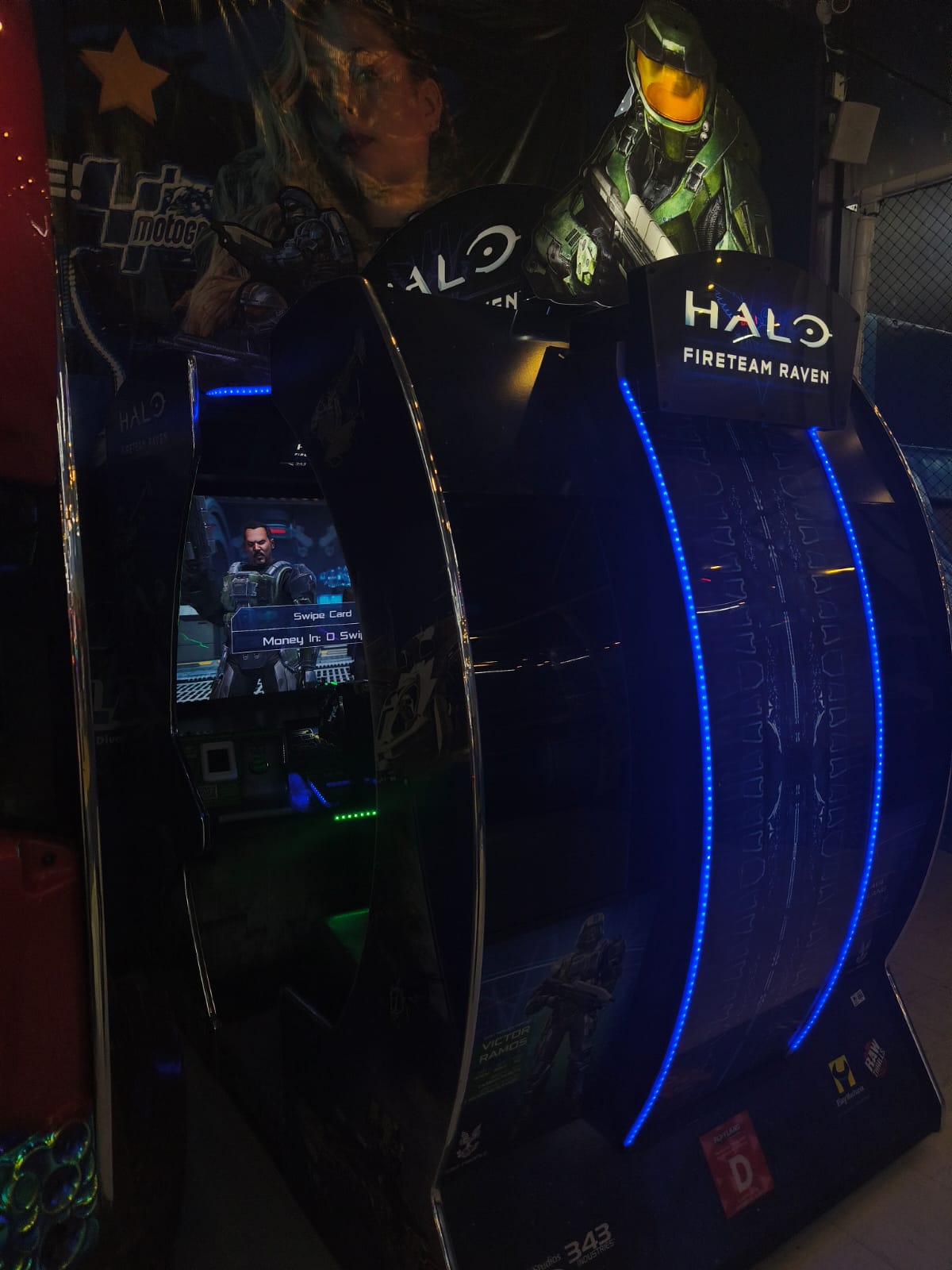
Really enjoyed the story about the demise of arcades on your country. Here in my country, Colombia, there are also still arcades on malls, between newer Raw Thrills stuff (i even saw last week an Arcade Halo Cabinet, didn´t even know such thing exist) co existing with Naomi/Dreamcast gems like Crazy Taxy, 18 Wheeler and Model 3 Daytona 2.

So that also proves the point of the thread, DC was that powerful at launch, that you can find it´s games on it´s arcade version (Naomi) still surviving in cities around the world, coliving with more modern machines, for more than 25 years!

Here, also arcades were very popular, but specially on neighborhoods, with cheap NeoGeo stuff (KOF and Samurai Showdown) in local stores, during all 90s and most part of 00s. There was also places focused on high end arcades, the most popular here in Bogotá was one called Videoplay, so you could find there all the cutting edge Sega Stuff from 90s and early 00s, incluiding lotta games which we played on Dreamcast. It was a very popular place, but also expensive, within all 90s and also 00s. But seems like some spots survived as far as the pandemic, when it finally went down...Not sure.

Nowadays it´s also normal to find arcades built with Raspberrys and LED TV screens loaded with retro gaming emulators (PS1, Neo Geo and Mame stuff specially) on pubs, restaurants and some other commercial places.

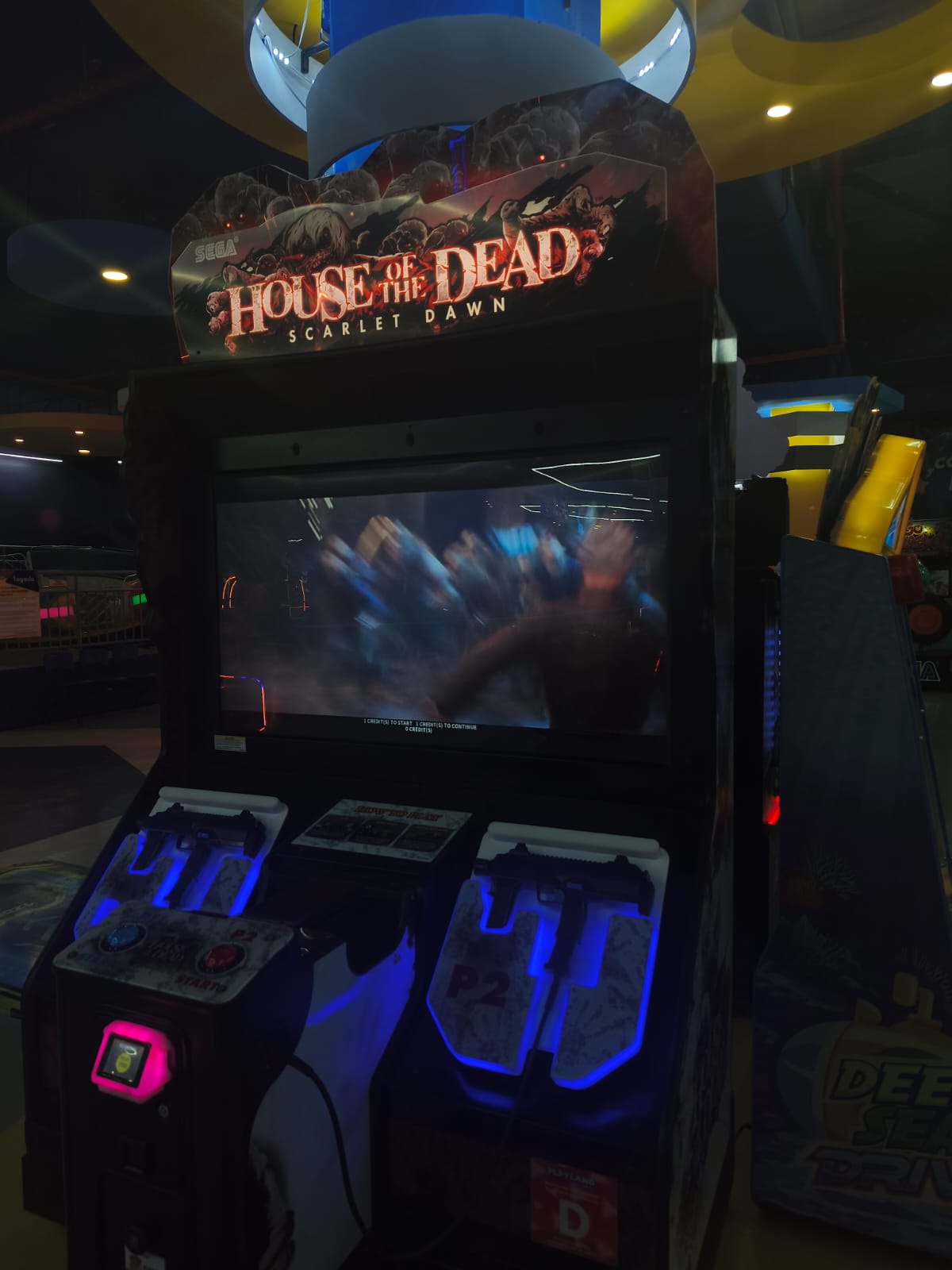
As i mentioned above, took this pictures last week on a mall close to my home, House of the Dead 2 was very popular here back in the day, so it´s normal you can find here on some places the latest entry of the franchise. Also, that Halo machine, gotta test it soon. The day i went there they were already closing, because it was kinda late, so couldn´t play with those.

4oBJg5o8No9mSOJY.jpeg
ygXbbCoV8IiTuqWu.jpeg


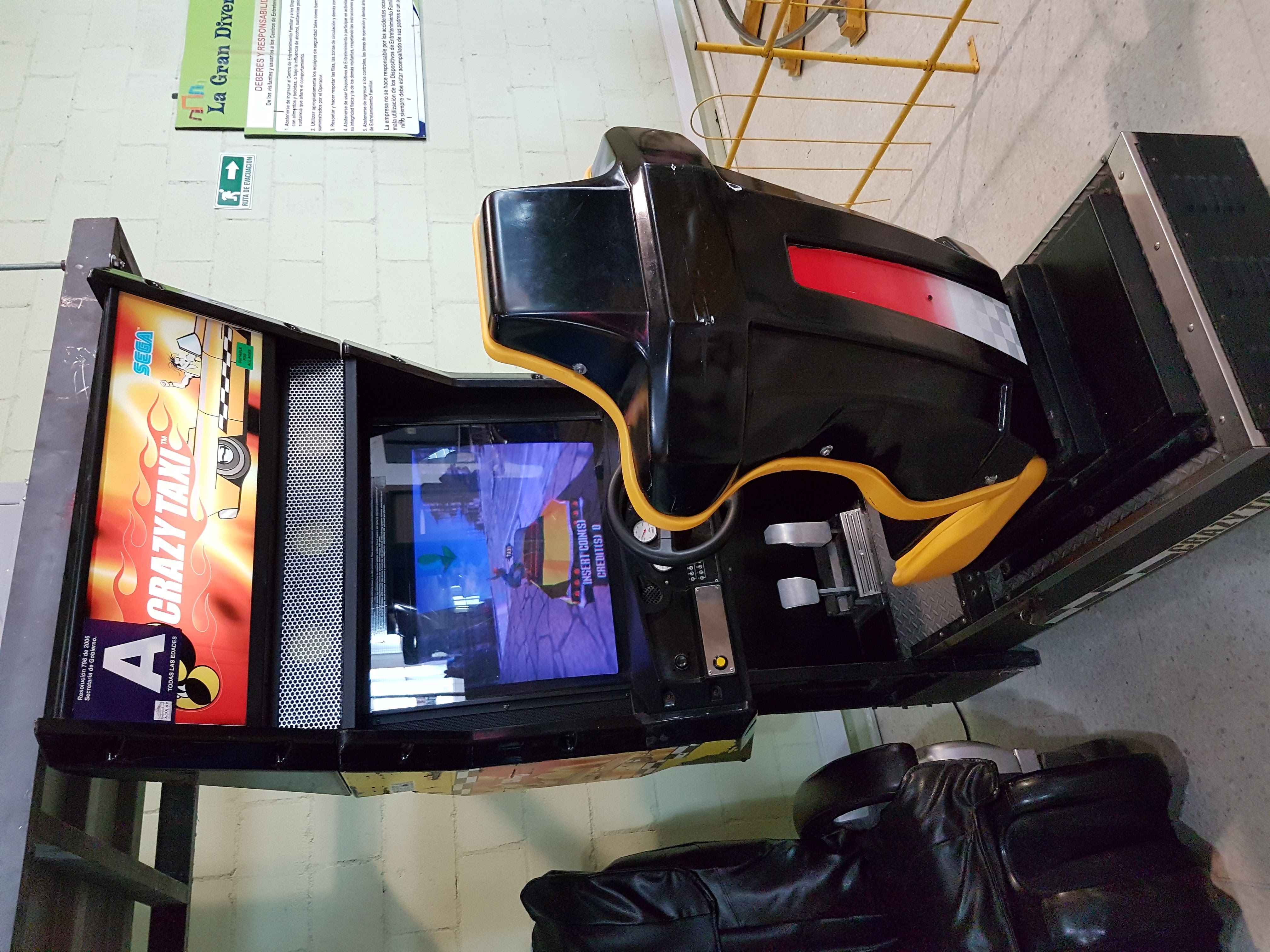
Also this was Crazy Taxy machine, spotted in the wild on a mall in the caribbean city Santa Marta, few years ago:

WTEGnEyHRGpK7945.jpg


Into another mall close to my home there is also an 18 Wheeler cabinet, will take a picture once i get there in the next weeks.
 
Last edited:


Sonic model on SA2 it´s like 3x the polycount compared to SA1 DC model (but SA1 DC Sonic model looks crazy good for just being 1K poly character model)

Cool video.

Interesting. So maybe it was the lighting system (Also the inexperience of Sonic Team with the hardware) what held back SA1 in terms of performance. I always had the weird impression that the rings in SA2 were less rounded that those in SA1.

I think that Sonic DX, when emulated through Dolphin, even with the downgrades that came with that port ....still looks incredible with widescreen mods, HD resolutions and a stable 60 fps. If you can, check it out
 
Cool video.

Interesting. So maybe it was the lighting system (Also the inexperience of Sonic Team with the hardware) what held back SA1 in terms of performance. I always had the weird impression that the rings in SA2 were less rounded that those in SA1.

I think that Sonic DX, when emulated through Dolphin, even with the downgrades that came with that port ....still looks incredible with widescreen mods, HD resolutions and a stable 60 fps. If you can, check it out
Also, i´d say this video proves somehow, DC could handle the higher poly count Sonic DX model...
 
The Naomi 2 was too late to the party though. By the time it was released the PS2 was already out and the Gamecube would soon beat it in terms of visuals at the same year. So again, the arcades would not have something to impress home users the same way the Model boards did. The visuals reached parity because Sega, Namco, etc, decided to get cheap.

I mean, they kinda had to though. Arcade revenue just wasn't justifying massive technical leaps like Model 3 (relative to home consoles of the time) going forward.

Ironically I'd say we're in a better timeline for those types of arcade machines now vs. the turn of the century. Home consoles are not pushing the high-end specs, and most PC gamers have potato-spec PCs. Cloud gaming subscription services may provide performance in a somewhat economical fashion but they can't standardize design around I/O interfaces as cloud gaming is hardware-agnostic, plus it's not got the low latency of native local play (and never really will).

In that type of environment I think arcade systems with top-line specs and more importantly, games that actually can target that top-line spec specifically in the way games like VF2 or VF3 did for Model 2 & Model 3, would be a very tempting product to offer and probably be financially viable to boot. You can always port to PC and consoles at a later date anyway.

And i get it, the custom high-tech Model and Hikaru type hardware were too expensive. But wasn't that always the point of the state of the art arcades? Most of Sega's arcade classics became huge for that reason. All those sprite scaling boards and later on the Model boards were homes for Sega's biggest hits because those games were something impressive to behold. Why would i go to the arcades to see the same game i can play at home, at the same quality and speed?

Well, Model 2 and 3 weren't "too expensive", just expensive, because operators still saw financial reasons to buy the machines. That started declining by the late 1990s.

But you're right too, that most of SEGA's stand-out arcade hits banked on tech which was lightyears ahead of home consoles and PCs/computers of the day.

And yes, the cabinet mechanisms themselves were half of the premium experience but the impressive visuals were the other half. By removing the later they gutted said premium experience, it's that simple IMO. And i would argue the visuals part was even more important because it affected more games and more arcade places. Not all games needed hydraulics and deluxe cabinets but they could still show off their visuals. And many places couldn't even afford the most expensive deluxe cabs anyway so they ended up with standard or "lite" upright ones. In my country we were even flooded with simple, mass produced bootleg cabs. But the games themselves inside those cabs were still the same, state of the art boards with the same visuals the bigger cabs could offer. So we still wanted to see those games and then feel bad about how the ports we have at home were so massively inferior.

After consoles reached parity, me and everyone i know just stopped caring about arcades and most Arcade places either became something else or closed completely, at least in my country.

My thing tho is that consoles only reached visual parity; if more arcade platform operators got quite innovative with the feedback experiences or jumped ahead of the mass consumer market on things like 3D and VR, arcades could've kept going strong IMO.

Games like DDR and Beatmania showed that non-visual pushers could drive business to arcades if the feedback and immersion of interaction were beyond what home consoles could economically provide. I'd say once home consoles started matching them on that front (helped in part by things like Guitar Hero, Rock Band, Eye Toy, Wii & Kinect), that's when the collapse had truly set in.

Arcades simply didn't bother to seek new ways of pushing user immersion while holding onto competitive visual fidelity, then they started converting to FECs and chasing redemption "gaming". Sad state of affairs truly.

Arcade Cabinets bring a level of inmersion which is arguably hardly to match still nowadays for home and mobile systems, at least for what they bring just out of the box...May be VR can surpass that? Not sure... I mean, on my country malls usually have arcade machines kinda recent, but also 90s and 00s wonders like Daytona 2 and 18 Wheeler are still standing it´s ground, 25 years later and with the smartphone on anyone pocket delivering more advanced visuals....

VR and MR (Mixed Reality) specifically could have maybe brought back those feelings, but outside of Steam and arguably Meta everyone else has given up on that pursuit. Sony were arguably in the best position to help proliferate VR adoption but Totokism took over and they've more or less killed their VR developments for at least a good 5 years, maybe 10. Microsoft never gave a shit, and Nintendo only dipped their toes in with Labo, which was like a toy experiment rather than the real deal.

So because there's been no major platform holder to really push VR or MR in the core gaming space at scale to provide it as a default option, we haven't gotten adoption of game design concepts to fully push that type of technology, let alone go further into things like different types of haptic feedback tied to xzcxc

I think they actually had to tone down the poly counts of SA2 to get it running at 60. So that comparison may not be as "cut and dried". I think what makes SA2 look better than SA1 is the fact that it actually pulls off a rock solid 60 during gameplay. The rest is art direction which can be pretty subjective.

Kind of like Tekken 4 and 5 reducing the poly count on chars vs. Tekken Tag but being better-looking games overall due to stronger art direction and better use of the polygon budget.


Sonic model on SA2 it´s like 3x the polycount compared to SA1 DC model (but SA1 DC Sonic model looks crazy good for just being 1K poly character model)


Strong art direction and smart utilization of GPU polygonal budget & resources.
 
Also I'll add very briefly, having done extensive research on systems like Dreamcast and PS2 (for a big project I've been working on in spare time), the more impressed I become of Dreamcast's hardware. On paper, if you're just comparing the two by metrics like translucent/opaque fillrates or polygons per second, or framebuffer bandwidth, the Dreamcast looks a lot weaker.

However, when you start actually analyzing the Dreamcast's architecture, you'll see it's a very "smart" design all around, and the same I can't necessarily say for the PS2. As in, the Dreamcast has a lot of built-in hardware-accelerated features for things like shadow volumes, FSAA, anisotropic filtering, specular highlights, polygon sorting etc. On PS2, you could leverage the VUs and multi-pass techniques (taking advantage of the eDRAM's bandwidth) to perform those things, and do things like manual polygon sorting, but it was a very "brute force" approach by comparison, and harder to get a grip on as a result.

Like it didn't even have function calls stored in libraries in on-chip ROM to ease that in; programmers had to write the functions from scratch themselves. A lot of flexibility, and in a lot of cases PS2 had the processing overhead to pull it off, but I don't think I'd consider it near as elegant a top-to-bottom system design as the Dreamcast, the more I learn about their respective architectures. Which probably speaks to some of the homebrew results we've been seeing with Dreamcast of late: with some attention and time, you can get performance much closer to PS2 levels than you'd think.

I'd still give PS2 the edge overall, especially in areas related to geometry throughput and lighting, and non-opaque pixel fillrates, but the point is the gap between it and DC isn't really that massive of one most people who barely understand system architectures or go beyond basic paper specs would like to believe. If you take advantage of Dreamcast's hardware features with some thought & care, you can extract a lot out of the hardware.

EDIT: Also WRT talk about PS2 textures not being as crisp as Dreamcast's, maybe that has something to do with the 8 KB direct-mapped texture cache in the Graphics Synthesizer? I'm just finding this out myself, because I thought the eDRAM would basically act as the texture cache and you could allocate however much for textures and however much of the rest for the framebuffers (back & front) & depth buffer.

Meanwhile it doesn't seem the Dreamcast's GPU has a texture cache outside of the VRAM. It could decompress textures fetched from VRAM in real-time with its 8:1 VQ compression capability so basically whatever part of the VRAM wasn't for geometry data and the framebuffers, could be used for textures. It's basically like how the Saturn VDP2 used its VRAM as a large, low-latency texture cache (and like Saturn, Dreamcast also has a tile-based approach, that's kind of the GPU's specialty for compression and reducing overdraw).

In fact I'd basically say the DC took the better parts of the Saturn and combined that with what features PC GPUs were supporting or starting to support in '97/'98 alongside matching the Model 1 (Spec 1) feature set. And the PS2 is basically the PS1 design on a severe dosage of steroids but having a few design influences from N64 (better texture filtering support in hardware, tho not as good as Dreamcast's i.e lacking anisotropic filtering hardware) and certain PC GPUs (I'd guess mainly 3DFX as they were the market leader) between 1997 and 1998. And if I had to also guess, some gleaming from Namco's System 23 arcade system.

OTHER EDIT: Having said all that, while the PS2 may not have had hardware-accelerated support in some graphics functions like Dreamcast (or other 6th-gen systems), its benefit in that regard is that it wasn't limited to a fixed-function implementation. Dreamcast's hardware support for anisotropic filtering, for example, operated a specific way since it was fixed-function, so it would always consume a certain number of clock cycles. If your game was aiming for a certain visual complexity & fidelity, a stable 60 FPS framerate but you couldn't fit DC's anisotropic filtering in the frame budget, then you just weren't using anisotropic filtering in your Dreamcast game. Not without compromises to geometry detail, texture quality, and/or framerate.

On PS2, though, if you as a programmer had a novel algorithm for handling anisotropic filtering that was faster than the hardware implementation in DC's PowerVR 2 CLX, you could basically program the VUs to offload that task directly. Yeah, it'd be lowering polygon budget somewhat and also affect things like physics (since the VUs were used for those things, too), but provided you optimized the algorithm really well in code, you could potentially get anisotropic filtering in your PS2 games that functioned better than the Dreamcast's, and still hit your frame targets & stay within frame budget.

That's really how most of the better-looking PS2 games had to do things: just relying absolutely significantly on VU0 & VU1. They were really powerful and developed for that purpose, but it also meant they came with a much higher learning curve than simply fitting Dreamcast's features into the scope of whatever your game wanted to do (and while DC's hardware features were fixed-function, I guess in theory you could augment or supplement that using the vector unit in the SH4 though, you'd be robbing some of the polygon and physics budget to do that).

Anyway, all of this isn't me from experience programming on these systems, just studying them for a long time and learning more about embedded system designs & architectures (primarily gaming-related) in general.
 
Last edited:
I didn't know they're actually making a DC game with Spiral Engine (same one that showed off the stencil shadow volumes and Doom 3 assets in a previous post), I thought they're just loading random assets to show off this or that feature, that's neat.
 
Last edited:
Top Bottom