RedC
Member
Context / Why this came up
• The question says discourse around High on Life 2 is missing a bigger topic: Unreal Engine 5 performance as a broader industry issue.
• They feel poor UE5 performance is being normalized ("accepted as furniture") instead of challenged.
• They argue average consumers won't think "UE5 = expected compromises," they'll think:
• "I just played Ghost of Yotei — why does this look/play worse?"
• They pose a provocative question: Would we be better off without UE5 (at least this generation)?
Core claim: "You can't have it all" isn't universally true
• They push back on the idea that on consoles you must pick only two of:
• Image quality / visual features
• Performance
• They cite other engines as proof that "two-of-three" isn't always a hard rule:
• idTech
• Decima
• RE Engine
• Sony's in-house engines
• Their implication: UE5's compromises feel uniquely common/visible, and it's fair to critique that.
UE4 vs UE5 argument: maybe UE4 is better for current-gen
• They suggest we may be better off using UE4-level feature sets on current consoles rather than forcing UE5's heavy features.
• They cite personal experience:
• Hogwarts Legacy
• Stellar Blade
• FF7 Remake
• Their priority: those games still look good and hold steadier performance.
• They contrast that with the only UE5 game they own: Black Myth: Wukong, which they call worse for overall performance/fidelity.
Future hardware concern: next "bestsellers" might be weaker
• They add a forward-looking worry: next-gen best-selling systems might be less powerful than base PS5 (they mention: Switch 2, Steam Machine-type devices, a PS6 handheld).
• Question raised: if UE5 is already compromised now, how will High on Life 2 run on weaker future hardware?
• They expect we'll find out "soonish" on Switch 2 (they think the game is coming there).
Listener letter (Marcus): "Is DF disconnected from average console players?"
Main concern• Marcus asks if there's a growing gap between:
• DF team seeing games on high-end PC
• Average console owners living with 720p internal resolutions and unstable frame rates
• He argues some players don't accept these trade-offs when the "visual leap" vs last gen (e.g., Ghost of Tsushima) isn't obvious.
• He also critiques John's "historian" lens (praising "better than PS3 era") as frustrating when people expect a premium modern experience.
• Proposal: do a dedicated discussion on cost vs visual return of new engines/features.
Alex's response: sympathizes with console players; 720p TSR looks bad
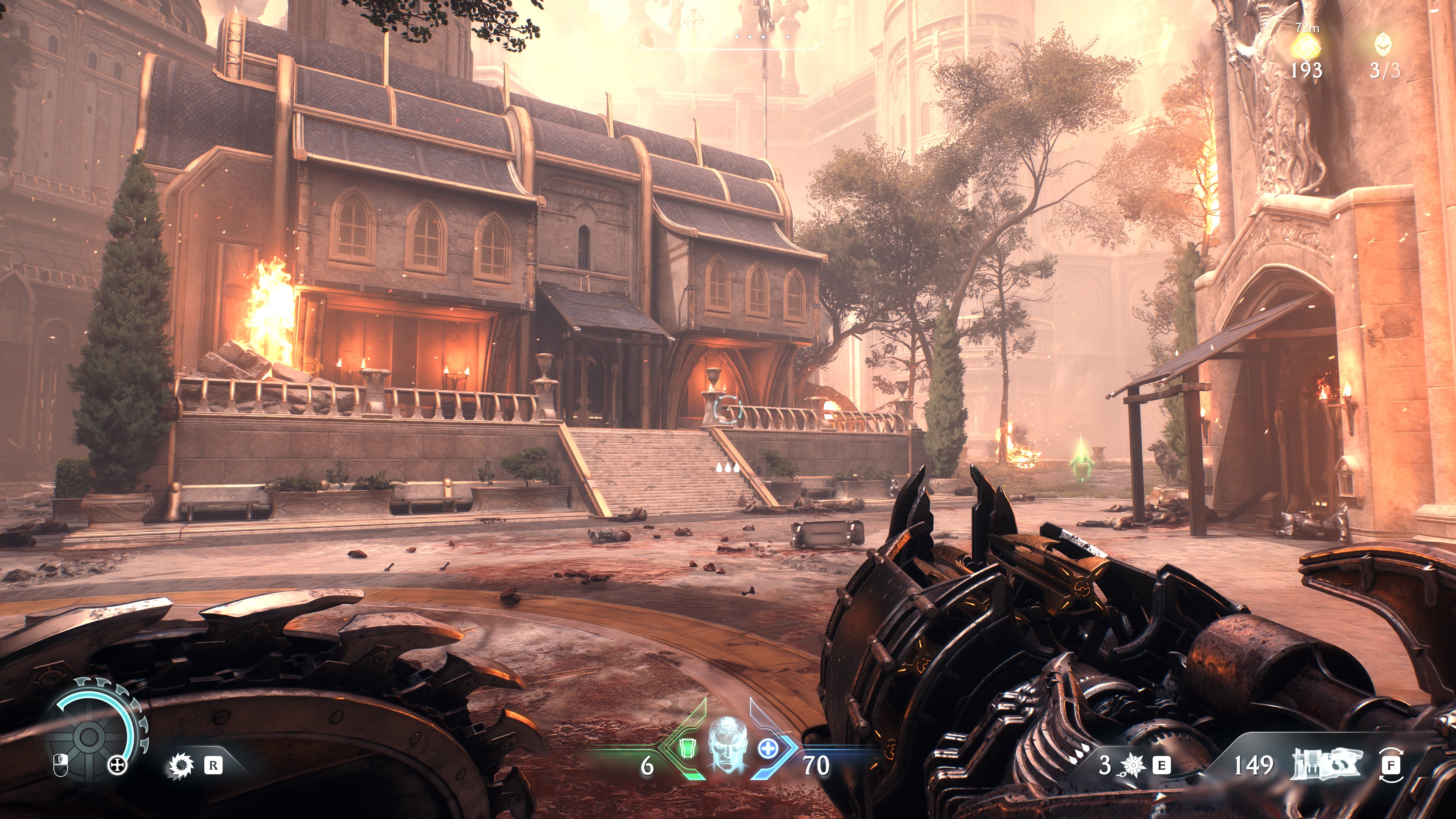
• Alex agrees that 720p upscaled via TSR to 1440p/4K looks dramatically bad on a 4K screen:• "fizzly," aliased
• "swimming pixels"
• He adds that at those low internal resolutions:
• Lumen reflections (especially software Lumen) can look bad too
• He argues it's not 100% an engine problem, but:
• Epic arguably oversold "60fps-ready" UE5 features without stressing the internal-res compromise
• Developers choosing UE5 features + 60fps are making the trade: resolution tanks
Key point: 60fps mode is a major driver of the problem
• Alex says if High on Life 2 didn't target 60fps, it likely wouldn't need to run at ~720p.
• Trade-off explanation: consoles lack:
• DLSS-style reconstruction
• strong ML upscaling options
• abundant compute headroom
• So if a dev insists on 60fps + UE5 features, resolution becomes the sacrifice.
John's response: admits PC play "tainted" his impressions
• John openly says his view was influenced by playing at high-end PC 4K.• He agrees the console image quality is pretty bad when seen properly on a TV.
• He notes DF initially saw console clips in a PC window, where it looked "okay," but full-screen/4K display reveals the issues.
• He highlights a broader reality: DF rigs can be near "borderline unobtainium" for many users (prices/supply).
Bigger historical framing: every gen has winners + failures
• John argues every console generation has:• games that push limits and still run well
• games that fall short due to choices/implementation
• Example: PS2 era had many 60fps games, but Killzone 1 ran terribly (~15fps) despite looking nice.
• He says Unreal has always had this pattern: UE3, UE4, and now UE5 — but expectations have shifted because players now expect 60fps more widely.
UE5 "pick-and-choose" reality (especially with Lumen/Nanite/VSMs)
• John says with UE5 features like Lumen + Nanite (and virtual shadow maps), it becomes hard to hit:• great image quality
• high frame rate
• advanced features
• He doesn't think it's impossible, but believes it requires:
• exceptional tech teams
• deep engine customization (e.g., studios close to Epic like The Coalition)
• time, budget, and knowhow
Practical alternative: use UE5 more conservatively
• John cites an example game he played (Reanimal) that:
• looks beautiful
• runs 60fps on PS5 Pro
• but doesn't use Lumen/Nanite
• His argument: some projects can get stunning results with art direction + conservative tech choices (static lighting, fixed camera angles, etc.).
"Use the technique that fits the project"
• John argues UE5 features are powerful but not always necessary.• Suggests:
• static worlds might be better with baked lighting (more stable + higher res)
• dynamic open worlds/time-of-day games benefit more from Lumen/Nanite-style tech
• He frames the issue as devs sometimes using "new shiny features" by default, then paying the price in resolution/perf.
Oliver/Rich hardware notes: budgets, CPU limits, and midrange PC reality
• Another panelist reiterates: it's about CPU/GPU time budgets and UE5 features eating that budget.• Notes testing High on Life 2 on a Ryzen 5 3600 + RTX 4060:
• CPU streaming limits show up more than on consoles
• even with DLSS, upscaling from 720p isn't attractive
• 4060 may hit memory limits; 4060 Ti fares better for higher settings
• Bottom line: the game is demanding, devs chose the trade-offs knowingly.
Alex pushback: people romanticize other games' tech too
• Alex argues comparisons can be selective:• Hogwarts Legacy has lots of technical issues on many platforms
• FF7 Remake runs well but has visible flaws in certain areas
• Stellar Blade may be conservative visually even if performant
• He also says Black Myth: Wukong is an especially bad UE5 console example and not representative.
UE4 vs UE5 rebuttal:
• Alex says "UE4 would be better" isn't a great argument because you can often:
• disable UE5 features and effectively return to a UE4-like approach, gaining performance
Custom engines vs UE5: "Could you do Forza Horizon-level results in UE5?
• The group wonders aloud whether you could match something like Forza Horizon 5/6 performance + visuals in UE5 today.• One speaker says: probably not, because those engines are purpose-built for that exact game.
Review philosophy + what High on Life 2 "should have done"
• They conclude reviews can only present results; consumers decide if they accept them.• Specific critique for High on Life 2:
• It should have had a quality mode (and possibly a 40fps mode)
• By only offering performance mode, everyone is forced into the low-resolution presentation
• Not everyone needs 60fps, and shooters can still be fun at 30fps (even if some dislike it)
VRR rant / actionable ask
• Panel complains devs should implement VRR properly, especially:• Use 120Hz output to enable low-framerate compensation
• 60Hz-only output won't cut it
• Mentions Sony has internal pushes (power saver / handheld considerations), but VRR implementation still isn't universal/easy at system level.


![[Sigma]](/data/avatars/m/701/701747.jpg?1726376545)







 ?
?