-
Hey Guest. Check out your NeoGAF Wrapped 2025 results here!
You are using an out of date browser. It may not display this or other websites correctly.
You should upgrade or use an alternative browser.
You should upgrade or use an alternative browser.
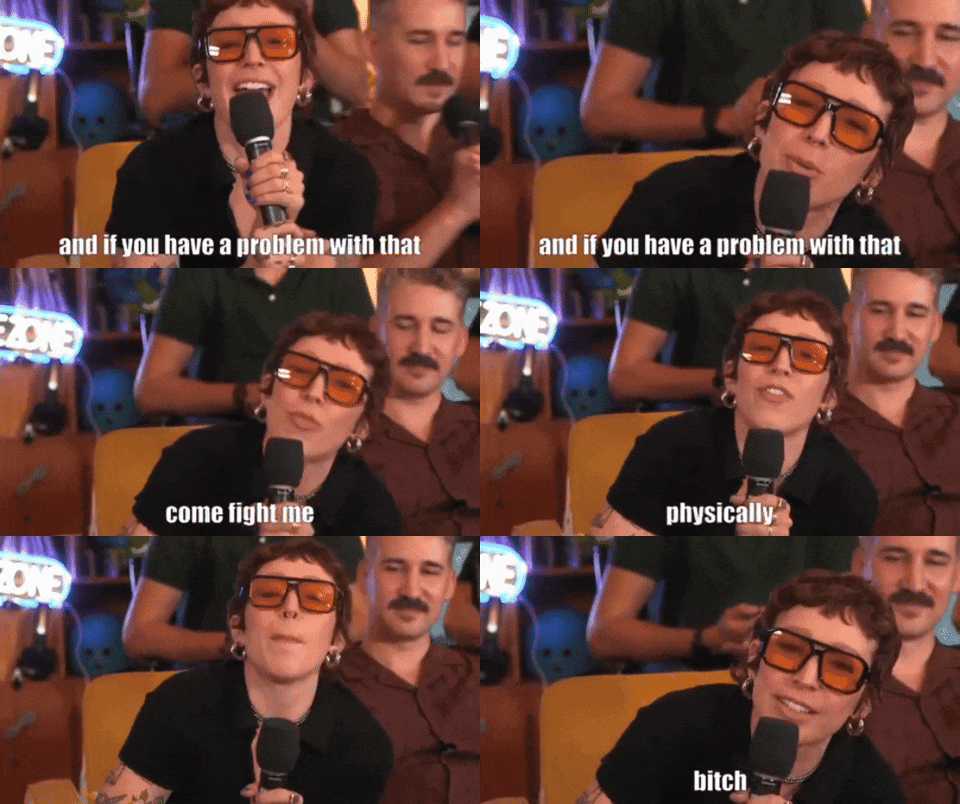
Colin finally got to interview Alyssa Mercante
- Thread starter rkofan87
- Start date



The_hunter
Member
Nose piercing

uncreativename
Member
That's how an interview should be imo, more about the person being interviewed than the interviewer. And if the person being interviewed is saying some bullshit lol, well you have to have some faith in your audience that they'll be able to figure that out on their ownI watched it over the weekend. It's fine. I don't think he pushed back enough on some of the points, but I get it. He was trying to be respectful and nice.

graywolf323
Member
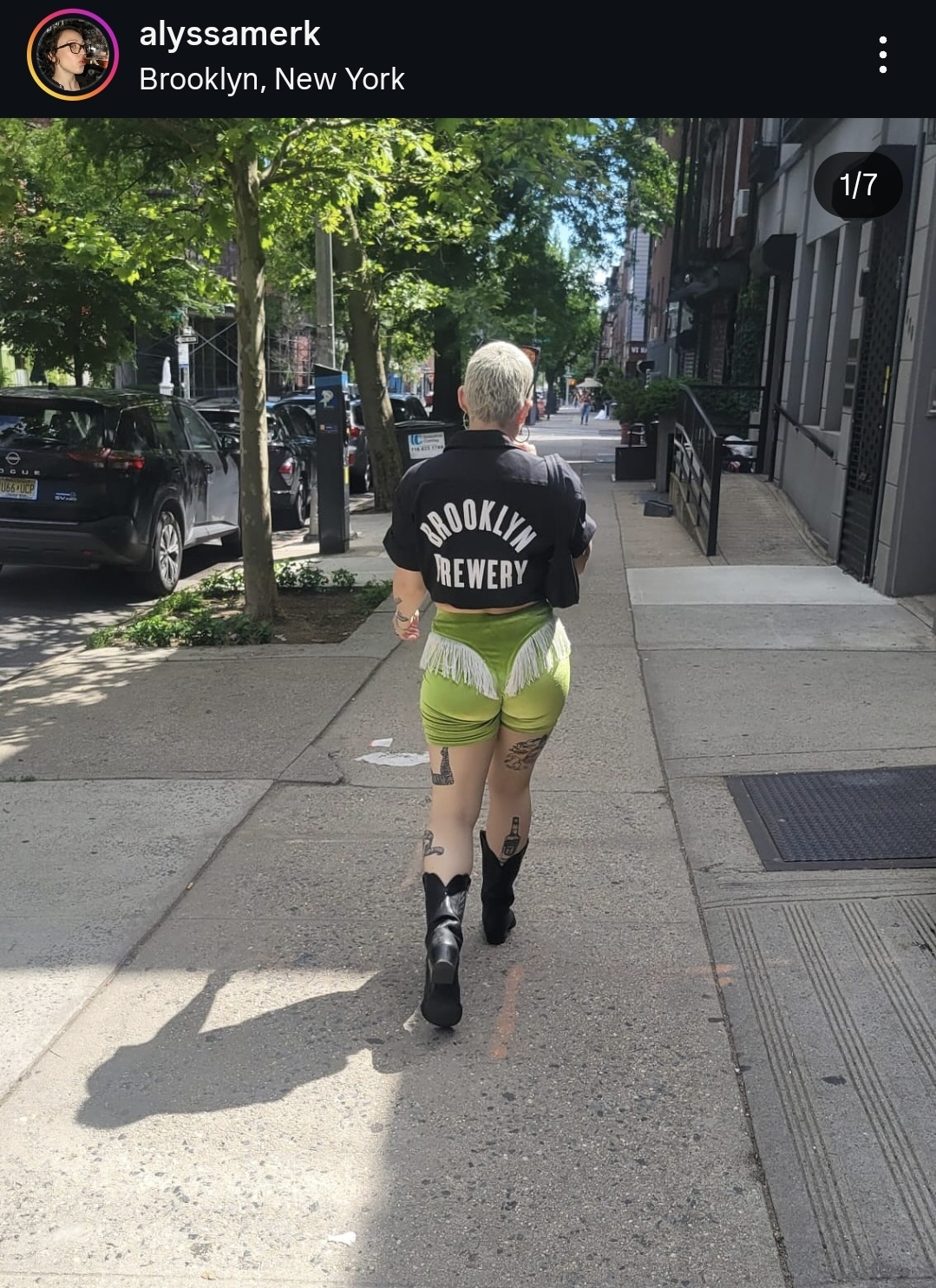
huh, she actually looks sorta normal now?

diffusionx
Gold Member
Is she the one with the big butt


Topher
Identifies as young
YouTube comments are saying it's a really good civil conversation
Cool. I'll watch it later. Will be refreshing to see some discussion without all the nastiness

AmuroChan
Member
That's how an interview should be imo, more about the person being interviewed than the interviewer. And if the person being interviewed is saying some bullshit lol, well you have to have some faith in your audience that they'll be able to figure that out on their own
I'm really just talking about Colin's normal level of pushback that he would have on other interviews he's done. This one in particular he was being extra nice.

LordCBH
Member
I'm really just talking about Colin's normal level of pushback that he would have on other interviews he's done. This one in particular he was being extra nice.
I'm assuming he doesn't want to have to deal with her SSRI-induced rage.

schaft0620
Member
I always thought that they would be friends if they just met.


You have to look normal when looking for a job.huh, she actually looks sorta normal now?


Sorcerer
Member
She is understandably shy of being interviewed and attacked. (She even has left the game's business behind it seems) Colin had to chase her for a while to get the interview. She finally agreed. It wouldn't be a good look for Colin to have her on and have him be hostile to her.I'm really just talking about Colin's normal level of pushback that he would have on other interviews he's done. This one in particular he was being extra nice.


Sticks
Al Pachinko, Konami President


ChorizoPicozo
Member

Here is a concise summary of Sacred Symbols+ Episode 515, featuring an unexpected conversation between host Colin Moriarty and journalist Alyssa Mercante (formerly of Kotaku).
Key Takeaways
- The Eternal Culture War: They explore why gaming's cultural divide remains so toxic, analyzing the transition from GamerGate to the recent "Sweet Baby Inc." controversies.
- "Winning Isn't Enough": The title's core premise examines the psychology of online movements. They discuss how factions that gain cultural or institutional power often refuse to accept victory, continuing to act like aggrieved underdogs instead of responsibly wielding their influence.
- The Collapse of Games Media: Alyssa details the economic death of traditional games journalism, explaining how the collapse of traditional outlets has created a massive power vacuum.
- The Rise of Influencers: They discuss how this vacuum is now dominated by independent creators and streamers (like Asmongold), who steer modern gaming discourse far more than traditional websites do.
- Bridging the Divide: Despite their differing political and industry backgrounds, Colin and Alyssa find significant common ground, emphasizing the need for good-faith dialogue over internet shouting matches
Alyssa Mercante's position in the interview focuses on three main points:
- Seeking Good-Faith Dialogue: She steps outside her typical media bubble to show that people on opposite sides of the gaming culture war can find common ground through nuanced, face-to-face conversation rather than internet outrage.
- The Defensive Reality for Women: She explains that enduring years of hostility in gaming spaces naturally forces women to enter the industry with a defensive mindset or a "chip on their shoulder" just to survive the toxicity.
- Journalism's Economic Collapse: She views the death of sites like Kotaku as a harsh economic reality, warning that the resulting vacuum has shifted immense power to independent streamers who lack traditional journalistic standards.
Does she understand the role of media in the shift of gaming discourse toward a more antagonistic, toxic narrative toward customers, especially straight white men?
Based on the actual dialogue in the podcast, the short answer is no, she does not fully agree with or validate that specific narrative, though she acknowledges the fractured state of the discourse from a different angle.
he frames the defensive or sharp mindset of modern media figures (particularly women) as a natural response to surviving a hostile environment,
rather than taking responsibility for driving ideological polarization.


BigBeauford
Member
Yeah, we need to make sure we are nice to people who have threatened to fight someone over gaming opinions, and have said pretty awful things about gamers.

Zacfoldor
Gold Member
This is why the Marathon community is like it is. Mindbreak.
- The Defensive Reality for Women: She explains that enduring years of hostility in gaming spaces naturally forces women to enter the industry with a defensive mindset or a "chip on their shoulder" just to survive the toxicity.
It's a shame. I would welcome female gamers.....but you have to have very thick skin and it will still change you.
That's online gaming.
It seems to imply in the last line that stronk women are a result of being hammered by gamers like Marathon players were. Basically the same reason the Marathon community is angry and mean and hostile(imho) is the same reason we have stronk women, which I guess are also angry and mean and hostile in some cases. This line I mean:
he frames the defensive or sharp mindset of modern media figures (particularly women) as a natural response to surviving a hostile environment,
Really though, instead of mindbreak, staying based is best. Staying based allows you to not lose yourself and turn into a hater even if people pick on you all the time. It's hard. I never thought that the stronk women stereotype exists because of mindbreak. I guess it makes sense.
Last edited:

AJUMP23
Parody of actual AJUMP23
rather than taking responsibility for driving ideological polarization.
That is the divide right? She isn't responsible for her ideology it is just a response from external factors. While her own ideas are reinforced in the gaming medias echo chamber of ideology.

Pedro Motta
Gold Member
I don't know about Alyssa Mercante and the GamerGate stuff, and at this stage, I'm too afraid to ask.

Moondoggy
Member
Best not to worry about it, it all just involves people who'll be working at Burger King soon anyways.I don't know about Alyssa Mercante and the GamerGate stuff, and at this stage, I'm too afraid to ask.

RedC
Member
Here is a concise summary of Sacred Symbols+ Episode 515, featuring an unexpected conversation between host Colin Moriarty and journalist Alyssa Mercante (formerly of Kotaku).
Key Takeaways
- The Eternal Culture War: They explore why gaming's cultural divide remains so toxic, analyzing the transition from GamerGate to the recent "Sweet Baby Inc." controversies.
- "Winning Isn't Enough": The title's core premise examines the psychology of online movements. They discuss how factions that gain cultural or institutional power often refuse to accept victory, continuing to act like aggrieved underdogs instead of responsibly wielding their influence.
- The Collapse of Games Media: Alyssa details the economic death of traditional games journalism, explaining how the collapse of traditional outlets has created a massive power vacuum.
- The Rise of Influencers: They discuss how this vacuum is now dominated by independent creators and streamers (like Asmongold), who steer modern gaming discourse far more than traditional websites do.
- Bridging the Divide: Despite their differing political and industry backgrounds, Colin and Alyssa find significant common ground, emphasizing the need for good-faith dialogue over internet shouting matches
Alyssa Mercante's position in the interview focuses on three main points:
- Seeking Good-Faith Dialogue: She steps outside her typical media bubble to show that people on opposite sides of the gaming culture war can find common ground through nuanced, face-to-face conversation rather than internet outrage.
- The Defensive Reality for Women: She explains that enduring years of hostility in gaming spaces naturally forces women to enter the industry with a defensive mindset or a "chip on their shoulder" just to survive the toxicity.
- Journalism's Economic Collapse: She views the death of sites like Kotaku as a harsh economic reality, warning that the resulting vacuum has shifted immense power to independent streamers who lack traditional journalistic standards.
Does she understand the role of media in the shift of gaming discourse toward a more antagonistic, toxic narrative toward customers, especially straight white men?
Based on the actual dialogue in the podcast, the short answer is no, she does not fully agree with or validate that specific narrative, though she acknowledges the fractured state of the discourse from a different angle.
he frames the defensive or sharp mindset of modern media figures (particularly women) as a natural response to surviving a hostile environment,
rather than taking responsibility for driving ideological polarization.

Sacred Symbols Plus Discussion Summary — Games Media, Gamergate, Anita Sarkeesian, Harassment, and Industry Culture
Overview
This conversation between Colin Moriarty and Alyssa Mercante evolves into a long-form discussion about:- games media culture
- Gamergate's long-term effects
- Anita Sarkeesian discourse
- online harassment
- games criticism
- identity in gaming spaces
- political tribalism online
- and how internet incentives have distorted conversations around games.
Alyssa Mercante's Current Position
Mercante explains:- she no longer works in games media full-time
- she now writes about the creator economy for a trade publication
- enjoys the peace of:
- no comments
- no constant online fighting
- less public scrutiny
- financially unstable
- administratively exhausting
- requiring constant hustling:
- bartending
- freelancing
- helping with landscaping work
Long Island / Personal Background Segment
Large section focuses on:- Long Island upbringing
- hockey fandom
- family backgrounds
- 9/11 experiences
- parents working in NYPD/FDNY
- emphasizing how internet discourse flattens people into caricatures instead of complex individuals.
Core Topic — Online Games Culture & Harassment
Mercante discusses:- entering online gaming through Halo 3 multiplayer
- being heavily harassed as a woman online
- verbal abuse
- misogynistic insults
- rape threats
- being blamed for team losses purely for being female
- her defensiveness
- her willingness to push back publicly
- her refusal to "quietly disappear" from gaming spaces.
Gamergate & The Endless "Culture War" Cycle
Mercante argues:- modern gaming discourse keeps resurrecting the same fights from 2014
- recurring outrage cycles
- algorithms rewarding incendiary content
- people turning others into symbolic villains
- internet systems incentivize outrage and endless conflict rather than productive discussion.
Sweet Baby Inc / Anita Sarkeesian / Slay the Spire 2
Mercante says:- Anita Sarkeesian being rediscovered in Slay the Spire 2 credits became another example of:
- old Gamergate-style outrage being resurrected
- nobody noticed Sarkeesian's involvement until someone searched credits
- players enjoyed the game without issue beforehand
- evidence that outrage is often retroactively manufactured rather than organically experienced.
Mercante's View On Anita Sarkeesian
Key points:- believes Sarkeesian has the right to work in games
- views Tropes vs Women as a form of literary/media criticism applied to games
- believes criticism itself helped legitimize games as an artistic medium
- people transformed Sarkeesian into a symbolic "enemy"
- years later she is still treated as a recurring villain despite largely fading from public prominence.
Colin Moriarty's Position
Moriarty takes a more nuanced position:- says he often disagreed with Anita Sarkeesian's analysis
- felt she lacked deep gaming background initially
- thought some criticisms toward her were directionally understandable
- he believes the modern fixation on her now feels excessive and performative
- people already "won" the culture war against her influence years ago
- continuing to obsess over her now feels hollow and repetitive.
Discussion About "Winning" The Culture War
Moriarty repeatedly argues:- anti-woke/right-leaning gaming voices are now culturally dominant online
- continuing to resurrect old enemies like Sarkeesian feels unnecessary
- outrage creators need recurring villains to sustain engagement
- saying some creators appear to constantly recycle the same enemies:
- Anita Sarkeesian
- Zoe Quinn
- Sweet Baby Inc
- etc.
Gaming As Meritocracy
Interesting philosophical section:- both discuss gaming culture as inherently meritocratic
- gamers often demand "credentials"
- trophies
- gamer scores
- proof of expertise
- he values people with deep experience discussing games
- criticizes culture-war commentators who barely play games themselves
- he distinguishes that from gatekeeping casual players entirely.
Women In Gaming Spaces
Mercante repeatedly emphasizes:- gaming spaces historically felt hostile toward women
- being the only woman at industry events
- being followed or treated strangely at conventions
- harassment at online multiplayer games
- women being roofied at gaming events
- this history explains why many women in games media became defensive or politically outspoken.
Conversation About Cancel Culture
Moriarty raises:- examples of people on the political right being professionally targeted:
- Palmer Luckey
- Chris Avellone
- Troy Leavitt
- Carolyn from Limited Run Games
- some resentment from right-wing gaming communities comes from feeling these tactics were normalized against them first.
- acknowledges cancellation/dogpiling can become cyclical and destructive
- but frames much of the left's defensiveness as reactive to long-term hostility in gaming spaces.
Twitter / Bluesky / Algorithm Discussion
Both criticize:- modern social media algorithms
- outrage gets rewarded
- nuance gets buried
- engagement farming distorts discussions
- says constant algorithmic outrage becomes psychologically exhausting.
Most Important Shared Conclusion
Despite political disagreements:- both eventually agree internet discourse reduces people into avatars instead of human beings.
- many people online stop seeing others as individuals
- instead seeing:
- "the woke journalist"
- "the right-wing gamer"
- "the feminist"
- "the anti-woke guy"
- once people become symbols instead of humans
- real conversations become nearly impossible.
ChorizoPicozo
Member
Too DAMN LONG didnt read
Sacred Symbols Plus Discussion Summary — Games Media, Gamergate, Anita Sarkeesian, Harassment, and Industry Culture
Overview
This conversation between Colin Moriarty and Alyssa Mercante evolves into a long-form discussion about:
- games media culture
- Gamergate's long-term effects
- Anita Sarkeesian discourse
- online harassment
- games criticism
- identity in gaming spaces
- political tribalism online
- and how internet incentives have distorted conversations around games.
Alyssa Mercante's Current Position
Mercante explains:
She describes post-Kotaku freelance life as:
- she no longer works in games media full-time
- she now writes about the creator economy for a trade publication
- enjoys the peace of:
- no comments
- no constant online fighting
- less public scrutiny
- financially unstable
- administratively exhausting
- requiring constant hustling:
- bartending
- freelancing
- helping with landscaping work
Long Island / Personal Background Segment
Large section focuses on:
This portion humanizes both participants:
- Long Island upbringing
- hockey fandom
- family backgrounds
- 9/11 experiences
- parents working in NYPD/FDNY
- emphasizing how internet discourse flattens people into caricatures instead of complex individuals.
Core Topic — Online Games Culture & Harassment
Mercante discusses:
Examples included:
- entering online gaming through Halo 3 multiplayer
- being heavily harassed as a woman online
She argues this shaped:
- verbal abuse
- misogynistic insults
- rape threats
- being blamed for team losses purely for being female
- her defensiveness
- her willingness to push back publicly
- her refusal to "quietly disappear" from gaming spaces.
Gamergate & The Endless "Culture War" Cycle
Mercante argues:
She describes:
- modern gaming discourse keeps resurrecting the same fights from 2014
Main point:
- recurring outrage cycles
- algorithms rewarding incendiary content
- people turning others into symbolic villains
- internet systems incentivize outrage and endless conflict rather than productive discussion.
Sweet Baby Inc / Anita Sarkeesian / Slay the Spire 2
Mercante says:
Her argument:
- Anita Sarkeesian being rediscovered in Slay the Spire 2 credits became another example of:
- old Gamergate-style outrage being resurrected
She sees this as:
- nobody noticed Sarkeesian's involvement until someone searched credits
- players enjoyed the game without issue beforehand
- evidence that outrage is often retroactively manufactured rather than organically experienced.
Mercante's View On Anita Sarkeesian
Key points:
Mercante argues:
- believes Sarkeesian has the right to work in games
- views Tropes vs Women as a form of literary/media criticism applied to games
- believes criticism itself helped legitimize games as an artistic medium
- people transformed Sarkeesian into a symbolic "enemy"
- years later she is still treated as a recurring villain despite largely fading from public prominence.
Colin Moriarty's Position
Moriarty takes a more nuanced position:
However:
- says he often disagreed with Anita Sarkeesian's analysis
- felt she lacked deep gaming background initially
- thought some criticisms toward her were directionally understandable
His argument:
- he believes the modern fixation on her now feels excessive and performative
- people already "won" the culture war against her influence years ago
- continuing to obsess over her now feels hollow and repetitive.
Discussion About "Winning" The Culture War
Moriarty repeatedly argues:
He believes:
- anti-woke/right-leaning gaming voices are now culturally dominant online
Mercante agrees:
- continuing to resurrect old enemies like Sarkeesian feels unnecessary
- outrage creators need recurring villains to sustain engagement
- saying some creators appear to constantly recycle the same enemies:
- Anita Sarkeesian
- Zoe Quinn
- Sweet Baby Inc
- etc.
Gaming As Meritocracy
Interesting philosophical section:
Mercante explains:
- both discuss gaming culture as inherently meritocratic
Moriarty says:
- gamers often demand "credentials"
- trophies
- gamer scores
- proof of expertise
However:
- he values people with deep experience discussing games
- criticizes culture-war commentators who barely play games themselves
- he distinguishes that from gatekeeping casual players entirely.
Women In Gaming Spaces
Mercante repeatedly emphasizes:
Examples:
- gaming spaces historically felt hostile toward women
She argues:
- being the only woman at industry events
- being followed or treated strangely at conventions
- harassment at online multiplayer games
- women being roofied at gaming events
- this history explains why many women in games media became defensive or politically outspoken.
Conversation About Cancel Culture
Moriarty raises:
He argues:
- examples of people on the political right being professionally targeted:
- Palmer Luckey
- Chris Avellone
- Troy Leavitt
- Carolyn from Limited Run Games
Mercante partially agrees:
- some resentment from right-wing gaming communities comes from feeling these tactics were normalized against them first.
- acknowledges cancellation/dogpiling can become cyclical and destructive
- but frames much of the left's defensiveness as reactive to long-term hostility in gaming spaces.
Twitter / Bluesky / Algorithm Discussion
Both criticize:
Main points:
- modern social media algorithms
Mercante explains leaving Twitter partly for peace of mind:
- outrage gets rewarded
- nuance gets buried
- engagement farming distorts discussions
- says constant algorithmic outrage becomes psychologically exhausting.
Most Important Shared Conclusion
Despite political disagreements:
Mercante's core argument:
- both eventually agree internet discourse reduces people into avatars instead of human beings.
She says:
- many people online stop seeing others as individuals
- instead seeing:
- "the woke journalist"
- "the right-wing gamer"
- "the feminist"
- "the anti-woke guy"
- once people become symbols instead of humans
- real conversations become nearly impossible.


DragoonKain
Neighbours from Hell
Never heard of her, so don't have a real interest in it, but from the thumbnail she looks like Hilary Duff.


laynelane
Member
Here is a concise summary of Sacred Symbols+ Episode 515, featuring an unexpected conversation between host Colin Moriarty and journalist Alyssa Mercante (formerly of Kotaku).
Key Takeaways
- The Eternal Culture War: They explore why gaming's cultural divide remains so toxic, analyzing the transition from GamerGate to the recent "Sweet Baby Inc." controversies.
- "Winning Isn't Enough": The title's core premise examines the psychology of online movements. They discuss how factions that gain cultural or institutional power often refuse to accept victory, continuing to act like aggrieved underdogs instead of responsibly wielding their influence.
- The Collapse of Games Media: Alyssa details the economic death of traditional games journalism, explaining how the collapse of traditional outlets has created a massive power vacuum.
- The Rise of Influencers: They discuss how this vacuum is now dominated by independent creators and streamers (like Asmongold), who steer modern gaming discourse far more than traditional websites do.
- Bridging the Divide: Despite their differing political and industry backgrounds, Colin and Alyssa find significant common ground, emphasizing the need for good-faith dialogue over internet shouting matches
Alyssa Mercante's position in the interview focuses on three main points:
- Seeking Good-Faith Dialogue: She steps outside her typical media bubble to show that people on opposite sides of the gaming culture war can find common ground through nuanced, face-to-face conversation rather than internet outrage.
- The Defensive Reality for Women: She explains that enduring years of hostility in gaming spaces naturally forces women to enter the industry with a defensive mindset or a "chip on their shoulder" just to survive the toxicity.
- Journalism's Economic Collapse: She views the death of sites like Kotaku as a harsh economic reality, warning that the resulting vacuum has shifted immense power to independent streamers who lack traditional journalistic standards.
Does she understand the role of media in the shift of gaming discourse toward a more antagonistic, toxic narrative toward customers, especially straight white men?
Based on the actual dialogue in the podcast, the short answer is no, she does not fully agree with or validate that specific narrative, though she acknowledges the fractured state of the discourse from a different angle.
he frames the defensive or sharp mindset of modern media figures (particularly women) as a natural response to surviving a hostile environment,
rather than taking responsibility for driving ideological polarization.
She views the death of sites like Kotaku as a harsh economic reality, warning that the resulting vacuum has shifted immense power to independent streamers who lack traditional journalistic standards.
I think this one of the main reasons why many people distrust games media. Access journalism, ideology presented as fact, villainization of the audience, etc. It's very telling that someone coming from a gaming media background like herself cannot see something that is obvious to so many (that being the complete lack of traditional journalistic standards in games media). It's also why games media, which is dying out, doesn't seem to have much of a chance of course correcting. They can't/refuse to even see there's a problem with their behavior.

SpiceRacz
Member
Is she the one with the big butt
Yes. She has an ample turd cutter.

S0ULZB0URNE
Member
Is she the one with the big butt

BigBeauford
Member
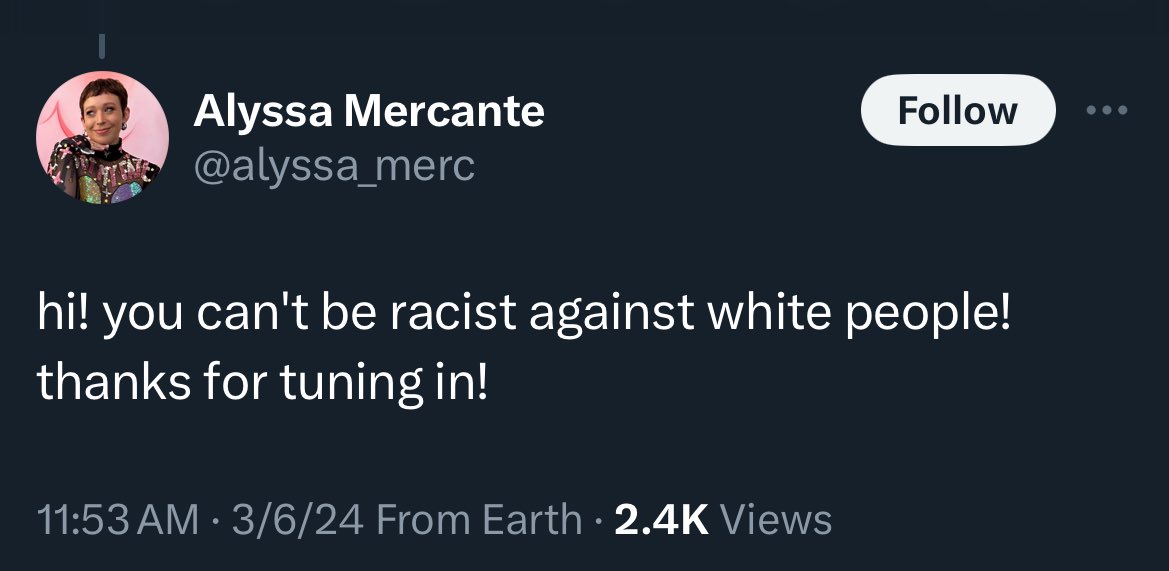
Man, what a softball interview. People like her are why he lost his job. No ownership of her part to play in it all, lest we forget shit like this:

poppabk
Cheeks Spread for Digital Only Future
To be honest I don't know who either of these people are. I'm guessing one 'woke' and one 'anti-woke'.who.gif

Plague Doctor
Member
Hey, remember that time Alyssa wrote a review for Shadow of the ErdTree and she spent literally a paragraph bitching about her online trolls and male privelege or some shit.
She is a class act of a gaming journalist.
Really explores the games she is reviewing.
Totally a mature adult and a consumate professional.
She is a class act of a gaming journalist.
Really explores the games she is reviewing.
Totally a mature adult and a consumate professional.
Last edited:


Portugeezer
Member
Was OK, somewhat soft interview and she mostly deflects.
Also

Also

Dirk Benedict
Gold Member
True that. Dude is like 90% beard, anyway. You can't see a fucking human being in all that mess of dead cells.At least its not Jaffe again

near
Gold Member