• Hey Guest. Check out your NeoGAF Wrapped 2025 results here!

What are you reading? (October 2015)

Status
Not open for further replies.
As much as I like The Shining Girls I have made so little progress in it the last couple of days that I think it is time to move on to another book.
 
A Brief History of Seven Killings won the Man Booker Prize. Well deserved, colbertIcalledit.gif, recommend it to mostly everyone etc etc.
 
I've been reading another web serial recently (I've previously talked about Worm and of course HPMOR). This one is slightly harder to recommend as whole-heartedly as the other two... but I'll save that for the end.

The story is "Mother of Learning," and here's how the author totally undersells it:
Zorian, a mage in training, only wanted to finish his education in peace. Now he struggles to find answers as he finds himself repeatedly reliving the same month. 'Groundhog's day' style setup in a fantasy world.
It's a lot more fun than he makes it sound. The main character is great. He starts off as a grouchy teenage misanthrope who just wants to be left alone to do his own thing, but he grows and learns a whole lot over the course of the story, while never losing his core. He's not absurdly overpowered or a great hero or a chosen prophesied one or anything like that--another character fills that role. Zorian is just stubborn and a little bit paranoid and willing to buckle down and do the hard work.

Time loops are something you don't see a lot of outside of fanfiction. They're much easier in fanfic because the reader already knows all the characters, all the places, all the events that are supposed to happen. In an original story that all needs to be set up, and the author does an excellent job of it. We're introduced initially to a small but key portion of the world and characters and events, and then get to see everything from different angles and get a sort of depth perception. One of the things done really well is the development of even minor throwaway characters into interesting people who clearly have their own lives and their own plans.

The world feels something like a mashup of Harry Potter and Dungeons & Dragons at first, though it soon develops a depth of its own, with enough details dropped here and there that it feels like a lived-in place. The magic system is well-designed and interesting to learn about (after a few initial expository hiccups), which is just as well, since our guy is at a school of magic.

The author also makes great use of foreshadowing and dropping clues. Some minor things we see early on turn out to be really important. Some things we thought we understood on the first go-round turn out to have always been about something else entirely. And then, of course, sometimes a cigar is just a red herring. At least for now.

Which leads me to the downsides, both of which are substantial. First, the story is unfinished. It's been going regularly for years at this point, but I'm pretty sure it's only about two thirds of the way through. Meaning it's likely to be at least a couple more years before it's totally done. Sorry. Second, and probably worse, the prose is... kind of rough. Not just in the "Brandon Sanderson writes middling prose" sense of being pedestrian and sometimes clunky, but in that there are poor word choices, odd stylistic issues, and a really irritating tic of the author's where random verbs will be in present rather than past tense. He seriously needs an editor or at least a proofreader. That said, the storytelling and character development and so on are enjoyable enough that I can grit my teeth and wade through the bits in the prose that bug me.

I have to give the author props for avoiding a few common failures of Groundhog Day-style time loop stories. One is repetition. Despite the title, repetition is actually kept to a minimum. The most prominent thing that's repeated each go-round is Zorian's annoying little sister jumping on him to wake him up at the start of each loop. Otherwise, anything that's just going to be the same is skipped over, or at worst skimmed through in narrative summary. Another common failure is a lack of danger or tension. If your hero just wakes up anew every time they die, what could they possibly have to fear? ... Oh, but that would be telling.
 
Don't want to make a new thread or bump any of the old ones, so I thought I'll ask here.

I was planning to get into the Culture series by Iain Banks, but noticed that only a few of those have kindle versions.
Am I missing something or is there no way to legally read them all in order in digital form?
 
Did anybody read "A thousand splendid Suns" by Khaled Hosseini? I'm like 60% done with it and it's fantastic. It changed my perception of Afghanistan fundamentally.
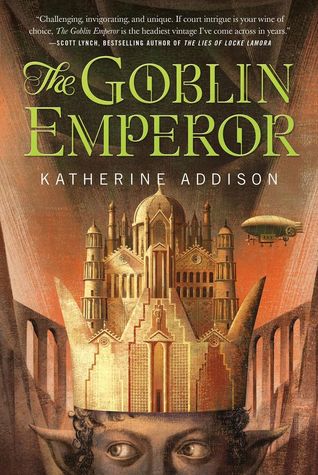
 
Just finished reading these two. Fun books all around.

51g6RsX0nNL._SX323_BO1,204,203,200_.jpg
51gF3dYpeTL._SX329_BO1,204,203,200_.jpg

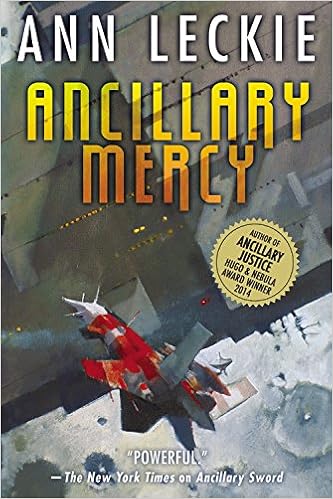
Next on the list is the conclusion to the Imperial Radch trilogy:

 
More like the Imperial Tea Time trilogy, amirite.
 
Is there a more annoying series to read than the Malazan series?

Such a bloated mess with way too many characters. At times it's a real chore to read a single chapter. I've taken months off between books in the series at various times because I've had enough. But then there are parts that are just awesome and as engaging as the best of everything else I've ever read.
 
Has anyone ever seen a Kindle book only show up on one device? I bought City On Fire the other night, and the only place I see it listed is on my actual Kindle - not their cloud read, not my phone, etc. Pissing me off...

EDIT: Bought it on my son's account by accident. Our accounts are linked so we can read each other's books, but that apparently only works on an actual Kindle, not other platforms...
 
I started reading 1Q84 last night (first time I'm reading a Murakami actually.. my Mom gave me After the Quake like 12+ years ago but I've not read it) after having it on my Kindle for many years. This thing is an absolute monster.. I read for a little under 2 hours and my Kindle said I wasn't even at 10%. I was in something like the 6th or 7th chapter and I think there's like 80 of them or so.

I only had my phone with me so that's how I was reading -- I'm sure that's a little slower than on the Kindle itself, but not overwhelmingly so. Curious from people who've read it if they recall how long it actually took them to get through it. In comparison to say A Dance With Dragons, it's actually slightly shorter in the app but it's clearly a lot longer of a read.
 
Finished The Martian by Andy Weir.

It's basically everything that Neal Stephenson was trying to pull off with Seveneves (goofy detail oriented sci-fi), but with a more reasonable pace, scope, and writing style. It's also funnier than Stephenson, probably since his Cryptonomicon days.

I really enjoyed it, though the first third had me checking my watch a few times. Once
Earth gets involved
things pick up the pace. I can't imagine the movie being astonishingly good, but I'm sure it will be fun. Probably watch it in six months when I can't remember the book anymore.
 

I finished up my re-read of this, and I stick by my 4 star rating. A lot of it was just a narrative of the war, which got a bit old. The chapters and parts that focused more on analysis were fascinating though.


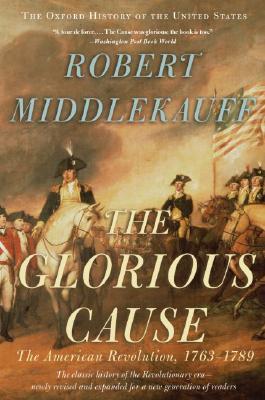
On to this, and god damn, it is even better than I remembered. Again, my better understanding of the ideology of the period has made this even more insightful than when I first read it. The amount of questions and notes that I feel compelled to write down for this one is rather insane.

I think I have said this multiple times, but I really need to read The Ideological Origins of the American Revolution. Have gotten rather busy later and been a bit burned out on reading (these are audiobooks), so my reading time has suffered. Need to get back on so that I can finally finish the Native American history that I was reading and then move onto Ideological Origins.
 
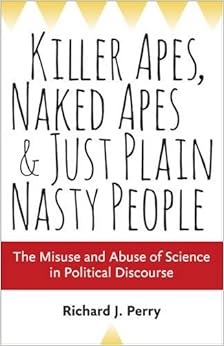
Finished Killer Apes, Naked Apes, and Just Plain Nasty People
51Xg%2BZW-5vL._SY344_BO1,204,203,200_.jpg

Killer Apes, Naked Apes, and Just Plain Nasty People is a fantastic nonfiction book that works to refute the latest discoveries in the realm of our genes dictating our lives. It is a comprehensive tome that assaults the biological determinist thoughts that have been around for many years. Additionally it uncovers how some current political groups embrace biological determinist ideas in a way to work towards going against the Leviathan as proposed by Hobbesian thoughts as well as how they similarly support Social Darwinism. For many of the ideas such as the claims that people believe intelligence can be inherited and that low intelligence, as determined by the IQ test, one probably entered into an opinion as intelligence being hereditary is an absurd idea. Fortunately, for people that may doubt or were confused about the idea, the writer goes into great detail to tell us, that it is not something that is inherited and that intelligence cant just be simplified to being controlled by a single gene. This ties into one of the key themes of the book which strives to explain that evolutionary psychology ideas are not better than hard science to explain human behavior. Hard science uses experimentation not suppositions and speculation based on hand picking genetic ideas. Human behavior, they believe, is a result of behavior modules that emerge. These modules were selected for during the Pleistocene and have not changed ever since. The reason people go after those with good genes, good jobs, their political alignment, or are go getteres or smart, is because these behaviors were selected for during those times of early humans. One wonders how that can be so when during that time there were way less people in the world and due to the spread of human (low population density) its highly unlikely that humans had encountered many others who werent like them. Furthermore, how can they have developed a behavior for their Conservative or Liberal leaning ideas when those parties didnt exist then. Lastly, why would these modules stop being selected for after the Pleistocene wouldnt they be under selection today since evolution is always taking place? In any case, the writer explains those ideas in extreme detail using numerous examples.

I found the book very enjoyable and also enjoyed how it tied into current thinking. It also took time to engage in dialogue about evolutionary psychology, sociobiology, and eugenics and how those ideas are being used for some decision makers to make decisions. Key figures embracing these ideas, like eugenics, believe that behavior is inherited through genes selected from the Pleistocene, if one is poor or mentally ill, or of ethic "origin, then they will stay that way and their future generations will stay that way and thus they must not be helped. Therefore, they believe that, strict immigration policies are needed since the people from Latin America wont be getting smarter and will inherit low intelligence, urban city families on food wages and such will always remain poor and on welfare and thus must not be helped so cut programs that help them, and senior citizens, well cut their funds too. It is an interesting thing that people believe and Im glad the book goes into detail to say adopting such thoughts is not good or helpful, and that that is not how genes work. In fact its the opposite as genes are complicated and what they do depends on the environment and specific interactions. Hopefully people can read this book and whenever they read articles with such ill thoughts on people that need help they will immediately click delete on articles or comment to refute them. Further, most of those articles dont have much proof beyond similar speculation, or as the writer says, reverse engineering. Meaning the evolutionary psychologist are using reason to guess how they believe the people back in the Pleistocene lived (which we have no way of knowing beyond hunting and other hints, how that involves guessing intelligence or peoples wealth has yet to be determined).

Good book could have been better if it were a bit longer and didnt repeat some ideas constantly.
 
It's also funnier than Stephenson, probably since his Cryptonomicon days.

I strongly disagree. The Martian's humor was mostly internet jokes of the "Haha. Mark Watney is a nerd like me!" variety. Meanwhile something like the Baroque cycle is full of humor of all types, and much of it comes from the way scenes are framed rather than one-liners.
 
Seven Gothic Tales by Karen Blixen was boring and couldn't get into it, so putting it on the back burner for Let Me In by John Ajvide Lindqvist.

7911377.jpg
 
Finished Killer Apes, Naked Apes, and Just Plain Nasty People
51Xg%2BZW-5vL._SY344_BO1,204,203,200_.jpg

Killer Apes, Naked Apes, and Just Plain Nasty People is a fantastic nonfiction book that works to refute the latest discoveries in the realm of our genes dictating our lives.

okay, so aside from the use of 'genetics' for the purposes of dehumanization and political shoutings that fit such purposes, how well does he differentiate between 'genetic hypothesises' and 'evolutionairy psychology'? Because while those are commonly associated in the reporting media, not serious scientist would claim them at the same time in any type of firm 'I has got my some evidence' voice. They are very different fields, and usually have nothing to do with one another.
The other part of my inquiry here is whether he actually proved counter-proof of that IQ statement. I accept the hypothesis that IQ isn't necessarily hereditary, but I also know (as kind of a social fact) that education of parents predicts education of children, and presumably that means they tend to have similar levels of IQ (but perhaps not in the same modules, which is how you could counter that argument). So my second question here, because I'm interested enough to consider reading this at some point, is whether he present a sufficient body of evidence for what I presume is his own claim (though more likely yours in that post) of a lack of hereditary IQ.

If it's just an essay on political language I will have to pass, but a good science argument is worth it.
 
Read Do Androids Dream Of Electric Sheep. Kind of trippy, and pretty good .... very different from Blade Runner.... ultimately I prefer Blade Runner though, as the central theme of
empathy
was stripped and focused on the with
Replicant
characters you care about. Still a good short read.

Also finished The Wind-Up Bird Chronicle by Murakami. My first book of his and I found it kind of Lynchian in my opinion which really js just code for weird crap happens. I liked it but at the same time have very conflicting opinions about it for people not prepared for this kind of thing It's not something I can just recommend as it's not exactly accessible in and I don't mean in prose/style but in just the content. It's very layered, complex in its own way and sometimes just outright bizarro.
 
I strongly disagree. The Martian's humor was mostly internet jokes of the "Haha. Mark Watney is a nerd like me!" variety. Meanwhile something like the Baroque cycle is full of humor of all types, and much of it comes from the way scenes are framed rather than one-liners.

I can't really think of any referential internet jokes in The Martian. I really only recall emotional frankness and sarcasm, which really tickles my fancy. Seveneves just couldn't pull that off.

I haven't read the Baroque cycle, so skip over that one. That's why I said his "Cryptonomicon Days," I was speaking about the vague time period.

I'm usually very sensitive to Internet nerd humor, and this book didn't have it. Disagree. Strongly.

EDIT: Now that I reconsider, The Martian did have stuff like the "Pirate Ninja" unit of measurement. I found that more endearing than I would had I read it on the internet given that Mark is on Mars and has had nothing but bad luck...he's trying to cheer himself up. But I concede that there's some nerd internet humor in the book.
 
For the first time in probably 2 years I'm finally reading the second book of a series I've started. I'm reading the second book in the Mistborn series and really liking it so far.

Not sure why I hadn't read it or any other second books until now, I was just on a tear of reading the first book in series and then just going on to another series.
 
I've been reading another web serial recently (I've previously talked about Worm and of course HPMOR). This one is slightly harder to recommend as whole-heartedly as the other two... but I'll save that for the end.

The story is "Mother of Learning," and here's how the author totally undersells it:

It's a lot more fun than he makes it sound. The main character is great. He starts off as a grouchy teenage misanthrope who just wants to be left alone to do his oywn thing, but he grows and learns a whole lot over the course of the story, while never losing his core. He's not absurdly overpowered or a great hero or a chosen prophesied one or anything like that--another character fills that role. Zorian is just stubborn and a little bit paranoid and willing to buckle down and do the hard work.

Cyan, after losing basically an entire month of reading to Worm, and a week or so to HPMOR, I'm going to need you to stop bringing up interesting web serials so that I have a shot of meeting my reading challenge for the year.
 
These short books that I am reading require greater effort & external resources to fully engage with the text; so much so that I wonder if I wouldn't be better off reading for entertainment.
Not that I am not being entertained.
 
I started to read Cloud Atlas. I am about forty pages in, and I feel slightly lost in the water. It's like Mitchell shoved me in the deep end and demanded I sink or swim. I'm not sure how I feel about the novel thus far. I hope the novel expands soon. I want to understand why this was a finalist for the Man Brooker. I should love this book, since I loved the film.
 
okay, so aside from the use of 'genetics' for the purposes of dehumanization and political shoutings that fit such purposes, how well does he differentiate between 'genetic hypothesises' and 'evolutionairy psychology'? Because while those are commonly associated in the reporting media, not serious scientist would claim them at the same time in any type of firm 'I has got my some evidence' voice. They are very different fields, and usually have nothing to do with one another.

The genetics part stays well with showing what is shown and known in reported experimental science papers, while the "evolutionary psychology" part involves putting social definitions to genes that the people want to exist and using logic to try to explain how (if they exist) are around today. The major claim is that behavior can not be reduced to evolution or genes because it is commanded by major social cues. The deepest into science he ever gets is explaining the malaria sickle cell gene and then and how it is selected for in the population and how it came to be exists, as well as how blood type is not commanded by only "1" gene.

I think he stays well in the science of showing why claims of genes for behavior from evolutionary psychologists cant be likened to being explained by the genes and what was selected for or against over time. A claim from one of the cited psychologists in the book attempted to explain that high pregnancies and low survival of people of color was due to them having worst genes was refuted due to the writer showing articles saying that once these people were given access to better healthcare and such that their children survival and pregnancy rate would be reduced. One part mentions claims for heredity in the family unit being related to genes, but again he shows that in most of the world and in most communities the 1 Mother + 1 Father + child idea is relatively recent and hasnt been wholly universal around the world to be able to be reduced to a gene for typical view of a modern day family (this used experiences with people living in indigenous peoples communities).


The other part of my inquiry here is whether he actually proved counter-proof of that IQ statement. I accept the hypothesis that IQ isn't necessarily hereditary, but I also know (as kind of a social fact) that education of parents predicts education of children, and presumably that means they tend to have similar levels of IQ (but perhaps not in the same modules, which is how you could counter that argument). So my second question here, because I'm interested enough to consider reading this at some point, is whether he present a sufficient body of evidence for what I presume is his own claim (though more likely yours in that post) of a lack of hereditary IQ.

If it's just an essay on political language I will have to pass, but a good science argument is worth it.

No that wasnt my own claim that was his as well as the claims of the other articles and additional readings cited in the book. Intelligence wouldnt be hereditary or able to be predicted by parents. The proof offered (by the author) is if you give the children of these parents access to early education programs and schools with more resources then they can perform in school just as well as other children. So the big part of intelligence would involve things external to biology and rather factors such as access to a variety of early education programs. So nothing there for education and intelligence would be in the "genes."

I think the most you could predict is if this family stays living in this city which is lacking these resources then their child could potentially be behind children in other areas. If it could be predicted in the genes, then how would children of families that had parents never finish middle school and such, go on to college?
 
Wait wat. The premise of the book is that genes have no influence over behavior, intelligence, etc, whatsoever? What a bizarre claim. It's pretty well accepted now that most outcomes are somewhere around 50/50 nature/nurture.
 
Man, this sucks. Neither large bookstore chain here (or at least the stores i visit) have good fantasy and scifi sections anymore (minor ones are worthless when it comes to speculative fiction). No new books, and the primary store i use doesn't bother even keeping the shelves full. Not sure if that is because of the new owner but still really annoying.

I read The Lies of Locke Lamora some time ago and i really liked it, so figured i'd get the second book. Were it available...
Neither am i getting Shadows of Self thanks to the stores being what they're, which makes it the first newer Sanderson's book i haven't gotten day one.

Guess i'll have to start ordering books online, which is annoying as i'd prefer to start reading more or less right after getting a book, not a week later.
(I don't like ebooks so they're not a good option.)
 
Wait wat. The premise of the book is that genes have no influence over behavior, intelligence, etc, whatsoever? What a bizarre claim. It's pretty well accepted now that most outcomes are somewhere around 50/50 nature/nurture.

The problem would be which genes, there is still no gene for intelligence. http://www.nature.com/news/smart-genes-prove-elusive-1.15858 If a gene for "aspect of interest" doesnt exist, how would you be able to prove that it has evolved from how people were during the early human times to current.
 
The problem would be which genes, there is still no gene for intelligence. http://www.nature.com/news/smart-genes-prove-elusive-1.15858

Right, of course. Intelligence is vastly complicated, of course it's not going to boil down to a single gene. But this is in the second paragraph of what you just linked:
Studies of twins have repeatedly confirmed a genetic basis for intelligence, personality and other aspects of behaviour.
 
Right, of course. Intelligence is vastly complicated, of course it's not going to boil down to a single gene. But this is in the second paragraph of what you just linked:

Yes the book is focused on people claiming there is a single gene controlling "aspect of interest".

I dont think you could use the twin study for intelligence when there is no gene, how could you have a genetic basis if a gene or gene complex for that aspect doesnt exist?
 
Yes the book is focused on people claiming there is a single gene controlling "aspect of interest". It did mention the twin study but saying it is more complex then a single "gene"

That's a total sideshow, though. Whether it's a single gene or something more complex doesn't have any real bearing on whether intelligence is heritable, which it obviously is.
 
That's a total sideshow, though. Whether it's a single gene or something more complex doesn't have any real bearing on whether intelligence is heritable, which it obviously is.

Then the line that you quoted also says

Studies of twins have repeatedly confirmed a genetic basis for intelligence, personality and other aspects of behaviour. But efforts to link IQ to specific variations in DNA have led to a slew of irreproducible results. Critics have alleged that some of these studies' methods were marred by wishful thinking and shoddy statistics. A sobering editorial in the January 2012 issue of Behavior Genetics2 declared that “it now seems likely that many of the published findings of the last decade are wrong or misleading and have not contributed to real advances in knowledge”.
 
So just to be clear, his claim, which you're repeating, is that intelligence is not heritable at all, and that it's 100% nurture?

The writer is against biological determinism, which would mean he is against claiming that intelligence would be inherited on genes. He refutes the claims of inherited intelligence from parents, based on studies showing that students in which children in disadvantaged backgrounds being given early childhood education enrichment opportunities could get caught up and perform just as well as students from non disadvantaged ("intelligent, people with "good genes") backgrounds. He is a supporter of the belief that this behavior is dictated by social cues, He claims that there is currently no gene or complex of genes for intelligence and that studies have not given evidence to support this.
 
The writer is against biological determinism, which would mean he is against claiming that intelligence would be inherited on genes. He refutes the claims of inherited intelligence from parents, based on studies showing that students in which children in disadvantaged backgrounds being given early childhood education enrichment opportunities could get caught up and perform just as well as students from non disadvantaged ("intelligent, people with "good genes") backgrounds. He is a supporter of the belief that this behavior is dictated by social cues, He claims that there is currently no gene or complex of genes for intelligence and that studies have not given evidence to support this.

So that's a yes?
 
I recently finished The Moon is a Harsh Mistress by Robert Heinlein, and Inverted World by Christopher Priest.

The Moon is a Harsh Mistress was ok. There were some good points to it, but not enough to overcome the things that I thought didn't work. One of the issues that became increasingly irritating was the 'character formula' Heinlein appears to follow. I just recently listened to The Puppet Masters, and the character dynamic is extremely similar. A main character that has a job of some prominence but comes across as pretty dim at times; an older man as all-knowing mentor who is rarely or never wrong (and hella condescending); a female to round things off, also in a job/ situation of prominence but is there just to be beautiful/ slept with/ exclaim 'why's that? please explain!'. The Prof fills the mentor role in TMIAHM and he became more and more annoying as the book went on, with his condescending know-all attitude. He was also used to implement another of the things I didn't like, the narrative device of keeping the main character - and also the reader - in the dark, to create a (meagre) sense of mystery, only to have it all explained to them later on, with the Prof (or whoever is in that role) having known everything all along. It got old.

I tried quite hard to be unbiased about the libertarian politics, but I failed. It just led me to comparisons with The Dispossessed, which made TMIAHM look even worse. I did find it interesting how Heinlein was trying to create a situation where libertarianism might be a sensible option, only, well, it wasn't a sensible option, no matter how he presented things. Also, perhaps as I'm not American (or possibly as I'm British), the whole Independence thing had no resonance with me. And I quickly got over my initial amusement at a capitalist revolution with people calling each other 'comrade'. The idea of a capitalist revolution is just a bit offputting.

Another issue was the lack of suspense. I looked at several goodreads reviews, trying to find what I was missing, and someone commented that it didn't matter that you knew where it was going, but it was how they got there that was interesting. Learning about life on Luna was good, and the line marriages were great. Mike/ Adam was really well done. But I found the story progression flat. I was really bored for much of this, and pretty keen for it to end.

It's because TMIAHM is seen as such a classic of the genre that I tried to work out why I didn't think much of it. I have much less to say about Inverted World. It was excellent. It reminded me a lot of Anathem by Neal Stephenson, which I loved loved. They follow a similar formula, with an initiate/ apprentice learning more about their society and the world about them, with a (sort of mathematical) mystery at the heart of it. But here it's a formula I like. And I like how Priest presents his ideas, on perception of the world etc. This was the first Priest book I've read/ listened to, but I'm definitely going to read more now.
 
Uprooted.jpg


I recently finished Uprooted by Naomi Novik, which I thought was absolutely brilliant. Very familiar in that it embraces a lot of fairy tale tropes, but Novik delivers perfectly in her execution, knowing just when to subtly subvert or give into each trope, and wraps it all around a beautiful story with charming characters, and brisk pacing. It stumbles a bit at the beginning of the first act, and probably doesn't need the romance elements, but otherwise it's a nearly perfect book.

Now, I'm onto:

3aiv06ol.jpg


Last Song Before Night by Ilana C. Meyer

It's impossible to say no when one of your longtime writing idols personally recommends a book to you, so I'm going into this debut with a lot of curiosity and excitement. I'm not far, but the writing is crisp and vibrant so far, characters are already nicely defined and interesting, and her worldbuilding is lyrical. It sort of reminds me of Daniel Abraham and Guy Gavriel Kay so far. Plus, it's a standalone.
 
Just recently reacquired reading as one of my two major hobbies.

Currently Reading:
1. Harrington on Hold 'em - Thinking about picking up poker as a third hobby and way to make money.
2. Introducing NLP - Contains very interesting ways to explore how your brain works and how to make it work for you.
3. Caro's Book of Poker Tells - Recommended in the Harrington book
4. A Storm of Swords - Second run through of ASOIAF is better than the first!
5. Get the Life You Want - Another NLP book
6. Where Men Win Glory - Interesting book on war and Pat Tillman
7. Time to Get Tough - Donald Trump book, a little dated on events but interesting.

Going to take a break from going out this weekend and get cracking, lots more in the queue!
 
Love to see the various Brontë reads going on in this thread atm, and want to repeat that the ones not in the top 10 most famous English novels of all time are also very much worth reading - like this, which is as weird, raw, modern - and good - as Wuthering Heights:

10a57c610a5f95bbd385d8ef5823c112.jpg


A book I'm always re-reading.
 
Started To The Lighthouse by Virginia Woolf. My initial impression is that a brilliant writer is constrained by self imposed rules. One, it desensitizes the reader to her insight because that's all there is and it's always in the moment and two, it feels contrived.

I suppose that observation means nothing if you haven't read it, or maybe even if you have. Put it another way, for the first 30 pages all I've got on my plate is bacon. I like bacon, it's delicious, but I can't make a meal of it and you're starting to turn me against it. Yes Virginia, you can smoke some serious bacon, but I'm keeping my fingers crossed for something else along the way.
 
Yes the book is focused on people claiming there is a single gene controlling "aspect of interest".

I dont think you could use the twin study for intelligence when there is no gene, how could you have a genetic basis if a gene or gene complex for that aspect doesnt exist?

Seems like you have a flawed understanding of genetics if you are focusing so much on this single gene thing. Most studies on the subject suggest that 50-80% of the variability in IQ scores can be explained by heredity. The fact that no one understands the exact genetic mechanism for the heredity of intelligence is irrelevant.
 
I picked up a copy of the Sound and the Fury by William Faulkner on a whim from Indigo. I think this is my first physical book purchase (not counting baby books for my daughter and textbooks) in at least 2-3 years.
 
So just to be clear, his claim, which you're repeating, is that intelligence is not heritable at all, and that it's 100% nurture?
That would be too extreme a statement to answer. There is an obvious heritage link in terms of systemic reproduction (ape + ape = ape), so claiming 'none' is scientific nonsense by default. Moving the goalpost in this way from 'not just one gene' to an imaginary maximum (that is literally impossible) is not exactly fair game.

Discrediting extreme claims like 'it's just one gene' without any real proof or clue to such an easily falsified hypothesis is something completely different. Multi-factor models do not discount the existence of complex interactions (it's what they are for), but they do discount / falsify overly simplistic correlations. Unfortunately publish-or-die generates a lot of the latter.

Thanks for answering my questions, DTL. Seems solid.
 
Status
Not open for further replies.
Top Bottom