phillipgessert
Member
1818 or 1831 version?
It's the 1818. I've avoided the 1831 til this was finished, because I was afraid I'd get mixed up thematicallybut I'll be tucking into that one next.
1818 or 1831 version?
It's a lot more fun than he makes it sound. The main character is great. He starts off as a grouchy teenage misanthrope who just wants to be left alone to do his own thing, but he grows and learns a whole lot over the course of the story, while never losing his core. He's not absurdly overpowered or a great hero or a chosen prophesied one or anything like that--another character fills that role. Zorian is just stubborn and a little bit paranoid and willing to buckle down and do the hard work.Zorian, a mage in training, only wanted to finish his education in peace. Now he struggles to find answers as he finds himself repeatedly reliving the same month. 'Groundhog's day' style setup in a fantasy world.
Did anybody read "A thousand splendid Suns" by Khaled Hosseini? I'm like 60% done with it and it's fantastic. It changed my perception of Afghanistan fundamentally.
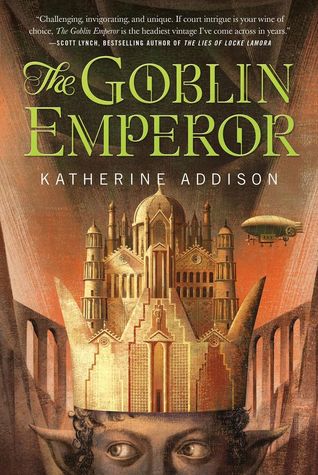

You don't have to do this, but it's a lot of fun to look up the myths being referenced as you go. There will be various parts where it can get weird but it's actually just being very clever.
It's also funnier than Stephenson, probably since his Cryptonomicon days.
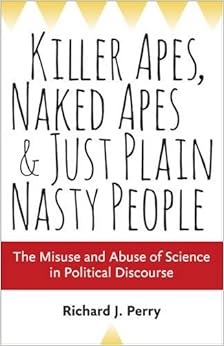
Finished Killer Apes, Naked Apes, and Just Plain Nasty People
Killer Apes, Naked Apes, and Just Plain Nasty People is a fantastic nonfiction book that works to refute the latest discoveries in the realm of our genes dictating our lives.
Huge fan of this book. Might have to read it again.Seven Gothic Tales by Karen Blixen was boring and couldn't get into it, so putting it on the back burner for Let Me In by John Ajvide Lindqvist.

I strongly disagree. The Martian's humor was mostly internet jokes of the "Haha. Mark Watney is a nerd like me!" variety. Meanwhile something like the Baroque cycle is full of humor of all types, and much of it comes from the way scenes are framed rather than one-liners.
I've been reading another web serial recently (I've previously talked about Worm and of course HPMOR). This one is slightly harder to recommend as whole-heartedly as the other two... but I'll save that for the end.
The story is "Mother of Learning," and here's how the author totally undersells it:
It's a lot more fun than he makes it sound. The main character is great. He starts off as a grouchy teenage misanthrope who just wants to be left alone to do his oywn thing, but he grows and learns a whole lot over the course of the story, while never losing his core. He's not absurdly overpowered or a great hero or a chosen prophesied one or anything like that--another character fills that role. Zorian is just stubborn and a little bit paranoid and willing to buckle down and do the hard work.
okay, so aside from the use of 'genetics' for the purposes of dehumanization and political shoutings that fit such purposes, how well does he differentiate between 'genetic hypothesises' and 'evolutionairy psychology'? Because while those are commonly associated in the reporting media, not serious scientist would claim them at the same time in any type of firm 'I has got my some evidence' voice. They are very different fields, and usually have nothing to do with one another.
The other part of my inquiry here is whether he actually proved counter-proof of that IQ statement. I accept the hypothesis that IQ isn't necessarily hereditary, but I also know (as kind of a social fact) that education of parents predicts education of children, and presumably that means they tend to have similar levels of IQ (but perhaps not in the same modules, which is how you could counter that argument). So my second question here, because I'm interested enough to consider reading this at some point, is whether he present a sufficient body of evidence for what I presume is his own claim (though more likely yours in that post) of a lack of hereditary IQ.
If it's just an essay on political language I will have to pass, but a good science argument is worth it.
Wait wat. The premise of the book is that genes have no influence over behavior, intelligence, etc, whatsoever? What a bizarre claim. It's pretty well accepted now that most outcomes are somewhere around 50/50 nature/nurture.
The problem would be which genes, there is still no gene for intelligence. http://www.nature.com/news/smart-genes-prove-elusive-1.15858
Studies of twins have repeatedly confirmed a genetic basis for intelligence, personality and other aspects of behaviour.
Right, of course. Intelligence is vastly complicated, of course it's not going to boil down to a single gene. But this is in the second paragraph of what you just linked:
Yes the book is focused on people claiming there is a single gene controlling "aspect of interest". It did mention the twin study but saying it is more complex then a single "gene"
That's a total sideshow, though. Whether it's a single gene or something more complex doesn't have any real bearing on whether intelligence is heritable, which it obviously is.
Studies of twins have repeatedly confirmed a genetic basis for intelligence, personality and other aspects of behaviour. But efforts to link IQ to specific variations in DNA have led to a slew of irreproducible results. Critics have alleged that some of these studies' methods were marred by wishful thinking and shoddy statistics. A sobering editorial in the January 2012 issue of Behavior Genetics2 declared that “it now seems likely that many of the published findings of the last decade are wrong or misleading and have not contributed to real advances in knowledge”.
Then the line that you quoted also says
So just to be clear, his claim, which you're repeating, is that intelligence is not heritable at all, and that it's 100% nurture?
The writer is against biological determinism, which would mean he is against claiming that intelligence would be inherited on genes. He refutes the claims of inherited intelligence from parents, based on studies showing that students in which children in disadvantaged backgrounds being given early childhood education enrichment opportunities could get caught up and perform just as well as students from non disadvantaged ("intelligent, people with "good genes") backgrounds. He is a supporter of the belief that this behavior is dictated by social cues, He claims that there is currently no gene or complex of genes for intelligence and that studies have not given evidence to support this.


Yes the book is focused on people claiming there is a single gene controlling "aspect of interest".
I dont think you could use the twin study for intelligence when there is no gene, how could you have a genetic basis if a gene or gene complex for that aspect doesnt exist?
Huge fan of this book. Might have to read it again.
So just to be clear, his claim, which you're repeating, is that intelligence is not heritable at all, and that it's 100% nurture?