
Who are these people? Aside from the fact that you not liking those movies doesn't mean anything as far as their quality, the people bringing up Iron Man 3 and Age of Ultron have been fans of Batman v Superman bringing those movies up out of nowhere to justify their "fuck critics" nonsense.Ahh, I misinterpreted your gif. It's just weird people trying to keep some of the weakest Marvel movies like I3 or AoU as any sort of good standard for comic book movies lol.. If quality meant sales, we would see different CBM movies at the top in terms of sales.
-
Hey Guest. Check out your NeoGAF Wrapped 2025 results here!
You are using an out of date browser. It may not display this or other websites correctly.
You should upgrade or use an alternative browser.
You should upgrade or use an alternative browser.
Wkd BO 0325-2716 - Batman vs Superman (or Grindr hookup gone sideways) bests Bunny
- Thread starter xaosslug
- Start date
- Status
- Not open for further replies.
I have no idea who that is.
Some dude
Colonel Nasty
Member
Nah. Grow a thicker skin, guys.
Plus, stuff like the SS trailer, the TDK trilogy, and the Arrowverse shows are almost universally praised. Man of Steel was a mess, and all the furor around it was them keeping the exact same creative minus some rewrite. And based on the critical reception of the film, it was warranted. I guarantee WB mixing up the creative team would help perception. No one wants these movies to be bad.
Iron Man 3 is an interesting film from a box office perspective, because it seemed to blow up vs the first two films domestically, but most of that was just IMAX/3D surcharges. Same with the last Potter. Both likely had single digit attendance increases.
Overseas was a different story obviously. That's where the "Avengers effect" really took place.
Overseas was a different story obviously. That's where the "Avengers effect" really took place.
Future Foundation
Member
Nah. Grow a thicker skin, guys.
Some don't usually see it as a "thicker skin" thing. Especially since there's been a good bit of criticism about the movie in that thread.
Well shit, now we have to have a 2 page discussion about how awesome Iron Man 3 is.
I'm kidding, let's not.
But seriously Iron Man 3 is awesome.
I used to not like it, but it's grown on me during rewatches. Besides isn't TDW usually considered "weakest" - or weaker than IM3?
Seems like the opposite to me, people having to make sure everyone knows how bad the movie is
Nah, everyone can see Rotten Tomatoes for themselves. It's not exactly a hidden secret that the majority of critics found this movie average at best. Even on GAF, which probably has a disproportionate amount of DC/Batman fans compared to the real world, the movie is getting mixed reactions.
The fact of the matter is, so many people here hyped themselves to a ridiculous level, to the point that even if the movie was just Batman riding a magical flying giant log of shit for three hours, they would have loved it because they've invested so much in it emotionally before it even came out.
Personally, Batman is my favorite superhero and Nolan's Batman movies are three of my favorite movies of all time. I had a sinking feeling that this movie was going to be a stinker when I heard Snyder was attached to it, but there was a part of me that was hopeful. Now that we know the movie isn't great, honestly the best thing would be for this movie to under perform and we get an actual competent director at the helm as a result.
The stuff about critics getting paid off/having a bias/trying to sink the movie has been really...strange to behold. Especially since I'm willing to bet most critics don't think of themselves as word of God or anything like that, nor are they coming in with any preconceived desire to demolish a film.
Have you seen the OT threads for this movie in the last three years? Did you see the RT/Review threads? I can't exactly blame them.
It's an especially ridiculous notion considering that one of the most scathing reviews was posted by EW, a media outlet owned by WB.
Yes it is and it has also been brought up constantly in every Batman v Superman thread.I used to not like it, but it's grown on me during rewatches. Besides isn't TDW usually considered "weakest" - or weaker than IM3?
Some don't usually see it as a "thicker skin" thing. Especially since there's been a good bit of criticism about the movie in that thread.
I used to not like it, but it's grown on me during rewatches. Besides isn't TDW usually considered "weakest" - or weaker than IM3?
I find the film boring but there are parts of it that are brilliant and subversive and at least the Shane Black-isms make it stand out.
(We'll pretend that Wonder Woman counted for two Falcons because, let's be honest, no one goes to the movies to see Falcon).

Future Foundation
Member
It's an especially ridiculous notion considering that one of the most scathing reviews was posted by EW, a media outlet owned by WB.
Someone from EW (I think it was the actual reviewer) said something to the effect of "WB and EW don't share a partner" or "WB doesn't own EW". Basically, there's no real connection.
I have no idea who that is.
A poster from gaming side that is known for often using descriptive language subscribing actions and fictional conversations between other GAF members and fictional characters or celebs.
Someone from EW (I think it was the actual reviewer) said something to the effect of "WB and EW don't share a partner" or "WB doesn't own EW". Basically, there's no real connection.
Let's entertain the idea that Time Inc(parent company of EW) no longer has any connection to Time Warner(which I find hard to believe), the idea that 200 reviewers collaborated to take down this movie, despite no evidence of any sort of benefit for them to do so, is about as ludicrous a conspiracy theory as any other you can think of.
Nah, everyone can see Rotten Tomatoes for themselves. It's not exactly a hidden secret that the majority of critics found this movie average at best. Even on GAF, which probably has a disproportionate amount of DC/Batman fans compared to the real world, the movie is getting mixed reactions.
The fact of the matter is, so many people here hyped themselves to a ridiculous level, to the point that even if the movie was just Batman riding a magical flying giant log of shit for three hours, they would have loved it because they've invested so much in it emotionally before it even came out.
Personally, Batman is my favorite superhero and Nolan's Batman movies are three of my favorite movies of all time. I had a sinking feeling that this movie was going to be a stinker when I heard Snyder was attached to it, but there was a part of me that was hopeful. Now that we know the movie isn't great, honestly the best thing would be for this movie to under perform and we get an actual competent director at the helm as a result.
This is exactly how I feel. Glad for those who enjoy this film, but I am most certainly not one of them (for about 2/3 of the film). And I actually really like some of Snyders films (300, Dawn of the Dead, Watchmen).
I am totally in for Batman by Affleck though, and still look forward to suicide squad.
BronsonLee
Member
A poster from gaming side that is known for often using descriptive language subscribing actions and fictional conversations between other GAF members and fictional characters or celebs.
Sounds a lot like me!
Yes it is and it has also been brought up constantly in every Batman v Superman thread.
We talking about Thor 2 again? *drink*
We talking about Thor 2 again? *drink*
Thor 2, more like ThorFUL 2... am I right?
I don't think that there was even this much discussion about Thor 2 when it was in theaters.We talking about Thor 2 again? *drink*
Future Foundation
Member
Yes it is and it has also been brought up constantly in every Batman v Superman thread.
Shit, my bad. I didn't know.
What's with the "fuck da critics" stuff around this movie? Is this like "librul media"? I don't remember another movie having this kind of effect to this degree.
DAYUM. But accurate.
Future Foundation
Member
Not really fair to pit one Ant-Man against both Batman AND Superman. Can Batman and Superman bring in one Ant-Man's worth of Box Office each? Stay tuned!
(We'll pretend that Wonder Woman counted for two Falcons because, let's be honest, no one goes to the movies to see Falcon).
I'm going to see Civil War - and I'm gonna see Falcon in it. That counts, right?

-Plasma Reus-
Service guarantees member status
I ain't going to lie. I hope the movie does well so that I get another DC movie from Snyder and co, which I hope will be a better one.
Let's hope it goes well beyond a billie.
Let's hope it goes well beyond a billie.
I ain't going to lie. I hope the movie does well so that I get another DC movie from Snyder and co, which I hope will be a better one.
Let's hope it goes well beyond a billie.
I understand your hope, I do, but fool me once (Man of Steel) shame on you, fool me twice (Batman vs. Superman) shame on me.
in a way it's like Batman and Batman returns.
Snyder was a little leashed with MoS (But it was still mostly Snyderiffic), and he went unleashed and completely fucking bonkers for BvS.
Needs a non-downer of a fucking superhero movie in the theaters
And it was merchandised to kids because Warner don't know how else to make a superhero film. The analogy works!
did you know Joel Schumacher hasn't done any directing work since doing a couple of episodes in the first series of House of Cards?
Ahh, I misinterpreted your gif. It's just weird people trying to keep some of the weakest Marvel movies like I3 or AoU as any sort of good standard for comic book movies lol.. If quality meant sales, we would see different CBM movies at the top in terms of sales.
I do expect Civil War to be the better film due to the Russos and sell more than this though, esp since Spidey is in.
First off, the fact that the quality of a film doesn't always translate to higher grosses does not mean sales are never in some part a product of a film's quality.
Secondly, people have brought up IM3 and AoU during the discussion as a way to bash them, not because they're considered the standard for good comic book movies as you put it. In turn, many responded to the contrary saying they enjoy them because plenty of people do. Just like plenty of people enjoy MoS. A sizeable number on gaf are already notable for being fans of BvS. I'm fairly confident history wont remember BvS as being better than any of those though. At least MoS is a technically solid film without the glaring structural issues of BvS (though MoS does have an opening that's way too long). Obviously there will be some people that disagree on a personal level but IM3, AoU, and probably MoS were better liked during their release compared to BvS, by critics and fans alike. And there's something to be said about the fact that a movie with both Batman and Superman wont beat the last Iron Man movie at the box office.
Future Foundation
Member
in a way it's like Batman and Batman returns.
Snyder was a little leashed with MoS (But it was still mostly Snyderiffic), and he went unleashed and completely fucking bonkers for BvS.
Needs a non-downer of a fucking superhero movie in the theaters
Scott Mendelson made this exact same comparison in a recent article:
Second of all, there is a pretty obvious precedent for franchise rehabilitation of this nature. After all, Warner Bros. did it once before with the Batman franchise nearly 25-years ago.
Batman Returns broke the opening weekend record with a $47.7 million debut but soon collapsed due to its not-so-crowd-pleasing content and child-unfriendly sex and violence. The film earned $162m domestic, good for the biggest movie of the summer. But it had dropped a then-huge 45% in weekend two and was in-and-out-of-theaters in six weeks. Within weeks of the debut, Warner Bros. was wringing its hands about how to save their crown jewel property. The status quo that was Tim Burtons Batman universe could not stand.
Because even though the film made a lot of money, it was clear that the template provided by Tim Burtons Batman Returns was not going to guarantee anywhere near as much interest in a third film. Tim Burton was indirectly shown the door, taking Michael Keaton with him. Joel Schumacher came aboard with Val Kilmer for what turned out to be a more crowd-pleasing and kid-friendly Batman Forever three years later.
They reconfigured the franchise and were able to produce a somewhat lighter and more adventure-ish blockbuster action movie, complete with prime star+concept casting (Jim Carrey as The Riddler). Batman Forever made significantly more money worldwide ($336 million versus $266m) than Batman Returns and, for a moment, the franchise was saved.
Bobby Roberts
Banned
I ain't going to lie. I hope the movie does well so that I get another DC movie from Snyder and co, which I hope will be a better one.
Let's hope it goes well beyond a billie.
I think hitting a billion is still possible. I don't think "well beyond" is in the cards, though.
Batman Returns still more of a superhero movie than this... 'thing'.

Bobby Roberts
Banned
The "holiday monday" phenomenon re: Easter is so weird to me. It has to be a recent thing, right? I'm old as shit, but it sure as hell was never a thing in my entire schoolgoing career.
Is it just that Easter is landing on a weekend that immediately precedes a lot of schools going on spring break?
Is it just that Easter is landing on a weekend that immediately precedes a lot of schools going on spring break?
Kids in my class are watching it on streaming sites, only two went and saw the movie in the cinema :/
They liked it though.
How can someone watch a 2.5 hour film in such shit quality?
The "holiday monday" phenomenon re: Easter is so weird to me. It has to be a recent thing, right? I'm old as shit, but it sure as hell was never a thing in my entire schoolgoing career.
Is it just that Easter is landing on a weekend that immediately precedes a lot of schools going on spring break?
I think its regional. Ontario has had Easter Monday off since I started school nearly 30 years ago.
Obviously the holiday business helps, but Zootopia's 4th Monday is larger than the previous 3 mondays. The film made $4.74M yesterday. Its previous best Monday was $4.6M during its second Monday.
Zootopia's run has been completely fascinating, it's been quietly doing wacky shit like this since it came out. Now Monday #4 is its highest, WTF.
Probably ~2 weeks before it and BvS have a streams crossing moment.
Zootopia's run has been completely fascinating, it's been quietly doing wacky shit like this since it came out. Now Monday #4 is its highest, WTF.
Probably ~2 weeks before it and BvS have a streams crossing moment.
It will pass Lego movie on Thursday or Friday.
Inside Out made $28.2M during its fourth week of release. Zootopia has already topped that with 3 days to spare. Inside Out's 5th week (starting this Friday comparatively) was a little over $15M. Zootopia will easily top that just from its weekend gross this coming weekend.
Inside Out made another $70M after this point in its run. If Zootopia simply matched that, it would pass $315M domestic.
Considering its run so far and lack of upcoming competition, I don't know what a reasonable end point for Zootopia is. $325-350M?
JadedWriter
Member
I saw it....on cable and kind of died a little bit on the inside.Speed Racer?
Oh wait, no one actually watched that.
Disney Animation has had some fascinating BO runs OS recently. Frozen going ape shit in Japan and grossing 200M and now Zootopia breaking records in China.
If Japan digs Zootopia, and BvS doesn't pick up in the legs department, Zootopia will beat Batman v Superman worldwide.
As of now, $900M to $1B is looking likely for Zootopia.
BronsonLee
Member
If Japan digs Zootopia, and BvS doesn't pick up in the legs department, Zootopia will beat Batman v Superman worldwide.
As of now, $900M to $1B is looking likely for Zootopia.
Not bad at all for a dumb bunny
Not bad at all for a dumb bunny
You're probably a easter mark
Not bad at all for a dumb bunny
Justice League scrapped for Batman v Looney Toons
EDIT: Opening scene will show the aftermath of Bugs sawing Florida off the map.
Dash_Riprock
Member
True. More competent management would have taken one look at MoS' reception and concluded that Snyder was exactly the wrong person to launch a DCCU.
I think this THR article from last year on WB's managerial approach to universe-building deserves another read:
http://www.hollywoodreporter.com/news/superman-batman-dcs-real-battle-792190
Holy Fucking Shit.
To anyone who thinks the WW movie even has a chance of being good, read this article...
Bobby Roberts
Banned
EDIT: Opening scene will show the aftermath of Bugs sawing Florida off the map.
"The world is introduced...to the WASCALLY"
BWUUUHHHHH, BWUH BHUHH HUHHH BWUUUUUHHHHH, BWUUUUUUHHH
Holy Fucking Shit.
To anyone who thinks the WW movie even has a chance of being good, read this article...
A source not involved in the films but with close ties to the studio says the process on Wonder Woman "felt like they were throwing shit against the wall to see what stuck."
AYY LMAO!
BronsonLee
Member
You're probably a easter mark
I shit you not, I thought Easter was last week
Justice League scrapped for Batman v Looney Toons
EDIT: Opening scene will show the aftermath of Bugs sawing Florida off the map.
AND BATMAN IS INSIDE ORLANDO
"The world is introduced...to the WASCALLY"
BWUUUHHHHH, BWUH BHUHH HUHHH BWUUUUUHHHHH, BWUUUUUUHHH
OH MY GOOOOODDDD
yankeehater
Member
Justice League scrapped for Batman v Looney Toons
EDIT: Opening scene will show the aftermath of Bugs sawing Florida off the map.
Batman and Elmer Fudd team up to kill Bugs.
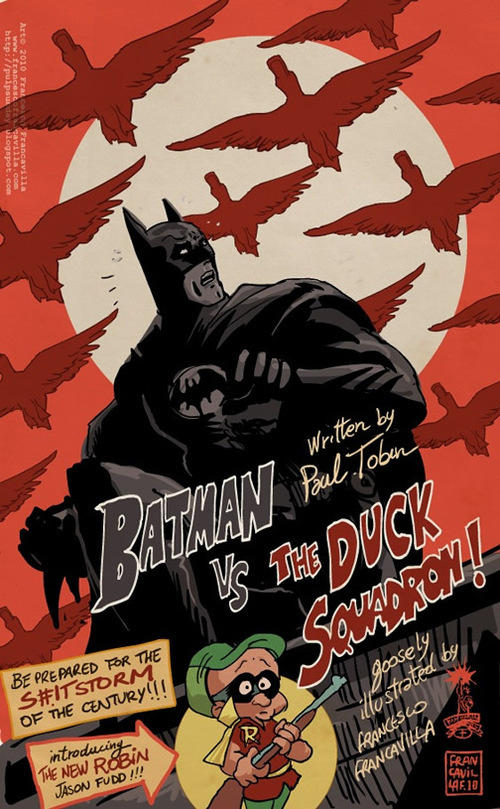
Future Foundation
Member
AND FUDD IS INSIDE ORLANDO
Or would it be Daffy? Or would Daffy be Lex?
Holy Fucking Shit.
To anyone who thinks the WW movie even has a chance of being good, read this article...
You do realise this happens a fair bit in Hollywood, right?
Justice League scrapped for Batman v Looney Toons
EDIT: Opening scene will show the aftermath of Bugs sawing Florida off the map.
It's Tunes dammit! TUNES!! Also LMAO
True. More competent management would have taken one look at MoS' reception and concluded that Snyder was exactly the wrong person to launch a DCCU.
I think this THR article from last year on WB's managerial approach to universe-building deserves another read:
http://www.hollywoodreporter.com/news/superman-batman-dcs-real-battle-792190
A source not involved in the films but with close ties to the studio says the process on Wonder Woman "felt like they were throwing shit against the wall to see what stuck."
Ah! The ole' manatee writing method.
- Status
- Not open for further replies.