
-
Hey Guest. Check out your NeoGAF Wrapped 2025 results here!
You are using an out of date browser. It may not display this or other websites correctly.
You should upgrade or use an alternative browser.
You should upgrade or use an alternative browser.
What are you reading? (October 2015)
- Thread starter Maklershed
- Start date
- Status
- Not open for further replies.

No offence to your lecturer, but if he gives students poor grades for writing an essay about one of the greatest authors of all time, he's a bit of a tool
I'd argue if a student hands in an essay on a subject they fully know the marker dislikes, then that's their problem. As much as I like one of my favourite novels The Great Gatsby, I'd never give an anti-Fitzgerald English teacher a Gatsby essay. Good grades in subjective courses are as much down to psychological games as they are to academic excellence.
I'd argue if a student hands in an essay on a subject they fully know the marker dislikes, then that's their problem. As much as I like one of my favourite novels The Great Gatsby, I'd never give an anti-Fitzgerald English teacher a Gatsby essay. Good grades in subjective courses are as much down to psychological games as they are to academic excellence.
Er.. Say what? a half decent teacher ought to be able to discern a good essay from a bad one regardless of their own position.
D
Deleted member 125677
Unconfirmed Member
I'd argue if a student hands in an essay on a subject they fully know the marker dislikes, then that's their problem. As much as I like one of my favourite novels The Great Gatsby, I'd never give an anti-Fitzgerald English teacher a Gatsby essay. Good grades in subjective courses are as much down to psychological games as they are to academic excellence.
If you're grading essays according to how you like whatever they're about, and not according to their qualities as essays, you're not fit to be a teacher.
Finished:
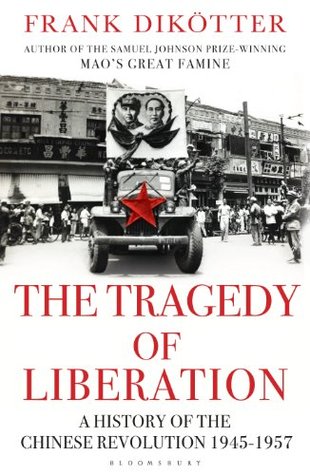
The Tragedy of Liberation: A History of the Chinese Revolution 1945-1957 by Frank Dikötter
Currently reading:
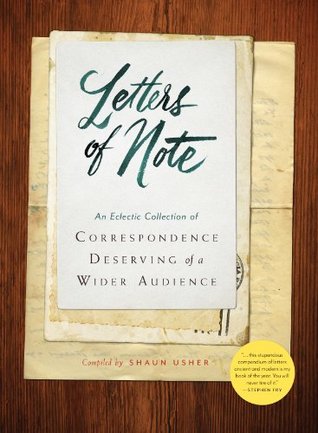
Letters of Note: An Eclectic Collection of Correspondence Deserving of a Wider Audience by Shaun Usher
Already read a very interesting letter about life goals by Hunter S so totally worth the bargain price on Amazon.
The Tragedy of Liberation: A History of the Chinese Revolution 1945-1957 by Frank Dikötter
An incredible, meticulously researched, breathtakingly powerful account of China post-Nationalists and pre-Great Leap Forward, detailing a campaign of terror and violence and, indeed, reform that transformed a nation. The sheer scale and power of the Party and of Mao's words and twisting public ideals is laid bare, although it offers no great insight into the mind of the man himself; more a general, all-encompassing history of the Chinese Revolution, spotted with anecdotes of some who survived (and many who did not). "Tragedy" is the correct moniker to describe it, for though the Nationalists may have been - in fact, probably were - 'bad', it is impossible to view the Party's takeover as anything other than a tragedy. Even putting aside the mass campaigns of murder and rape, terror and theft, of turning neighbour against neighbour and tearing villages apart, of the utter decimation of China's intelligensia and higher educational institutes and much of its culture, all for the purposes of securing the power necessary to change the country - setting these horrors aside, the Revolution failed to do what it set out to do, killing thousands - perhaps millions - in the process.
As it only covers China's history up to the year 1957, the book ends somewhat abruptly, which is disappointing but difficult to fault.
Currently reading:
Letters of Note: An Eclectic Collection of Correspondence Deserving of a Wider Audience by Shaun Usher
Already read a very interesting letter about life goals by Hunter S so totally worth the bargain price on Amazon.
If you want to continue the story you should read Mao's Great Famine
If you want to continue the story you should read Mao's Great Famine
d00d, i need a break for a while :T
only so much 'my grandparent's country ate itself' i can take
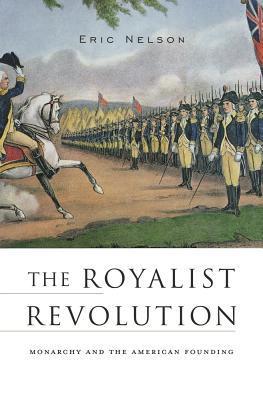
Piecake, two books I found out about recently that you might find interesting:
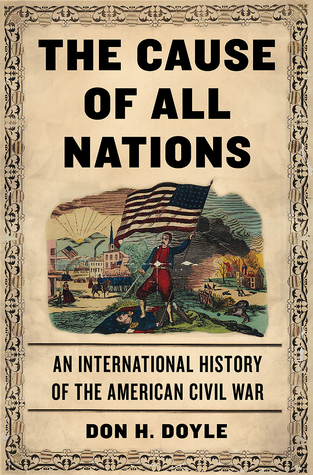
Interesting, Ive read this

And found the quite fascinating because it put the Civil War in a more global perspective. Your book seems to do that and then some. It looks quite fascinating and will be interesting to see if and/or how he connects global democratic movements together.
As for the other one, that definitely is an interesting argument and a book that I will read eventually just for that, but I am rather skeptical. From the goodreads blurb, it makes it seem like these royalists would have been fine if the King was the one who was issuing the Stamp Act, Townsend Acts, Intolerable Acts, etc. Maybe he somehow proves that, but from my reading so far on the revolution and the figures of the revolution, I think that is rather ridiculous. But hey, I definitely could be totally wrong, and he might surprise me with some excellent evidence and interpretations, which is the reason why I definitely will get around to reading it.
They were against all of those things because of arbitrary power and the threat to American liberty and rights, not because it was Parliament that was doing it. They would have been against it if the King was doing it as well. Certainly, there were revolutionaries who professed admiration for the English system and wanted a strong executive, but I woiuldnt call these people royalists, monarchs, or people who would have stayed loyal to the Empire if the King ruled over them instead of Parliament. They were still Republicans. They just imbued more of British 'Court' ideology than British 'Country' ideology. The experience of being in the Army during the Revolutionary War, I think, was another major factor that moved people towards a stronger executive and a more centralized, powerful state.
And any sentiment about wanting the King to govern them directly is simply an idea that was quickly disabused that the King actually cared about them, wouldnt do that to them if he knew/had power, and if only Parliament was out of the way then it would be fixed.
But yea, thanks for the recommendations. I think these will be two books that I read after my American history project though since they seem to be a little too niche for what I want to do right now.
New Mistborn book out today!

Nice! My current plan is to finish Aeronauts Windlass from Butcher and then move over to Alloy of Law.
What are the GAF's impressions of Sanderson's Legion series?
Nice! My current plan is to finish Aeronauts Windlass from Butcher and then move over to Alloy of Law.
What are the GAF's impressions of Sanderson's Legion series?
I think its a massive shame the Legion books are as short as they are, really interesting idea for a character that I would love to see in a book in the 400-500 page range.
As for my October books, only read these so far.
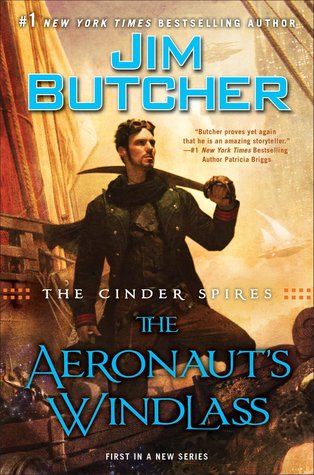
I enjoyed The Aeronauts Windlass despite my subconscious mind complaining it wasn't a Dresden book for the 1st 10-20% of it. I'm curious to know how many books there are planned for this series, I know he has signed on for 3 so far but the world it so different from a standard 'Earth' that 3 books doesn't seem like enough for general world building alongside the main story.
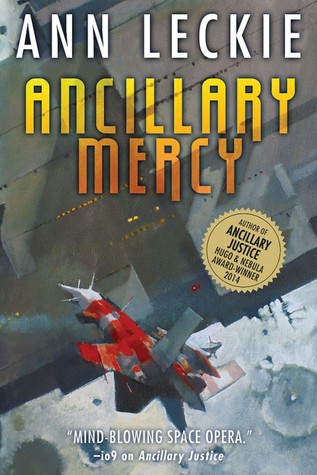
Ancillary Mercy ended the trilogy nicely, I don't know if the author plans continue the books in this universe or move onto something new, If this was the last based in the Imperial Radch universe then I think things were tied up quite nicely.
Interesting, Ive read this
And found the quite fascinating because it put the Civil War in a more global perspective. Your book seems to do that and then some. It looks quite fascinating and will be interesting to see if and/or how he connects global democratic movements together.
As for the other one, that definitely is an interesting argument and a book that I will read eventually just for that, but I am rather skeptical. From the goodreads blurb, it makes it seem like these royalists would have been fine if the King was the one who was issuing the Stamp Act, Townsend Acts, Intolerable Acts, etc. Maybe he somehow proves that, but from my reading so far on the revolution and the figures of the revolution, I think that is rather ridiculous. But hey, I definitely could be totally wrong, and he might surprise me with some excellent evidence and interpretations, which is the reason why I definitely will get around to reading it.
They were against all of those things because of arbitrary power and the threat to American liberty and rights, not because it was Parliament that was doing it. They would have been against it if the King was doing it as well. Certainly, there were revolutionaries who professed admiration for the English system and wanted a strong executive, but I woiuldnt call these people royalists, monarchs, or people who would have stayed loyal to the Empire if the King ruled over them instead of Parliament. They were still Republicans. They just imbued more of British 'Court' ideology than British 'Country' ideology. The experience of being in the Army during the Revolutionary War, I think, was another major factor that moved people towards a stronger executive and a more centralized, powerful state.
And any sentiment about wanting the King to govern them directly is simply an idea that was quickly disabused that the King actually cared about them, wouldnt do that to them if he knew/had power, and if only Parliament was out of the way then it would be fixed.
But yea, thanks for the recommendations. I think these will be two books that I read after my American history project though since they seem to be a little too niche for what I want to do right now.
Well, I don't know, not having read it! I can only say that it seemed like something you could make a plausible case for based on what I remembered from the Open Yale intro course on the American Revolution that I'd listened to. If you're interested in the author's arguing his case, you might find this response to a (generally positive) review interesting. No doubt the book goes into more detail.
Since I read seven books in about 6 weeks from the middle of march to the end of April, I've totally been slack and barely touched a book since..... Anyway after a lengthy lay off I'm raring to get back into it... I decided to start it off with...
Gardens of the Moon by Steven Erikson

Nearly half way through it and I like what I've read so far, guess I'm in for the long haul eventually... after this I plan to finish off 4 novels I got about quarter through but stopped for various reasons.... (mostly because I started reading something else and just never got back to them...) Annihilation, The Blade Itself, The Hero of Ages & Royal Assassin.
After that I'll either move onto book 2 of The Malazan Book of the Fallen, finish off the Farseer trilogy or The Riftwar Saga.... or even maybe take a break from fantasy....
I was aiming to get through 50 novels this year but that looks outta reach, oh well I'll be happy with half of that.
Gardens of the Moon by Steven Erikson
Nearly half way through it and I like what I've read so far, guess I'm in for the long haul eventually... after this I plan to finish off 4 novels I got about quarter through but stopped for various reasons.... (mostly because I started reading something else and just never got back to them...) Annihilation, The Blade Itself, The Hero of Ages & Royal Assassin.
After that I'll either move onto book 2 of The Malazan Book of the Fallen, finish off the Farseer trilogy or The Riftwar Saga.... or even maybe take a break from fantasy....
I was aiming to get through 50 novels this year but that looks outta reach, oh well I'll be happy with half of that.
Narrative of the life of Frederick Douglass.[An American Slave]; written by himself.
Quoting my self, as I have read the entire thing over the course of a working day. I had heard that this is perhaps the best American Slave story from the point of view of a former slave. And I would agree to that statement.
Add this, if you haven't already read it, to your Required Reading list.
----
On to The Communist Manifesto. By Friedrich Engels and Karl Marx.
RunTheBrules
Member
Just finished "Go Set A Watchman," and man was it just so . . . meh. Had potential to be a great book, but it screws itself over by pretty much ignoring the events that occurred in TKAM. Definitely could have used a rewrite. It just reads like a first draft at times.
Now on to my favorite author, Kurt Vonnegut. Currently reading "Cat's Cradle," and man did I miss Vonnegut. I read "Breakfast of Champions" and "Slaughterhouse-Five" about two years ago, and have just been reading other stuff in the meantime. I love his prose, ideas, and wit so much that when I was student teaching, I made my 9th graders read "Harrison Bergeron" during their short story unit.
Now on to my favorite author, Kurt Vonnegut. Currently reading "Cat's Cradle," and man did I miss Vonnegut. I read "Breakfast of Champions" and "Slaughterhouse-Five" about two years ago, and have just been reading other stuff in the meantime. I love his prose, ideas, and wit so much that when I was student teaching, I made my 9th graders read "Harrison Bergeron" during their short story unit.

Dandy Crocodile
Member
Just finished "Go Set A Watchman," and man was it just so . . . meh. Had potential to be a great book, but it screws itself over by pretty much ignoring the events that occurred in TKAM. Definitely could have used a rewrite. It just reads like a first draft at times.
That's probably because it is a first draft. It doesn't ignore events, though. When it was written TKAM didn't exist yet in the form we know it.

Veritigo_X
Member
A Brief History of Seven Killings by Marlon James

Been meaning to pick this up for awhile now after the positive press it's received over the last year. Ended up getting it on my lunch break and read the first few pages. Plan on fully diving into it once I'm off.
Been meaning to pick this up for awhile now after the positive press it's received over the last year. Ended up getting it on my lunch break and read the first few pages. Plan on fully diving into it once I'm off.
Maklershed
Member
Gonna start tomorrow:
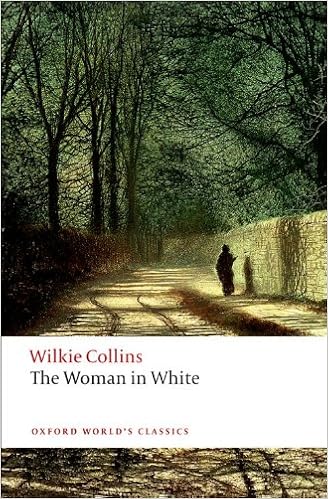
Have you read Drood? I'd be curious to know how this is.
sparky2112
Member
Have you read Drood? I'd be curious to know how this is.
Collins obviously lived firmly in Dickens's shadow, and I think general consensus is that he didn't deserve to - that his work stood pretty well on its own. Having said that, I have yet to read this. Very generally speaking, if something is still around from that era, it deserves to be.
Have you read Drood? I'd be curious to know how this is.
Not yet. I've just recently started reading again, switched to English books (original language) and thus have a lot of "catch-up" to do. Add to that that I only read about 30-45 minutes per day on the way back from work. So "catching up" might take a while.
I've already considered reading more, especially during the weekends when I apathetically waste my time on the internet but it's hard.
Atraveller
Banned
How's the first one?New Mistborn book out today!

Jag
Member
How's the first one?
The first Mistborn series or the first book of the 2nd trilogy (Alloy of Law)? This is the 2nd book in the 2nd trilogy (so the 5th Mistborn book) which takes place 300 years after the events in the first Mistborn series.
Mistborn is very enjoyable, escapist fantasy with a different take on magic and how it works. It's typical Sanderson worldbuilding and character development and recommended if you like his work. I'm a big fan of the series.
The Final Empire is Book 1.
Parmadillo Marshmallow
Member
Picked up Futuristic Violence and Fancy Suits on release day yesterday. It's even better/wackier than John Dies at the End and This Book is Full of Spiders.
MrOogieBoogie
BioShock Infinite is like playing some homeless guy's vivid imagination

Started my first Murakami novel recently after hearing many great things about him.
I'm loving many things about this book. About a third of the way through it and I just read one of the most gruesome, revolting passages of my life:
The in-depth detailing of a soldier being skinned alive from head to toe.
Holy shit. I needed to put the book down for a bit after that.
The first Mistborn series or the first book of the 2nd trilogy (Alloy of Law)? This is the 2nd book in the 2nd trilogy (so the 5th Mistborn book) which takes place 300 years after the events in the first Mistborn series.
Mistborn is very enjoyable, escapist fantasy with a different take on magic and how it works. It's typical Sanderson worldbuilding and character development and recommended if you like his work. I'm a big fan of the series.
The Final Empire is Book 1.
Shadows of Self is technically the first volume of a new trilogy. The Alloy of Law (which features the same characters and sets up Shadows of Self) is technically a standalone novel that creates a bridge between the two trilogies.
(The Mistborn Trilogy)
The Final Empire
The Well of Ascension
The Hero of Ages
The Alloy of Law
(The Wax & Wayne Trilogy)
Shadows of Self
The Bands of Mourning
The Lost Metal (tentative title)
Jag
Member
Ah, thanks. Wasn't sure. Great review for Shadows of Self by the way. I only just saw it....if you won't self promote, then I will!
Looks like Sanderson likes your review as well.
Looks like Sanderson likes your review as well.
Ah, thanks. Wasn't sure. Great review for Shadows of Self by the way....if you won't self promote, then I will!
Looks like Sanderson likes your review as well.
I was actually confused about this myself, until I recently had to clarify the situation because I was writing a piece about Sanderson's work.
And, thanks!
Well, I don't know, not having read it! I can only say that it seemed like something you could make a plausible case for based on what I remembered from the Open Yale intro course on the American Revolution that I'd listened to. If you're interested in the author's arguing his case, you might find this response to a (generally positive) review interesting. No doubt the book goes into more detail.
Thanks, I will definitely check it out. I am always up for a book/argument that can significantly change my views on a topic. I might hate it and be irritated by it or I might be convinced and totally love it. Either way, I will probably find it interesting, which is a win in my book.
Shadows of Self is technically the first volume of a new trilogy. The Alloy of Law (which features the same characters and sets up Shadows of Self) is technically a standalone novel that creates a bridge between the two trilogies.
The Alloy of Law
(The Wax & Wayne Trilogy)
Shadows of Self
The Bands of Mourning
The Lost Metal (tentative title)
That... doesn't make any sense. Alloy of Law was definitely not standalone.


Krauser Kat
Member
finishing up
Year of the Flood
margret Atwood.
The world is fun, and the characters are refreshing and strong in their own ways. a couple idiosyncrasies through out but otherwise a great book that compliments the first novel in ways that i have never seen a sequel do.
and 30% into
The final empire.
Fun magic system. Some of the characters a little cookie cutter at this point and its written very matter of fact. I want to dive into it more.
Next up is the new Butcher book and the second book in swordspoint series by kushner
Year of the Flood
margret Atwood.
The world is fun, and the characters are refreshing and strong in their own ways. a couple idiosyncrasies through out but otherwise a great book that compliments the first novel in ways that i have never seen a sequel do.
and 30% into
The final empire.
Fun magic system. Some of the characters a little cookie cutter at this point and its written very matter of fact. I want to dive into it more.
Next up is the new Butcher book and the second book in swordspoint series by kushner

Jag
Member
That... doesn't make any sense. Alloy of Law was definitely not standalone.
Maybe not a standalone, but a bridge between 2 trilogies or prequel or even a backstory. Sort of how Red Country was a standalone in the First Law world even though it contained characters from the trilogy.
Maybe not a standalone, but a bridge between 2 trilogies or prequel or even a backstory. Sort of how Red Country was a standalone in the First Law world even though it contained characters from the trilogy.
I don't mean in terms of having the same characters, but that it kicked off some longer-term plot stuff that was clearly meant to be followed up on in a sequel. There was that whole thing with kidnapped mistings and some kind of shadowy conspiracy, and I don't remember much about it but it definitely felt like part of an ongoing storyline.
I guess trilogy sounds better than quadrilogy for marketing purposes.
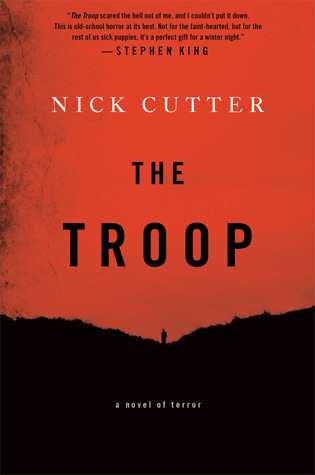
TestMonkey
Member
Found Ancillary Justice at my school's library so I decided to give it a shot after all the hype it's been getting here on GAF. The garbled gender pronouns is messing me up a little but besides that pretty good so far. Seems like Andromeda focused on the AI which isn't a bad thing.
Finished Flowers for Algernon today. Sad book, but worth reading. It's still $1.99 on Amazon for those interested.
Cheers for the heads up
/edit can't find it, is it a region-locked thing?
War Peaceman
You're a big guy.
Finished Kokoro.
It is fine and well characterised but it is obvious that he wrote the third part and then wrote parts one and two to give it some context and meaning, which leaves those parts feeling a bit functional.
It is fine and well characterised but it is obvious that he wrote the third part and then wrote parts one and two to give it some context and meaning, which leaves those parts feeling a bit functional.
- Status
- Not open for further replies.