• Hey Guest. Check out your NeoGAF Wrapped 2025 results here!

Was the Dreamcast actually powerful at launch? Or the beneficiary of no competition?

Was the Dreamcast a powerhouse at launch?

  • No

    Votes: 124 10.9%
  • Yes

    Votes: 1,015 89.1%

  • Total voters
    1,139
More revived Dreamcast online multiplayer.
I felt like exploding some stuff so I put Incoming in. It's one underrated 1998 launch title. It was also a lauded pack in for Voodoo 2 cards. Tons of on screen action, real time lights, shadows, endless projectiles, transparencies for smoke/fire, enemies and structures shatter into individual polygons as they explode etc., there's even some split screen co-op. I looked into the studio to see what else they made (even if not on DC) but I guess their potential remained unrealized and very tech demo style with no nuance in gameplay design even in later Xbox/PC titles like Gun Metal or Incoming Forces. It's sad, this engine would be great for some more serious, deeper, cooler cockpit games a la Gungriffon, MechWarrior, AMOK, Gundam Rise from the Ashes, Thunderstrike, or even some open terrain FPS stuff a la Delta Force (where they'd actually have to tone down the action and effects!). It would compare favorably to later games like Thunderstrike: Operation Phoenix with an art director. Its helicopters are nice (also play the best) but alien crafts look like programmer art. Anyway, it's hard to find decent footage so fools that fail basic directions like follow the arrow will have to do:​
Let's remember some good times from the thread's past while we're at it, straight from the resident experts who would only ironically imagine something like GTA III possible on a system they claimed was maxed out by PS ports like Re-Volt and was also essentially unable to do any transparencies..!​

So much talk of how it's impossible to stream, do transparency, or for an open world to run better than early tests with rendering full of purple glitches, missing assets, 5 fps, etc., now what's left is to cry at it running a tad worse than PS2 or some toned down effects with higher end PC content :messenger_tears_of_joy:
Airforce Delta/Deadly Skies is another fun launch game, panned for (not) being Ace Combat. It's not deep like Aero Dancing/Wings or pretty like Propeller Arena, textures/explosions aren't great and it didn't run in VGA (fan patches do), but is 60fps, attempts a neat cloud layer and has cool replays.​
 
Last edited:
I finally managed to set up my flight stick with RetroArch and figured I'll try more Dreamcast flight games. So far Airforce Delta controls the best with it because it's quite simple and you can use rudder on the twist axis and thrust is on buttons, other games have thrust on L and R instead of rudder so that won't work on the twist axis and you gotta do some more creative remapping (that is, if like me you don't like using the stick's tiny throttle lever for thrust, otherwise they're fine also, unless with too many complicated toggles like StarLancer) or just stick with the standard gamepad controls. I guess the real solution would be to be able to map my hotas' throttle piece as well and stick thrust there but I haven't figured out how to use Thrustmaster's dodgy software to combine it as one device as I think you can't set up multiple devices (except mkb) for the same player/port in RetroArch.

So anyway, because of that I just discovered that Iron Aces' Japanese version is actually a very different game. It's fictional WWII era stuff in all versions of course and I suppose they went that route because in Japan they wanted you to play as the Japanese but not explicitly for the Axis, lol. So most of the missions appear to be different with different characters and much more character driven story stuff in between. You often play from the reverse pov of the Iron Aces releases (ie attack vs defend x) but it also seems to be a longer game with more missions total. Idk if that makes it meaningfully better (it's considered pretty mid but I guess is ok for the era, not that dissimilar to Airforce Delta above, if less exciting looking without missiles and jets and things). The cockpits are nice and sharp looking (and even though they're transparent for visibility they're still 3D and affected by your machinegun muzzle flash etc.) and the explosions are maybe better animated than those in Airforce Delta though they're both pretty low poly looking overall but this was a budget game like Simple series stuff. Both of these have PS2 sequels too (Airforce Delta also has an Xbox sequel).​
 
Last edited:
Airforce Delta/Deadly Skies is another fun launch game, panned for not being Ace Combat. It's not deep like Aero Dancing/Wings or pretty like Propeller Arena, textures/explosions aren't great and it didn't support VGA (fan patches do), but is 60fps, attempts a neat cloud layer and has cool replays.​

AF Delta game total knock off of Ace Combat. The music, mission press screens and even says Bingo! after a kill.
 
I'd still give PS2 the edge overall, especially in areas related to geometry throughput and lighting, and non-opaque pixel fillrates, but the point is the gap between it and DC isn't really that massive of one most people who barely understand system architectures or go beyond basic paper specs would like to believe. If you take advantage of Dreamcast's hardware features with some thought & care, you can extract a lot out of the hardware.
This needs to be read over and over again by lotta folks on GAF and YT!
 
I didn't know they're actually making a DC game with Spiral Engine (same one that showed off the stencil shadow volumes and Doom 3 assets in a previous post), I thought they're just loading random assets to show off this or that feature, that's neat.


The SM64 port looks like it runs just about perfectly. However, I wish it got a graphical upgrade. Maybe people will do that in the future; we know the DC could easily get a better-looking version of that game running at 60. Maybe comparable with Sunshine for Gamecube.

Speaking of cancelled games getting finished, I'd really like if someone could finish that survival horror game Agatha. The concept sounded very novel and interesting, and the story seems like it'd of been a banger if the game were actually completed. Not like there aren't assets out there to use or build off of.


Oooh, makes me wonder what a R&C port to Dreamcast would look like 🤔...

This needs to be read over and over again by lotta folks on GAF and YT!

Some people have a weird fetish of treating the DC like an M2 when comparing it to PS2 (and is probably a slight on my part to M2 because it'd of probably been closer to a DC than N64 had it came out; we just don't know much anything about its GPU architecture or at least, I haven't found any documentation on that unfortunately). They just look at some paper specs and go with oft-repeated talking points that they don't even bother checking to see if they're true or not.

Now I'm gonna say something that'll probably ruffle some feathers: out of all the home consoles released across the 6th and 7th gens, I'd consider the Dreamcast and Xbox 360 as the "smartest", most wholly efficient architectures of the bunch. I'm including things like how forward-thinking they were, how they tackled certain challenges that could've been bottlenecks, price to performance, and influence on succeeding hardware design architectures among other things.

On those metrics, I think it's increasingly difficult to not consider the Dreamcast and Xbox 360 as the cream of the crop for console hardware between 1998 - 2012. Speaking purely home console hardware here tho, not handhelds or anything like that. Though I think GameCube is in close running with those, especially when looking at features of the TEV unit. OG Xbox is complicated, because while it was kind of indicative of the x86 shift consoles would take in the 2010s, its own design is kind of a hodgepodge and not totally elegant. It's part of the reason they wanted to move so quickly on to the 360.

I think the PS2's design was somewhat forward-thinking in terms of the eDRAM cache (something the 360 would utilize tho for a different purpose and more efficiently), and of course DVD (that was an inevitability tho IMHO). And the VU0 and VU1 units being precursors to an extend for enabling the type of custom graphics programming that GPU shader cores would take up the role of in successive generations. But it lacked a lot of hardware-accelerated features in areas it could've, and relied on tons of multi-passing with lackluster compression (3:1 indexed palette texture compression support only) and heavy immediate mode rendering to achieve its performance. A design philosophy the rest of the industry was kind of starting to shift away from.

And the PS3? Well, I don't even need to really go into that one. Split memory space (and no external ASIC to at least enable data acquisition for multiple components to reduce copying from main RAM to VRAM), non-unified shaders, cumbersome method (vs 360) for doing procedural geometry synthesis, and I still think Blu-Ray as a push wasn't worth it or at least they maybe could've done it with a cheaper new PS2 model instead and still gotten the adoption rates needed to win the format wars without losing so much money on PS3 to do so. The SPEs in Cell being an evolution of the vector units from PS2, and even more a precursor to the more GPGPU-centric shaders GPUs would adopt in the following years. Though, the Cell itself was something of a dead end, since it assumed that type of work would stay CPU-side when in fact it shifted to the GPU (and the 360's GPU already had some very early consideration for GPGPU since it supported vector5 SIMD where the 5th unit could be used for some different non-graphics tasks, IIRC, tho it wasn't particularly great at it).

That said, a lot of this can be said thanks to power of hindsight; with PS3 & 360 in particular no one could have definitively said which design would have became favored until some time after their launch, into early 2008 I'd argue. That was enough time after PS3's launch to really gauge things between it and 360 to see which design was doing more for 3P devs of the era.

 
Some people have a weird fetish of treating the DC like an M2 when comparing it to PS2 (and is probably a slight on my part to M2 because it'd of probably been closer to a DC than N64 had it came out; we just don't know much anything about its GPU architecture or at least, I haven't found any documentation on that unfortunately). They just look at some paper specs and go with oft-repeated talking points that they don't even bother checking to see if they're true or not.

Now I'm gonna say something that'll probably ruffle some feathers: out of all the home consoles released across the 6th and 7th gens, I'd consider the Dreamcast and Xbox 360 as the "smartest", most wholly efficient architectures of the bunch. I'm including things like how forward-thinking they were, how they tackled certain challenges that could've been bottlenecks, price to performance, and influence on succeeding hardware design architectures among other things.

On those metrics, I think it's increasingly difficult to not consider the Dreamcast and Xbox 360 as the cream of the crop for console hardware between 1998 - 2012. Speaking purely home console hardware here tho, not handhelds or anything like that. Though I think GameCube is in close running with those, especially when looking at features of the TEV unit. OG Xbox is complicated, because while it was kind of indicative of the x86 shift consoles would take in the 2010s, its own design is kind of a hodgepodge and not totally elegant. It's part of the reason they wanted to move so quickly on to the 360.

I think the PS2's design was somewhat forward-thinking in terms of the eDRAM cache (something the 360 would utilize tho for a different purpose and more efficiently), and of course DVD (that was an inevitability tho IMHO). And the VU0 and VU1 units being precursors to an extend for enabling the type of custom graphics programming that GPU shader cores would take up the role of in successive generations. But it lacked a lot of hardware-accelerated features in areas it could've, and relied on tons of multi-passing with lackluster compression (3:1 indexed palette texture compression support only) and heavy immediate mode rendering to achieve its performance. A design philosophy the rest of the industry was kind of starting to shift away from.
I get what you mean, and both the Dreamcast and the 360 follow a very safe hardware design but it means games tailored for that system just look generic. With the PS2, despite its lack of VRAM, games (including third party) had to focus on geometry and particle effects to compensate for the lack of vRAM, meaning that certain ports of games look unique on the PS2. Need for Speed Hot Pursuit 2 is an example of where the PS2 version isn't overly inferior, but uses the strengths of the PS2 to look 'unique' compare to the other console and PC versions of the game. Whilst it lacks the texture detail of the Xbox version, the PS2 version compensates with its animation and physics.


PS3 did at least have Quincunx Anti-Aliasing, whilst the 360 had 'free' 4xMSAA thanks to it's eDRAM configuration which gave them a unique look, but that's about it. Others have mentioned the distinct RGB difference between the ATI and Nvidia GPU's used, but I personally can't really see that much of a difference.

It's like the N64 vs the PlayStation for third party games. You had to choose between blurry but Anti-Aliasing games with minimal loading times, vs games with FMV's but with no AA or texture filtering. There really isn't any superior version aside from personal preference.
 
Now I'm gonna say something that'll probably ruffle some feathers: out of all the home consoles released across the 6th and 7th gens, I'd consider the Dreamcast and Xbox 360 as the "smartest", most wholly efficient architectures of the bunch.
That depends entirely on what you define as 'smart' or 'efficient'. Eg. by basically every metric of utilising hw - GC was in a class of its own for efficiency - as you'd get high hardware utilization at a fraction of developer effort needed for every other console - especially compared to the HD twins that required a ton of hand-holding because of their CPU/memory architecture being such a mess.
Now does that make it 'smart'? - again, what are we even defining under this category?

If we want to talk 'forward thinking' - that's a different discussion alltogether. PS2 'IME' was the only console to both spearhead and keep up with the CG evolution of the following decade+ (even beyond that if we include things like mesh-shaders).
But it's also not entirely a fair comparison. Eg: 360/PS3 entirely missed out on the TAA / PBS bandwagon - not because the hardware couldn't do it - but because the market was no longer around by the time the software got there - so there was 'forward looking' elements that just didn't happen in their respective commercial lifespans.

I think the PS2's design was somewhat forward-thinking in terms of the eDRAM cache (something the 360 would utilize tho for a different purpose and more efficiently)
PS2 was not designed with eDram cache - it was a working memory, unlike 360's which indeed operated just as cache. But yes there was forward-thinking behind that (basically moving FX industry approaches into realtime). The whole point of making memory access 'free' was that you can treat it like a giant register file (1000x the size of other hardware) ie. 'multipass' performs the same as register combiners so there's no downsides to it.
What hurt PS2 approach the most was the failure to fit their design onto target node - ie. we only got 4MB instead of 8.

A design philosophy the rest of the industry was kind of starting to shift away from.
At the time - the field was still wide open (and there were other attempts at doing what PS2 did - from Voodoo to Microsoft's own Talisman). Eventually history remembers what came out on the other side of course.

And the PS3? Well, I don't even need to really go into that one.
What makes PS3 interesting is that so much of the original thinking was left of the cutting room floor. Ie. it has more in common with something like Saturn (lots of last minute changes/fallbacks and hacking things together) than the well thought out architecture of some of the contemporaries.
 
I get what you mean, and both the Dreamcast and the 360 follow a very safe hardware design
Right. Dreamcast paved the way for the new gen and was a tremendous gap compared to PS1/Sat/N64, yet it was somehow a very safe and easy hardware design lol. SEGA just had to copy/paste the equivalent hardware designs of all consoles of the same category, which amounted to the incredible number of... 0! So many choices to pick from to ensure making a good hardware...

Putting a PowerVR was for sure a very safe hardware decision, we had so much feedback about it, it was the most evident thing to do, right ?

And the 360 was also, with a doubt, the most logical and safe hardware design possible. After all, PowerPC was predominant in the console market before the 360 was released.

All of this to try and justify PS2 games looking like absolute shit 🙃

Reality is that both MS and SEGA made excellent hardware choices for the DC and X360 (outside of reliability, which Sony consoles were not either anyway), while Sony made shitty decisions with the PS2 and PS3, but still managed to force their way out thanks to the momentum they had gained.

Everything looked like shit, but we had these tiny sparkles added to the picture and it made a complete difference.
 
Last edited:
Pretty nice comparison between NFL2K2 on the Dreamcast vs NFK2K2 for the PS2...


I'm not sure of there are different day/ night cycles present in the PS2 game. But it does have additional lighting effects with the 'bloom' coming off the giant back panel lights and the additional multi directional shadows. Textures are a little different. The PS2 game looks a little more 'grey scale' as you can see the pelleted textures at work.

The Dreamcast is showing off its larger texture cache and higher colour textures. The Dreamcast game has less 'shimmering' an issue with the PS2 hardware, as the Dreamcast could output 480p through VGA. Overall for a late 2001 game, NFL2K2 looks really good on the Dreamcast. I feel like the system never really hit its' theoretical peak. I do like how 'clean' the Dreamcast version looks overall.

One of the biggest upgrades for the PS2 game is the jump to DVD format. Meaning that the devs could throw in a lot better color commentary and even include personal bios for each player. The larger disc medium did allow VC to add better commentary,

Sadly, the series the NFL2K series peaked at NFL2K5, when EA and the NFL created a long withstanding exclusivity contract that probably made football games go stagnant due to the lack of competition. Visual Concepts was really giving EA a run for their money.
 
Last edited:
Pretty nice comparison between NFL2K2 on the Dreamcast vs NFK2K2 for the PS2...


I'm not sure of there are different day/ night cycles present in the PS2 game. But it does have additional lighting effects with the 'bloom' coming off the giant back panel lights and the additional multi directional shadows. Textures are a little different. The PS2 game looks a little more 'grey scale' as you can see the pelleted textures at work.

The Dreamcast is showing off its larger texture cache and higher colour textures. The Dreamcast game has less 'shimmering' an issue with the PS2 hardware, as the Dreamcast could output 480p through VGA. Overall for a late 2001 game, NFL2K2 looks really good on the Dreamcast. I feel like the system never really hit its' theoretical peak. I do like how 'clean' the Dreamcast version looks overall.

One of the biggest upgrades for the PS2 game is the jump to DVD format. Meaning that the devs could throw in a lot better color commentary and even include personal bios for each player. The larger disc medium did allow VC to add better commentary,

Sadly, the series the NFL2K series peaked at NFL2K5, when EA and the NFL created a long withstanding exclusivity contract that probably made football games go stagnant due to the lack of competition. Visual Concepts was really giving EA a run for their money.

Since this game was released when DC was already dead, probably VC didn´t saw any reason to upgrade the models and improve further the graphics to reach the DC limits or beyond. I think at least the character models could have been more detailed LODs at least on the faces, just like NHL 2K2, on close up shots.
 
Neat, they're porting Sonic Mania and even attempt to get the 3D special stages in rather than ditch them and focus on the 2D game parts. How it started (well, it was even worse, like barely rendering, like early, purple GTA 3) vs how it's going. Primarily same dude as the Doom 64 port remaster.
 
Last edited:
Dreamcast was big innovation when released. I was a launch day owner. I was coming from n64 and it was a huge leap. Arcade ports at home were nearly flawless.
 
Neat, they're porting Sonic Mania and even attempt to get the 3D special stages in rather than ditch them and focus on the 2D game parts. How it started (well, it was even worse, like barely rendering, like early, purple GTA 3) vs how it's going. Primarily same dude as the Doom 64 port remaster.

That's pretty cool. Porting to Dreamcast also means that they have to manage with the 4/3 ratio for the 2D gameplay, which will be an issue for any section that is exactly one screen wide. Mainly bosses.
 
Last edited:
Lol, dude already jumped it to 60fps in a day. I guess this will be another perfect port when done. I won't be posting every new video obviously, check his channel for that.

Mind the game was never made for such old platforms and fan ports on 3DS/PSP/Wii had issues.
 
Last edited:
Follow me on some thoughts... revisiting this thread got me thinking abou the Playstation texture compression. Anyone here thinks that it's lower quality texture comparing to the Dreamcast actually helps giving naturally colorful games a more "mature" or "realistic" look?
Not that it makes Playstation better or worse, but that can contribute to how some people looks towards the games on the platform, given the less colorful, more grey washed some some games look, especially compared to the more vibrant textures that Dreamcast could deliver.
 
The playstation 2 does not support texture compression
Yes, it does support it. But even if it doesn't, palletized textures are a form of compression. And who cares about compression if the Dreamcast result is worse ? Look at Half-Life, evil twin; it has textures compressed with Dreamcast technology, however, these textures are uglier and lower resolution than those used on the PS2.
 
Last edited:
Follow me on some thoughts... revisiting this thread got me thinking abou the Playstation texture compression. Anyone here thinks that it's lower quality texture comparing to the Dreamcast actually helps giving naturally colorful games a more "mature" or "realistic" look?
Not that it makes Playstation better or worse, but that can contribute to how some people looks towards the games on the platform, given the less colorful, more grey washed some some games look, especially compared to the more vibrant textures that Dreamcast could deliver.
Who told you that? That the PS2 is less colorful and has worse textures? PS2 supports 32-bit color while the Dreamcast uses that old 16-bit color dither. The PS2 supports lighting effects that enhance textures, it also has bump mapping capabilities, it can use polygons as textures and vegetation, instead of a green texture and the PS2 displays better fire, snow, and metal textures than the Dreamcast. That's why I wonder why this misinformation exists.
 
Yes, it does support it. But even if it doesn't, paletted textures are a form of compression. And who cares about compression if the Dreamcast result is worse ? Look at Half-Life, evil twin; it has textures compressed with Dreamcast technology, however, these textures are uglier and lower resolution than those used on the PS2.
No, the consolole does not have hardware compresion for textures. that is not for debate.

Follow me on some thoughts... revisiting this thread got me thinking abou the Playstation texture compression. Anyone here thinks that it's lower quality texture comparing to the Dreamcast actually helps giving naturally colorful games a more "mature" or "realistic" look?
Not that it makes Playstation better or worse, but that can contribute to how some people looks towards the games on the platform, given the less colorful, more grey washed some some games look, especially compared to the more vibrant textures that Dreamcast could deliver.

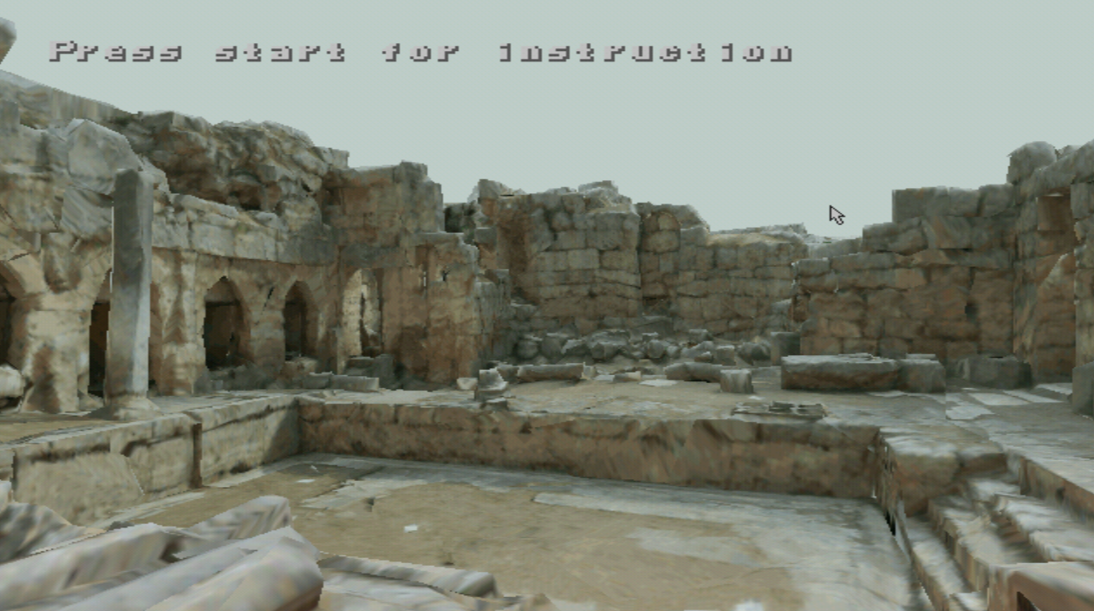
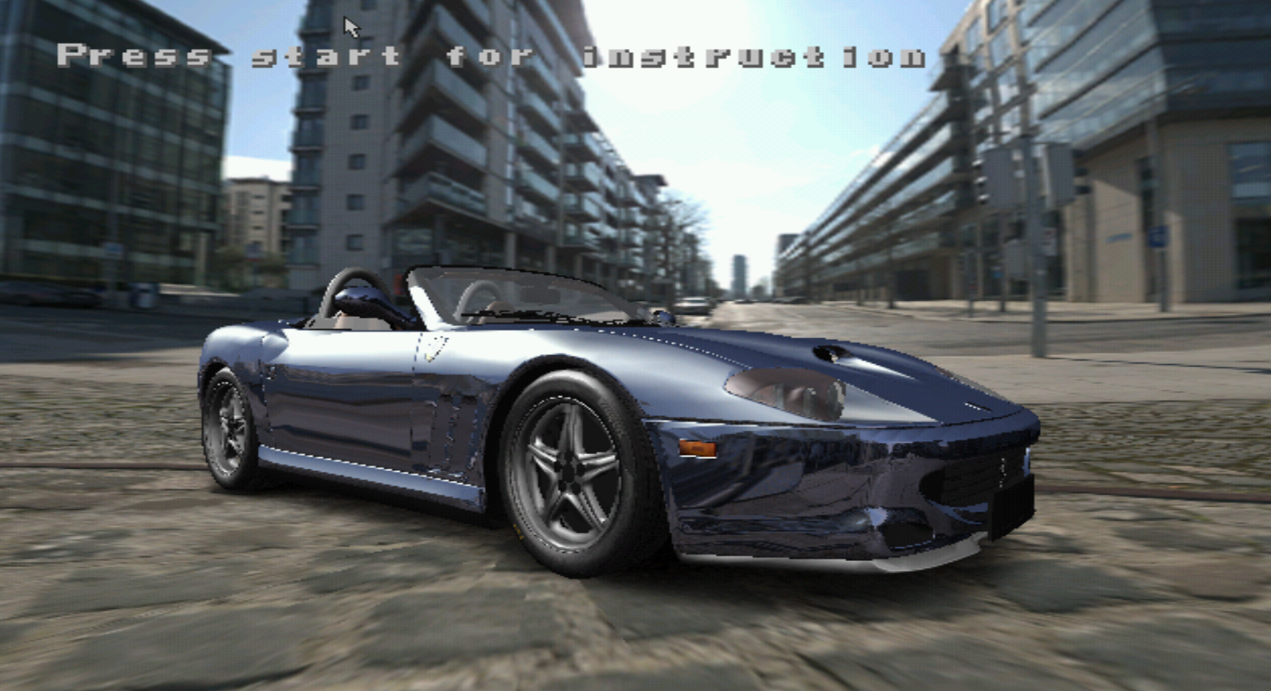
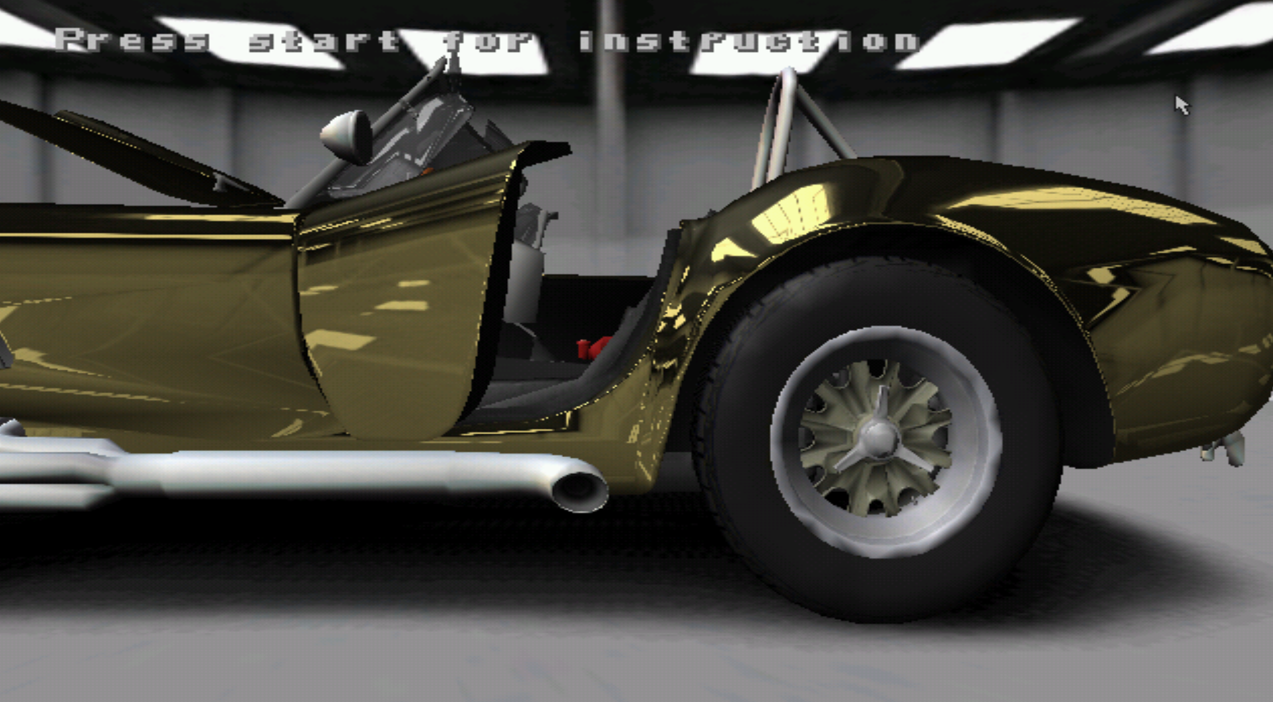
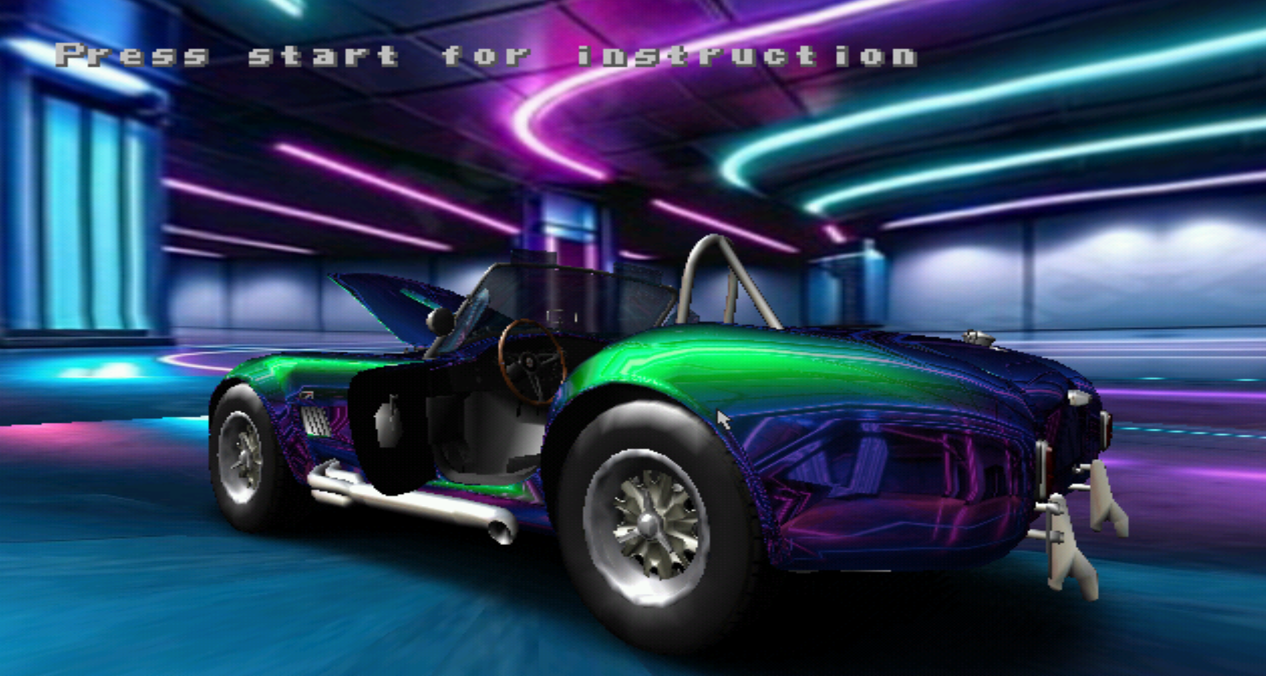
Going back to this topic, is not about hardware compression but rather artisitc choices, these are some tech demos I've been working for the Dreamcast, froom toon to realitic textures.

8dEz5V8rxbIzbtGa.png
5PxykQum7WFs8RV5.png
hombu1c6VCACSLSi.png
vH4cLMrMIpB5DRJo.png
6XxqM3bdAUVsXNrV.png
D6CqO1GlF0bksGIH.png
uBHx2vKvLdCvmrIp.png
KbST4fsdti1cLAZS.png


85o60G95EUzr6M4T.png

7Nrl8VIuduRaRmuQ.png
4B82VwKSoSRKIil7.png


What is so funny? Geometric-crusher?
 
Last edited:
And Dreamcast "supports" (vs uses as on that PS2 statement) 24bit color so more "facts" by the forum clown who insisted GTAIII on DC would have to have no transparencies on car windows and do without all the lighting and other effects, resembling early pre-alpha screenshots. Mind 32bit is 24bit color + 8bit transparency and with Dreamcast's unique architecture that had hardware based order independent transparency that didn't mean you missed anything with its eventual 24bit output, it was just as good, if not better, spec wise (hence missing effects/issues in raw ports to GC/PS2).​

Let's assume that GTA 3 runs on the Dreamcast, the car windows would be all black, no shadows, no light effects
The most the Dreamcast can do is a Driver 2 at 640x480 with a little more detailed character and longer draw distance like it did in 98-2001 in its games. Or Super Runabout Omikron.

More improvements to come, by amateur homebrewers @ their spare time. Always better to believe your eyes and actual devs over forum trolls that keep making up bs (somehow still trying to claim they're impartial fans of whatever they're bsing about), like Geometric-Crusher/Instant_Classic.
The Dreamcast was a really very powerful console at launch! It was a superbly designed and balanced system, and here's why!

We did a lot of work building optimized high end PC development focused on the best 3DFX Voodoo GPU's before Dreamcast released - Dethkarz and GP500. The Dreamcast wasn't just an order of magnitude more powerful than PS1 and N64, it was generally significantly more performant for 3D graphics than even the highest end PC of the day when it launched.

PC's of the era didn't yet have hardware T&L but the Dreamcast's SH4 had the basis of hardware T&L with an optimized hardware matrix transform instruction that allowed it to perform the calculations required for 3D at a massively accelerated rate compared to any other platform on the market. The PC would have to wait until 1999 to have the first hardware T&L.

Combined with the SH4 the Dreamcast's GPU was really outstanding! Thanks to its unique tile-based rendering it provided essentially infinite opaque polygon fill rate. Every other system of the time had the problem of limited fill rate, limiting performance in high resolution + high depth complexity scenes. The DC was the first console to totally eliminate this issue with opaque polygons. Although it did still have the restriction of 100M pixels / sec for non-opaque, that was still quite a bit and enough for many things (even if nowhere near PS2 level in that regard!). PowerVR based GPU's were of course also available for PC, but they weren't backed up with the transform performance of the SH4!

Compared to other consoles, both prior and after it, this GPU also provided exceptional image quality. All shading calculations were done in full 24-bit colour (on the tile) resulting in smoother gradients and shading compared to all other 16-bit colour rendering systems of the time. There was enough performance to enable anisotropic filtering (used in Lemans), and of course for the first time in a console hardware texture compression that with its unprecedented for console amount of VRAM allowed enormous rich high-resolution textures. It was also for years the only system that could properly render any type of fully translucent models due to its tile-based hardware sorting. The icing on the cake was Sega's unique deinterlacing hardware that provided a rock-solid 640x480 flicker free image on interlaced CRT's (similar approach to their Model 2 & 3 arcade machines).


The Dreamcast sound hardware was also an absolute beast, but I'll save that for another day lol.

In a way Dreamcast also started the trend that every future console GPU (after PS2) would be based on PC GPU architecture - putting high image quality first beyond the cost saving and performance 'optimizations' that were often used in all prior machines at the expense of image quality. Really it was the first home game machine to provide beautiful 3D graphics where the very best still stand the test of time!
1. We build Le Mans from the ground up specifically and only for the Dreamcast, the rendering engine, physics simulation, assets, all of it. A bit of a work of passion really and I think the approach was much like how Sega itself might build a first party game. I actually brought the game to Sega Japan and they were extremely surprised about some of the things the game was doing! They took me around all of the Sega AM groups to get their feedback and actually wanted to publish it worldwide as a 1st party Sega title ;-)

2. It's perhaps a myth for the final shipping version of the game! The game uses a sustained 50,000 polygons per frame + effects at 30FPS. It renders a pretty constant load balanced 25,000 for cars and 25,000 for the circuit per frame. So that's really 1.5M polygons per second, call it close to 2 with all effects lol. However, the graphics engine is very optimized and can do 4 million perhaps 5 million polygons per second! Lemans had the unique problem of having 25 cars on track at the same time. Every car has the same sophisticated physics simulation as the player car, as well as an AI driver and associated audio - the races are authentic, and all cars behave with the same physics characteristics as the player has. This uses a lot of CPU resources, compromising how much of the CPU can be dedicated to 3D transforms and feeding the GPU with vertices! There is an unreleased early version of the game that we showed at E3 that has one finished track and 8 finished cars on track that runs with the same polygon count at a sustained 60fps! In that version with 8 cars on track it does 50,000 polygons / frame at 60FPS = 3M polygons / second.

3. We would love to have made Grand Prix Challenge for Dreamcast as well. It uses a similar in-house engine, but this time optimized ground up for PS2. The Dreamcast could run it at 30FPS with some changes. GPC uses 2-3 times the polygon counts on PS2 at what looks like double the frame rate. However, it is an illusion and is cheating! For the longest time GPC was stuck at 30FPS on PS2, however late in development we discovered a secret that literally doubles the apparent frame rate! Essentially, we are doing something similar to DLSS3 on PS2 and I'm amazed it's taken this long for something like DLSS3 to appear! GPC runs at 30FPS, however it generates the next frame an in in between interpolated image from the prior frame to deliver 60FPS in a 30FPS game :D Transformers Armada uses the same trick and in hindsight it might have been possible to do that on a Dreamcast as well! In any case if GPC were ever made for Dreamcast it would have less polygons and better image quality than the PS2 game.


4. It's awesome to see people still trying to do things like on Dreamcast! If the graphics engine and assets were rebuilt from the ground up for Dreamcast there is no reason you couldn't do a pretty cool version of GTA III for it. However, given the original game uses Renderware that ran quite badly on PS2 and is very slow in first place it'll be a challenge to make it run beautifully on Dreamcast. Good luck with it though :)
Devs who worked on these games in this instance and, of course, the previously attacked by trolls GTAIII technical director who simply explained the full & final game was possible on Dreamcast even before the fan port (which utilizes the PC version's higher density and detail world geometry etc.).​

Much of what's done on PS2 via better, matured, higher production values was first on DC via transparencies, shading, self shadowing, environment mapping, volume/framebuffer/multipass effects, inverse kinematics etc. (in pristine 480p), just less on a short lived system few went the extra mile for. Naturally, the resolution matters, as seen with Gran Turismo 4 being full color in 480i yet 16bit in 480p, where most Dreamcast games are full 480p and most PS2 games aren't (btw, forcing it with hacks doesn't necessarily raise the internal resolution which can be even lower, only the final scan out).​
 
Last edited:
Who told you that? That the PS2 is less colorful and has worse textures? PS2 supports 32-bit color while the Dreamcast uses that old 16-bit color dither. The PS2 supports lighting effects that enhance textures, it also has bump mapping capabilities, it can use polygons as textures and vegetation, instead of a green texture and the PS2 displays better fire, snow, and metal textures than the Dreamcast. That's why I wonder why this misinformation exists.
Opinions vs FACTS!
No, the consolole does not have hardware compresion for textures. that is not for debate.


Going back to this topic, is not about hardware compression but rather artisitc choices, these are some tech demos I've been working for the Dreamcast, froom toon to realitic textures.

8dEz5V8rxbIzbtGa.png
5PxykQum7WFs8RV5.png
hombu1c6VCACSLSi.png
vH4cLMrMIpB5DRJo.png
6XxqM3bdAUVsXNrV.png
D6CqO1GlF0bksGIH.png
uBHx2vKvLdCvmrIp.png
KbST4fsdti1cLAZS.png


85o60G95EUzr6M4T.png

7Nrl8VIuduRaRmuQ.png
4B82VwKSoSRKIil7.png


What is so funny? Geometric-crusher?
But don´t get me wrong, Geometric-Crusher Geometric-Crusher i´m glad to see you around here, again. For the sake of discussion!
 
I don't know what games you played to get that impression, but the Dreamcast is a console that has already been completely mastered; nothing about it is a mystery to us. In my conversations with Dreamcast fans, I realize that many don't understand technology, which may be true here again. The PS2 is not a console of the same hierarchy as the Dreamcast, which is why its visuals are very different from those presented by the Sega console. The PS2 applies depth of field and other post-processing filters to all its games, which make the image less sharp but with realism, while the Dreamcast has that characteristic flat visual style that often hinders the perception of whether an object is in the foreground or not. All the great examples of games with good textures on the Dreamcast share the same elements in common: they are games with very low polygon counts and flat lighting. The curious thing is that later PS2 games not only had sharper textures than those on the Dreamcast, but without sacrificing their special effects and post-processing, we can see this in Burnout 2 and BGDA, and hundreds of other games, but there's no point in mentioning them individually; you'll say, "Hey, it's sharper on the Dreamcast," thus transforming a hardware deficiency into quality.
 
I don't know what games you played to get that impression, but the Dreamcast is a console that has already been completely mastered; nothing about it is a mystery to us. In my conversations with Dreamcast fans, I realize that many don't understand technology, which may be true here again. The PS2 is not a console of the same hierarchy as the Dreamcast, which is why its visuals are very different from those presented by the Sega console. The PS2 applies depth of field and other post-processing filters to all its games, which make the image less sharp but with realism, while the Dreamcast has that characteristic flat visual style that often hinders the perception of whether an object is in the foreground or not. All the great examples of games with good textures on the Dreamcast share the same elements in common: they are games with very low polygon counts and flat lighting. The curious thing is that later PS2 games not only had sharper textures than those on the Dreamcast, but without sacrificing their special effects and post-processing, we can see this in Burnout 2 and BGDA, and hundreds of other games, but there's no point in mentioning them individually; you'll say, "Hey, it's sharper on the Dreamcast," thus transforming a hardware deficiency into quality.
Dreamcast was completely mastered in 2 years worldwide and just 18 months in the west? Wow, that´s a record for any console! Dude, you said in this very forum like 2 years the same when Skmp started to show his early work on GTA 3 on DC, and DC wouldn´t be able to handle...and Boom time and FACTS shut ya down, now we have even VC, Doom 64 with vertex lighting that not even the 2020 HD remaster has, among many other stuff, and most of them made actually by people in this very forum who i assume you would put on the group of "many don´t understand technology". Do you actually know how to code? are you a programmer? Because yes, seems like you know lotta about theory, but this thread and other on NeoGaf have proved you wrong on many topics, specially related to DC, with FACTS, stuff actually coded for DC. Also, it´s evident AF that you´re pretty Sony biased.
 
Top Bottom