Okay, so I did a bit of digging to find comparison numbers.
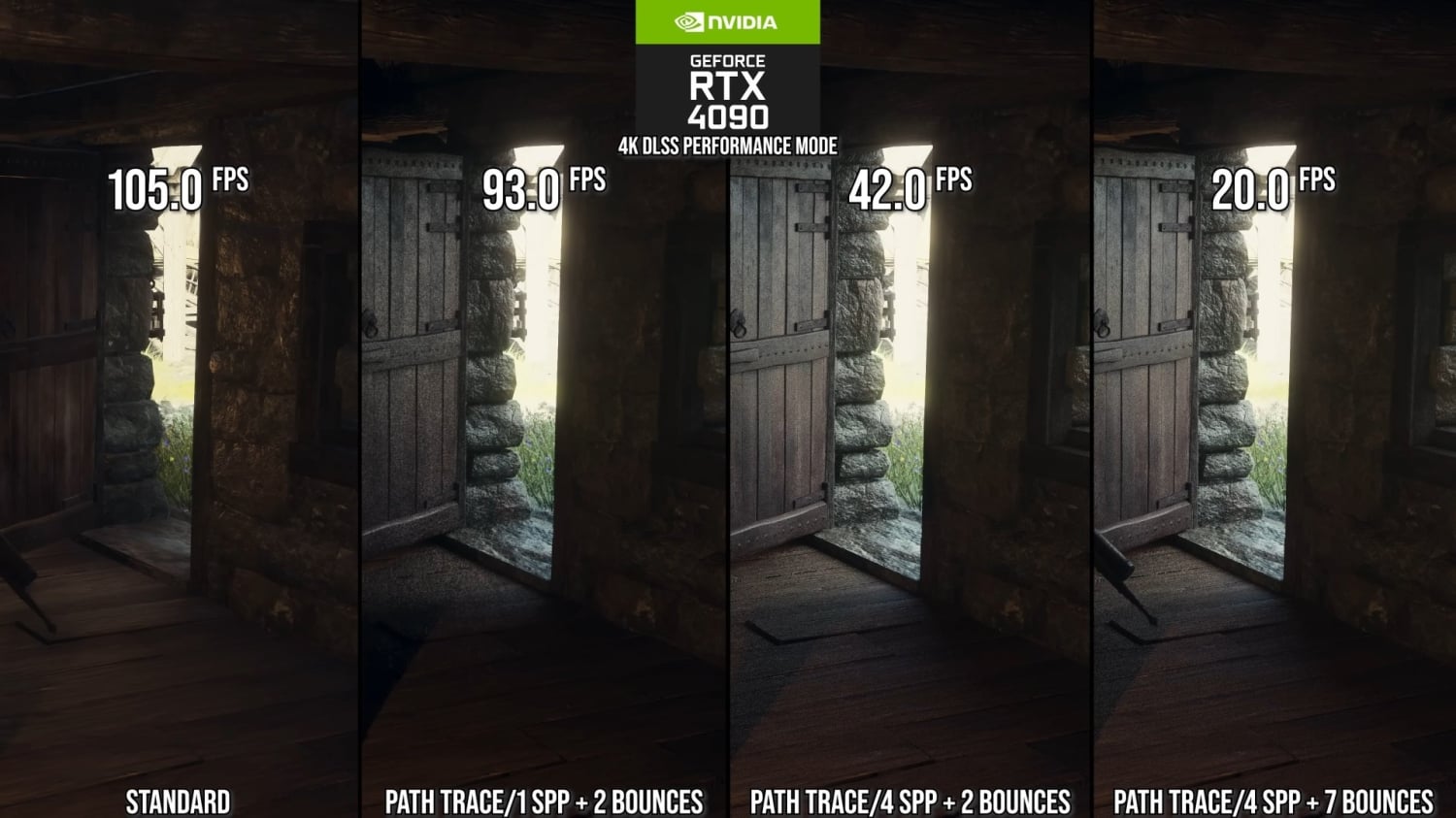
The standard mode of Dragon's Dogma 2 GI uses 1/4th sample per pixel. Not exactly the same as one ray, but within this context, it's close enough (correct me if I'm wrong on this). There's no specularity (reflections) in the standard mode either. There's no mention of the number of rays per pixel for specular specifically.
In Cyberpunk, the default in RT Overdrive is 2 rays per pixel, but I'm not sure of the breakdown. NVIDIA's documentation mentions the following for reflective surfaces in the non-PT mode.
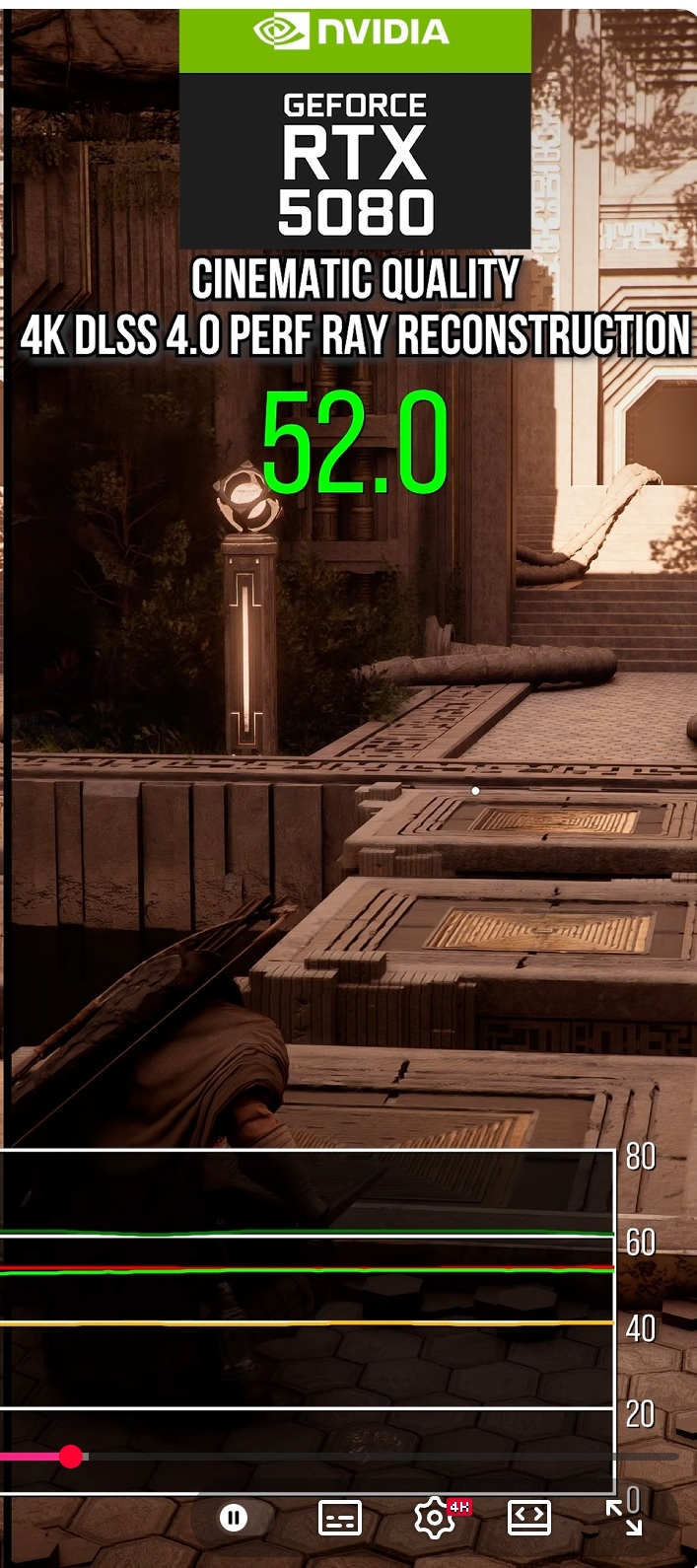
It's 1/16th for GI in Crimson Desert and 1/4th for reflections. There's no mention of the number of bounces, but given the result, it's probably 0. Cyberpunk Ultra uses 32x the number of rays for reflective surfaces on Ultra and 88x on Psycho compared to Crimson Desert. This explains the bad reflections in Crimson Desert. Dragon's Dogma's diffuse lighting uses 4x the number of rays per pixel compared to Crimson Desert.
So, I guess we know why a 2080 is the recommended GPU for Ultra and why it has RT on (all?) consoles. The quality is just extremely low. Perhaps the lowest of any AAA game, but in their defense, they seem to have built their art around it, so it's not a scenario where we get shitty RT just so they can check a box. The RT has tons of limitations as can be seen in the video. I'm also hoping there are ways to add more rays on PC, especially when it comes to reflections or even lighting. When the count is that low, going from 1/16th to even 1/8th could be a huge difference.
Also been lurking Beyond3D and Andrew Lauritzen, a former Epic engineer I believe, says the following:
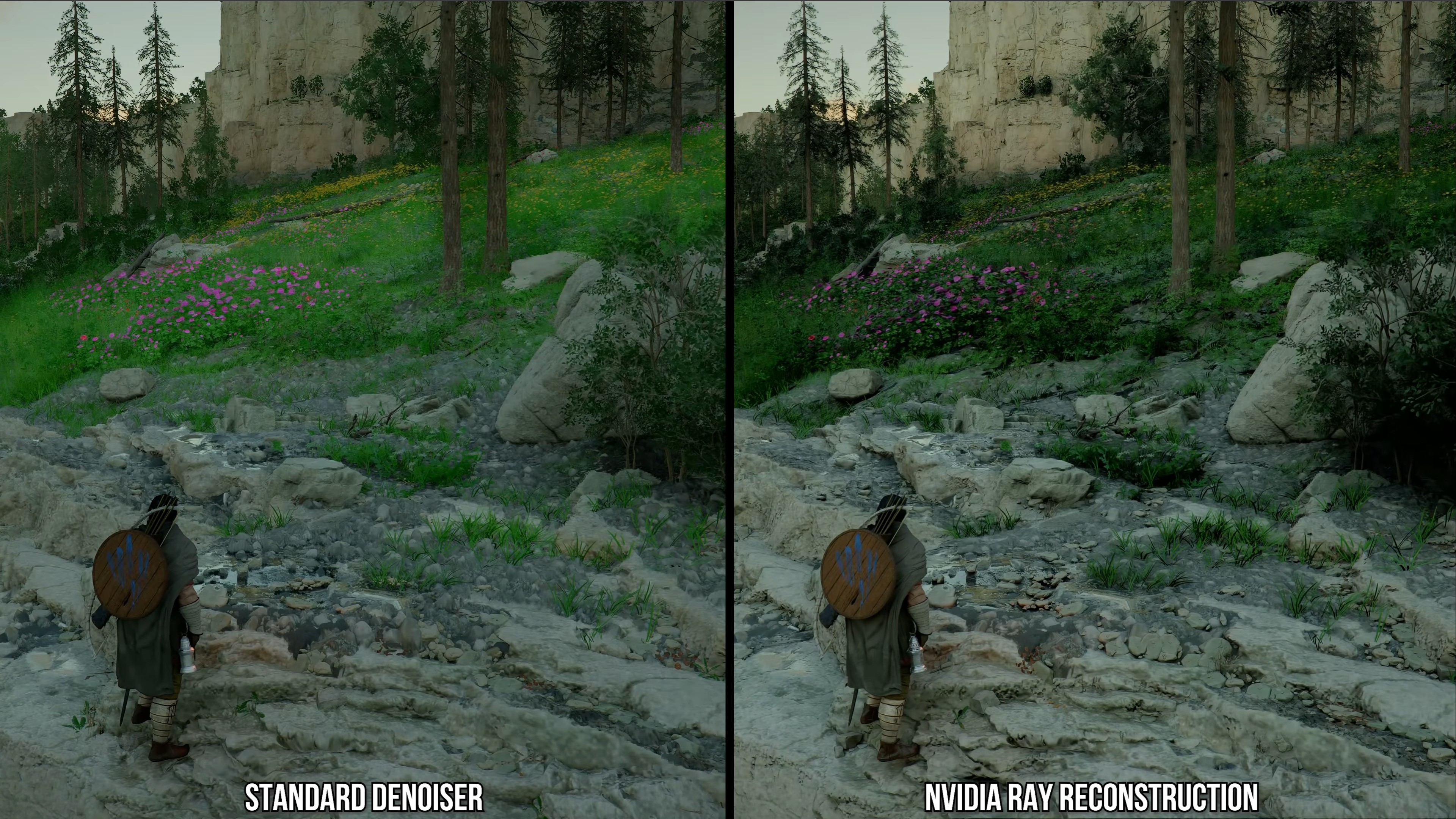
There's clearly something more going on than that in many of these scenes. The non-RR results are just entirely missing a bunch of objects/occlusion... it's not like that occlusion is just "blurred out"... you'd still see a general darkening in that area if so. Unclear if bugs or the RT structure is different or something else but there's no way these results are exclusively from enabling RR with everything else the same. There's pretty clearly a bug or settings/content difference as well.
I agree that some part of the difference here is because the stock "RTGI" thing is so low frequency that it almost looks like flat ambient in a lot of the console shots. But I'm still not really sure that explains several of the shots in the comparison here where extra occlusion is present, not just "blurred out". Or I guess to put it another way, the RR path is effectively just a different algorithm/content, and has little to do with the IHV RR implementation itself.
So yeah, more to this than just the denoiser bringing back lost details/lights/shadows.