IbizaPocholo
NeoGAFs Kent Brockman
In this video, we dive deep into why SSD prices are skyrocketing, and why we think they'll get worse in the near-term. Similar to RAM (DRAM) prices for system memory, SSDs are now plotting an actually worse price increase trajectory by time vs spot price, and we expect contract prices will trail. Currently, data centers and "AI" are driving the demand for SSDs to be deployed in server solutions worldwide, which reduces consumer demand. At the same time, some SSD NAND suppliers are reducing their production capacity despite high demand.
TIMESTAMPS
00:00 - Why SSD Prices Are Skyrocketing
04:15 - SUPPORT OUR WORK
05:24 - Factors, Basics, and Methodology
07:47 - Spot Prices Surge toward 9x
11:13 - Completed Product Price Increases
16:53 - Hard Drive Prices
19:13 - NVIDIA's Vera Rubin Servers
20:48 - Reducing Flash Production
22:18 - Conclusion
- (00:02) NAND flash prices (core SSD component) have exploded up to ~9× in 6 months, signaling a major supply shock similar to past RAM/GPU shortages.
- (00:26)Main causes of rising SSD prices:
- Massive data center demand
- Hard drive shortages pushing buyers to SSDs
- Manufacturers prioritizing higher-margin enterprise SSDs
- Some companies intentionally restricting supply to protect profits
- (01:12)Example price surge:
- 512 Gbit TLC NAND: $2.70 → $23+ (~8.5× increase)
- 2TB SSDs:
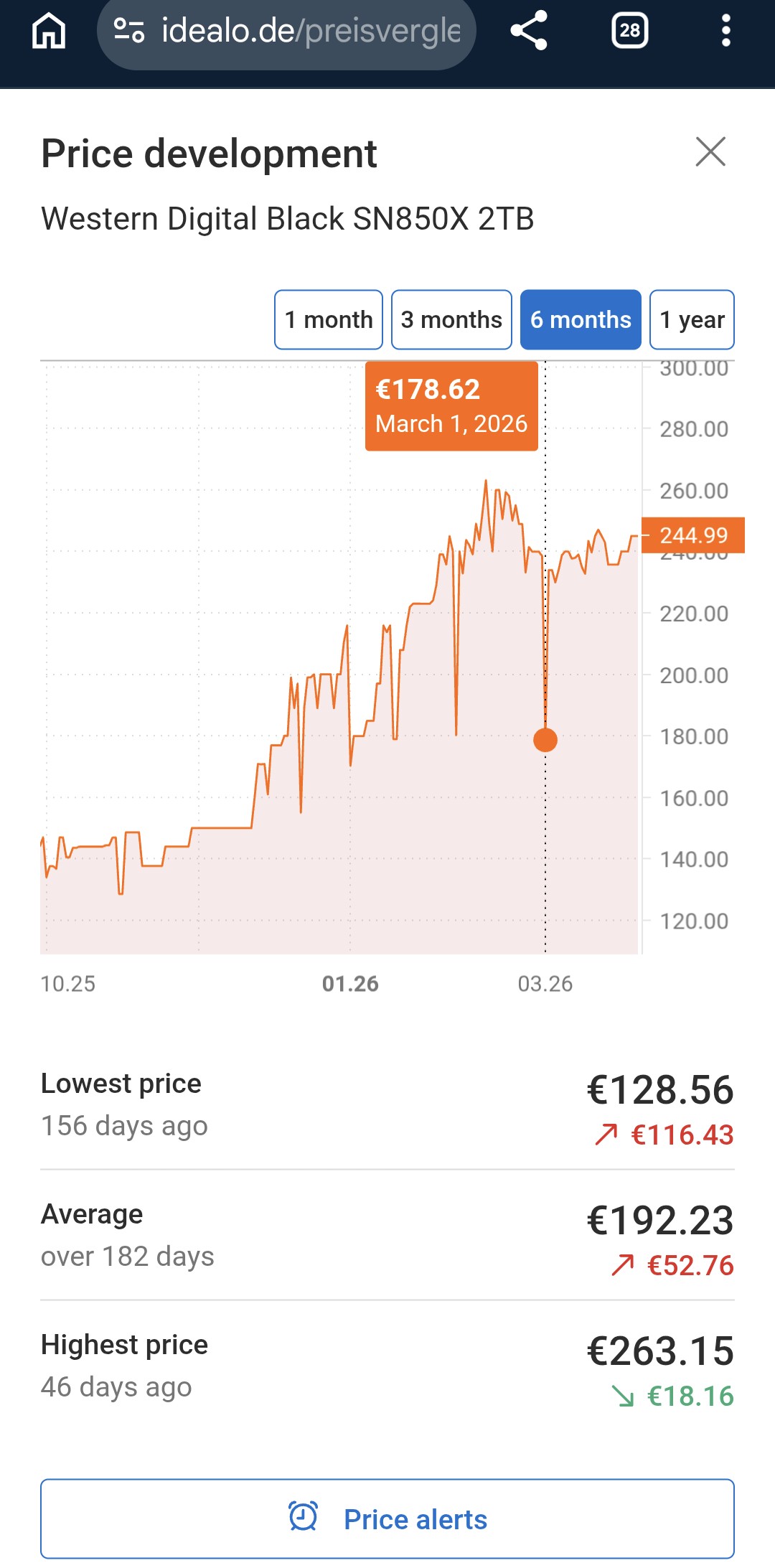
- SATA: $150 → $350
- NVMe: $190 → $450
- (02:01)Supply crisis indicators:
- Kioxia: "production is already sold out"
- Western Digital: "sold out for 2026"
- Valve: Steam Deck shortages due to storage supply
- (02:37) Major manufacturers like Samsung Electronics and SK hynix are reducing NAND output, worsening shortages.
- (03:04)AI is a huge driver:
- NVIDIA server storage demand could grow from 2.8% → 9.3% of global NAND demand by 2027
- AI data centers are consuming massive storage at unprecedented scale
- (07:23) Unlike normal pricing cycles (which usually fall over time), SSD prices are rising abnormally, breaking historical trends due to sustained demand pressure.
- (09:06) SSD component costs are rising faster than DDR5 RAM, with NAND seeing ~8.6× price multipliers, indicating worse underlying pressure than RAM markets.
- (13:06)Consumer SSD prices are catching up:
- NVMe SSDs: ~114% average increase in 4 months
- SATA SSDs: ~76% increase
- Prices lag behind components due to temporary inventory buffers
- (18:10)Structural causes of the crisis:
- AI data centers buying hundreds of thousands of SSDs quarterly
- Hard drive shortages causing shift to flash storage
- Enterprise demand crowding out consumers
- (22:18)Key conclusion:
- SSD price surge is not temporary
- Likely to get worse before improving, following the same trajectory as RAM shortages
- (23:29)Final takeaway:
- A mix of AI demand + supply restrictions + possible coordinated production cuts is driving a long-term pricing crisis across storage markets.






 .
.