DEATH;184732049 said:
Alot lol.
1. I have problems with shading, particularly primary and secondary/tertiary forms. I understand how shading works already and I can shade simple forms (spheres, boxes, cylinders). The thing that isn't clicking for me are when secondary forms are involved (forms within forms, like muscles over the cylindrical arm). If I render the secondary forms (the muscles and/or folds), it tends to look all over the place and the primary forms (the whole cylindrical arm) get lost.
(This is where I realized knowing anatomy doesn't automatically translate with my artwork. At this point I think I can point out most, if not all, the superficial muscles + fat pads, its general shape, and its origin and insertion, but it doesn't help me shade the whole figure overall).
2. Same struggles with drapery, but with added problem of not being able to represent them via lines. Like, I'm gonna make/detail a fold and the whole thing gets too messy. I learned recently that I have to quiet those kinds of details, but when I do, I lose the whole fold. I cannot strike that balance.
3. Doing sketching digitally with a tablet. I don't get satisfied with my digital sketches compared to my pencil sketches. If I get too loose, I get a better sketch but it's scratchy and ends up causing a bad lineart. But if I'm too careful I end up taking too much time and the results aren't good either.
I guess I'm still trying to figure out a proper workflow digitally overall.
I'll address these points fairly briefly as what's causing these problems is actually a deeper problem of your technical skill and understandings; these things you notice here are just symptoms of the root cause.
1. You have to understand that when you put down basic shapes of the body these are loose representations of what you're trying to further build on. Sure using a cylinder to represent an arm works as its the nearest like basic geometric shape to what an arm is; but an arm is far from a cylinder. The body is made up of a network of muscles that are all different shapes and sizes and they push and pull and contort to create movements within the body. The arm should not just be a cylinder by the time you get onto further rendering. If anything its much more ovular and narrow on one of the axis. Use your base shapes to lay down proportions, do not use them to determine your form. There will be all sorts of crevices (or lack there of) depending on the build of the person you are drawing; be sure to take notice of these. Once you are done laying down your body plan of basic shapes, forget them and start thinking about the actual human anatomy. As always I reccomend people watch work out videos to better understand how the human body works. They usually go in great depth of what each muscle is doing during any particular exercise, and better yet you get to see the muscle in action on a body that likely has lower body fat% so you can see what it is doing exactly.
The second part of this problem probably has more to do with your values. If you're adding shading to your body from a particular light source you need to be able to understand where your form shadows will come from and where your cast shadows will fall. On top of that you need to determine if the tint or shade is the right value depended on the strength of your light source. From these pictures alone I couldn't tell you what your problem is specifically as there's no value work there. I couln't explain in a single paragraph a lone how this all works as light is a bit more complicated than that (depending on its setting), as well as that you have things as secondary light, and some diffusion going on in some cases.
2. This sounds like you're struggling with line weight here. (This is something that I can see more apparently with your sketches provided). You need to learn to lighten the pressure. Draw incredibly light when mapping and like a marksman go in heavy when you are absolutely sure this is the line you want. I go by the "there's only one line for everything" rule. Any object or detail you are trying to represent within your image (when it comes specifically to representing the shape and contour lines only) should have a singular line to determine it. The fewer lines you use the better. It's also important to keep an eye on the values of your lines; thicker/darker/heavier lines will give the impression of solidity while lighter/thinner/softer lines will ease up the weight of the object. Do not use consistent weights throughout an entire image if you're wanting to show changes in texture, weight or importance.
3. Are you sketching with the pen pressure off? It sounds like more line weight issues. Either work with lower opacity or thinner lines. Build up to the heavier line work when you have settled on the placement of objects and ready to solidify everything. Unfortunately this is going to have to be a matter of trail and error to see what works best for you as well, as digital tools have lots of different ways of making them do pretty much the same thing.
As I said, these are all my brief analysis of what you're saying compared to the work I've seen. It sounds to me like you need to study more on values and how light works in reality for you to be able to flesh out your sketches. It takes time and more studying! I'm always happy to talk about art stuff on my
streaming channel if you ever want to stop by. I typically announce when I'm streaming on my
twitter. Good luck man.
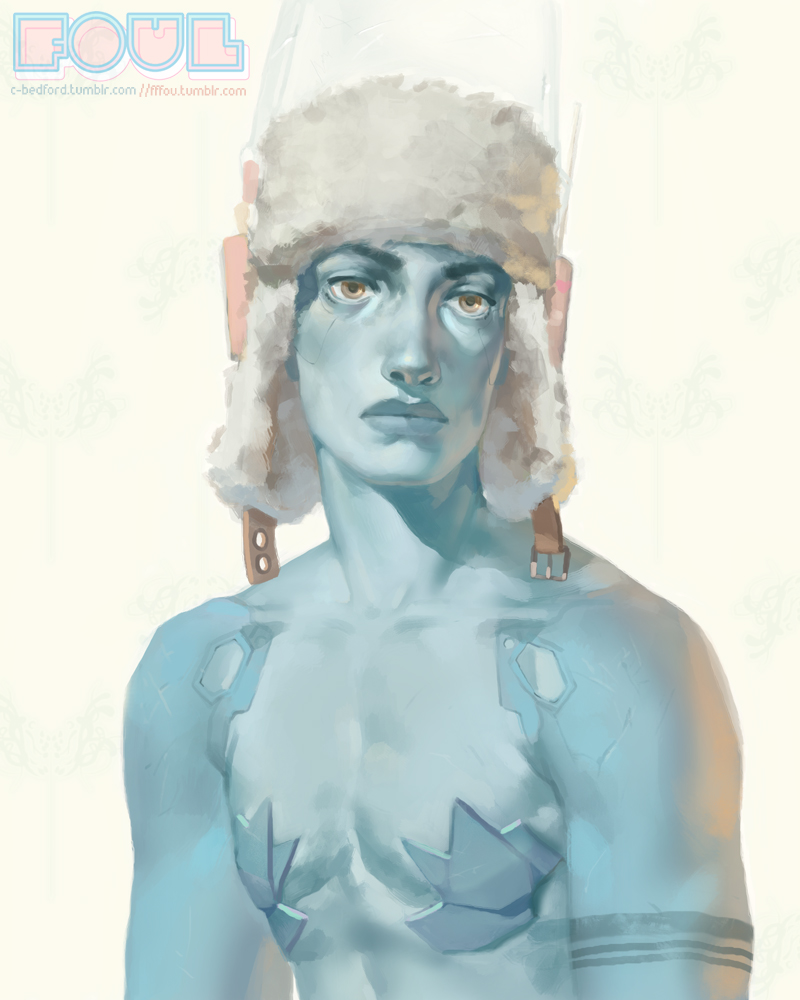
So I started quickly painting this last night half asleep:
I want to practice more with having high key backgrounds and low key subjects, and able to keep my value range distinctive between the two. such a weird ass angle. I'll probably stream while working on this later...
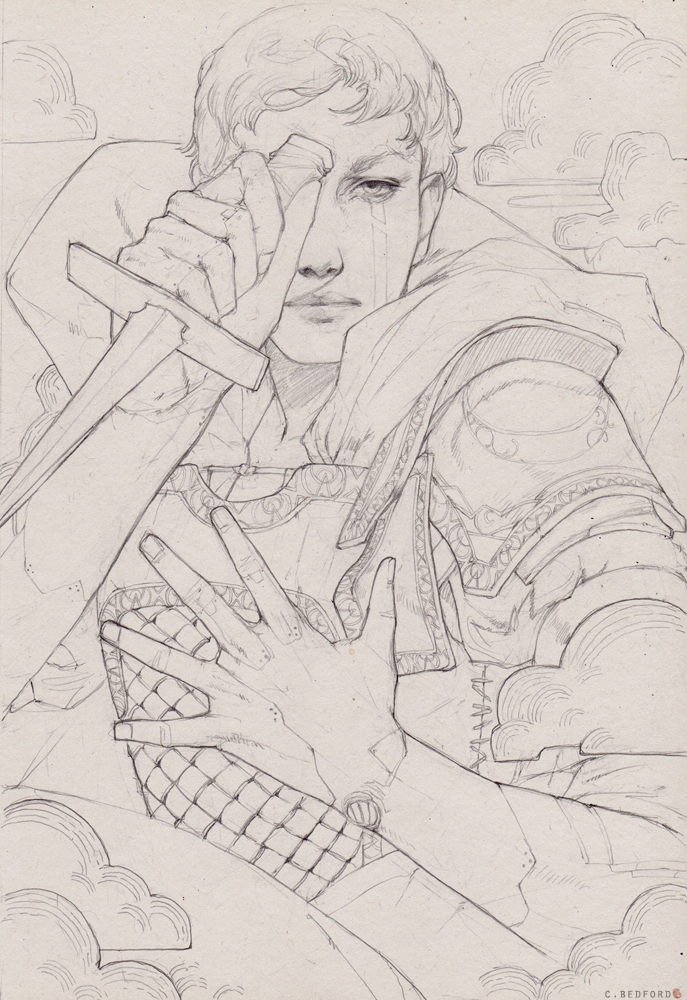
Managed to get a commission done today as well. I'm satisfied with this one, I feel like I haven't produced anything pleasant for a while graphite wise.
Just hoping the commissioner digs it.