• Hey Guest. Check out your NeoGAF Wrapped 2025 results here!

EDGE: Sony’s VR tech will be revealed at GDC

People do realize that the HMZ-T3W is $999/1299€ and 720p, right? Even after toning down design (making it less of a luxury, and more practical) + removing wireless/battery, it'd likely still be a $799 product. Just wondering what kind of quality is expected at a $200-350 price here.. when you're talking about 1080p VR.

If Oculus can do it, then Sony can do it. Oculus is aiming for around $300 last I heard with all those great specs. I'm guessing these will be two separate lines of product, you really won't be able to compare the two. If Sony releases this for more than $399 it's pretty much dead in the water. I am excited for VR but no way I'm paying more than what a PS4 costs and I don't think many will. I think their aim should be and will be $299.
 
People do realize that the HMZ-T3W is $999/1299€ and 720p, right? Even after toning down design (making it less of a luxury, and more practical) + removing wireless/battery, it'd likely still be a $799 product. Just wondering what kind of quality is expected at a $200-350 price here.. when you're talking about 1080p VR.

They can cut the price a lot by using the e.g. PS Cam for head tracking. No additional hardware required for that.
 
People do realize that the HMZ-T3W is $999/1299€ and 720p, right? Even after toning down design (making it less of a luxury, and more practical) + removing wireless/battery, it'd likely still be a $799 product. Just wondering what kind of quality is expected at a $200-350 price here.. when you're talking about 1080p VR.

It's expensive because two 0.7" 2,098dpi OLED screens. Rare production.

I think VR more better with mobile screen (smartphone eg) - allows more wider FOV. The tracking will likely same hardware features as Move controller. Overall shouldn't take too much cost to production.
 
I guess falling off a high ledge would be one, in some games I feel weird when looking at that on a TV screen, in VR it would be insane. Though more notably being shot from behind in an FPS game will be an issue in VR games, as unexpected 'jolts' can cause motion sickness. It's really apparent that VR games have to be really tailored for the device, just slapping support on an existing game likely won't work.

Yeah, that's what I was getting at with my question, as in the ease of any game being able to support a VR mode. As long as they don't take camera control away from the players head, and maybe sudden acceleration changes? Just keep it in the realm of real world possibilities. Most FPS could be easily tweaked to fit that rule.

Actually the latest version of OR reportedly eliminates most if not all of the potential of nausea for users. The more the brain thinks what is happening is real due to higher specs, the less nausea.

The original OR model did cause people to get nausea because it was low-end. What Sony sells will undoubtedly be better. My guess is nausea will only be an issue for the most sensitive (those that get motion sickness, etc.)

Nausea is one thing but people were saying earlier in the thread games will have to be specifically tailored for VR, you couldn't do certain actions, etc etc. I imagine games like Vanquish or ZOE would be out of the question.
 
Star Citizen will have to tone down in setting for best VR experience (esp @ 95fps)

PC developers build in graphics settings for a reason. The player may want to turn stuff down to get a better framerate for VR but they can also compensate with better hardware. The developer isn't forced to compensate for struggling hardware. Console devs aren't so lucky.
 
People do realize that the HMZ-T3W is $999/1299€ and 720p, right? Even after toning down design (making it less of a luxury, and more practical) + removing wireless/battery, it'd likely still be a $799 product. Just wondering what kind of quality is expected at a $200-350 price here.. when you're talking about 1080p VR.
you first quote of me is not accurate considering that was a joke response to being told to stfu. I stand by by the $350 quote thought.
 
Ah, you edited but that Flower shot you had before was nasty.
Here's what it really looks like.
if6nAl9sYpPwZ.jpg
I vomited uncontrollably for 3 minutes
 
PC developers build in graphics settings for a reason. The player may want to turn stuff down to get a better framerate for VR but they can also compensate with better hardware. The developer isn't forced to compensate for struggling hardware. Console devs aren't so lucky.

At least console fixed hardware - no need to make multi-settings testing. Just two modes testing - less work for devs.

It's not really for serious techs, but it is welcome for cheaper.
 
If anyone from Sony/Oculus is reading this thread, send this to R&D divisions! :D

The way to make your OculusRift-based design completely compatible with 2D content from any HDMI+USB-equipped source [2D games from PS4/PS3, movies, computer desktop, mobile phones]:
- Take small Android SoC and place it into control box (oculus rift has one) or directly into headset [power will come from USB connection that your headset will have by default].
- Put a button on a headset that will activate/deactivate this Android SoC that has only one function activated by default [many more could be added of course, but lets stick to basics]. Possibly another button for calibration.
- Android SoC takes HDMI input, quickly ads that stream to 2D plane, and places this 2D plane in front of user to be fixed in space like he is in cinema [just blackness around the screen]. If USB tracking data is not available, then it doesn't need to be fixed in space [like with HMZ-T1].
- Positional tracking data can be sent from PC/PS4 who have PS4 camera equipped, basic orientation data can come from headset itself.
- Optionally, if headset has its own cameras that are looking around user, push of the third button can replace blackness around the virtual screen with the view of the user's surroundings. This will move user from "isolated geek" state to the "member of society". :D

Instant compatibility with ALL 2D HDMI content [99.9% of content that is experienced today by gamers, PC users and home movie watchers].

This could be moved to PS4 headset#2 down the line, giving it a strong marketing push with this great new feature. OculusVR could also use this, possibly giving us superior experience because they can go wild with display resolutions.

What you describe already exists, minus the orientation data, on the costly HMDs Sony sells for movie-watching.

They are costly partly because of the expensive lenses it uses to transmit existing 2D material with minimal distortion.

Oculus uses cheap, simple lenses because it anti-distorts the image in software before sending it through them.

The problem with watching movies through the Oculus is that the effective resolution of 2D content on the 1080p C.C model is only around 480p at best, a far cry from the 1080p and 4k that all new 50+ inch HDTVs everywhere will offer.
 
PC developers build in graphics settings for a reason. The player may want to turn stuff down to get a better framerate for VR but they can also compensate with better hardware. The developer isn't forced to compensate for struggling hardware. Console devs aren't so lucky.
Eh, PC developers still make all sorts of compromises. They still have to sell a product.
 
The problem with watching movies through the Oculus is that the effective resolution of 2D content on the 1080p C.C model is only around 480p at best, a far cry from the 1080p and 4k that all new 50+ inch HDTVs everywhere will offer.

How do you figure? It should be about the same as 720p (which is 3x 480p)
 
How do you figure? It should be about the same as 720p (which is 3x 480p)

1080p/2 for working horizontal resolution = 990, throwaway some because you don't even see them - ~900 wide, then spread that over a much larger field of view - 100 degree FOV.

Half that FOV for video formatted for a traditional display so that it can be comfortably viewed - and you less than 450 pixels left.

Even so, that's not bad... but it's less than DVD standards.

@ 4k, the resolution density would be very workable.
 
Low persistence requires at least 90Hz according to VR specialists. So unless Sony has some magical tech no one has heard of yet, I highly doubt the PS4 can run PS3 level graphics in stereo at 90 frames per second.

PS3 had 1080p/60fps games so I think a console that is 8-12 times more powerful could handle PS3 graphics and better at 60+ fps in stereo.
 
I want this to happen so badly! I love my PS4, but I really think VR is going to feel like true next gen. If it can come close to OR's most recent build, I'll be ecstatic. I think the price will be $299; $399 would really be pushing it.
 
1080p/2 for working horizontal resolution = 990, throwaway some because you don't even see them - ~900 wide, then spread that over a much larger field of view - 100 degree FOV.

Half that FOV for video formatted for a traditional display so that it can be comfortably viewed - and you less than 450 pixels left.

Even so, that's not bad... but it's less than DVD standards.

@ 4k, the resolution density would be very workable.

You're not taking into account that the left eye has more information to the left than the right eye and vice versa.
Also, you have a conservative idea about what viewing distance is comfortable.

EDIT: The different left/right information being merged by your brain actually only gains you about 65 lines of horizontal resolution. But remember that all DVDs were only 720 pixels across.
 
If I could play Wipeout HD on a VR headset I'd be very happy. Zone mode would be so very good. I've tried simulating it by sitting unhealthily close to the screen.
 
Can't wait to see what they got. I get a feeling we won't get specs, but it would at least be nice to know if they've already achieved presence.
 
If I could play Wipeout HD on a VR headset I'd be very happy. Zone mode would be so very good. I've tried simulating it by sitting unhealthily close to the screen.


I have a feeling that Wipeout would make me throw up. I think I'd feel more comfortable with something slower paced, and more methodical.
 
I have a feeling that Wipeout would make me throw up. I think I'd feel more comfortable with something slower paced, and more methodical.

Quite possibly yes! I'd like to try both really. I'd definitely give Wipeout a go though, in a similar way I've enjoyed other games that generally induce vertigo/nausea. Same for things in real life. I realise I sound like I have a sick fetish.
 
What you describe already exists, minus the orientation data, on the costly HMDs Sony sells for movie-watching.

They are costly partly because of the expensive lenses it uses to transmit existing 2D material with minimal distortion.

Oculus uses cheap, simple lenses because it anti-distorts the image in software before sending it through them.

The problem with watching movies through the Oculus is that the effective resolution of 2D content on the 1080p C.C model is only around 480p at best, a far cry from the 1080p and 4k that all new 50+ inch HDTVs everywhere will offer.


New VR headsets need some sort of compatibility with 2D content, and this is the best solution for now. Sure, we will need maybe even 2 4K displays per headset to come close to great visuals, but better to have something than nothing. :)


People do realize that the HMZ-T3W is $999/1299€ and 720p, right? Even after toning down design (making it less of a luxury, and more practical) + removing wireless/battery, it'd likely still be a $799 product. Just wondering what kind of quality is expected at a $200-350 price here.. when you're talking about 1080p VR.

Palmer's Oculus rift design =/= Sony's HMZ line which uses very expensive full OLED microdisplays
 
Just in case it wasn't known, I was just responded to by Shuhei Yoshida on Twitter. He told me that the event he his taking part in will not be streamed. It will, however, be recorded and archived for later viewing.

DbbMLgm.png


This was the video he linked me to as an example:
https://www.youtube.com/watch?v=DiboVZsXYXY

That's a totally different event compared to this.

“Driving the Future of Innovation at Sony Computer Entertainment,” is hosted by SCEA R&D’s director Richard Marks and senior software engineer Anton Mikhailov. They’ll be accompanied by Shuhei Yoshida, president of SCE Worldwide Studios.

Not sure if it's going to be livestreamed though.
 
That 'there will be games not suitable for OR because of nausea' thing makes think.

At first, some adrenaline-burst games may be put out of the question, but I guess that with some time, people would get used to it and it ends not being a problem at all.

Also, seeing it from the other side, couldnt it be a form of training people's mind for extreme experiences?

Maybe I'm thinking too much right now, but people who are brave enough to taste the most extreme experiences could really get a stronger mind. Maybe for things they wont never do in real life, but it's better than nothing.
 
The whole power argument is completely overblown and TOTALLY misses the point of VR. Watch any casual consumer put on an Oculus Rift with a demo running absolutely barebones graphics, and their eyes and facial expressions light up FAR more than any reaction that would be elicited by graphics as good as something like The Order (not to take anything away from that game, or any other game that has amazing 2D visuals).

VR isn't about fidelity, it's about complete and total immersion. Fooling your senses into believing you've legitimately stepped into an alternate world. Something not possible with 2D games featuring robust, dense visuals. PS4 is absolutely capable of delivering immersive VR with visuals that are far more detailed than the tech demos out there blowing people away with the Oculus Rift.

People shouldn't focus on VR being a replacement for traditional gaming experiences, because it's not. And while I'm confident that there will be a decent amount of support from traditional games, those really won't be the focus of what the device is all about. You won't be buying a VR headset largely for tacked on 3D or quasi-VR support of AAA games; you will be buying a VR headset for experiences that currently are not even available or conceptualized anywhere in the gaming landscape as it stands.

VR, when coupled with motion gaming, will create new genres and experiences that simply haven't been developed before -- and that's really what it's all about, and it has nothing to do with blistering visual detail that only the highest of high end PCs are capable of pulling off.

The other aspect is that PS3, and even PS2 era games, when combined with clean IQ, are DEFINITELY NOT UGLY, and certainly of high enough quality to do justice to VR.

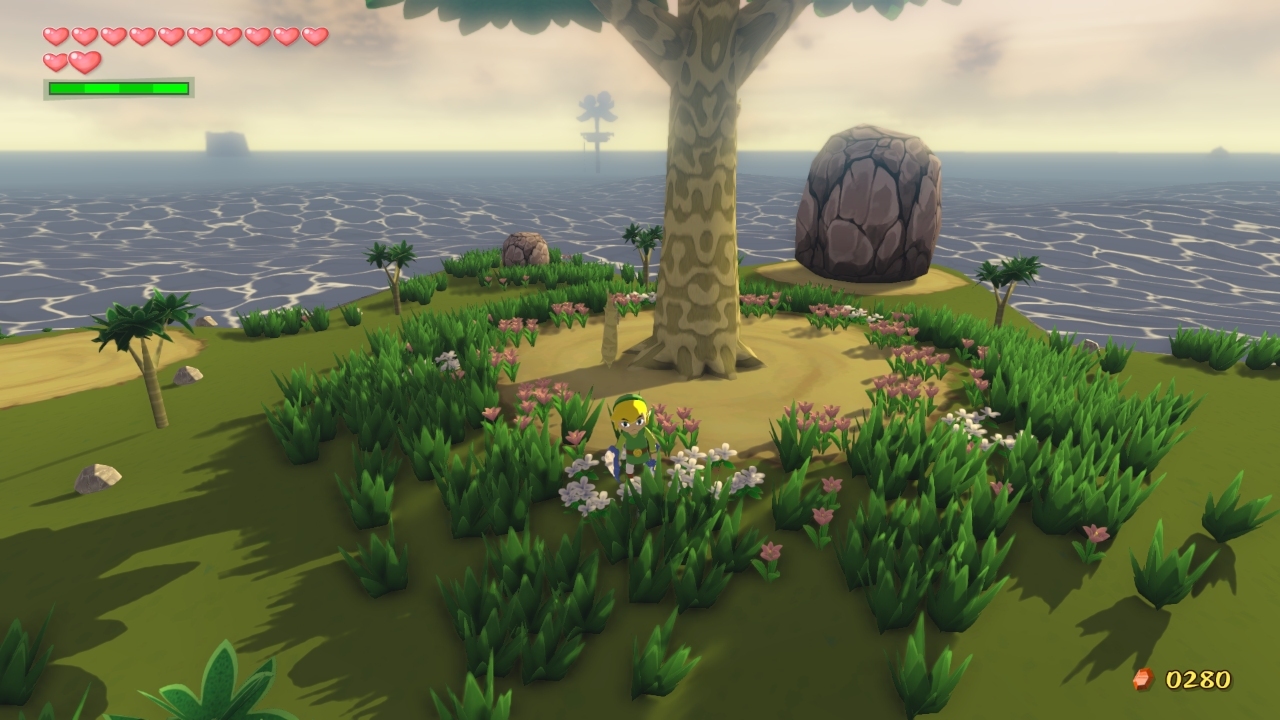
Would anyone complain if this was the best we could expect for VR?

wiiu_screenshot_tv_014dzws.jpg

ihnTbx39rYIw3.jpg

journey.jpg

714Ua5vMRBL._SL1500_.jpg

the-witness-10.jpg

rime.jpg

tearaway_2.jpg


Honestly, I cannot wait to have my next "Mario 64 moment" with gaming, and it has less to with fidelity and more to do with brand new experiences. Some of you sound incredibly jaded.
Just remember that 1080p on a monitor, much less a TV screen 5+ feet away from you, isn't going to be the same thing as 1080p in VR with your face pressed up against a display. 720p devkits were apparently extremely pixelly.

We'll need even higher resolutions to really get that sort of fidelity. I know that OLED can alleviate the screen door pixel effect, but the basic idea remains that image quality at a certain resolution isn't going to be nearly as crisp in VR as you're used to.

1080p will be a good starting point, but the faster we get to 1440p and up, the better.
 
Just remember that 1080p on a monitor, much less a TV screen 5+ feet away from you, isn't going to be the same thing as 1080p in VR with your face pressed up against a display. 720p devkits were apparently extremely pixelly.

We'll need even higher resolutions to really get that sort of fidelity. I know that OLED can alleviate the screen door pixel effect, but the basic idea remains that image quality at a certain resolution isn't going to be nearly as crisp in VR as you're used to.


This is all true. But it will still be more immersive then playing Crysis 3 on a monster PC at max settings.
 
If they gonna use vanilla-oculus design, I wish that Sony should nudge developers to adopt "cropped rendering". So much space is wasted with basic Oculus lenses, engines could get so much more performance if they would crop what is not needed and focus rendering on only what will impact user's vision. Best part of this approiach is that it is optional. Devs [indies] can still choose to render game in full.
http://abload.de/img/vorpxdbji1.jpg


Either that, or create lenses that would cover more of the display real estate. This would increase pixel density, making a 1080p screen more in line with 1440p screen that is using basic Oculus lenses.
 
If they gonna use vanilla-oculus design, I wish that Sony should nudge developers to adopt "cropped rendering". So much space is wasted with basic Oculus lenses, engines could get so much more performance if they would crop what is not needed and focus rendering on only what will impact user's vision. Best part of this approiach is that it is optional. Devs [indies] can still choose to render game in full.
http://abload.de/img/vorpxdbji1.jpg


Either that, or create lenses that would cover more of the display real estate. This would increase pixel density, making a 1080p screen more in line with 1440p screen that is using basic Oculus lenses.


I'm actually hoping Sony used two "Square" shaped OLED screens for this reason.
 
I'm actually hoping Sony used two "Square" shaped OLED screens for this reason.

Well, they could also create their own custom display with non-standard aspect ratio.

Heck, they could create physically WARPED OLEDs that don't force devs to create anti- fisheye rendering. [ok, that's a bit extreme :D]
 
Well, they could also create their own custom display with non-standard aspect ratio.

Heck, they could create physically WARPED OLEDs that don't force devs to create anti- fisheye rendering. [ok, that's a bit extreme :D]


The Valve VR prototype was using 2 Galaxy S4 screens, running custom video drivers. I think they were rendering only a small, square portion of each display just like you described.
 
To both of you, our concept of 3D design exists within the real world already, so how it would be any more effective in VR, is yet to be explained or demonstrated. It would offer different and new experiences no doubt, but rather than further our (industry-wide) development of 3D design, I see it introducing far more problems in creating something functional or compelling on a fundamental level. It's taken 15 years to get to this stage with 3D console gaming.
While 3D games loosely emulate the look of our world, they make little to not attempt to recreate it with an accurate sense of scale, moreover, things that might appear mundane within traditional 3D gaming has a renewed sense of importance in VR. Something as simple as how a door works in a game, you click E, or [] or X and it just pops open, because the conventions of modern game design are based on efficiency, not accuracy. There appears to be no value to presenting the more mundane aspects of how we use our environment because the experience is already abstracted with absurd HUDs and the like.

What I believe we'll see is a change in where the focus will be, it won't be in making these insanely reflective, glowing environments with you killing monsters or whatnot. That stuff already feels pretty played, but VR is the perfect excuse for the industry to actually mature. When just 'visiting' an environment is part of the experience, much greater importance will be on the environment being reactive. You might walk up to a TV, hit E and it just flicks on, and that's the standard for now, in VR that would be embarrassing, you'll need to find the remote which has fallen down the side of the sofa, and actually point it at the TV so the IR blaster hits it.

Just detail is the difference, enriching the simulation to provide a greater sense of inhabiting a place that's meaningful.

I think your avatar is somewhat ironic actually, what I know of The Rapture seems like more or less the perfect candidate for a VR game.
To Stuburns, the input standards you're describing are just that: standards. They are paradigms that are simultaneously recognisable and non-compulsory. Rather than looking at the controller or input as something that is holding the medium back, look at the choices developers are making with design as holding the medium back.
Standards exist for a reason. Yes, there have been options for third independent controls previously, such as camera based motion tracking, but they've never gained traction because developers can't just do whatever they want, they have to do what publishers allow, and publishers care deeply about if something is viable. You can't build a game from the ground up expecting people to use head tracking because lots of people won't use it. PS4 VR will create the first serious standard with a third independent input.

The Odyssey in 1972 set a single input standard in consumer home video games. In 1983 the NES set a two input standard, and that's it, that's as far as we've got, until next week.

And again, it's not just the addition of an input standard, it's the ease and quality of control it allows. Learning to be comfortable playing video games is a process, learning to internalize the camera/reticule lock is not a natural presentation of a 3D world. All the people that are intimidated by 3D games, and it is a lot of people, are going to be able to experience by far the best and most natural 3D interaction we've seen so far.
Everything else to do with VR is visual titillation and embellishment.
I don't think that's the case. VR offers advantages outside of the obvious technological ones, because the impact of certain things are more impacting.

The reason so many people loved being with Alyx in HL2 and it's episodes is because Valve focused on developing accurate eye line focus so you, on a subconscious level, believe she's looking directly at you. That was a technological innovation that provided a deeper connection to a character and helped anchor the player to the world.

When you believe you're there, you have a much more primal care for the place and the people who populate it. Giving designers ammunition to develop games that deal more directly with a player's relationship with characters and the environment.
The timeless element is 3D design, not the peripheral that informs the interaction.
I totally disagree. 3D game design is still rooted in 2D game design. We went through a period where designers had to transfer 2D genres to 3D, so they could carry on making the same games. Some genres completely changed in that conversion, personally, I think Mario 64, as amazing as it is, is a very poor translation of the 2D platformer concept, Mirror's Edge did it massively better.

More recently we have seen people experiment with game design that does actually value the environment primarily, and the player in it, but they're few and far between, and more importantly, they're cheap.

Not many people have played it, but I think Façade was a glimpse of the future of game design. Games that put you in a place, and have you deal with the characters interacting within traditionally dramatic scenarios. Not shooting aliens.

 
I think it will be $299 with the Camera and a digital download for Driveclub VR. No move packed in.

I already have bought a camera and have spare Moves ready.

Just give us a price for the headset, it is not fair to bundle items that many people have already purchased.

A heavy bundle would just delay my purchase if I already have many items in that bundle...
 
I already have bought a camera and have spare Moves ready.

Just give us a price for the headset, it is not fair to bundle items that many people have already purchased.

A heavy bundle would just delay my purchase if I already have many items in that bundle...
Just sell the spare accessories. People would buy a PS4 Camera for streaming, at least.
 
Top Bottom