• Hey Guest. Check out your NeoGAF Wrapped 2025 results here!

Monitoring the situation in Iran

It's almost as if the economy likes stability and predictability?

Oh My God Reaction GIF

Trump already did that last year with tarrifs that changed every day depending on this mood...

Now with this war, we see gas prices going up and with increased gas prices EVERYTHING will become more expensive. Fucking great.
 
No.

I see a terrorist state shouting 'death to American and it's allies' for 50 years, now bragging about enriching enough uranium to carry out that goal. 🤷‍♀️
Ok then make that case. Point to that evidence as the reason you took us to war. Explain what our end goal is and what it will cost.
I think that ship sailed about a dozen undeclared wars ago. Your standard of 'but Iran is more important than those other ones' is completely arbitrary.

Regardless, the President does not need to 'seek approval of the governed' before using the military. Authority to do so was bestowed upon him by virtue of being elected President.
It might be arbitrary but it is valid. The impact of an Iran is much greater than a Yemen or a Libya. This is regime change POST Iraq and Afghanistan. We should demand even MORE clarity and information after both of those disasters.
 
Gas in my neighborhood has gone up about 50 cents per gallon, if not more in the last few weeks. No exaggeration, early February it was like 3.11 and currently it's hovering around 3.70.

Those midterms are going to be a bloodbath.

I asked my Republican voting friends why aren't they more upset if not for the fact that this war makes it more likely the midterms will see a blue wave. I feel like this a blindspot they're not going to notice until it's too late.

From a pure political point of view, Trump could and should have waited until after, unless he really did think this was going to be some kind of glorious victory that polled positively.
 
I don't have to make the case, I'm not the state department, Iran has already done that for over 50 years however.
I wasn't directing it at you but at the broader concept you are alluding to. If that is the overall argument then someone come out and make it with evidence. Someone tell us what the end goal is and how do we reach it. How do we do regime change without ground troops and a decade+ commitment of $$$ and troops?
 
I asked my Republican voting friends why aren't they more upset if not for the fact that this war makes it more likely the midterms will see a blue wave. I feel like this a blindspot they're not going to notice until it's too late.

From a pure political point of view, Trump could and should have waited until after, unless he really did think this was going to be some kind of glorious victory that polled positively.

Can see them ending up with a Tory style wipeout if they don't navigate this carefully.
 
Article:
"We urgently need to reflect on whether our doctrine, our institutions and our decision making – all designed in a postwar world of ⁠stability and multilateralism – have kept pace with the speed of change around us. Whether the system that we ⁠built – with all of its well-intentioned attempts at consensus and compromise – is more a help ⁠or a hindrance to our credibility as a geopolitical actor," she added.


Figured it's a bit relevant given the context of what's going on in the world.
 
Can see them ending up with a Tory style wipeout if they don't navigate this carefully.

It seems like that is getting more and more likely, but there's still time for things to change.

It's weird because it seems like a lot of Republicans care more about regime change in Iran rather than winning elections. I mean, cool for sticking to your principles, I guess. I don't like the Iranian regime either and would love to see them go, but our respective analyses of what the costs are for that are perceived very differently.
 
I wasn't directing it at you but at the broader concept you are alluding to. If that is the overall argument then someone come out and make it with evidence. Someone tell us what the end goal is and how do we reach it. How do we do regime change without ground troops and a decade+ commitment of $$$ and troops?
I'm not alluding to anything. Iran has made the case for over 50 years. There was one final attempt for a peaceful negotiation, they went in "guns blazing" and threatening nuclear action. They said so themselves out of their own mouths. Time was up, clearly.
 
Ironic as Lincoln was the first president to really shred the constitution with overreaching powers.

Ironic, sure, but in context he took those actions due to extraordinary circumstances in order to save the country, and I think history looks back on those actions as relatively justified since it all worked out in the end.

Modern presidents since WW2 have been doing their damnedest to increase the executive branch's power, as evidenced by presidents going to "war" since then without needing Congress' specific approval.
 
Ok then make that case. Point to that evidence as the reason you took us to war. Explain what our end goal is and what it will cost.
All present in President Trump's widely reported initial statement.

It might be arbitrary but it is valid.
In what sense? The system is not and cannot be 'the President has the authority to unilaterally use the military offensively, unless Vestal decides the scenario is too important, in which case he cannot'.

In the first instance it is the President's place to make that judgement. Congress has the power to rein him in later, if there is sufficient consensus to do so.

This has been accepted as the standard because the alternative -the military unable to take action until Congress has debated the matter and reached a decision- would introduce a potentially catastrophic delay.
 
I'm not alluding to anything. Iran has made the case for over 50 years. There was one final attempt for a peaceful negotiation, they went in "guns blazing" and threatening nuclear action. They said so themselves out of their own mouths. Time was up, clearly.
I think we are going to need more than Steve Witkoff saying Iran said they have x.. We have been hearing that Iran was 2 weeks away from a bomb for over 20 fucking years.
 
All present in President Trump's widely reported initial statement.

While we have a huge disagreement on the justifications for war, could we at least agree that we are open to changing our minds about this war, given certain conditions, and what constitutes success or failure?

In terms of the justification, if I were to see actual evidence that Iran was planning an imminent attack on the USA, that would change my mind. It's hard for me to just take them at their word, given history.

In terms of how it's going, if we can see a new leadership structure put in place that is not authoritarian within a 6 month timeline, I'd consider that a partial success. If we do that while keeping Iranian deaths under 10,000, I'd also consider that a success, given innocent Iranian deaths are part of the justification for this war. If we end up killing more Iranians than Khomeini did, though, I would consider that a failure. If this overall conflict lasts more than 6 months, I'd consider that a partial failure. If this leads to full blown war among the gulf states, I would consider that failure too.
 
All present in President Trump's widely reported initial statement.


In what sense? The system is not and cannot be 'the President has the authority to unilaterally use the military offensively, unless Vestal decides the scenario is too important, in which case he cannot'.

In the first instance it is the President's place to make that judgement. Congress has the power to rein him in later, if there is sufficient consensus to do so.

This has been accepted as the standard because the alternative -the military unable to take action until Congress has debated the matter and reached a decision- would introduce a potentially catastrophic delay.
Which was later contradicted within hours.

To your later statement
While you might be trying to make it like its some sort of personal bar that I am setting. If I American Tax Payer am already feeling fucking stress from high prices, a slowing job market and a really fucked up health care system. Is it too much to ask to at least hand out lubrication before you fuck me harder?
 
changing our minds
You can change your mind as much as you like, and people can believe the content of the initial statement or not, or consider it satisfactory or not. You can set whatever personal conditions for success or failure you feel like.

Vestal's implication that no case was made containing the elements he requested will still be false.
 
You can change your mind as much as you like, and people can believe the content of the initial statement or not, or consider it satisfactory or not. You can set whatever personal conditions for success or failure you feel like.

Vestal's implication that no case was made containing the elements he requested will still be false.

I'm curious as to what your standards are. You seem pretty steadfast about this endeavor and I'm curious to see what, if anything, would change your mind.
 
While you might be trying to make it like its some sort of personal bar that I am setting.
I'm not making it that. It is that. The distinction you are drawing between how the system should function for Iran vs. the other examples is that you consider Iran more important. How is this not a personal bar?
 
Ww2 would happen regardless of Chamberlain though.

A France-British intervention in 1936 during the remilitarization of the Rhineland could have stopped Hitler.
The German military was not yet prepared for a major war.
The policy of appeasement was driven by political, public, and military unwillingness to fight again and not just a failure of foresight.

Even without hindsight, the 1936 Rhineland Crisis the Wehrmacht was in a transitional phase and would have been defeated by a swift French intervention
German forces entering the Rhineland were under orders to retreat immediately if France intervened, as they were outnumbered and lacked equipment.
General Werner von Blomberg commanded the troops to withdraw if they encountered resistance, specifically if the French crossed the border.

It is widely accepted that the avoidance of war in 1936 enabled Hitler to strengthen his position leading to a much more devastating, worldwide conflict.
Hitler later admitted that the 48 hours after the move were the most nerve-wracking in his life, acknowledging that if the French had intervened, the Germans would have had to retreat.

"The 48 hours after the march into the Rhineland were the most nerve-racking in my life.
If the French had marched into the Rhineland, we would have had to withdraw with our tails between our legs,
for our military resources would have been wholly inadequate for even a moderate resistance."

Despite German weakness, France and the UK were politically divided and militarily underprepared to act, with France, in particular, lacking public support for another war.
The French, however, did not take action, allowing the gamble to succeed without any, or only minimal, resistance.
The decision to not act in 1936 meant that Germany could continue its rearmament culminating in a far more capable force by 1939.

Didn't want to fight "another" war and a few years later had to fight THE war.

The seeds of WW2 were planted with the treaty of Versailles.

And that's what shaped the Post-WW2 thought. The lesson learned? Don't impose "Carthaginian Peace" on the losers to a point where they have nothing to lose. Hence why the US help rebuilt Japan and Germany.
And the US used its military might to confront anyone who was flaunting the new International Order by policing the world in order to avoid another costly hot war. Hence why the us confronted the Soviets at every turn in the Cold War.

After WWI, the U.S. retreated into isolationism and rejected the League of Nations, creating a power vacuum. Post-1945, the U.S. did the opposite, establishing NATO and a permanent global military presence to "deter" challengers before they could trigger a "hot war".

Guess what Iran, Russia and China has been doing for the last few decades? Actively challenging the US-led international order. Because the anti-US retards in the West have forgotten all the lessons learned in WW2. The desire for "equitable" multi-polarity to counter US influence driven by nothing more than envy. Their argument that US hegemony is the primary source of global instability is is the cornerstone of "anti-imperialist" rhetoric from these useful idiots in the West.

The current reality marked by a resurgence of traditional security threats like large-scale land wars in Europe, China gobbling up large swaths of the South China Seas claiming it belongs to them suggests that as US influence recedes or is challenged, the "long peace" established after 1945 becomes increasingly fragile.

The critics/skeptics often use the post-9/11 nation building failures as the argument for a multi-polar world with some weird belief that it'll lead to some sort of collaborative pluralism. But don't even realize we already had a multi-polar world and it lead to two world wars. But these idiots operate on the "anything is better than the US hegemony"
But I get it, the neocons went on an adventure because of the hubris from the US winning the Cold War and wanted to re-shape the post-Cold War world and got involved in nation building that didn't work out. Managing friction is the best option we have with. Trading these low intensity "wars" to avoid the costly and bigger wars.

 
I'm curious as to what your standards are. You seem pretty steadfast about this endeavor and I'm curious to see what, if anything, would change your mind.
Change my mind in what sense? Short term domestic political concerns? It was always a bad idea in this regard.

For American interests overall? I suppose if America gets nuked during the conflict it would be reasonable to say it would have been better to just allow Iran to acquire nuclear weapons.

The reality is the negative consequences of acting are now going to be real and measurable, while the negative consequences avoided by acting can now never be known or measured, but this does not mean they wouldn't have happened. If someone believes no significant negative consequences were avoided by acting, then obviously any amount of negative consequences resulting from acting will be considered 'too much'.
 

Airstrikes turned the IRGC bases to ash, forcing our butchers into tents. So a brave Iranian girl walked right up and set their camp ablaze.

The world thinks we want freedom on a silver platter. Wrong. We have fought this occupying regime from day one, bleeding in every massacre, and we will fight until their absolute end.

We never asked the outside world to win this for us.
We just needed a leveled playing field.
And when they armory is stripped and it's our turn to fight we will be sure to finish the job.


Change my mind in what sense?
In the sense similar to the ones that I laid out for myself.

Short term domestic political concerns? It was always a bad idea in this regard.
But not in that sense. Yes, I know you feel that short term political concerns are going to be a pain point, but that doesn't change your mind about pursuing the action. Within this context, the question would specifically be how bad do those short term political concerns have to be in order for you to think that this wasn't worth it (thus changing your mind)? And what forms would that take?

The reality is the negative consequences of acting are now going to be real and measurable, while the negative consequences avoided by acting can now never be known or measured, but this does not mean they wouldn't have happened. If someone believes no significant negative consequences were avoided by acting, then obviously any amount of negative consequences resulting from acting will be considered 'too much'.

While I agree with the general thrust of that argument, I'm a little wary of giving it more weight than it deserves due to the non-falsifiable nature of that situation. We can imagine any sort of dire consequences that would make us think twice, pre-February 28th, obviously. Let me put it this way - it's pretty clear in my personal assessment that with what has transpired so far, the resulting fallout has put this military action in the "the juice is not worth the squeeze" territory. I have considered a few things, that if they occurred would make this whole ordeal worth it, so it's not like I've written off this entire operation as 100% unsalvageable, and therefore my mind is open to being changed. What needs to transpire, in what form, and in what quantity for you to come to the conclusion that this is more than you bargained for? (America getting nuked, aside).
 
Last edited:
Agreed.

if people actually paid attention to history we wouldn't be in this mess right now.

Oh they pay attention.. but only to the revisionist history that benefits them ie "the democratically elected" original sin that gives Iran carte blanche cover to do whatever it pleases.
This, ladies and gentlemen, is what propaganda does to you.

Actual Iran:


What was the Rial 1 year ago?

It's amazing how many westerners peddle pro-iranian propaganda around here.

They were pretty quiet until the gas prices went up and suddenly like little bitches popping out of a Vietcong tunnel at night.
A President is supposed to be able to look beyond what is good for himself or his party at the next election.

In terms of immediate domestic political concerns, obviously the smart thing to do would be to do nothing and let future America worry about the consequences of Iran acquiring nuclear weapons.


North Korea is a different story altogether. It's possible to go there as a tourist but only on a predetermined guided tour scripted by the North Korean government that presents the country in the most flattering light and at the same time tries to indoctrinate every westerner that the US is absolute evil, Korean style communism is the gate to paradise on earth and their glorious leaders (past and present) are geniuses greater than Einstein or Da Vinci.

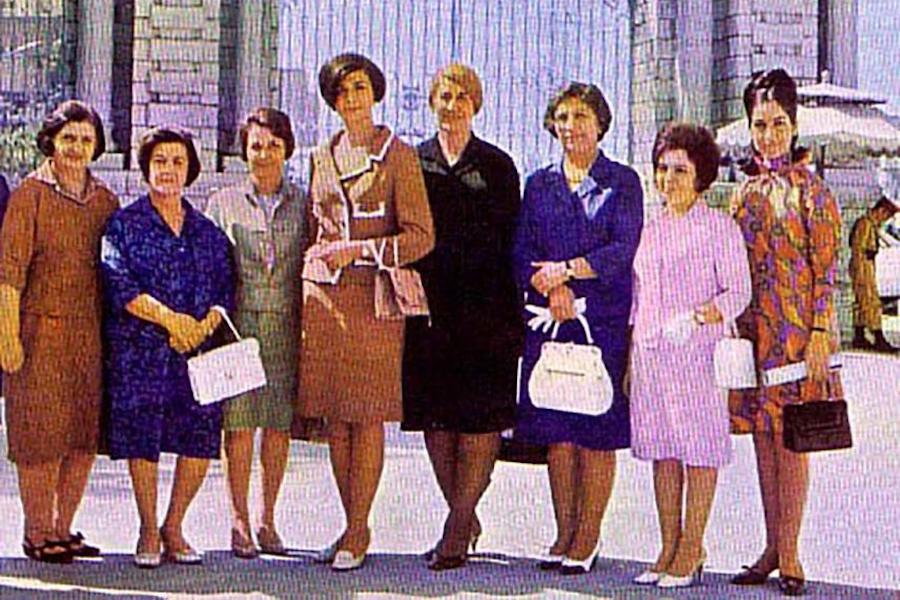
At least it was possible for regular folks to visit Iran as a regular tourist and have a great experience. I've seen multiple Youtube videos about tourism in Iran and the one thing I got from them was how friendly Iranians were to westerners. Seemed like a great place to visit - if you didn't contemplate the nasty, dictatorial side of Iran at all. Even our new gay, Dutch prime-minister went on vacation there years ago even though that country executes gay men by hanging them from a crane....

Bdts07E0ow3XiScs.jpg

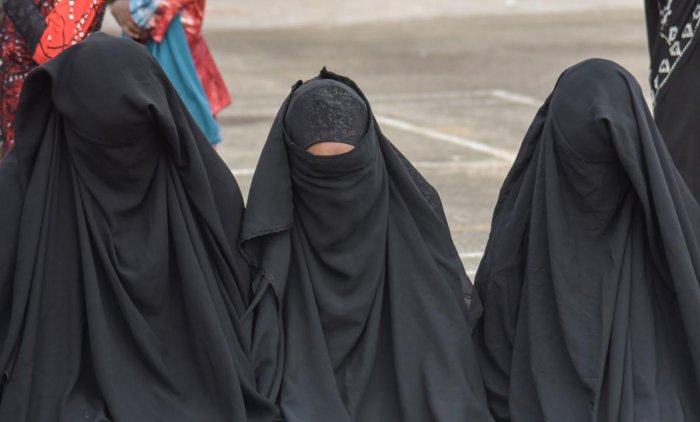
Some Pakistani guy went to Iran and got self-conscious when he realizes a lot of Iranians were non-practicing
North Korea when?

Is being retarded genetically encoded in your DNA that you are compelled to make these asinine surface level assessments?
North Korea and South Korea signed an armistice in 1953 and technically they're still at war.

If the US and ROK could neutralize NK without mass casualties, they would.

NK has conventional artillery and rockets in harden bunkers in mountains all along the DMZ.
Seoul is within range of these artillery guns that they have been constructing continuously for 70 years.
Seoul has been a hostage to this deterrence for decades before NK ever acquired nukes in the 90s.

  • Hardened Artillery Sites (HARTS): North Korea has an estimated 13,000 hardened sites, including concrete bunkers, tunnels, and caves. Approximately 200–300 of these are within direct range of Seoul, allowing guns to fire and then quickly retreat into cover to avoid counter-battery fire.
  • Proximity to Seoul: The South Korean capital, home to nearly 10 million people, sits just 30 miles from the DMZ. This proximity makes it vulnerable to a massive initial barrage with almost no warning.
  • Varying Casualty Estimates:
    • RAND Corporation (2020): Estimated that a massive one-hour barrage could cause more than 200,000 casualties.
    • Conservative Models (2025): Recent analyses suggest South Korea's advanced civil defense and concrete infrastructure could reduce fatalities to between 700 and 4,500 in realistic scenarios.
    • Pentagon Scenarios: Historically cite approximately 20,000 deaths daily in South Korea during a conventional war.

NK firing ballistic missiles over Japan whenever it wants something. It's the strategy Iran wants for the Strait of Hormuz.

Thankfully Trump is in charge and not the useful idiots in the West.

Oh and Japan is still technically at war with Russia too.
 
But then shouldn't the main target be that uranium instead of it being a stretch goal of the war.
It was... in last June.
Didn't worked

---

"Smoking Jars of Metal and Fuses" sounds like one of those youtubers trying to say something that goes against YT's algorithm.
 
Top Bottom